
George Washington Bridge Shooting, Victor Romero Charged With Manslaughter in Koran Irvine’s Death
Status box: Victor Romero has been charged but not convicted. As of October 27, 2026, a grand jury indictment and an official case number were not confirmed in the public records reviewed. All case details below are allegations reported from police, prosecutors and court proceedings.
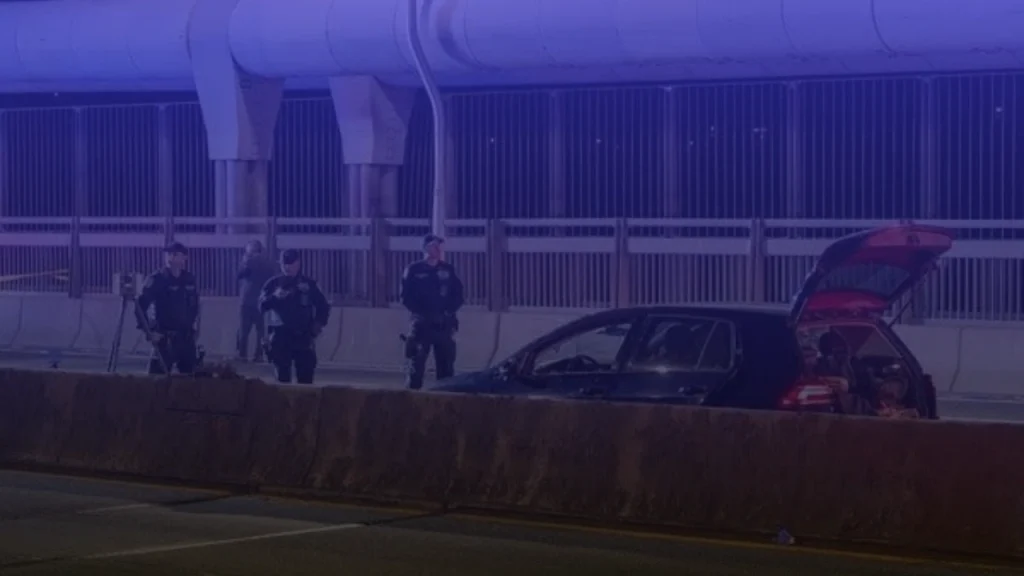
A fatal shooting on the George Washington Bridge on October 20, 2026, has led to criminal charges against Victor Romero, a 62-year-old retired New York City police detective from Haverstraw, New York. Prosecutors allege Romero fired one shot into a car driven by Koran Irvine, 46, a Con Edison worker from Valley Cottage, after the two vehicles nearly collided on the approach to the bridge. Irvine died at a New Jersey hospital. Police have described the incident as an apparent road-rage shooting. [1][2][3]
Romero was arrested on October 21 and initially charged with murder. At his October 22 arraignment in Manhattan, the charge was manslaughter in the first degree, and a judge set bail at $1 million. He posted bail and was released. He appeared briefly in a Lower Manhattan courtroom again on October 27. [2][3][4]
Romero is presumed innocent unless and until proven guilty beyond a reasonable doubt.
Quick Facts: George Washington Bridge Shooting
| Detail | Reported information |
| Incident | Fatal shooting during an apparent road-rage confrontation |
| Date | October 20, 2026 |
| Time | Reports vary: court documents cite a near-collision around 6:47 p.m.; police said Irvine was found just after 7 p.m. |
| Location | Upper level of the George Washington Bridge, Manhattan to Fort Lee, N.J. |
| Victim | Koran Irvine, 46, of Valley Cottage, N.Y., Con Edison employee, husband and father of two |
| Defendant | Victor Romero, 62, of Haverstraw, N.Y., retired NYPD detective |
| Arrest | October 21, 2026, initially on a murder charge |
| Charge at arraignment | Manslaughter in the first degree (N.Y. Penal Law § 125.20) |
| Bail | $1,000,000; posted, defendant released |
| Prosecuting office | Manhattan District Attorney’s Office |
| Court | Manhattan criminal court (100 Centre Street); case file number not independently verified |
| Latest reported appearance | October 27, 2026 |
| Grand jury | Presentation expected; no indictment independently confirmed |
| Settlement or claim form | None identified |
What Happened in the George Washington Bridge Shooting?
Irvine was driving home from work when he entered the bridge’s upper level from Washington Heights. Surveillance video showed his Volkswagen and a black Range Rover nearly colliding on the approach, according to reports citing police and prosecutors. [2][5]
Responding officers initially treated the scene as a crash. They found Irvine unconscious in the driver’s seat with a gunshot wound near the right shoulder. His car had struck a median. He was taken to Englewood Hospital in New Jersey, where he was pronounced dead. [1][5]
The bridge’s closed lanes reopened about five hours after the shooting, according to the Port Authority, causing major delays for commuters. [1]
What Do Prosecutors Allege?
At the October 22 arraignment, an assistant district attorney said surveillance video showed Romero’s vehicle tailgating Irvine’s car, then pulling up to its right side. Prosecutors allege Romero fired one shot that entered through the rear passenger-side window and struck Irvine behind the right shoulder. They also allege that Romero left the scene, and reporting from the hearing said he was found at work the next day. [3][4]
These are prosecution allegations presented in court, not findings. The full video, forensic evidence, witness statements and the defense’s response have not been made public.
Who Was Koran Irvine?
Koran Irvine, 46, lived in Valley Cottage in Rockland County, New York, and worked for Con Edison, which called the shooting a “senseless act of violence.” He was a husband and a father of two. His sister Zeria Irvine spoke publicly after the arraignment about the family’s loss. [1][3][4]
Irvine’s family and their attorney objected to the manslaughter charge and to Romero’s release on bail, and asked that he be held in jail while the case proceeds. Their position is part of the public record of the case, but it does not determine the charge or the outcome, which are decided through the legal process. [3][4]
Who Is Victor Romero?
Victor Romero, 62, was an NYPD narcotics detective in Brooklyn who retired in 2001. Reports say he was wounded in a 2000 off-duty shooting while confronting men attempting to rob his family’s laundromat. News outlets reported he was later working in a private role when he was arrested at his workplace-linked or home address connected to Haverstraw. [1][4][6]
His police background explains much of the public attention on the case. It does not prove the allegations, show a motive or affect what a court must find. Romero’s attorney’s response to the charge was not available in the public materials reviewed.
Related article: C$150 Million Aviva COVID Business Interruption Settlement Approved, Who Can Still Claim?
Why Was the Charge Reduced From Murder to Manslaughter?
Romero was first charged with murder after his arrest, and the charge reported at arraignment was first-degree manslaughter. Prosecutors have not publicly explained the reduction in the materials reviewed, so it would be inaccurate to say it reflects weak evidence, an accident or any specific defense argument. [2][3]
First-Degree Manslaughter Under New York Law
Under N.Y. Penal Law § 125.20, one way a person commits first-degree manslaughter is by intending to cause serious physical injury to another person and causing that person’s death. The statute lists other circumstances as well. It is a class B violent felony. Which subsection applies in Romero’s case should be confirmed from the charging document. [7]
Second-Degree Murder Under New York Law
N.Y. Penal Law § 125.25 covers murder in the second degree, a class A-I felony, which includes intentionally causing a death and certain depraved-indifference theories. Murder and manslaughter often differ on the defendant’s mental state, and prosecutors must prove every element of the specific charge beyond a reasonable doubt. [8]
A grand jury, if the case is presented, can vote on the charges it finds supported by the evidence. The grand jury’s decision is not a finding of guilt.
What Evidence Have Investigators Described?
The evidence below was described in reports and has not been tested at trial.
- Surveillance video: Prosecutors said cameras captured the near-collision, the tailgating and the vehicle pulling alongside Irvine’s car. [3][4]
- Vehicle identification: Investigators tracked a black Range Rover tied to a company vehicle. [4][6]
- Firearms: Reports from the October 22 proceedings said prosecutors referred to handguns Romero carried or kept at home. A full official inventory and any weapon charges were not verified. [3]
- Medical evidence: Irvine died of a gunshot wound. A full medical examiner report was not public in the materials reviewed.
The defense may challenge how evidence was collected, what it shows and whether it proves the elements of the charge.
Why Was Romero Released on $1 Million Bail?
A judge set bail at $1 million at the October 22 arraignment, and Romero posted it. In New York, bail decisions follow the state’s bail statutes and the court’s assessment of the case. Bail is not a finding of guilt or innocence, and release does not mean charges are dismissed. The judge’s complete reasoning was not available in the public materials reviewed. [3][4]
What Happened at the October 27 Court Appearance?
Romero appeared briefly in a Lower Manhattan courtroom on October 27, his first public appearance since the arraignment, according to ABC7 New York. He did not respond to reporters’ questions. No new charge, indictment, plea or resolution was reported. [2]
Earlier reports said the Manhattan District Attorney’s Office would present the case to a grand jury. A grand jury decides whether there is enough evidence to indict; it does not decide guilt. [7][9]
What Happens Next?
- Grand jury action. If an indictment is returned, the case moves to the superior court for a new arraignment, then discovery, pretrial motions and possibly trial.
- If no indictment is returned. The court record would show whether charges were changed or dismissed. A missing public indictment alone does not mean the case was dropped.
- Plea or trial. A case may be resolved by a plea agreement approved by the court. If it goes to trial, prosecutors carry the burden of proof beyond a reasonable doubt.
- Sentencing exposure. If convicted, sentencing would follow New York’s sentencing laws for the specific offense. Class B violent felonies carry determinate prison terms, and the exact range depends on the conviction and the defendant’s record.
Could Koran Irvine’s Family File a Wrongful Death Lawsuit?
Possibly. A wrongful-death action is separate from the criminal case and is brought by the personal representative of the deceased person’s estate for the benefit of eligible survivors. It uses a lower burden of proof than a criminal trial, and a criminal case does not decide it. Under New York law, wrongful-death claims generally must be filed within two years of the death, subject to exceptions, so families typically speak with a New York attorney promptly.
No civil lawsuit, public settlement fund or claim form connected to Irvine’s death was identified. Members of the public cannot claim compensation because they were affected by the bridge closure.
For examples of how fatal-shooting cases play out in civil and prosecutorial contexts, see our coverage of the Saveion McConnell police shooting and body-camera release after a Missouri prosecutor declined charges, the $1.06 million Illinois Lauer family shooting settlement and the James Williams Canton police shooting $3.5M settlement. Those matters involve different facts and legal postures, and illustrate why a criminal prosecution and a civil damages claim are separate proceedings.
Key Dates
| Date | Event |
| October 20, 2026 | Koran Irvine fatally shot on the George Washington Bridge; closed lanes reopened about five hours later |
| October 21, 2026 | Victor Romero arrested and initially charged with murder |
| October 22, 2026 | Arraignment on first-degree manslaughter; bail set at $1 million and posted |
| October 26, 2026 | Date reported for possible grand jury presentation; outcome not confirmed |
| October 27, 2026 | Romero appeared briefly in Manhattan court |
| Future | Possible indictment, further hearings, motions, plea or trial |
Frequently Asked Questions
Who was shot on the George Washington Bridge on October 20, 2026?
Koran Irvine, 46, of Valley Cottage, N.Y., a Con Edison employee and father of two, died after being shot while driving on the bridge’s upper level.
Who is Victor Romero?
A 62-year-old retired NYPD detective from Haverstraw, N.Y., charged in Irvine’s death. He has not been convicted.
Was it a road-rage incident?
Police and prosecutors have described it as an apparent road-rage shooting after a near-collision. The full evidence and any court findings are still pending.
Why was the murder charge reduced to manslaughter?
Romero was first charged with murder and was arraigned on first-degree manslaughter. Prosecutors’ reasons were not publicly detailed in the materials reviewed.
Did Romero post bail?
Yes. Bail was set at $1 million on October 22, and he was released after posting it.
Has a grand jury indicted him?
An indictment was not independently confirmed as of October 27, 2026. Check the court docket or the Manhattan District Attorney’s Office.
Is there a claim form or settlement?
No. A separate wrongful-death claim by Irvine’s estate is legally possible but none has been publicly identified.
Where can I find updates?
The Manhattan District Attorney’s Office, New York Courts and the court docket are the most reliable sources.
Official Legal References and Reporting Sources
- Associated Press: Retired NYPD detective arrested in road rage killing on George Washington Bridge
- ABC7 New York (Oct. 27, 2026): Victor Romero, ex-NYPD detective accused in GWB road-rage fatal shooting, appears in court
- CBS New York (Oct. 22, 2026): Family of GWB shooting victim blasts “miscarriage of justice” after alleged gunman faces manslaughter charge, granted bail
- NY1 (Oct. 22, 2026): Retired NYPD detective arraigned following fatal George Washington Bridge shooting
- ABC7 New York (Oct. 22, 2026): Retired veteran NYPD detective arrested, charged with murder in fatal GWB shooting
- FOX 5 NY: Who is Victor Romero? Ex-NYPD detective accused of murder in GW Bridge shooting
- New York State Senate: Penal Law § 125.20, Manslaughter in the first degree
- New York State Senate: Penal Law § 125.25, Murder in the second degree
- New York Courts: Preliminary hearing and grand jury process and Basic steps in a criminal case
This article is for general informational purposes only. AllAboutLawyer.com is not a law firm and does not provide legal advice. The allegations against Victor Romero have not been proved at trial. Some details come from contemporaneous news reporting because the charging documents, an official case number and the October 27 court record were not independently available. Anyone considering a legal claim should consult a licensed New York attorney.
About the Author
Israr Ahmad is a legal content researcher with 4+ years of experience covering class action settlements and consumer rights cases. He has researched and published coverage of 2,500+ settlements using verified court records, settlement administrator filings, and government sources. Learn more about Israr.