
Trump Hush Money Conviction Appeal, What Happened at the Second Circuit on November 16, 2026
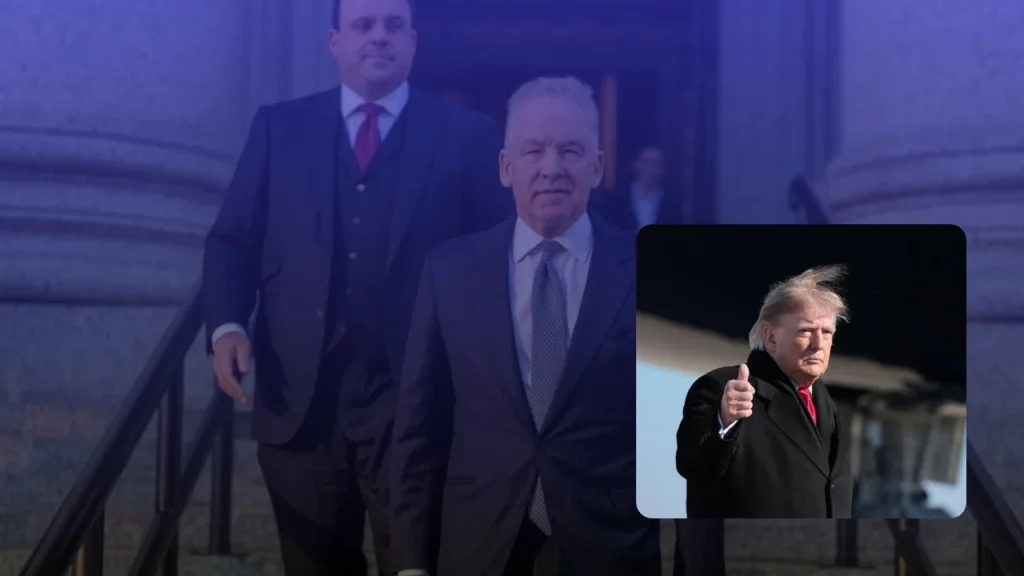
On Monday, November 16, 2026, a three-judge panel of the U.S. Court of Appeals for the Second Circuit heard more than an hour of argument on whether President Donald Trump’s New York criminal conviction on 34 felony counts of falsifying business records can be moved from state court to federal court.
The panel did not issue a decision. The convictions remain in effect as of November 17, 2026.
Trump’s lawyers want federal jurisdiction so they can pursue presidential-immunity arguments under the Supreme Court’s 2024 decision in Trump v. United States. Prosecutors from the Manhattan District Attorney’s office oppose the transfer and want the case to stay in New York’s state courts.
Trump is pursuing a second, separate appeal in the New York state courts, where the Appellate Division heard arguments on November 5, 2026.
Trump Hush Money Appeal: Key Facts
| Question | Current status |
| What happened? | Second Circuit heard removal arguments November 16, 2026 |
| Has the court ruled? | No decision announced |
| Original conviction | 34 felony counts of falsifying business records in the first degree |
| Conviction date | May 30, 2024 |
| Sentence | Unconditional discharge, January 10, 2025 |
| Federal appeals court | U.S. Court of Appeals for the Second Circuit |
| Lower federal court | U.S. District Court, Southern District of New York (No. 1:23-cv-03773) |
| Trump’s lead appellate lawyer | Robert Giuffra Jr. (Sullivan & Cromwell) |
| Prosecutor opposing transfer | Steven Wu, chief of the appeals division, Manhattan District Attorney’s Office |
| State appeal | Argued November 5, 2026 in the Appellate Division |
| Next decision date | Not announced |
What Happened at the Second Circuit Hearing on Trump’s Hush Money Conviction?
The question before the court was whether federal law allows a completed state prosecution to be moved into federal court after a verdict, a sentence and the start of a state appeal.
Robert Giuffra Jr. urged the judges to act quickly, even before issuing a full written opinion, so that Trump’s immunity arguments could be reviewed in federal court without waiting for the New York appeal to finish. He proposed that the case go first to a federal district judge, who would adopt the state court verdict, and then return to the Second Circuit for a decision on dismissal on immunity grounds. He also argued that the prosecution’s description of the payment as an illegal campaign contribution under the Federal Election Campaign Act raises federal questions that belong in federal court.
Judge John M. Walker Jr. and Chief Judge Raymond J. Lohier Jr. expressed doubts about the approach. Their questions concerned how the process would work in practice and whether Congress authorized post-conviction removal.
Steven Wu urged the panel to uphold the district court’s ruling and leave the case in state court. Prosecutors argue that the conduct was private and unofficial, and that the removal request came too late.
Questions at oral argument are not rulings. A judge’s skepticism does not establish how the panel will decide.
Why Is Trump Trying to Move His New York Criminal Case to Federal Court?
Trump’s lawyers argue that evidence at his trial involved official presidential activity and should not have been used against him, and that federal court is the proper forum for that defense. They point to the federal-officer removal statute, 28 U.S.C. § 1442.
Two separate questions are involved:
- Was the New York trial affected by evidence the Supreme Court’s immunity ruling protects?
- Does federal law allow the case to be moved to federal court at this stage?
Even a valid immunity argument does not automatically mean a federal court has authority to take over the case. Removal decides which court hears the case. It does not by itself overturn a conviction.
What Was Trump Convicted of in the New York Hush Money Case?
On May 30, 2024, a Manhattan jury convicted Trump on all 34 counts of falsifying business records in the first degree. The charges concern records tied to a $130,000 payment to adult-film performer Stormy Daniels (legal name Stephanie Clifford) shortly before the 2016 presidential election. Prosecutors alleged the payment, made through Trump’s then-attorney Michael Cohen, was later reimbursed through entries falsely recorded as legal expenses. Trump has denied wrongdoing and denies the alleged encounter.
The 34 counts concern allegedly falsified business records, not 34 separate payments to Daniels.
Why were the New York charges felonies instead of misdemeanors?
Under New York Penal Law § 175.05, falsifying business records with intent to defraud is a misdemeanor. Under § 175.10, it becomes a class E felony when the intent to defraud includes an intent to commit or conceal another crime. Prosecutors relied on an alleged conspiracy to influence the 2016 election by unlawful means, implicating New York Election Law § 17-152. Jurors had to agree unanimously that Trump was guilty of each count. The defense disputes this legal theory and continues to challenge the verdict.
Source: Manhattan District Attorney’s May 30, 2024 conviction announcement.
What Did the Supreme Court Decide in Trump v. United States?
In Trump v. United States, 603 U.S. 593 (July 1, 2024), the Supreme Court held that a president has:
- Absolute immunity from criminal prosecution for core constitutional powers.
- At least presumptive immunity for other official acts.
- No immunity for unofficial, private acts.
The decision also limits the use of evidence about protected official acts to prosecute unofficial conduct. That evidentiary point is central to Trump’s New York appeal. The Court did not hold that everything a sitting president does is immune, and the question of what counts as an official act is disputed here.
Source: Supreme Court opinion, Trump v. United States.
Which trial evidence does Trump say was improperly admitted?
Trump’s lawyers have challenged testimony from former White House staff Hope Hicks and Madeleine Westerhout, evidence about Michael Cohen and presidential matters, certain presidential social media posts and a federal ethics disclosure form. Prosecutors dispute that this evidence concerned official acts and argue that any error would not justify overturning the verdict. In December 2024, trial judge Juan Merchan rejected Trump’s post-trial immunity challenge.
Which Federal Laws Govern Trump’s Removal Request?
28 U.S.C. § 1442 (federal officer removal). It allows certain federal officers to move state prosecutions to federal court when the case concerns conduct related to their official duties and a federal defense is raised. Trump argues his case qualifies. Prosecutors say the conduct was private.
28 U.S.C. § 1455 (criminal removal procedure). A defendant ordinarily must seek removal within 30 days of arraignment or before trial, whichever is earlier. A court may allow a later filing for good cause. Trump argues the Supreme Court’s 2024 ruling gave him good cause for a second, later request. Whether that satisfies the statute, and whether removal is available after conviction and sentencing, is the dispute before the Second Circuit.
Sources: 28 U.S.C. § 1442 and 28 U.S.C. § 1455.
How Did the Trump Removal Fight Reach the Second Circuit Again?
Judge Alvin K. Hellerstein of the Southern District of New York declined Trump’s removal requests three times: after the 2023 indictment, after the conviction, and again in August 2026. Hellerstein died in October 2026 at age 92.
- First and second denials. Hellerstein ruled the hush money payments were private, unofficial acts.
- November 6, 2025. A Second Circuit panel vacated the second denial and sent the case back, finding the district court had not weighed “important issues relevant” to the request, including the effect of the immunity ruling and the timing of a second removal notice. The panel said it expressed no view on how the judge should rule. That decision did not overturn the conviction or order removal.
- August 28, 2026. Hellerstein denied leave for a second removal notice, writing that paying hush money to an adult film star or covering up an embarrassment is not subsumed in presidential immunity.
- November 16, 2026. Trump’s appeal of that ruling was argued.
Official documents: Second Circuit opinion, November 6, 2025 and federal district court order, August 28, 2026.
Why Does Trump Have Two Appeals Pending at the Same Time?
| New York state appeal | Federal removal appeal |
| Challenges the conviction directly | Challenges whether the case can move to federal court |
| Argued November 5, 2026 | Argued November 16, 2026 |
| New York Appellate Division | U.S. Court of Appeals, Second Circuit |
| Can address state trial errors and federal constitutional claims | Addresses removal jurisdiction and related immunity questions |
| Decision pending | Decision pending |
Giuffra argued that even if the Second Circuit sides with Trump, the state appeals court would remain free to rule. Both appeals involve immunity arguments, but they ask different courts to do different things.
Can Trump’s 34 Felony Convictions Be Overturned?
A conviction can be reversed or vacated on appeal if a reviewing court finds a sufficient legal basis. The November 16 hearing did not change the verdict. Several outcomes are possible:
- The Second Circuit rejects removal. The case stays in state court, and the state appeal continues.
- The Second Circuit orders further proceedings. The removal question goes back to a federal district court, which would not itself erase the convictions.
- The Second Circuit allows a federal route. A federal court would then decide how to treat the state verdict and whether the claimed constitutional errors justify relief.
- The Appellate Division rules first. It could affirm the conviction, reverse it or order other relief while the federal question is pending.
No outcome can be predicted from the questions judges asked.
Will Trump Face Jail Time if He Loses His Hush Money Appeal?
No new sentence automatically follows. On January 10, 2025, Judge Merchan sentenced Trump to an unconditional discharge on all 34 counts: no jail, no probation and no fine. The convictions remain on the record unless an appeals court changes them.
Can a President Serve With a Felony Conviction, and Can He Pardon a State Crime?
Article II sets presidential eligibility requirements (age, citizenship and residency) and does not disqualify a person solely for a felony conviction. A presidential pardon covers federal offenses, not New York state crimes, and moving a state case to federal court would not by itself turn it into a federal offense eligible for a pardon.
For related reading on removal from office, see Can Democrats Remove Trump In 2027? Impeachment Explained.
Could Trump’s Hush Money Case Reach the U.S. Supreme Court?
Possibly. Federal constitutional questions from either appeal could eventually be taken to the Supreme Court after the lower courts finish, but the Court chooses which cases to hear. Trump’s lawyers argue that removal would provide a quicker path there. That remains speculative until the lower courts rule.
Trump has separately sought Supreme Court review in an unrelated civil case, covered in Donald Trump Asks the Supreme Court to Revive His Dismissed 2016 Election Lawsuit Against Hillary Clinton and Others.
Timeline: Trump’s Hush Money Conviction and Appeals
| Date | Development |
| March 30, 2023 | Manhattan grand jury indicts Trump |
| April 4, 2023 | Trump arraigned on 34 felony counts |
| April 15, 2024 | State trial begins |
| May 30, 2024 | Jury convicts Trump on all 34 counts |
| July 1, 2024 | Supreme Court issues presidential-immunity ruling |
| December 16, 2024 | Judge Merchan rejects post-trial immunity challenge |
| January 10, 2025 | Trump receives unconditional discharge |
| November 6, 2025 | Second Circuit orders Judge Hellerstein to reconsider removal |
| August 28, 2026 | Judge Hellerstein again denies removal |
| October 2026 | Judge Hellerstein dies at age 92 |
| November 5, 2026 | New York Appellate Division hears state appeal |
| November 16, 2026 | Second Circuit hears removal arguments |
| November 17, 2026 | No decision announced in either appeal |
What Happens Next in Trump’s New York Hush Money Case?
The Second Circuit must decide whether federal removal law lets the case leave New York’s state courts, and the Appellate Division must separately decide Trump’s direct appeal. Neither court has announced a decision date. For an overview of Trump’s other cases, see Trump Lawsuits 2026, Every Major Case And What’s Happened.
Bottom Line: Did Trump Win at the Second Circuit on November 16?
No ruling was issued. The judges heard argument, questioned the procedure and took the matter under consideration. The 34 convictions and the January 2025 unconditional discharge remain unchanged. Trump’s lawyers argue the immunity ruling undermines the conviction. Manhattan prosecutors maintain the state judgment should stand. The next development to watch is a written decision from either court.
Sources
- Second Circuit opinion, November 6, 2025
- Southern District of New York order denying removal, August 28, 2026
- Supreme Court, Trump v. United States, July 1, 2024
- New York Courts, People v. Donald J. Trump case documents
- Manhattan District Attorney, May 30, 2024 conviction announcement
- 28 U.S.C. § 1442 and 28 U.S.C. § 1455
- New York Penal Law § 175.10
- Associated Press reporting on the November 16, 2026 hearing
This article is general legal information, not legal advice. It reports arguments made in court as arguments, not as findings.
Researched and written by Israr Ahmad, legal content researcher and founder of AllAboutLawyer.com. All facts verified against Associated Press reporting on the November 16, 2026 hearing, the Second Circuit’s November 6, 2025 opinion, the Southern District of New York’s August 28, 2026 order, the Supreme Court’s opinion in Trump v. United States and New York court records, as of November 17, 2026. Last Updated: November 17, 2026.
About the Author
Israr Ahmad is a legal content researcher with 4+ years of experience covering class action settlements and consumer rights cases. He has researched and published coverage of 2,500+ settlements using verified court records, settlement administrator filings, and government sources. Learn more about Israr.