
Gabapentin Lawsuit Update, September 2026, New Settlement, New Study, and Where the Dementia Cases Really Stand
What’s Actually New Since Our Last Gabapentin Update
We’ve covered gabapentin litigation on this site before — in November 2025, and again twice in March 2026. Here’s what’s changed since then, in plain terms:
- There’s real money you can actually claim right now — but it’s from an old price-fixing case, not the dementia lawsuits. A federal settlement worth $533 million opened its claims process in July 2026, and gabapentin is on the covered drug list.
- A separate, brand-new $17.85 million settlement was announced February 2, 2026, with two more generic drug makers — Lannett and Bausch — over the same price-fixing scheme. That one isn’t open for claims yet.
- A peer-reviewed meta-analysis published in August 2026, pooling multiple studies rather than relying on just the one from July 2025, adds more weight to the dementia-risk signal our earlier articles covered.
- Still no MDL. As of September 2026, there is no federal multidistrict litigation and no class action for gabapentin dementia or cognitive-decline claims — that hasn’t changed since our March update, even though national law firms are now actively signing up cases.
Gabapentin Lawsuit — Key Facts, Updated September 2026
| Drug | Gabapentin (brand name Neurontin) |
| Manufacturer | Pfizer (brand); dozens of generic makers |
| Open Claim You Can File Now | Yes — $533M generic drug antitrust end-payer settlement, deadline November 9, 2026 |
| New Settlement, Not Yet Claimable | $17.85M — Lannett Company and Bausch Health, announced February 2, 2026 |
| Dementia/Cognitive Decline Litigation | Individual lawsuits only; no MDL or class action as of September 2026 |
| Newest Research | Meta-analysis of multiple studies, published in Drugs & Aging, August 2026 |
| Law Firms Actively Recruiting Cases | Yes — several national firms, since at least June 2026 |
| Last Updated | September 14, 2026 |
Is There a Gabapentin Class Action Settlement You Can Actually Join Right Now?
Yes — but it’s easy to mix up with the dementia litigation, so it’s worth separating the two clearly.
Gabapentin is one of roughly 200 generic drugs named in a long-running antitrust case accusing manufacturers of conspiring to fix prices between 2009 and 2019. That litigation has produced several separate settlement pots over the years, and one of them opened its claims process in July 2026: a combined $533 million fund covering settlements with Sandoz and Fougera ($275 million), Sun Pharmaceutical and Taro ($200 million), and Heritage and Apotex ($58 million). If you or your health plan paid out of pocket for gabapentin or any of the other named generics between May 1, 2009, and December 31, 2019, you can file a claim now at the official End-Payer Settlement site, no receipts required — the process runs on self-attestation. The deadline to file is November 9, 2026.
Separately, a coalition of 48 states and territories announced a new $17.85 million settlement on February 2, 2026, with two more manufacturers — Lannett Company and Bausch Health — over the same underlying price-fixing conspiracy. That one is still registration-only as of this writing; there’s no live claim form yet, so the smartest move is to register your interest at the official state settlement site so you’re notified the moment claims open.
Neither of these settlements has anything to do with dementia, cognitive decline, or any other personal injury. They’re strictly about being overcharged for the drug itself. If your interest in a “gabapentin lawsuit” is really about being harmed by the drug rather than overpaying for it, the next section covers where that stands.
Dementia and Cognitive Decline Litigation: Where Things Actually Stand
Short answer: still no settlement, still no class action, and still no multidistrict litigation, as of September 2026. That’s consistent with what we told you in March. What’s changed is momentum, not outcome.
Several national law firms — including at least one that announced it publicly on June 4, 2026 — are now actively signing up patients diagnosed with dementia or significant cognitive decline after long-term gabapentin use, pointing to the same 2025 research our earlier coverage discussed. That kind of case-recruiting activity is usually what precedes a request to the Judicial Panel on Multidistrict Litigation to consolidate cases — but a request isn’t a filing, and a filing isn’t a ruling. Nobody should assume an MDL is imminent just because law firms are building inventory.
For context, gabapentin’s manufacturer has been down this road before. A federal jury in Massachusetts found Pfizer liable to Kaiser Foundation Health Plan for off-label Neurontin marketing back in 2010, a verdict that grew to $142 million after automatic trebling under federal racketeering law — and the First Circuit upheld it in 2013. That case took roughly a decade from the first whistleblower complaint to a final appellate ruling. It’s a useful reminder that even when the underlying science and legal theory are strong, gabapentin litigation has historically moved on the timescale of years, not months.
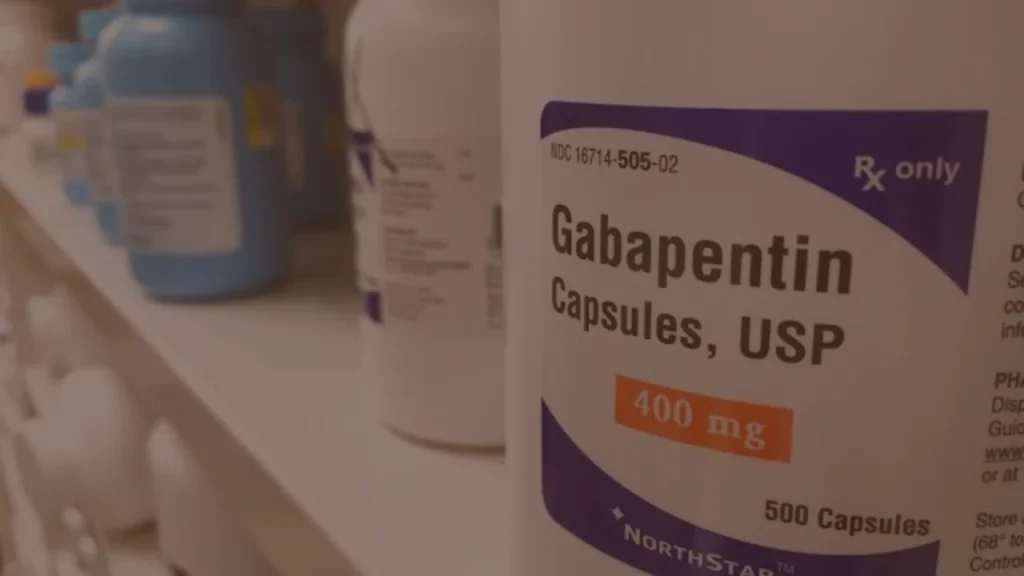
The New Research: What the August 2026 Meta-Analysis Adds
Our earlier coverage centered on a single large study — the Case Western Reserve University analysis of 26,416 patients with chronic low back pain, published in July 2025, which found a 29% increased risk of dementia and an 85% increased risk of mild cognitive impairment among patients with six or more gabapentin prescriptions. That study held up under scrutiny, but it was one dataset from one research group.
In August 2026, a systematic review and meta-analysis published in the peer-reviewed journal Drugs & Aging pooled results across multiple observational studies — including the Case Western data, a 2023 Taiwan study of over 200,000 patients, and other cohorts — to assess gabapentinoid use and Alzheimer’s-related dementia risk as a body of evidence rather than a single result. Pooling studies this way matters for litigation specifically: plaintiffs’ attorneys generally need more than one study to argue general causation, and a peer-reviewed meta-analysis is exactly the kind of evidence used to clear that bar in mass tort cases. It’s also exactly the kind of publication that tends to accelerate a decision on whether to seek MDL consolidation.
None of this proves gabapentin causes dementia. Researchers and physicians, including specialists who reviewed the original 2025 study, have consistently cautioned that these are association studies, not proof of direct causation — factors like reduced mobility from chronic pain could independently raise dementia risk in the same patient population. But the accumulating weight of evidence is precisely what’s driving the current wave of case recruitment.
Do You Have Grounds for an Individual Gabapentin Lawsuit?
Since there’s still no class action or MDL for injury claims, anyone pursuing compensation for actual harm is filing an individual lawsuit. You may have grounds to consult a pharmaceutical injury attorney if:
- You took gabapentin for six months or longer, particularly for an off-label use like back pain, anxiety, or insomnia
- You received six or more gabapentin prescriptions and were later diagnosed with dementia or mild cognitive impairment
- You or a family member experienced suicidal thoughts or behavior while taking gabapentin
- You experienced respiratory depression, especially while also taking an opioid
- A loved one died of an overdose in which gabapentin was identified as a contributing cause
Our March 2026 deep dive walks through the legal standard for these individual claims in more detail, including how statutes of limitations work when cognitive decline takes years to surface.
Gabapentin Litigation Timeline — Updated
| Milestone | Date |
| Case Western Reserve dementia study published | July 2025 |
| Sun Pharmaceutical and Taro’s $200M end-payer settlement gets final approval | January 23, 2026 |
| Lannett and Bausch $17.85M multistate settlement announced | February 2, 2026 |
| National law firms begin actively recruiting dementia cases | June 4, 2026 |
| Combined $533M End-Payer settlement claims process opens | July 2026 |
| Meta-analysis on gabapentinoids and Alzheimer’s-related dementia published in Drugs & Aging | August 2026 |
| No MDL or class action for dementia claims confirmed | September 2026 |
| End-Payer settlement claim deadline | November 9, 2026 |
| First multistate antitrust trial (Hartford, CT) | Late 2026 (anticipated) |
Frequently Asked Questions
Is there a gabapentin class action lawsuit I can actually join right now?
For overcharging on the price of the drug, yes — the $533 million End-Payer settlement is accepting claims now through November 9, 2026. For dementia or other injury claims, no — there’s still no class action or MDL as of September 2026.
How much money could I get from the $533 million settlement?
It depends on how many people file valid claims and how much you spent on covered generic drugs between 2009 and 2019. Payments are pro rata, meaning the fund is divided among everyone who files — there’s no fixed per-person amount.
Do I need proof of purchase to file the antitrust claim?
No. The End-Payer settlement accepts self-attested claims without receipts, though you’ll need to estimate what you spent on covered drugs during the class period.
What happened to the $17.85 million Lannett and Bausch settlement — can I file a claim yet?
Not yet. As of this writing, that settlement is registration-only. Register at the official state settlement site so you’re notified when the claims process opens.
Has a gabapentin dementia lawsuit ever gone to trial or settled?
No. Every dementia and cognitive-decline case remains in the individual lawsuit or early-investigation stage. Pfizer’s past legal losses — including the $142 million Kaiser verdict — involved off-label marketing claims from over a decade ago, not the current cognitive-decline litigation.
Should I stop taking gabapentin because of the dementia research?
No, not without talking to your doctor first. Stopping gabapentin abruptly can cause serious withdrawal symptoms, including seizures. If you’re concerned about memory or cognitive changes, raise it with your prescriber rather than adjusting your own dose.
For the fuller history of gabapentin’s off-label marketing scandal, the 2004 Pfizer criminal plea, and the FDA’s respiratory and suicidality warnings, see our earlier coverage: Gabapentin Lawsuits, What Patients Who Took Neurontin Are Claiming and Gabapentin Lawsuit 2025.
Researched and written by Israr Ahmad, legal content researcher and founder of AllAboutLawyer.com. All facts verified against official state attorney general press releases on the Lannett and Bausch settlement, the class counsel press release announcing the End-Payer settlement claims process, the peer-reviewed meta-analysis published in Drugs & Aging, and First Circuit case records, as of September 14, 2026. Last Updated: September 14, 2026.
This article is for informational purposes only and does not constitute legal or medical advice. Laws vary by state and individual circumstances differ. For advice about your specific situation, consult a qualified attorney or your prescribing physician. If you are experiencing suicidal thoughts, please contact the 988 Suicide and Crisis Lifeline by calling or texting 988.
Sources Used in This Update
- Nebraska Attorney General’s Office — “Nebraska Attorney General’s Office Announces Settlements with Lannett and Bausch Totaling $17.85 Million,” February 2, 2026: https://ago.nebraska.gov/sites/default/files/doc/Lannett.pdf
- New York Attorney General — “Attorney General James Secures More Than $17 Million from Drug Manufacturers Bausch and Lannett,” 2026: https://ag.ny.gov/press-release/2026/attorney-general-james-secures-more-17-million-drug-manufacturers-bausch-and
- Fine, Kaplan and Black, R.P.C. (Class Counsel) — “Claim Forms Now Being Accepted for Class Action Settlements,” PR Newswire, July 2026: https://www.prnewswire.com/news-releases/fine-kaplan-and-black-rpc-announces-claim-forms-now-being-accepted-for-class-action-settlements-if-you-paid-or-reimbursed-for-certain-prescription-generic-drugs-in-the-united-states-between-may-1-2009-and-december-31-2019-302822284.html
- PubMed — “Gabapentinoid Use and Risk of Alzheimer’s Disease-Related Dementias: A Systematic Review and Meta-analysis of Observational Studies,” Drugs & Aging, August 2026: https://pubmed.ncbi.nlm.nih.gov/42329333/
- PubMed — “Risk of dementia following gabapentin prescription in chronic low back pain patients,” Regional Anesthesia & Pain Medicine, July 2025: https://pubmed.ncbi.nlm.nih.gov/40639955/
- U.S. Court of Appeals for the First Circuit — In re: Neurontin Marketing and Sales Practices Litigation, Nos. 11-1904, 11-2096, decided April 3, 2013: https://media.ca1.uscourts.gov/pdf.opinions/11-1904P-01A.pdf
About the Author
Israr Ahmad is a legal content researcher with 4+ years of experience covering class action settlements and consumer rights cases. He has researched and published coverage of 2,500+ settlements using verified court records, settlement administrator filings, and government sources. Learn more about Israr.