
Empire Hotel Class Action Lawsuit 2026, What Guests Need to Know About Hidden Fee Allegations
A class action lawsuit filed in February 2026 accuses The Empire Hotel in New York City of using “drip pricing” to mislead guests about the true cost of a hotel room. The lawsuit claims the hotel advertises one price, then adds mandatory fees only after consumers have clicked through multiple booking pages and reached the checkout screen. No settlement has been reached. The case is in early litigation.
Quick Facts
| Field | Detail |
| Defendant | West 63 Empire Associates LLC (The Empire Hotel) |
| Plaintiff | Dylan Bittlingmaier |
| Lawsuit Type | Class action — litigation phase, no settlement |
| What Is Alleged | Drip pricing — advertising low room rates, then revealing mandatory fees only at checkout |
| Laws Cited | New York General Business Law; unjust enrichment; fraud |
| Who May Be Affected | U.S. consumers who booked a hotel room at The Empire Hotel |
| Court | U.S. District Court for the Southern District of New York |
| Case Number | 1:26-cv-01209 |
| Date Filed | February 12, 2026 |
| Plaintiff’s Attorneys | Philip L. Fraietta and Julian C. Diamond of Bursor & Fisher P.A. |
| Settlement | None — no claim form available at this time |
Where This Case Stands
- The lawsuit was filed on February 12, 2026 — it is in its earliest stage. No court date, class certification hearing, or settlement has been scheduled or announced.
- The Empire Hotel has not yet filed a public response to the complaint.
- No claim form exists. Consumers cannot file for compensation at this time. This article will be updated if a settlement is reached.
What Is The Empire Hotel and What Does the Lawsuit Allege?
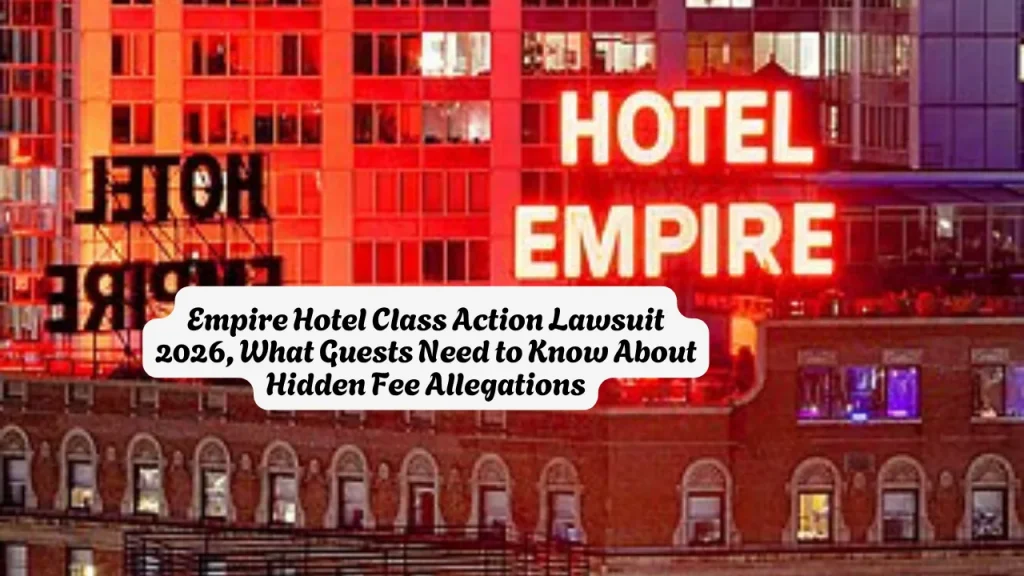
The Empire Hotel is a 427-room hotel located at 44 West 63rd Street in Manhattan, across from Lincoln Center and steps from Central Park. It operates under the legal name West 63 Empire Associates LLC and is known for its rooftop bar, art deco lobby, and its famous red neon sign. The hotel appeared as a setting in the TV series Gossip Girl.
Plaintiff Dylan Bittlingmaier filed a class action lawsuit against the hotel on February 12, 2026, in the U.S. District Court for the Southern District of New York. The lawsuit claims the hotel’s online booking process deceives consumers about the real price they will pay for a room.
According to the complaint, when a consumer searches for a room on the hotel’s website, the price shown on the search results page does not include mandatory taxes and fees. Those extra charges are hidden behind a hyperlinked “taxes and fees” button and only become visible after the consumer has clicked through multiple pages and arrived at the checkout screen. By that point, the lawsuit says, consumers have already invested time in the booking process and are more likely to complete the purchase even after seeing a higher total.
The lawsuit calls this practice “drip pricing” — a tactic where a business advertises one price to draw consumers in and then incrementally reveals additional mandatory charges only at the end of the transaction. Bittlingmaier alleges the hotel uses this practice to capture price-conscious consumers, profits from the confusion it creates, and deprives guests of the ability to accurately compare hotel room prices against competitors who disclose full pricing upfront.
Related article: Mazda CX-90 Class Action Lawsuit, What Owners Need to Know About Brake and Lane-Keep Defect Claims
What Is Drip Pricing and Why Is It Illegal?
Drip pricing is the practice of advertising a price that does not reflect what a consumer will actually pay. In the hotel industry, this typically means listing a low nightly room rate on search pages while hiding mandatory fees — such as resort fees, destination fees, or facility fees — until the final stage of checkout.
The Federal Trade Commission first warned the hotel industry about drip pricing in 2012, stating that concealing mandatory fees in advertised prices may violate federal consumer protection law. Despite more than a decade of warnings, many hotels continued the practice.
In December 2024, the FTC passed the Rule on Unfair or Deceptive Fees, which took effect on May 12, 2025. The rule directly prohibits bait-and-switch pricing and drip pricing in the short-term lodging and live-event ticketing industries. Under the rule, hotels must disclose the total price — including all mandatory fees — clearly and conspicuously at the very first point where a price is shown to a consumer. The rule does not ban any specific type or amount of fee. It simply requires that whatever fees exist must be included in the advertised price from the start.
The FTC can pursue civil penalties of up to $53,088 per violation of the rule. In addition to federal enforcement, consumers and private plaintiffs can bring claims under state consumer protection laws — which is exactly what Bittlingmaier has done in this case, citing New York’s General Business Law alongside claims for fraud and unjust enrichment.
New York’s General Business Law, particularly Section 349, prohibits deceptive acts and practices in the conduct of business. The state recently expanded this law through the FAIR Business Practices Act, effective February 2026, which now also covers “unfair” and “abusive” business practices — making New York one of the stronger state-level consumer protection environments in the country.
Who May Be Affected?
The lawsuit seeks to represent a class of consumers in the United States who booked a hotel room at The Empire Hotel through its website and were subjected to the drip pricing practice described in the complaint. The specific class definition — including date ranges and other eligibility criteria — will be determined by the court if and when the case proceeds to class certification.
If you booked a room at The Empire Hotel and believe the final price you paid was materially higher than the price originally shown to you on the search or listing page, you may have been affected by the conduct described in this lawsuit.
Important: You do not need to take any action right now. If a settlement is reached, affected consumers will typically receive notice by mail or email and will have the opportunity to file a claim at that time
What the Lawsuit Is Asking For
Bittlingmaier and his attorneys at Bursor & Fisher P.A. are seeking relief on behalf of the full class of affected consumers. The complaint asserts three categories of legal claims:
Unjust enrichment — The hotel allegedly profited from fees that consumers did not knowingly agree to pay at the time they initially chose their room.
Fraud — The booking process allegedly contained deliberate misrepresentations about the true price of a hotel room.
Violations of New York’s General Business Law — The hotel’s pricing practices allegedly constitute deceptive acts or practices under New York consumer protection law.
The lawsuit seeks unspecified monetary damages, restitution of fees paid, and an injunction requiring The Empire Hotel to change its pricing disclosures going forward.
The Bigger Picture: A Wave of Hotel Drip Pricing Lawsuits
The Empire Hotel case is part of a growing wave of drip pricing lawsuits filed across the country following the FTC’s May 2025 Junk Fees Rule. Similar complaints have been filed recently against other businesses accused of hiding fees until late in the checkout process — including event ticket platforms, retail websites, and other hospitality companies.
Bursor & Fisher P.A., the law firm representing the plaintiff, is the same firm that has litigated drip pricing cases against major hotel brands including Marriott International. Their filing against The Empire Hotel signals that smaller and mid-size hotel operators — not just global chains — are now targets in this area of consumer litigation.
At the state level, the hotel industry has faced similar action from attorneys general. In 2023, Pennsylvania reached a multi-state settlement with Choice Hotels International over resort fee disclosure and drip pricing. Booking Holdings settled with the State of Texas for $9.5 million in August 2025 over similar allegations involving its hotel booking platforms.
Frequently Asked Questions
What is drip pricing?
Drip pricing is when a business advertises a low base price for a product or service and then gradually reveals mandatory additional charges later in the purchase process. In hotels, this typically means showing a low nightly rate on the search page but adding resort fees, destination fees, or other mandatory charges only at the final checkout screen.
Is there a settlement I can claim from the Empire Hotel lawsuit?
No. This lawsuit was filed in February 2026 and is in early litigation. No settlement has been proposed or approved. There is no claim form and no money available to consumers at this time. If that changes, this article will be updated with claim details.
What laws did the Empire Hotel allegedly violate?
The complaint cites New York’s General Business Law, which prohibits deceptive acts and practices in consumer transactions. The lawsuit also asserts claims for fraud and unjust enrichment. The plaintiff additionally references the FTC’s Rule on Unfair or Deceptive Fees, which took effect May 12, 2025, and directly prohibits drip pricing in hotels.
Do I need a lawyer to follow this case?
No. If a settlement is eventually reached, you will typically receive a notice letter and can file a claim without hiring an attorney. You can monitor the case through the PACER federal court docket system at ecf.nysd.uscourts.gov using Case No. 1:26-cv-01209.
When will I receive money if a settlement is reached?
It is too early to answer this. The lawsuit was only just filed. Class action cases can take months or years to resolve, and a settlement is not guaranteed. Courts must certify the class and either approve a negotiated settlement or take the case to trial.
What is the FTC Junk Fees Rule and does it affect this case?
The FTC’s Rule on Unfair or Deceptive Fees took effect May 12, 2025. It requires hotels to include all mandatory fees in the advertised price from the first point a price is displayed to a consumer. While the rule is referenced in the lawsuit’s background, the plaintiff’s legal claims are brought under New York state law — not directly under the federal rule.
Who is Bursor & Fisher and why does it matter?
Bursor & Fisher P.A. is a consumer protection law firm with a track record of litigating drip pricing and hidden fee cases against major companies, including hotel chains. Their involvement suggests the case is backed by attorneys experienced in this specific area of consumer law.
Last Updated: April 10, 2026
Disclaimer: This article is for informational purposes only and does not constitute legal advice. Legal claims and outcomes depend on specific facts and applicable law. For advice regarding a particular situation, consult a qualified attorney.
About the Author
Israr Ahmad is a legal content researcher with 4+ years of experience covering class action settlements and consumer rights cases. He has researched and published coverage of 2,500+ settlements using verified court records, settlement administrator filings, and government sources. Learn more about Israr.