
Donald Knierim Student Loan Lawsuit, 15 PSLF Payments Reversed After Retirement, AFT Sues Education Department
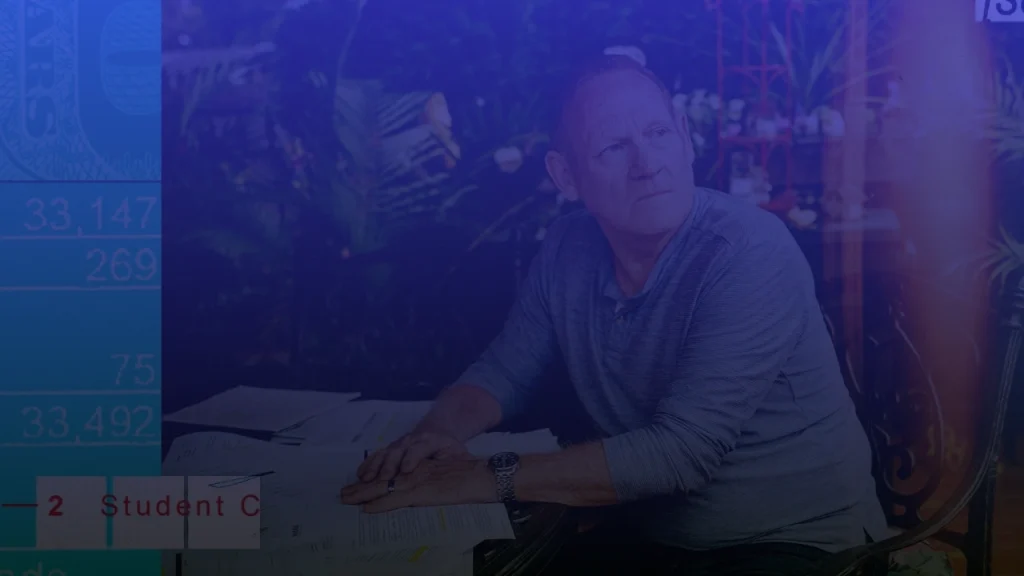
Donald Knierim, a 71-year-old retiree who worked for Chicago’s commuter railway Metra, believed his federal student loans were forgiven. His StudentAid.gov account told him so. He retired. Months later, the Department of Education reclassified 15 previously credited payments as nonqualifying, and his balance came back.
His story is now part of a federal lawsuit. On October 30, 2026, the American Federation of Teachers (AFT), AFT President Randi Weingarten and nine public-service workers filed Weingarten v. McMahon against the U.S. Department of Education and Education Secretary Linda McMahon in the U.S. District Court for the District of Columbia. It is a putative class action, meaning the plaintiffs want the court to certify nationwide classes, but no class has been certified.
One distinction matters for accuracy: Knierim is not one of the nine individually named plaintiffs. The complaint describes an affected AFT member as “Donald K.,” and reporting from Business Insider identifies him as Knierim and as a declarant supporting the case.
This is not a cash settlement. The lawsuit asks a court to make the Department follow the Public Service Loan Forgiveness (PSLF) rules for borrowers who already earned forgiveness.
Quick Facts: Weingarten v. McMahon (Knierim PSLF Lawsuit)
| Item | Detail |
| Case | Weingarten v. McMahon, No. 1:26-cv-03826 |
| Court | U.S. District Court for the District of Columbia |
| Filed | October 30, 2026 |
| Plaintiffs | American Federation of Teachers, AFT President Randi Weingarten and nine individual public-service borrowers |
| Defendants | U.S. Department of Education and Education Secretary Linda McMahon |
| Donald Knierim’s role | Affected borrower (“Donald K.” in the complaint); declarant per Business Insider; not a named plaintiff |
| Class status | Putative class action; no class certified |
| Money available | No settlement, no settlement fund, no claim form, no claim deadline |
| Main laws cited | 20 U.S.C. § 1087e(m); Administrative Procedure Act, 5 U.S.C. § 706(1) and § 706(2)(A) |
What Happened to Donald Knierim’s PSLF Forgiveness?
Knierim spent most of his career designing financial data systems for private companies. At age 60, he took a lower-paying job at Metra in 2015, partly because the position qualified for PSLF. Reporting puts his remaining loan balance at about $62,000. The complaint describes about $60,000.
His plan was simple: work 10 years in public service, make 120 qualifying payments and have the remaining Direct Loan balance canceled.
November 2025: Federal Student Aid says he is done
Around November 9, 2025, the Department sent Knierim a notice saying he had met the requirements. His StudentAid.gov account displayed this message:
“Congratulations! You’ve satisfied your obligation, and no additional payments are required for this loan.”
The account also showed 120 qualifying payments with none remaining. He submitted his retirement notice and left Metra in 2025.
December 2025: The message changes
In December 2025, the account language changed. It said he had reached 120 payments but might still need to meet additional requirements, and the Department asked for more information. Reaching 120 on an online tracker is not the same as a completed forgiveness determination, which still requires an eligibility review.
January 2026: The rejection
According to the AFT complaint, Knierim received a rejection notice in January 2026 that identified two previously counted months as nonqualifying, even though he had made the same payments in other months that continued to count.
The 15-payment reversal
Business Insider later reported that 15 payments previously counted toward his forgiveness were changed to nonqualifying. That left him needing at least another 18 months of payments at about $470 a month, according to that reporting. The complaint, by contrast, says the Department was requiring about $683 a month.
The public materials do not reconcile the “two months” in the complaint with the “15 payments” in Business Insider, or the $470 and $683 monthly figures. They are attributed separately here and should not be read as identical statements. Check his actual loan statement before treating either figure as his current bill.
Why Did the Department of Education Reverse Knierim’s PSLF Payment Credits?
According to Knierim’s account to Business Insider, his servicer told him some payments made under Temporary Expanded Public Service Loan Forgiveness (TEPSLF) did not qualify because they were below the required payment amount. Congress created TEPSLF in 2018 appropriations legislation as an extra path to forgiveness for borrowers who did not meet the original PSLF payment-plan rules but met specific alternative conditions.
Making a payment every month does not by itself earn PSLF credit. The payment has to meet the program’s requirements under the borrower’s repayment plan.
Business Insider also reported that the Department said it has been correcting accounts after coding errors tied to earlier administration of the program. That sets up two positions:
- Knierim’s position: He relied on his payment history, his servicer’s guidance and an official dashboard that said his obligation was satisfied.
- The Department’s position: Some earlier credits were recorded incorrectly and had to be corrected to match actual PSLF eligibility rules.
A reversal does not automatically prove wrongdoing. But a government confirmation of 120 payments makes the accuracy, explanation and timing of later changes a fair subject for a court.
How Is Donald Knierim Connected to the AFT Lawsuit Against Linda McMahon?
The complaint uses Knierim’s experience as an example of what happens when previously recognized qualifying payments are removed after a borrower believes the requirements are met. Reporting identifies him as a declarant, which means he provided a sworn statement supporting the case.
For the full breakdown of the proposed classes and the court case, read our existing article: PSLF Lawsuit 2026, AFT, Randi Weingarten and Borrowers Sue Education Secretary Linda McMahon Over Delayed Buyback Applications, Lost Payment Credits and Withheld Forgiveness.
What Is the AFT Asking the Court to Order in Weingarten v. McMahon?
The complaint describes three problems.
1. Restoring PSLF payments the Department removed
The plaintiffs allege the Department took away qualifying payments that borrowers had been told counted. Knierim is one example. Another is Elizabeth Schoepflin, a New York school speech-language pathologist. She had been told she had 119 of the required 120 payments. In August 2026 her account was reportedly reduced by 14 months, leaving her at 105 qualifying payments at that time.
2. Processing delayed PSLF Buyback applications
The lawsuit cites Department reporting showing about 88,000 Buyback applications pending as of April 30, 2026. AFT has described the backlog as nearly 90,000. The figure counts applications, not necessarily unique borrowers, because some people may have filed duplicates.
3. Counting recent qualifying payments that never posted
The complaint alleges some borrowers made payments throughout 2026 that never appeared in their PSLF trackers. Without an accurate count, a borrower may not know whether they have reached 120 payments, can request Buyback or can apply for final forgiveness.
What Does PSLF Buyback Have to Do With the Knierim Lawsuit?
Buyback is part of the broader case, but it is not the same problem Knierim describes. The program lets eligible borrowers pay for certain past months spent in deferment or forbearance so those months count toward the 120-payment requirement.
Under current Federal Student Aid guidance, borrowers generally need:
- 120 months of certified qualifying employment.
- Eligible Direct Loans with an outstanding balance.
- Certified qualifying employment covering the months they want to buy back.
- Eligible deferment or forbearance months for which they are seeking credit.
If approved, the borrower receives an agreement stating the amount to pay, and the full amount generally must be received within 90 days. Borrowers must keep making regular payments while a Buyback request is pending.
Knierim’s reported problem is that payments already credited were later removed, so he is not simply waiting on a Buyback decision. The lawsuit covers both issues because either can keep a borrower short of 120 payments.
For another development affecting borrowers who lost time during repayment-plan forbearance, see our SAVE Plan Lawsuit 2026: What 7 Million Borrowers Must Do Now.
How Much Could Donald Knierim Owe After the PSLF Reversal?
Using the Business Insider figures, 18 additional payments at about $470 equals $8,460. Using the complaint’s figure of about $683 a month, the same 18 months would equal $12,294. Neither number should be treated as confirmed without his loan statement.
Knierim reportedly cannot return to his old job. He is caring for his wife, who has serious health problems, and lives on a fixed retirement income. He told Business Insider the added payments could put real pressure on the household.
Did Donald Knierim Default on His Student Loans?
No default has been reported. According to Business Insider’s November 1 report, Knierim spent months contacting Federal Student Aid and his servicer. He also sent a letter offering to pay any shortfall in his earlier monthly payments and says he got no answer. Worried that further payments might complicate his forgiveness case, he stopped paying. His account became delinquent and he faced a possible default in November 2026. His forbearance request was approved days before that point, and his PSLF reconsideration request remains pending.
Delinquency begins when a scheduled payment is missed. Default comes later under federal loan rules. A pending forgiveness request or lawsuit does not make it safe to stop paying without written confirmation of your status. Defaulted federal student loans can expose borrowers to federal collection tools, including Treasury offset of certain federal payments (31 U.S.C. § 3716) and administrative wage garnishment (20 U.S.C. § 1095a). Anyone in a similar position should confirm their loan status with Federal Student Aid and their servicer in writing.
What Has the Department of Education Said About the PSLF Lawsuit?
The Department has not accepted the lawsuit’s allegations. In earlier reporting, a spokesperson said the Department is committed to crediting every qualifying payment properly. In response to the newer reporting, Department spokesperson Ellen Keast said Buyback requires case-by-case reviews and extensive paperwork, and that Federal Student Aid has begun moving this work to loan servicers to streamline it. The spokesperson also criticized AFT for filing suit.
These are public statements, not a filed legal response in the new case. The court will have to examine the records, program rules and agency actions before deciding the allegations.
Which Laws Apply to the Donald Knierim PSLF Lawsuit?
1. Higher Education Act, 20 U.S.C. § 1087e(m)
This is the core PSLF statute. It provides for cancellation of the remaining balance on eligible Direct Loans after a borrower makes 120 qualifying monthly payments while working full time in qualifying public service. The plaintiffs argue the Department must honor that entitlement when the conditions are met.
2. PSLF regulations, 34 C.F.R. § 685.219
This regulation sets out the program’s definitions and rules, including qualifying employment, qualifying repayment plans and what counts as a qualifying payment. It is where disputes over payment amounts and eligibility are decided in practice.
3. Administrative Procedure Act, 5 U.S.C. § 706(1)
This section lets a court compel agency action that has been unlawfully withheld or unreasonably delayed. It is the legal hook for the Buyback backlog and delayed forgiveness decisions.
4. Administrative Procedure Act, 5 U.S.C. § 706(2)(A)
This section lets a court set aside agency action that is arbitrary, capricious, an abuse of discretion or otherwise not in accordance with law. The plaintiffs argue that removing previously credited payments without a rational, explained process fits that standard.
5. Fifth Amendment due process
The complaint, as described in public reporting, also raises a due-process theory: that borrowers whose credits were removed did not get adequate notice and a chance to challenge the decision. A court has not ruled on it.
6. Federal Rule of Civil Procedure 23
Rule 23 governs class actions in federal court. Plaintiffs must show, among other things, that the proposed class is large enough, shares common legal questions, and is represented by plaintiffs with typical claims. A class seeking court orders against a federal agency generally proceeds under Rule 23(b)(2). Until a judge certifies a class, this remains a putative class action.
Important: These are claims in a complaint, not findings by a court that the Department violated any law.
Who Could Be Covered by the Putative Class Action in Weingarten v. McMahon?
The complaint asks the court to certify three nationwide classes.
| Proposed class | Who could be affected |
| PSLF Buyback Class | Eligible borrowers whose Buyback requests have not been processed within a reasonable time |
| PSLF Clawback Class | Borrowers whose previously credited qualifying payments were removed |
| Withheld Payments Class | Borrowers whose recent qualifying payments have not posted, delaying forgiveness or Buyback eligibility |
No class has been certified. Filing a putative class action does not automatically make every PSLF borrower a class member. A borrower would have to fit whatever class definition the court eventually approves.
Will Donald Knierim Get a Settlement From the Department of Education?
No. There is no verified separate lawsuit by Knierim against the Department. His situation is part of the AFT case, which does not seek a cash payout for him or a damages fund for borrowers.
According to the complaint, the plaintiffs are seeking:
- A declaration that the Department violated the Administrative Procedure Act.
- Timely processing of eligible Buyback applications.
- Restoration of qualifying payments that were unlawfully removed.
- Accurate posting of qualifying payments.
- Loan cancellation for borrowers who have met the PSLF requirements.
- Attorney fees and other appropriate relief.
There is no approved settlement, administrator, payment amount or public claim form. This is not the first time AFT has taken the Department to court over PSLF. Its earlier case, Weingarten v. DeVos, ended in a 2021 settlement that created the PSLF reconsideration process, which remains relevant to borrowers disputing their payment counts.
What Should PSLF Borrowers Do if Qualifying Payments Disappear?
Knierim’s experience shows why borrowers should keep their own records instead of relying only on an online counter.
- Check the tracker. Log in to StudentAid.gov and review which months are marked qualifying or nonqualifying.
- Save screenshots. Keep dated images of payment counts, “Congratulations” messages and account notices.
- Keep payment records. Save bank statements, servicer statements and confirmation numbers.
- Confirm employment certification. Make sure every month you are claiming is covered by certified qualifying employment.
- Ask for a written explanation. When a payment is removed, ask the servicer and Federal Student Aid to identify the month and the reason.
- Use reconsideration. Check whether you can file a PSLF reconsideration request or another review.
- Do not stop paying without confirmation. Federal Student Aid says borrowers must keep making regular payments while a Buyback request is under review.
- Know your outside options. Some forbearance periods may not count toward PSLF, so ask before accepting one. State student-loan ombudsman offices and your congressional representative can also help with servicing problems.
Borrowers with servicing problems may also want to read our MOHELA Class Action, Borrowers Sue Over Overcharges, Ignored Discharges, and PSLF Delays, which covers separate litigation over federal student loan servicing.
Frequently Asked Questions About the Donald Knierim PSLF Lawsuit
Why was Donald Knierim’s PSLF forgiveness reversed?
The Department later questioned whether previously credited payments qualified. Reporting says some payments under TEPSLF were treated as below the required amount. Knierim says he followed his servicer’s instructions and was told he qualified.
How many payments were taken from Donald Knierim’s PSLF count?
Business Insider reported 15 payments were changed to nonqualifying. The AFT complaint’s description of “Donald K.” refers to a January 2026 rejection identifying two months. The public records do not fully reconcile the figures.
How much student loan debt does Donald Knierim still owe?
The complaint describes about $60,000. Earlier media reporting cited about $62,000.
Is Donald Knierim a named plaintiff in Weingarten v. McMahon?
No. The complaint refers to him as “Donald K.” in its facts, and Business Insider reports he is a declarant. The nine named borrowers are separate plaintiffs.
Who filed Weingarten v. McMahon against the Department of Education?
The American Federation of Teachers, AFT President Randi Weingarten and nine public-service borrowers filed it on October 30, 2026, in the U.S. District Court for the District of Columbia.
Can other PSLF borrowers join the Weingarten v. McMahon putative class action?
Class certification has not been granted. The proposed classes cover Buyback delays, removed payment credits and unposted qualifying payments.
Will Weingarten v. McMahon automatically forgive student loans?
No. A filing does not cancel loans. The plaintiffs are asking the court to order the Department to honor PSLF requirements for borrowers who qualify.
Can borrowers receive money from the Weingarten v. McMahon lawsuit?
The complaint does not seek a general cash compensation fund. It primarily seeks declaratory and injunctive relief.
Has the Department of Education admitted it made PSLF payment-credit mistakes?
Reporting says the Department described certain account corrections as necessary because of coding errors. It disputes the broader allegations and says qualifying payments should be credited properly.
Is there a deadline to join the Knierim PSLF lawsuit?
No. There is no public registration deadline or official claim form.
What Happens Next in Weingarten v. McMahon?
The case is at an early stage. Developments to watch include the Department’s response, any motion challenging the putative class, the court’s handling of the requested relief and whether the payment-credit problems are fixed through administrative action instead.
Knierim’s own reconsideration request is also pending. A favorable decision could restore his forgiveness without waiting for the whole case to finish. For other public employees, the central question is whether the Department will restore removed payments and process pending requests in line with federal law.
His story points to a wider problem: borrowers can make years of payments, receive official confirmation, plan retirement around it and then watch the payment history change.
As of November 2, 2026, there is no court ruling, certified class, settlement or guaranteed forgiveness resulting from this lawsuit.
Sources and Court Records
- AFT: Weingarten v. McMahon, Class Action Filed October 30, 2026
- Federal Complaint: Weingarten v. McMahon, No. 1:26-cv-03826, Document 1
- Business Insider: He Retired After Student-Loan Forgiveness. Then His Payments Came Back
- Business Insider: A Retired Borrower Is Fighting for Public Service Debt Relief
- The Washington Post: Teachers Union Sues Trump Over Public Service Loan Forgiveness
- Education Week: Teachers’ Union Sues Trump Administration Over Student Loan Forgiveness
- Federal Student Aid: Public Service Loan Forgiveness Buyback
- 20 U.S.C. § 1087e(m): Public Service Loan Forgiveness
- 34 C.F.R. § 685.219: Public Service Loan Forgiveness Program
- 5 U.S.C. § 706: Scope of Review Under the Administrative Procedure Act
- AFT: 2021 Weingarten v. DeVos Settlement
Legal disclaimer: AllAboutLawyer.com is an independent U.S. legal information website, not a law firm. This article is not legal advice, and the allegations against the Department of Education have not been proven in court.
Researched and written by Israr Ahmad, legal content researcher and founder of AllAboutLawyer.com. All facts verified against the AFT press release, the federal complaint in Weingarten v. McMahon, Business Insider reporting and Federal Student Aid guidance (studentaid.gov), as of November 2, 2026. Last Updated: November 2, 2026.
About the Author
Israr Ahmad is a legal content researcher with 4+ years of experience covering class action settlements and consumer rights cases. He has researched and published coverage of 2,500+ settlements using verified court records, settlement administrator filings, and government sources. Learn more about Israr.