
Democrats Push ACA Tax Credit Extension After the Midterms, Will Obamacare Premiums Drop in 2027?
Democrats won both the House and the Senate in the November 3 midterms, and restoring the expired Affordable Care Act (ACA) tax credits is at the top of their list. But winning an election does not change federal law. As of November 17, 2026, the enhanced ACA premium tax credits have not been restored.
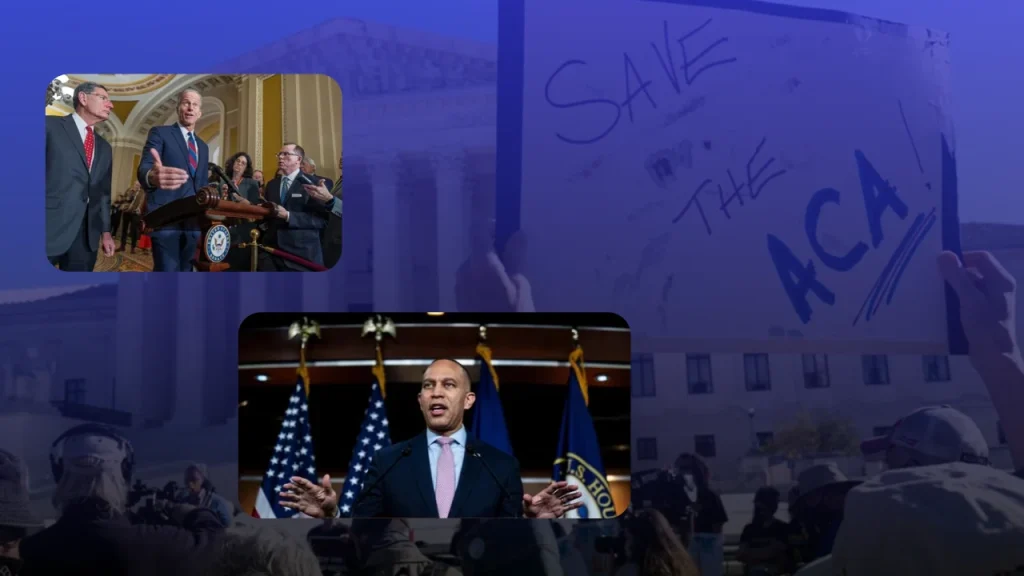
House Democratic leader Hakeem Jeffries has made the credits a priority for the first 100 days of the new Congress, which convenes in January 2027. President Donald Trump still holds the veto pen, and he has said he would block Democratic legislation. That leaves Marketplace shoppers with a practical problem: 2027 open enrollment is already running.
If you want coverage on January 1, 2027, plan to enroll by December 15, 2026. Do not wait for Congress.
ACA Tax Credits 2027: Quick Facts
| Question | Current answer |
| Have Democrats proposed restoring the enhanced credits? | Yes |
| Have the enhanced credits been restored? | No |
| When did the enhanced credits expire? | December 31, 2025 |
| Who controls Congress after the 2026 midterms? | Democrats, in both the House and Senate (new Congress starts January 2027) |
| Who is president? | Donald Trump |
| Did the House pass an extension earlier? | Yes, on January 8, 2026, by a vote of 230–196 |
| Did that bill become law? | No |
| Has Trump agreed to a deal? | No final agreement announced |
| 2027 open enrollment began | November 1, 2026 |
| Deadline for January 1 coverage (HealthCare.gov) | December 15, 2026 |
| HealthCare.gov enrollment closes | January 15, 2027 |
| General subsidy income ceiling under current law | 400% of the federal poverty level |
What Are Democrats Planning After the 2026 Midterms?
Jeffries laid out his agenda in a November 4 letter announcing his run for speaker. Four domestic priorities stand out:
- Restoring the enhanced ACA premium tax credits.
- Reversing Medicaid funding and coverage cuts.
- Restoring Supplemental Nutrition Assistance Program (SNAP) funding.
- Easing household costs through tax and affordability policy.
These programs are linked politically but run under different laws. Marketplace credits help people who buy their own insurance. Medicaid covers qualifying low-income people. SNAP helps households buy food. Passing a bill on one does not automatically change the others.
Have Democrats Already Extended the ACA Tax Credits?
No. A bill passed the House, but it never became law.
On January 8, 2026, the House approved H.R. 1834, the Breaking the Gridlock Act, which carried a three-year extension of the enhanced credits. It passed 230 to 196, with 17 Republicans joining 213 Democrats.
That vote matters because it shows some Republicans will support an extension even when their own leadership does not. It gives Democrats a starting point. But a bill that dies at the end of a Congress does not carry over on its own. Lawmakers would have to introduce and pass legislation again in the new session.
What Are Enhanced ACA Premium Tax Credits?
The ACA created premium tax credits to help eligible people pay for plans bought through federal or state Marketplaces. The credit lowers the monthly premium for an eligible plan.
The American Rescue Plan Act of 2021 made that help more generous, and Congress later extended the boost through December 31, 2025. During that time, many households paid a smaller share of their income toward premiums, and some people earning above 400% of the federal poverty level could still qualify.
What changed when the enhanced credits expired?
Many people now have to pay a larger share of their income toward benchmark coverage. Households above 400% of the federal poverty level generally no longer qualify for the credit at all. The IRS has confirmed that income limits and contribution percentages changed starting in 2026.
Did all Obamacare subsidies disappear?
No. The basic ACA premium tax credit still exists. What expired was the temporary enhancement. Eligible people within the income limits can still get help. Headlines saying Obamacare subsidies were wiped out are misleading.
How Much Will Obamacare Cost in 2027 Without an Extension?
Your price depends on your age, location, income, household size, insurer, and plan. Still, the national numbers point up. KFF’s November 2026 analysis found that average benchmark Silver premiums for 2027 rose 13%, after a 26% jump from 2025 to 2026.
That does not mean your own bill will rise 13%. What you pay depends on how much tax credit you get.
Related article: Grid Shutdown November 17, 2026 | Is the US Power Going Out? Simpsons Prediction, Microsoft Outage and FEMA Alert Explained
How much of your income could go toward premiums?
The IRS has published the 2027 applicable percentage table. These figures feed into the tax credit formula for the benchmark plan. They are not a flat premium for every plan.
| Household income (% of FPL) | 2027 applicable contribution range |
| Below 133% | 2.15%, where otherwise eligible |
| 133% to below 150% | 3.23%–4.30% |
| 150% to below 200% | 4.30%–6.78% |
| 200% to below 250% | 6.78%–8.66% |
| 250% to below 300% | 8.66%–10.22% |
| 300% through 400% | 10.22% |
| Above 400% | Generally no federal premium tax credit |
Picking a cheaper or pricier plan than the benchmark changes what you actually pay.
Who would benefit most from restoring the enhanced credits?
- Middle-income families: Some would qualify for larger credits and pay less each month.
- Self-employed workers: Freelancers, contractors, and small-business owners who buy their own coverage could see lower net premiums.
- Adults 50–64: Premiums are age-rated, so older people not yet on Medicare can face very high unsubsidized prices in some regions.
The size of any benefit would depend on the final bill and on your own circumstances.
Why Does the 400% Income Limit Matter?
The return of the 400% limit brings back what many people call the subsidy cliff. A household at or just under the line may qualify for a credit. A household just over it generally gets nothing.
A small raise or a good freelance month can push you over the line and make you ineligible for the entire credit when you file taxes. That is a real risk for self-employed people and anyone with irregular income.
The limit is tied to household size and the current poverty guidelines, so there is no single dollar figure for everyone. Use HealthCare.gov or your state Marketplace to get your own numbers.
Could Trump Agree to Restore ACA Subsidies?
Possibly, but nothing is final.
Trump has said he would block Democratic legislation if they took Congress. He has also, at other times, suggested some kind of extension might be needed, and he has favored stronger anti-fraud measures. Vice President JD Vance has raised concerns about how the subsidy system works. Republicans who want changes have pushed for tighter verification, income limits, and other safeguards, citing federal cost and the risk of improper enrollment.
Democrats counter that restoring the credits would lower household costs and keep people from losing coverage. Polling has also shown majority support for extending them.
What could a compromise look like?
Past negotiations have touched on:
- A limited-time extension instead of a permanent one.
- Stricter income and eligibility checks.
- New income limits for higher earners.
- Changes to zero-premium plans.
- Disputes over abortion-related funding rules.
These are ideas from earlier talks. They are not terms of an approved deal.
Trump would have to sign any bill, or Congress would need enough votes to override a veto. Ordinary Senate legislation can also face a 60-vote threshold. Budget reconciliation may offer another route for qualifying tax and spending provisions, but it comes with its own Senate rules. Democrats could also try to attach the credits to must-pass bills such as government funding, which would force negotiations.
What Would an ACA Tax Credit Extension Cost?
In September 2025, the Congressional Budget Office estimated that permanently extending the enhanced credits would add about $350 billion to deficits from 2026 through 2035. It also estimated about 3.8 million more insured people in 2035 compared with its baseline.
Supporters say the cost buys real affordability and coverage. Critics say it raises deficits, helps some higher-income households, and sends more federal money to private insurers. A three-year extension or a narrower compromise would cost less, so the $350 billion figure should not be treated as the price of every possible bill.
What About Medicaid Cuts and Work Requirements?
Restoring the ACA credits is only one part of the Democratic agenda. The 2025 federal reconciliation law added Medicaid changes, including work-related eligibility rules for certain adults. Qualifying adults generally must show at least 80 hours a month of work, education, community service, or other approved activity unless an exemption applies.
Did the administration delay the Medicaid work requirements?
On November 13, 2026, the Centers for Medicare & Medicaid Services announced an optional hold-harmless period through June 30, 2027. States that use it can hold off on denying or ending coverage solely because someone missed the work requirement. The requirement itself has not been repealed, states can choose different approaches, and coverage can still end for other reasons.
For more detail, read our guide: Medicaid Work Requirements Delayed Until July 2027 in States That Opt In, Can You Still Lose Your Medicaid Coverage?
Does extending ACA credits reverse Medicaid cuts?
No. The Marketplace credit falls mainly under Internal Revenue Code § 36B. Medicaid eligibility and funding sit under separate laws. Congress would have to act on Medicaid separately, which is why Jeffries named both goals.
Other Legal Changes Marketplace Customers Should Know
1. Repayment caps on excess advance credits are gone
Under the 2025 reconciliation law, the limits that once protected some taxpayers from repaying the full excess of their advance premium tax credits ended starting with tax year 2026. If your actual income qualifies you for less help than you received in advance, you generally must repay the full difference when you file. That can mean a large tax bill. The IRS recommends updating your Marketplace income estimate whenever your situation changes.
2. Immigration-status limits start in 2027
According to HealthCare.gov, starting January 1, 2027, premium tax credit eligibility is limited to certain immigration categories, including lawful permanent residents, Cuban or Haitian entrants, and eligible Compact of Free Association migrants. Other lawfully present people may still be able to buy Marketplace coverage but not receive federal premium savings. Check the rules for your specific status.
These changes are separate from the expiration of the enhanced credits.
What Should You Do Before the 2027 Enrollment Deadlines?
| Date | What it means |
| November 1, 2026 | 2027 open enrollment begins |
| December 15, 2026 | Deadline for January 1 coverage on HealthCare.gov |
| January 1, 2027 | Coverage starts for timely December enrollees who pay their first premium |
| January 2027 | New Congress takes office |
| January 15, 2027 | HealthCare.gov open enrollment ends |
| February 1, 2027 | Coverage generally starts for December 16–January 15 enrollees |
State-run Marketplaces may use different dates.
Five steps to protect your coverage
- Go to HealthCare.gov or your state Marketplace and review 2027 plans.
- Update your estimated 2027 income and household details.
- Compare total cost, not just the premium: deductibles, copays, drug coverage, and provider networks.
- Check Medicaid, CHIP, and cost-sharing reduction eligibility, not only premium credits.
- Enroll before the deadline and pay your first premium so coverage actually starts.
If Congress restores the enhanced credits later, how and when you could change your assistance would depend on the law’s text and Marketplace guidance. Do not count on automatic refunds for premiums you already paid.
Are ACA Tax Credits the Same as a Settlement or Refund?
No. ACA credits are federal assistance for qualifying health coverage. They are not class action payments, and there is no claim form that lets every Marketplace customer collect the expired credits.
For example, the $2.67B Blue Cross Blue Shield Antitrust Settlement, Are Your Payments Coming? — In re Blue Cross Blue Shield Antitrust Litigation, MDL No. 2406 is a separate antitrust case against health insurers and has no direct link to the ACA credit debate.
How Would Democrats Pay for It?
Some Democrats have floated higher taxes on corporations and wealthy households. Others point to borrowing or spending trade-offs. None of it is settled, and no financing plan has been enacted.
The 2025 reconciliation law paired tax changes with cuts to projected spending on some health and assistance programs, so reversing parts of it could mean revisiting both taxes and spending. For background, see Does the Big Beautiful Bill Raise Taxes on the Poor 2026?
What Happens Next in Congress?
Watch for whether Democratic leaders introduce a specific bill once the new Congress convenes. The big open questions:
- Will it be a temporary extension or a permanent restoration?
- Will it bring back the removal of the 400% income cap?
- Will Republicans demand new verification or eligibility limits?
- Will Trump sign it or veto it?
- Could new rules apply during the 2027 coverage year?
Until a bill passes both chambers and becomes law, today’s rules apply.
Could the credits be restored retroactively?
Congress could write a retroactive date into a tax bill, but that is not guaranteed. What it would mean for premiums already paid, advance payments, and tax reconciliation would depend on the final language and federal guidance. Do not assume higher premiums will be refunded.
Frequently Asked Questions About ACA Tax Credits in 2027
Are the enhanced ACA tax credits extended for 2027?
No. As of November 17, 2026, the enhanced credits have not been restored. The regular premium tax credit remains available to qualifying households.
Did Democrats pass a healthcare subsidy bill?
The House passed a three-year extension on January 8, 2026, but it did not become law.
Will Obamacare premiums go down in 2027?
Not automatically. Current 2027 premiums and subsidy rules stay in place until Congress changes them. Any drop would depend on what a future bill says and when it takes effect.
Will Trump sign an ACA subsidy extension?
He has not committed to one. He has said he would block Democratic legislation, and he has also signaled he might accept a limited deal with tighter verification.
Who loses ACA tax credits above 400% of the poverty level?
Under current rules, households above 400% of the federal poverty level generally cannot get the premium tax credit. The enhanced credits had removed that cap.
When does 2027 Obamacare enrollment end?
HealthCare.gov enrollment ends January 15, 2027, and December 15, 2026 is the deadline for coverage starting January 1. State Marketplace dates can differ.
Are Medicaid cuts canceled because Democrats won Congress?
No. Elections do not repeal laws. Congress must pass new legislation, or a qualifying court or agency action must change the rules.
The Bottom Line
Democrats’ midterm wins give them real leverage to pursue restored ACA credits, and some Republicans voted for an extension earlier this year. But Trump is still in office, the Senate has procedural hurdles, cost is a live fight, and no enhanced credit extension has become law.
For now, treat the enrollment deadline as your deadline. Review your plan options by December 15, 2026, if you want coverage starting January 1, 2027.
Official Sources and Legal References
- Rep. Hakeem Jeffries — November 4, 2026 Letter Announcing His 2027 Agenda
- U.S. House Clerk — January 8, 2026 Vote on H.R. 1834
- IRS — Premium Tax Credit Questions and Answers
- IRS — 2027 Premium Tax Credit Applicable Percentages
- CMS — 2027 Marketplace Plans and Prices
- HealthCare.gov — Open Enrollment Dates and Deadlines
- HealthCare.gov — Savings on Monthly Premiums
- CBO — Estimated Effects of Extending Enhanced Premium Tax Credits
- CMS — November 13, 2026 Medicaid Work Requirement Transition Announcement
- IRS — Repayment Limits for Excess Advance Premium Tax Credits Eliminated
- NPR — Democrats Win Full Control of Congress (November 4, 2026)
Byline: AllAboutLawyer.com Legal Content Research Team
Last verified: November 17, 2026
Editorial status: Legislative proposal and political negotiations. No enacted extension of the enhanced credits.
Disclaimer: This article offers general legal, tax, and health insurance information, not individualized legal, tax, or financial advice. We are not attorneys. Eligibility, credit amounts, and deadlines depend on current law and your Marketplace, so confirm details with HealthCare.gov, your state Marketplace, or a licensed professional.
About the Author
Israr Ahmad is a legal content researcher with 4+ years of experience covering class action settlements and consumer rights cases. He has researched and published coverage of 2,500+ settlements using verified court records, settlement administrator filings, and government sources. Learn more about Israr.