
Blue Diamond Smokehouse Almonds Class Action, Why New York Shoppers Are Suing Over the Label
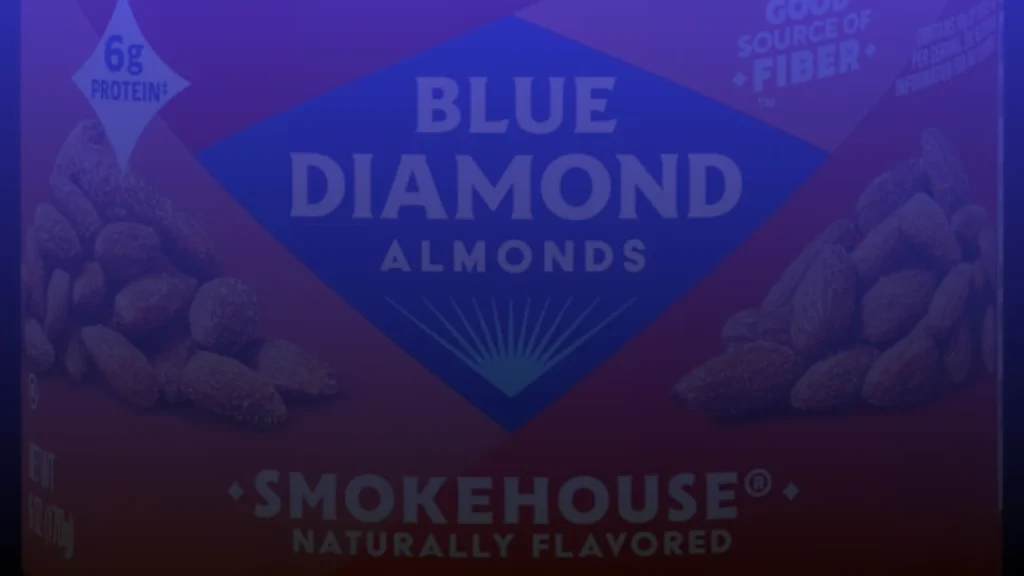
Blue Diamond Growers faces a new federal class action accusing the company of misleading consumers by selling its popular Smokehouse Almonds as if they were smoked over burning wood, when their smoky taste allegedly comes from added flavoring.
The lawsuit, filed November 13, 2026, by New York consumer Pablo Lopez, alleges the product’s prominent “Smokehouse” branding leads shoppers to believe the almonds go through a traditional smoking process.
Blue Diamond’s own ingredient list includes “natural hickory smoke flavor.” Whether the packaging unlawfully misleads a reasonable shopper is a separate legal question that no court has decided in this case.
The case is Lopez v. Blue Diamond Growers, No. 1:26-cv-07342, in the U.S. District Court for the Eastern District of New York.
There is no certified class, settlement, refund program, or claim form, and the allegations are unproven.
Blue Diamond Smokehouse Almonds Lawsuit: Quick Facts
| Detail | Information |
| Lawsuit | Lopez v. Blue Diamond Growers |
| Case number | 1:26-cv-07342 |
| Filed | November 13, 2026 |
| Court | U.S. District Court, Eastern District of New York |
| District judge | Nina Gershon |
| Magistrate judge | James R. Cho |
| Plaintiff | Pablo Lopez |
| Defendant | Blue Diamond Growers |
| Product | Blue Diamond Smokehouse Almonds |
| Main allegation | Misleading “Smokehouse” labeling |
| Disputed ingredient | Natural hickory smoke flavor |
| State laws implicated | New York General Business Law §§ 349 and 350 |
| Proposed class | New York purchasers (reported; not certified) |
| Class certification | Not granted |
| Settlement | None |
| Claim deadline | None |
| Status | Newly filed putative class action |
The federal docket and other sources for this article are listed in the Sources section at the end.
Why Is Blue Diamond Being Sued Over Smokehouse Almonds?
The lawsuit challenges the gap between the impression created by the front of the package and how the almonds allegedly get their smoky taste. Blue Diamond has sold Smokehouse Almonds for decades, known for a bold, salty, smoky flavor.
A smokehouse is traditionally a structure where food is exposed to smoke, often from burning hardwood. Lopez alleges ordinary shoppers may reasonably believe the almonds were smoked that way, when the smoky taste instead comes from added natural hickory smoke flavor. The complaint challenges whether the branding adequately explains that difference.
What Does the Package Say?
Blue Diamond’s product website lists these ingredients: almonds, sunflower oil, sea salt, maltodextrin, natural hickory smoke flavor, yeast, hydrolyzed corn and soy protein, and other natural flavors. The smoke flavor and several others fall in a group making up less than 1% of the product.
The ingredient list is not the disputed fact. The lawsuit asks whether the prominent name and presentation could create a misleading impression before shoppers read the ingredients.
Does Blue Diamond Actually Smoke Its Almonds?
Blue Diamond’s website confirms the almonds contain natural hickory smoke flavor but does not publicly detail every manufacturing step. The company’s FAQ describes the flavor as derived from burning hickory wood, which is different from saying the almonds themselves are smoked over hickory.
So the legal question is not simply whether smoke flavor is in the ingredients. It is whether a reasonable buyer would understand “Smokehouse” to promise an actual smoking process.
What Is Natural Hickory Smoke Flavor?
It is a flavoring ingredient that gives food a smoky taste without necessarily exposing the finished food to smoke in a smokehouse. Smoke flavorings can be made by burning or heating wood, collecting the flavor-producing components, and processing them into a food-grade preparation.
Is Natural Smoke Flavor the Same as Artificial Flavor?
Not necessarily. The FDA distinguishes natural from artificial flavoring based on source, composition, processing, and function. Under 21 C.F.R. § 101.22, a natural flavor can include qualifying extracts, distillates, or products derived from specified natural materials, and industrial processing alone does not make a flavor artificial.
The regulation also contains specific rules about representations that food flavored with certain smoke preparations was actually smoked. It does not say every food with natural smoke flavor must be labeled artificially flavored. Whether Blue Diamond’s labeling meets the rules depends on the product’s actual composition and the provisions governing the disputed claims.
Has Blue Diamond Changed the Packaging?
According to reporting on the lawsuit, newer packaging adds a “Naturally Flavored” disclosure, and the complaint reportedly distinguishes older packaging without it. That could matter because courts look at the overall packaging when asking whether a reasonable shopper would be misled.
Shoppers should photograph the front and ingredient panel of any package they buy. Packaging can vary by size, retailer, and production date.
Who Could Qualify for the Class?
The complaint reportedly proposes a class of New York consumers who bought Smokehouse Almonds for personal or household use starting November 13, 2023. This is only a proposal. The court has not certified a class, set a final definition, or ordered notice to purchasers.
| Consumer question | Current answer |
| Bought Smokehouse Almonds in New York | Potentially within the proposed class |
| Bought them before November 2023 | Outside the reported proposed period |
| Bought them outside New York | Not automatically covered by this proposal |
| Have a receipt | Keep it in case it’s needed later |
| Can file a settlement claim | No |
| Guaranteed compensation | No |
Buying the product does not automatically show you were deceived or suffered a compensable loss.
What Laws Apply?
New York General Business Law § 349
Section 349 prohibits deceptive consumer-oriented business practices. A plaintiff generally must show the conduct was consumer-oriented, materially misleading, and caused a legally recognized injury. Lopez alleges the “Smokehouse” name could mislead buyers about how the product is made.
New York General Business Law § 350
Section 350 prohibits false advertising. In food-labeling cases, the product name, images, qualifying disclosures, and overall presentation can all matter. A claim does not succeed merely because an ingredient was not obvious from the front label.
FDA Food Labeling Rules
The federal Food, Drug, and Cosmetic Act (21 U.S.C. § 343(a)) bars false or misleading food labeling, and 21 C.F.R. § 101.22 governs flavor declarations. Consumers generally have no unrestricted private right to enforce FDA rules directly, and state claims must be weighed against federal preemption.
How Much Could New York Consumers Recover?
No amount has been approved. Under New York law, successful individual claims can potentially support statutory damages: § 349 generally allows actual damages or $50, whichever is greater, and § 350-e allows actual damages or $500, whichever is greater, subject to the claim’s requirements. The complaint reportedly seeks statutory damages alongside other relief.
That does not mean every purchaser will receive a set amount. The court must first decide whether the plaintiff has a viable claim, whether a class can be certified, and whether injury and damages can be proven.
What Is a Price-Premium Claim?
A price-premium claim alleges consumers paid more because of a misleading representation. Here, the plaintiff argues shoppers may value almonds believed to be wood-smoked more than smoke-flavored ones. A court cannot just assume that caused overpayment, and the plaintiff may need pricing data, consumer evidence, or expert analysis. This issue has already been decisive in earlier Blue Diamond litigation.
What Happened in Earlier Smokehouse Almonds Lawsuits?
Clark v. Blue Diamond Growers (Illinois federal court)
In Clark, No. 1:22-cv-01591, a consumer alleged the company falsely suggested the almonds were smoked in a smokehouse. On February 20, 2026, U.S. District Judge Jorge L. Alonso denied class certification. The decision turned on the named plaintiff’s ability to represent other consumers: the court pointed to evidence that she may have known the almonds were smoke-flavored before some purchases, creating a defense specific to her. The court did not hold that Smokehouse Almonds advertising was lawful.
O’Connor v. Blue Diamond Growers (New York state court)
On July 10, 2026, New York Supreme Court Justice Andrea Masley dismissed O’Connor, Index No. 160511/2025, with prejudice. The court found the complaint did not adequately plead materially misleading labeling or legally sufficient injury, found the overall label did not plausibly create the alleged deception, and rejected an insufficiently supported price-premium allegation.
Colpitts v. Blue Diamond Growers (New York federal court)
An earlier federal case ended with judgment for Blue Diamond in 2023 because the plaintiff did not provide enough evidence of actual financial injury.
Courts have not uniformly accepted Smokehouse Almonds labeling claims. But Lopez involves a different plaintiff and a new complaint, and the earlier rulings do not automatically decide it.
Are Smokehouse Almonds Unsafe?
No. The lawsuit is a false-advertising and economic-loss dispute. It does not allege contamination and does not establish that the almonds are unsafe, and there is no recall.
Some related reporting raises questions about smoke flavorings in general. The European Food Safety Authority has identified potential genotoxicity concerns for eight specific smoke-flavoring preparations it reviewed. That does not show Blue Diamond’s flavoring is one of them, or that the almonds cause harm. A labeling allegation is not a safety warning.
Can You Join the Lawsuit or File a Claim?
Not through a settlement claim form. The case is at the initial complaint stage, with no certified class, court-approved administrator, or consumer filing deadline.
If you bought the product in New York, consider keeping:
- Receipts and digital purchase records
- Photos of the front and back of the packaging
- Product size and purchase dates
- Retailer order history
These may matter if the case later reaches certification or settlement. Beware of any website or email claiming you can file a claim for Blue Diamond almond money right now. No settlement exists, so such offers are unauthorized and potentially fraudulent. Never pay anyone to register for compensation.
What Happens Next?
The case is assigned to Judge Nina Gershon and Magistrate Judge James R. Cho. Blue Diamond will respond through the federal litigation process. Possible next steps include a motion to dismiss, discovery, and disputes over whether the proposed class meets Federal Rule of Civil Procedure 23. No court has ruled on the merits, and a new class action does not automatically lead to a settlement.
Frequently Asked Questions
Why is Blue Diamond being sued in New York? A New York consumer alleges the word “Smokehouse” misleads buyers into believing the almonds are traditionally wood-smoked, when the smoky taste allegedly comes from added flavoring.
Is natural hickory smoke flavor artificial? Not automatically. FDA rules distinguish natural and artificial flavors by source and characteristics.
Can New York buyers get a payment? No. There is no settlement and no approved claim form in the November 2026 Lopez case.
Is this a nationwide class action? The reported proposed class covers New York purchasers. It has not been certified.
Did Blue Diamond win the earlier lawsuits? It obtained favorable outcomes in several: a 2023 judgment in Colpitts, a February 2026 denial of class certification in Clark, and a July 2026 dismissal with prejudice in O’Connor. None decides Lopez.
Have the almonds been recalled? No recall has been announced, and the lawsuit is about labeling, not a product defect.
Why This Lawsuit Matters
The case raises a recurring consumer-law question: when does a product name become a misleading statement about how the food was made? The plaintiff says shoppers may associate “Smokehouse” with real wood smoking. Blue Diamond’s ingredient list openly names natural hickory smoke flavor, and earlier courts have accepted defenses to similar claims. The outcome will depend on the specific packaging, consumer expectations, and whether the plaintiff can show legally sufficient injury.
Bottom line: Blue Diamond faces a new putative class action in New York over its Smokehouse Almonds branding, but no court has found the packaging unlawful. No settlement money is available and no claim deadline exists.
Verification note: The November 13 docket and the earlier court decisions were verified. The full Lopez complaint was not available through the public docket interface reviewed, so its proposed class definition and packaging allegations are described as reported.
Legal disclaimer: This article provides general legal information, not individualized legal advice. AllAboutLawyer.com is not affiliated with Blue Diamond Growers, the plaintiff, the court, or the parties’ attorneys. The newly filed allegations are unproven.
Prepared by the AllAboutLawyer.com legal content research team using court records, company product disclosures, and applicable consumer-protection laws.
Related Articles
- Minute Maid Fruit Punch Class Action Lawsuit 2026, Why Coca-Cola Faces “100% Natural Flavors” Claims:
- Target Mac and Cheese Lawsuit, Good & Gather and Market Pantry “No Preservatives” Claims Challenged in Vaughan v. Target Corp.
- Magic Spoon Class Action Lawsuits, Allulose, “0g Total Sugars” Claims and the Latest Court Updates
Sources
- Lopez v. Blue Diamond Growers, No. 1:26-cv-07342, federal docket: https://dockets.justia.com/docket/new-york/nyedce/1:2026cv07342/554197
- Blue Diamond, Smokehouse Almonds product and ingredients: https://www.bluediamond.com/brand/blue-diamond/snack-almonds/flavor-forward/almond-smokehouse/
- Blue Diamond, official FAQ on Smokehouse flavor: https://www.bluediamond.com/faqs/
- O’Connor v. Blue Diamond Growers, New York state court dismissal, July 10, 2026: https://www.nycourts.gov/reporter/pdfs/2026/2026_32112.pdf
- Clark v. Blue Diamond Growers, class certification denial, February 20, 2026: https://law.justia.com/cases/federal/district-courts/illinois/ilndce/1:2022cv01591/413660/199/
- Colpitts v. Blue Diamond Growers, federal decision, 2023: https://law.justia.com/cases/federal/district-courts/new-york/nysdce/1:2020cv02487/534781/108/
- 21 C.F.R. § 101.22, flavoring and labeling regulations: https://www.ecfr.gov/current/title-21/chapter-I/subchapter-B/part-101/subpart-B/section-101.22
- New York General Business Law § 349: https://www.nysenate.gov/legislation/laws/GBS/349
- New York General Business Law § 350: https://www.nysenate.gov/legislation/laws/GBS/350
- European Food Safety Authority, smoke flavorings: https://www.efsa.europa.eu/en/topics/topic/smoke-flavourings
About the Author
Israr Ahmad is a legal content researcher with 4+ years of experience covering class action settlements and consumer rights cases. He has researched and published coverage of 2,500+ settlements using verified court records, settlement administrator filings, and government sources. Learn more about Israr.