
Costco Auto-renewal Class Action Lawsuit, Did Your Membership Renew Without Proper Notice?
A California consumer filed a class action lawsuit against Costco Wholesale Corp. in 2026, claiming the retailer automatically charged his credit card for a membership renewal without giving him the legally required advance notice or the information he needed to cancel. The lawsuit is in its early stages — no settlement has been reached. If Costco auto-renewed your membership and you felt blindsided by the charge, this case may be relevant to you.
Quick Facts
| Field | Detail |
| Case Name | George II v. Costco Wholesale Corp. |
| Case Number | 3:26-cv-02369 |
| Court | U.S. District Court, Northern District of California |
| Filed | 2026 |
| Defendant | Costco Wholesale Corp. |
| Plaintiff | Russel George |
| Plaintiff’s Attorney | Matthew Smith, Migliaccio & Rathod LLP |
| Laws Allegedly Violated | California ARL, False Advertising Law, CLRA, UCL |
| Membership Charged | Gold Star — $65 |
| Settlement Status | No settlement — litigation phase |
| Settlement Amount | TBD |
| Claim Deadline | TBD |
| Who May Qualify | Costco members who received auto-renewal notices outside California’s 45-day window, or noticed missing required disclosures |
| Payout Per Person | TBD |
What’s Happening Right Now
- The lawsuit was filed in 2026 in federal court in California and remains in its earliest stage — no class certification, no settlement, and no claim deadline has been set.
- The plaintiff seeks a jury trial and asks the court to award damages and injunctive relief on behalf of himself and all similarly situated Costco members.
- No settlement administrator has been appointed and no claim form is available at this time.
What the Costco Membership Renewal Lawsuit Is About
Plaintiff Russel George’s class action lawsuit claims Costco sends its customers an email notice 60 days prior to automatically charging their credit cards for membership renewals, which he argues is untimely and falls outside the 45-day window required by California’s Automatic Renewal Law (ARL).
California’s ARL is a consumer protection statute that requires businesses to send renewal reminders within a specific window before charging a customer — not too early and not too late — so the customer has a real opportunity to cancel. The law also requires the notice to spell out the exact amount being charged, the length of the renewal term, and clear instructions for how to cancel.
George claims Costco’s membership renewal notices also fail to include statutorily required information, such as the length and terms of the renewal, the amount to be charged, and any methods to cancel the automatic renewal. In his view, a notice that arrives too early — and leaves out key details — does not give consumers a meaningful chance to opt out before the charge hits their card.
Related article: 1983 Universal City Studios v. Nintendo Lawsuit, The Legal Victory That Defined an Era
How the Plaintiff Says He Was Harmed
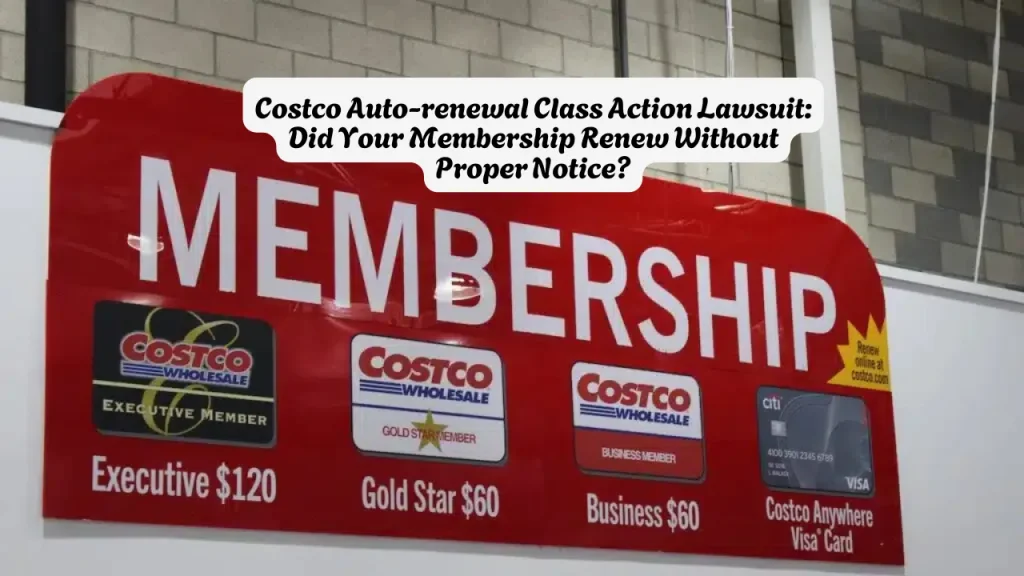
George argues he was surprised to learn that Costco automatically renewed his Gold Star annual membership in January 2026, charging his payment card $65, after he began reconsidering whether he should maintain the membership due to the low frequency with which he shopped at the retailer.
The lawsuit puts it plainly: “Had the plaintiff been provided this notice in a timely manner, he would have cancelled his membership and not gone forward with the auto-renewal.”
His argument is not simply that Costco sent a notice — it’s that the notice arrived too far in advance under California law, and that it lacked the specific disclosures the ARL requires. Under California law, a legally deficient notice is treated as no notice at all.
What Laws Costco Allegedly Broke
George claims Costco violated California’s ARL, False Advertising Law, Consumers Legal Remedies Act, and Unfair Competition Law. That combination of claims is standard in California auto-renewal cases and gives plaintiffs several legal avenues to pursue damages and force a company to change its practices.
California’s ARL, codified in Business & Professions Code sections 17600–17606, was enacted specifically to protect consumers from unexpected recurring charges. If a business fails to comply with the ARL’s requirements, all goods or services the consumer receives under the automatic renewal are deemed “unconditional gifts” to the consumer. That means Costco could potentially be required to treat the $65 charge as a gift it cannot keep — not just for George, but for every class member.
The Consumers Legal Remedies Act and Unfair Competition Law claims open the door to additional relief, including injunctive relief that could force Costco to overhaul how it sends renewal notices going forward.
Who May Qualify for This Lawsuit
You may qualify if:
- You hold or held a Costco Gold Star or Executive membership
- Costco automatically charged your payment card for a membership renewal
- You received your renewal notice more than 45 days before the charge date
- The notice you received did not clearly state the amount being charged, the renewal period, or how to cancel
- You would have cancelled your membership if you had received proper notice in time
- You are a California resident, or Costco’s conduct affected you under California law
This case is in its very early stages. Class membership has not been certified by the court, which means the exact eligibility criteria — including geography and date ranges — will be defined as the lawsuit progresses.
What You Could Receive
No settlement amount has been proposed or approved. The plaintiff asks the court to award:
- Monetary damages for himself and all class members
- Declaratory relief confirming Costco’s notices violated California law
- Injunctive relief requiring Costco to change its auto-renewal notification practices going forward
- Attorney’s fees and costs
Under California’s ARL, a non-compliant automatic charge may also be treated as an unconditional gift — meaning the full amount charged could be subject to refund. The actual per-person payout, if any settlement is ever reached, is TBD.
What to Do Right Now
If you believe Costco auto-renewed your membership without adequate notice or required information, here are the practical steps to take today:
Step 1 — Check your email inbox and credit card statements for your most recent Costco renewal notice and charge date.
Step 2 — Note how many days before the charge the renewal notice arrived, and whether it stated the exact amount, renewal period, and cancellation instructions.
Step 3 — Save any emails from Costco about your membership renewal — screenshots and PDFs work fine.
Step 4 — Keep your credit card statement showing the date and amount of the membership charge.
Step 5 — Monitor this case for updates. Once a class is certified and a settlement or judgment is reached, eligible members will typically be notified directly.
Step 6 — If you suffered financial harm you believe warrants individual attention, consult a consumer protection attorney for a case evaluation.
Estimated time to gather your documents: under 10 minutes.
This type of case — where Costco’s membership records identify every affected consumer — means you may be automatically included as a class member if the case is certified, without needing to take any action now. For more on how auto-renewal billing class actions develop and what past settlements have looked like, see our coverage of the Bumble auto-renewal billing class action.
Important Dates and Deadlines
| Milestone | Date |
| Lawsuit Filed | 2026 |
| Class Certification Hearing | TBD |
| Claims Period Opens | TBD |
| Claim Filing Deadline | TBD |
| Opt-Out Deadline | TBD |
| Objection Deadline | TBD |
| Final Approval Hearing | TBD |
| Expected Payment Date | TBD |
This article will be updated as the court sets hearing dates and as the case progresses. Check back for updates.
Frequently Asked Questions
Do I need a lawyer to participate in this class action?
No. If the court certifies a class and a settlement is later reached, eligible Costco members will typically receive notice by email or mail — because Costco already has your contact information through its membership system. You would file a claim through an official website with no legal representation required. A lawyer is only necessary if you want to pursue an individual injury claim or opt out of the class to sue on your own.
Is this Costco lawsuit legitimate?
Yes. The case, George II v. Costco Wholesale Corp., Case No. 3:26-cv-02369, was filed in the U.S. District Court for the Northern District of California and is a matter of public court record. The plaintiff is represented by Migliaccio & Rathod LLP, a recognized consumer protection law firm. No settlement has been announced, and the case is in its early litigation phase.
When will I receive any payment?
There is no settlement and no payment timeline at this stage. The case must first survive motions to dismiss, proceed through class certification, and either reach a negotiated settlement or go to trial before any money changes hands. Cases like this typically take one to several years to resolve.
What if I missed a previous Costco settlement?
This is a newly filed lawsuit with no settlement yet. It is separate from a prior Costco membership backdating settlement resolved in 2010. If you missed that earlier settlement, your options there are closed — but you may be eligible to participate in this new case when it progresses. For a look at how Costco’s lawsuit history has unfolded in recent years, see our related coverage.
Will a settlement payment affect my taxes?
Possibly. Small consumer class action settlements are often treated as a refund of an overcharge rather than income, which may not be taxable. However, the IRS treatment depends on the nature of the payment and your individual tax situation. Consult a tax professional once a settlement is announced and before you file.
I live outside California — does this lawsuit apply to me?
The lawsuit was filed in California and specifically invokes California’s consumer protection laws, which apply broadly to California residents. If you live in another state, your direct eligibility as a class member will depend on how the court defines the class. Many auto-renewal class actions do expand to include nationwide classes or subclasses. Monitor the case for updates when class certification is decided.
What is California’s Automatic Renewal Law?
California’s ARL — Business and Professions Code §§ 17600–17606 — requires businesses to clearly disclose automatic renewal terms before charging consumers, obtain affirmative consent, and send renewal reminders within a defined timeframe. The ARL applies to any business making an “automatic renewal” or “continuous service” offer to California consumers. Businesses that fail to comply face civil liability and may be required to treat any unauthorized charge as an unconditional gift to the consumer.
What is Costco’s response to the lawsuit?
Costco has not issued a public statement in response to this specific lawsuit as of the time of publication. The company has not yet filed an answer or motion to dismiss in court. This article will be updated as Costco’s legal response becomes available.
Sources and References
- Court Docket: George II v. Costco Wholesale Corp., Case No. 3:26-cv-02369 (N.D. Cal.) — PACER
- California Automatic Renewal Law: California Legislative Information — Bus. & Prof. Code §§ 17600–17606
Last Updated: April 7, 2026
Disclaimer: This article is for informational purposes only and does not constitute legal advice. Legal claims and outcomes depend on specific facts and applicable law. For advice regarding a particular situation, consult a qualified attorney.
About the Author
Israr Ahmad is a legal content researcher with 4+ years of experience covering class action settlements and consumer rights cases. He has researched and published coverage of 2,500+ settlements using verified court records, settlement administrator filings, and government sources. Learn more about Israr.
same thing happened to me, but I am in Colorado