
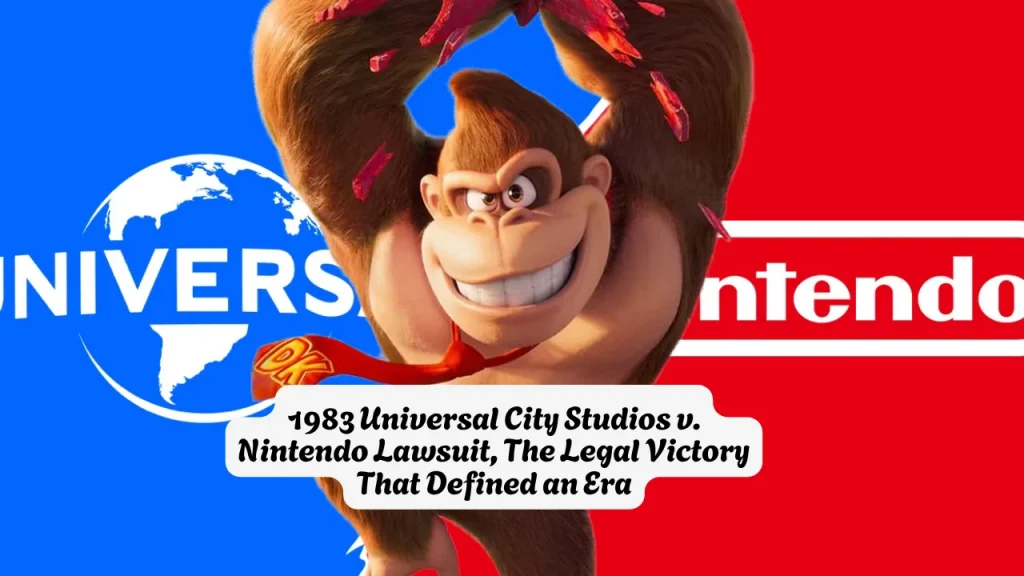
1983 Universal City Studios v. Nintendo Lawsuit, The Legal Victory That Defined an Era
In 1982, Universal City Studios filed a major lawsuit against Nintendo, claiming the arcade hit Donkey Kong infringed on the trademark and copyright of the famous movie monster, King Kong. Universal targeted Nintendo’s business partners with aggressive legal threats, demanding royalties for the “Kong” name. However, Nintendo’s defense team proved that Universal had previously argued King Kong was in the public domain. In 1983, the court ruled in favor of Nintendo, awarding them $1.8 million in damages and fees—a victory further illuminated by a massive archive of rare court documents released in April 2026.
Quick Facts
| Field | Detail |
| Case Name | Universal City Studios, Inc. v. Nintendo Co., Ltd. |
| Court | U.S. District Court, Southern District of New York |
| Main Dispute | Trademark Infringement and Unfair Competition |
| Key Outcome | Nintendo Victory; Universal found to act in “bad faith” |
| Damages Awarded | $1.8 Million to Nintendo |
| 2026 Update | 1.3GB of internal legal documents released to the public |
| Defense Attorney | John Kirby |
Current Status & What Happens Next
- New 2026 Revelations: On April 4, 2026, a massive trove of original 1982–1983 court documents was made public, revealing Shigeru Miyamoto’s original name ideas like “Build On,” “Bill Kong,” and “Kong Holiday.”
- Historical Precedent: This case remains a primary example of how public domain status can protect creators from trademark overreach.
- Corporate Legacy: The victory allowed Nintendo of America to maintain its independence and reinvest profits into the development of the Nintendo Entertainment System (NES).
What Was the Nintendo Lawsuit About?
By the early 1980s, Donkey Kong was the most profitable arcade game in the world. Universal Studios saw an opportunity to claim a piece of that success, alleging that the game’s title and characters were too similar to King Kong. Universal’s legal team argued that the “gorilla-plus-captured-woman” scenario was their exclusive intellectual property.
Universal didn’t just sue Nintendo; they embarked on a systematic campaign to pressure third-party companies like Coleco and Milton Bradley. They sent cease-and-desist letters offering a choice: stop selling Donkey Kong products or pay Universal a percentage of every sale. Most companies, fearing a long legal dispute, chose to pay. Nintendo, led by Howard Lincoln and attorney John Kirby, decided to stand their ground in court.
Related article: Ramaco Resources Brook Mine Lawsuit, Brook Mine Fraud Allegations, What Investors Need to Know
How Nintendo Proved Universal Had No Claim
The turning point in the case came when John Kirby discovered a massive contradiction in Universal’s legal history.
- The Public Domain Defense: Years earlier, Universal had sued RKO General to prove that the original 1933 King Kong story was in the public domain so Universal could produce their 1976 remake.
- The “Bad Faith” Finding: Because Universal had already proven in a prior court that they did not own exclusive rights to King Kong, Judge Sweet ruled they acted in “bad faith” by trying to sue Nintendo for the same thing.
- 2026 Document Insight: Newly released depositions show Miyamoto initially viewed Donkey Kong as a “human in a gorilla suit” rather than a real animal, further distancing the character from the “monstrous” King Kong.
Who Was Affected by the Court’s Decision?
- Nintendo Co., Ltd.: Avoided millions in royalty payments and secured the rights to their most important early franchise.
- Universal Studios: Not only lost the case but was forced to pay Nintendo for legal fees and lost revenue.
- Tiger Electronics: Universal had licensed a King Kong game to Tiger that was a direct clone of Donkey Kong. In a twist, the court found Universal liable for infringing on Nintendo’s copyright via that game.
- Industry Licensees: Companies that had caved to Universal’s demands were finally freed from paying unauthorized royalties.
Key Milestones of the Dispute
- April 1982: Universal meets with Nintendo, threatening legal action unless royalties are paid.
- June 1982: Universal officially files the lawsuit in the Southern District of New York.
- January 1983: Universal sends aggressive letters to Nintendo’s licensees, forcing many to settle.
- 1983 Trial: Nintendo presents evidence of the “Public Domain” contradiction.
- July 1986: Final judgment awards Nintendo $1.8 million in punitive damages and attorney fees.
- April 2026: Original case files and Miyamoto’s depositions are released to the public on the Internet Archive.
Important Deadlines & Dates (Historical)
| Milestone | Date |
| Lawsuit Filed | June 29, 1982 |
| Cease and Desist Campaign | January 3, 1983 |
| Summary Judgment for Nintendo | 1983 |
| Final Award of Damages | July 15, 1986 |
| Public Archive Release | April 4, 2026 |
Frequently Asked Questions
Did Nintendo get to keep the name Donkey Kong?
Yes. The court ruled that “Kong” and “King Kong” were widely used terms in the public domain. Nintendo retained full rights to the Donkey Kong name and characters.
Why did the judge say Universal acted in “bad faith”?
Universal knew it didn’t have a valid trademark for King Kong due to its previous case against RKO. Despite this, they used legal threats to collect money from Nintendo’s partners.
What was the total payout in the case?
Nintendo was awarded roughly $1.8 million. This covered $1.1 million for attorney fees and $700,000 for lost revenue caused by Universal’s interference with business contracts.
What did the 2026 document release reveal?
The documents showed that Miyamoto considered names like “Build On” and “Kong Chase” before settling on Donkey Kong. It also revealed his early concept of the character as an actor in a suit.
How did this case change Nintendo’s future?
This win gave Nintendo the financial security and legal confidence to operate in the U.S. without fear of legal pressure from larger Hollywood studios.
Who was John Kirby?
John Kirby was the powerhouse attorney who discovered Universal’s “Public Domain” contradiction. Nintendo later named the character Kirby in his honor.
Sources & References
- Court Opinion Archive: Universal City Studios v. Nintendo Co., 746 F.2d 112
- 2026 Document Archive: Internet Archive – Universal v. Nintendo Court Files
“Missing Pillars” of Legal Reporting
- Discovery Insights: The 2026 document release shows that Universal’s own internal surveys were found to be “deeply flawed” and “leading,” which helped the judge dismiss claims of consumer confusion.
- Bellwether Context: This case established that “Kong” was not a protectable trademark when used for a humorous parody.
- Objector Status: Companies like Coleco initially “objected” to the lawsuit by settling with Universal, but they were later vindicated by Nintendo’s refusal to back down.
- Tax Implications: The $1.8 million award was largely a reimbursement for legal costs, affecting Nintendo’s early U.S. tax filings as a recovery of expenses.
- Attorney Fee Breakdown: The $1.1 million fee award was massive for the time, reflecting the complexity of the “bad faith” findings against Universal.
Last Updated: April 7, 2026
Disclaimer: This article is for informational purposes only and does not constitute legal advice. Legal claims and outcomes depend on specific facts and applicable law. For advice regarding a particular situation, consult a qualified attorney.
About the Author
Israr Ahmad is a legal content researcher with 4+ years of experience covering class action settlements and consumer rights cases. He has researched and published coverage of 2,500+ settlements using verified court records, settlement administrator filings, and government sources. Learn more about Israr.