
Cole Tomas Allen Faces New Terrorism Charge in White House Dinner Shooting, What the Indictment Says
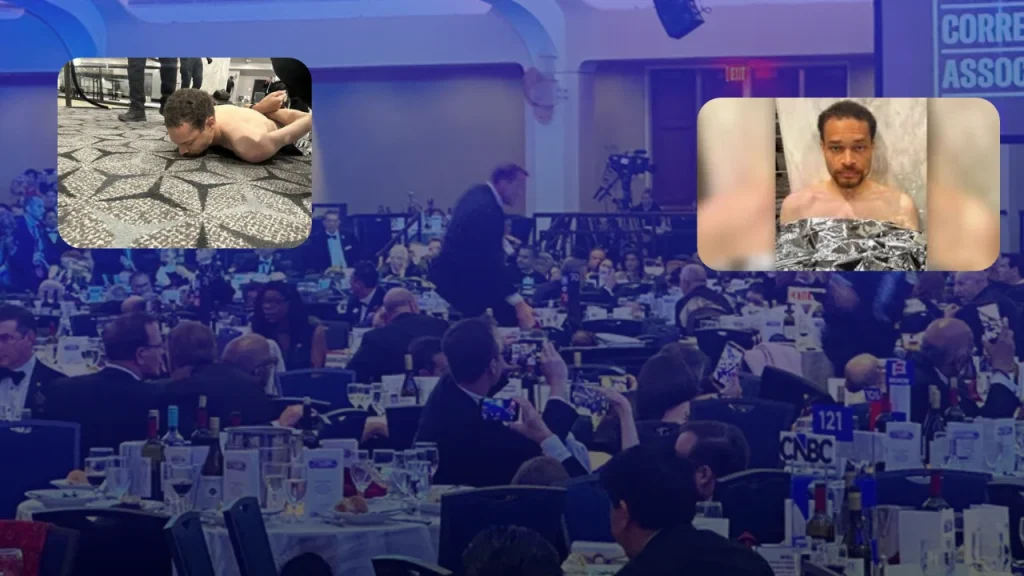
Cole Tomas Allen, a 31-year-old man from Torrance, California, now faces an armed terrorism charge in addition to four federal charges. All five counts relate to the April 25, 2026 shooting at a Secret Service checkpoint inside the Washington Hilton, where the White House Correspondents’ Association Dinner was taking place.
The U.S. Attorney’s Office for the District of Columbia announced the new count on November 13, 2026, after a grand jury returned a five-count superseding indictment dated November 12. The new charge, “act of terrorism while armed,” is brought under Washington, D.C. law, not federal law. Prosecutors allege the attempted killing was meant to influence the conduct of the federal government and intimidate the civilian population.
Allen faces a potential maximum sentence of life in prison. That maximum is reported for the case overall, and the federal attempted-assassination count under 18 U.S.C. § 1751(c) independently allows a life term. No sentence has been imposed, and he has not been convicted of anything.
These are allegations. Allen is presumed innocent, and the government must prove every element beyond a reasonable doubt to a jury. Jury selection is scheduled to begin September 7, 2027 before U.S. District Judge Trevor N. McFadden.
Cole Tomas Allen Terrorism Case: Key Facts
| Detail | Information |
| Defendant | Cole Tomas Allen, 31, Torrance, California |
| Incident | White House Correspondents’ Association Dinner shooting |
| Date and location | April 25, 2026, Washington Hilton, Washington, D.C. |
| Alleged target | President Donald Trump (prosecutors also describe senior officials as targets) |
| Superseding indictment | Dated November 12, 2026; announced November 13, 2026 |
| Total counts | Five (four federal, one D.C. Code) |
| New count | Act of terrorism while armed (attempted first-degree murder) |
| D.C. statutes cited | D.C. Code §§ 22-3152, 22-3153 and 22-4502 |
| Case | United States v. Allen, No. 1:26-cr-00098-TNM |
| Court and judge | U.S. District Court for the District of Columbia, Judge Trevor N. McFadden |
| Plea | Not guilty to the original four counts; no plea on Count Five reported as of this update |
| Maximum sentence | Life imprisonment |
| Trial | Jury selection set for September 7, 2027 |
| Next court date | A status conference is reported for early December 2026 |
| Investigating agency | FBI Washington Field Office, with the U.S. Secret Service |
| Conviction | None |
Primary document: Five-count superseding indictment
What Changed in the November 13 Cole Tomas Allen Indictment?
The original indictment, returned May 5, charged Allen with four federal crimes: attempting to assassinate the President, assaulting a federal officer with a deadly weapon, transporting firearms and ammunition across state lines with intent to commit a felony, and discharging a firearm during a crime of violence.
The superseding indictment keeps those four counts and adds Count Five: Act of Terrorism While Armed (Attempt to Commit First Degree Murder).
What Does Count Five Allege?
Count Five alleges that Allen attempted to commit first-degree murder while armed with firearms, ammunition, knives and other sharpened instruments. It further alleges the attempt was made with the intent to:
- influence the policy and conduct of the Office of the President and federal executive agencies by intimidation or coercion, and
- intimidate or coerce a significant portion of the civilian population of the United States and the District of Columbia.
Under the original indictment, the government’s case centered on an attempt to kill the President. The new count adds a claim about purpose. That purpose is what turns the underlying offense into “terrorism” under D.C. law.
What Are the Five Charges Against Cole Tomas Allen?
| Count | Charge | Statute |
| 1 | Attempt to assassinate the President | 18 U.S.C. § 1751(c) |
| 2 | Assaulting a federal officer with a deadly weapon | 18 U.S.C. § 111(a)(1), (b) |
| 3 | Interstate transportation of firearms and ammunition with intent to commit a felony | 18 U.S.C. § 924(b) |
| 4 | Using, carrying and discharging a firearm during a crime of violence | 18 U.S.C. § 924(c)(1)(A) |
| 5 | Act of terrorism while armed (attempted first-degree murder) | D.C. Code §§ 22-3152, 22-3153, 22-4502 |
Count One: Attempt to Assassinate the President (18 U.S.C. § 1751(c))
This statute makes it a crime to attempt to kill or kidnap the President. The government must prove the intent to kill and a substantial step toward doing it. A conviction can bring imprisonment for any term of years or for life. Because this is an attempt charge, the death penalty is not an available punishment under this subsection, and DOJ has identified life imprisonment as the maximum in this case.
Count Two: Assaulting a Federal Officer (18 U.S.C. § 111)
Prosecutors allege Allen assaulted a Secret Service officer using a shotgun. Under § 111(b), assault with a deadly or dangerous weapon, or one that causes bodily injury, carries up to 20 years in prison.
Count Three: Interstate Firearms Transportation (18 U.S.C. § 924(b))
Prosecutors allege Allen transported firearms and ammunition from California to Washington, D.C., between about April 21 and April 25, intending to use them in a felony. The maximum sentence is 10 years.
Count Four: Discharging a Firearm in a Crime of Violence (18 U.S.C. § 924(c)(1)(A))
Discharging a firearm during and in relation to a crime of violence carries a mandatory minimum of 10 years under § 924(c)(1)(A)(iii). By statute, that term generally must run consecutively to any other sentence, unless a court rules otherwise on the law. The indictment points to the attempted assassination and federal-officer assault counts as the underlying crimes.
Count Five: Act of Terrorism While Armed (D.C. Code)
This is a District of Columbia charge that appears in a federal indictment. It rests on three D.C. provisions working together:
- D.C. Code § 22-3152 defines an “act of terrorism” as a listed underlying offense, such as murder, committed with an intent to intimidate or coerce a significant portion of the civilian population, influence the policy or conduct of a “unit of government” by intimidation or coercion, or retaliate against a government for its policy or conduct. The Office of the President is expressly listed as a unit of government.
- D.C. Code § 22-3153 sets the penalties for terrorism offenses, including attempts.
- D.C. Code § 22-4502 adds penalties for committing a crime of violence while armed.
Why Is the Terrorism Charge Under D.C. Law Instead of Federal Law?
The United States has several federal terrorism statutes, but none works as a general “domestic terrorism” charge for every politically motivated violent act. Federal terrorism offenses generally require a specific link, such as an act that crosses borders, use of a weapon of mass destruction, or support for a designated foreign terrorist organization.
Washington, D.C. has its own terrorism statute. It focuses on the defendant’s intent, not membership in any group. Prosecutors in the District can therefore use it when they allege a listed offense was committed to intimidate the public or influence the government. The government does not have to show Allen belonged to a terrorist organization to prove Count Five.
For a different example of a state terrorism-threat prosecution, see Aurora Hindu Temple Attack Plot, Alexandros Paporakis Charged With Terrorist Threat in Illinois, Suspect, Charges, Laws and Court Date.
Why Can a D.C. Crime Be Tried in Federal Court?
D.C. Code § 11-502(3) gives the U.S. District Court for the District of Columbia jurisdiction over an offense under a law that applies exclusively to the District when it is joined in the same indictment with a federal offense. That is why a local terrorism count can sit alongside federal counts in this case. It does not turn the D.C. statute into a federal terrorism law.
Could Allen Challenge the Terrorism Count?
He could. A defendant can use pretrial motions under Federal Rule of Criminal Procedure 12 to attack the legal sufficiency of a count, and under Rule 7(f) can ask for a bill of particulars to force the government to give more detail. Defendants in other D.C. terrorism-count cases have raised arguments about how the indictment identifies the intended “unit of government.” Here, the indictment names the Office of the President and federal executive agencies, which D.C. Code § 22-3152 lists as units of government. Whether Allen files any such motion has not been reported.
What Happened at the White House Correspondents’ Dinner on April 25?
According to the Justice Department and court documents:
- Shortly after 8:30 p.m., Allen approached a Secret Service checkpoint on the Terrace Level of the Washington Hilton.
- President Trump was in a ballroom on a lower level.
- Allen allegedly ran through a magnetometer and toward the stairs leading to the ballroom.
- He allegedly fired a Mossberg Maverick 88 12-gauge pump-action shotgun, striking a Secret Service officer once in the chest. The officer was wearing a ballistic vest.
- The officer returned fire with five shots. Allen fell, was restrained and was arrested. DOJ reported that he suffered a minor knee injury and was not hit by gunfire.
President Trump was not shot or injured and was moved to safety. Authorities say Allen was stopped before he entered the ballroom.
What Weapons Did Authorities Recover?
Investigators reported recovering the shotgun with one spent shell, a Rock Island Armory 1911 .38-caliber pistol, additional ammunition, two knives, four daggers and other items. These details are the prosecution’s account and have not been tested at trial.
Why Do Prosecutors Say President Trump Was the Target?
The government’s theory relies on Allen’s alleged travel and preparation, the weapons, his conduct at the checkpoint and writings recovered during the investigation. According to the April 27 DOJ announcement:
- Allen reserved a room at the Washington Hilton on April 6.
- He traveled by train from California through Chicago to Washington and arrived on April 24.
- Investigators obtained an email he allegedly sent to family members and a former employer shortly before the incident, which included an apology and referred to himself as a “Friendly Federal Assassin.”
Prosecutors have described the alleged plan as politically motivated. Whether the email is authentic, what it means and how it fits with the other evidence are questions for the court. Prosecutors’ interpretation of a motive is not a finding of guilt.
Does Cole Tomas Allen Face Life in Prison?
Life imprisonment is a legally possible sentence, but it is not automatic. Count One alone allows a term of years or life. DOJ and news reports identify life as the maximum penalty in the case overall.
It would be inaccurate to say the new terrorism count by itself carries a mandatory life sentence. The actual sentence would depend on which counts, if any, produce a conviction, the mandatory minimum under § 924(c), the federal sentencing guidelines, any D.C. Code sentencing rules for Count Five and the judge’s decisions. The government cannot seek a death sentence on the current charges.
Did Allen Try to Remove Jeanine Pirro From the Case?
Yes. Allen asked the court to disqualify U.S. Attorney Jeanine Ferris Pirro and Acting Attorney General Todd Blanche from the prosecution. His defense pointed to their attendance at the dinner, their public comments afterward and Pirro’s friendship with President Trump.
On June 22, 2026, Judge McFadden denied the motion. He found that those facts did not show a conflict of interest requiring disqualification. The ruling let the prosecution continue. It said nothing about whether Allen is guilty.
Federal law directs the Justice Department to maintain rules that disqualify its own officials where a personal or political relationship creates a conflict (28 U.S.C. § 528; 28 C.F.R. § 45.2). Read the court’s June 22 memorandum order in United States v. Allen.
What Is a Superseding Indictment?
A superseding indictment is a new charging document returned by a grand jury that replaces an earlier one. It can add charges, remove them or change allegations. The Fifth Amendment requires a grand jury indictment for a federal felony prosecution, and the grand jury only needs to find probable cause. A trial jury applies the far higher beyond-a-reasonable-doubt standard. A superseding indictment is not a conviction.
For another look at the difference between a complaint and a grand jury indictment, see Two Former FBI Officials Charged With Lying to Congress About Hunter Biden’s Laptop, Nikki Floris and Bradley Benavides Case Explained.
What Happens Next in the Cole Tomas Allen Case?
The case is in the pretrial stage. On October 29, Judge McFadden set jury selection for September 7, 2027, with a trial expected to last about three to four weeks. Prosecutors had asked for an earlier date, and the court chose September after the defense asked for more preparation time. A status conference is reported for early December 2026, and discovery continues.
The new count will require an arraignment on Count Five. The additional count may also bring new pretrial motions, evidence disputes over the alleged purpose to influence government or intimidate civilians, and changes to jury instructions. Federal criminal cases are also governed by the Speedy Trial Act (18 U.S.C. § 3161), which allows courts to exclude time for pretrial motions and for continuances granted in the interests of justice. The September 7, 2027 date remains the latest verified trial date, subject to any new scheduling order.
What Does the Case Mean for Secret Service Security?
The shooting happened at a screening checkpoint protecting an event attended by the President and senior officials. That raises public questions about checkpoint design and response, but those questions are separate from whether the government can prove the charges against Allen. The Secret Service is part of the Department of Homeland Security, whose funding was the subject of a congressional dispute covered in DHS Shutdown of 2026, Senate Funding Bill, Congressional Deadlock, and What It Means for TSA and Secret Service Workers. The indictment does not claim that staffing or funding problems caused the April incident, and any such link would need separate evidence.
Cole Tomas Allen Case Timeline
| Date | Development |
| April 6, 2026 | Allen allegedly reserves a room at the Washington Hilton |
| April 21 to 24 | Prosecutors allege he travels from California to Washington |
| April 25 | Shooting at the White House Correspondents’ Association Dinner |
| April 27 | Criminal complaint and initial court appearance |
| May 5 | Grand jury returns four-count indictment |
| June 22 | Judge McFadden denies motion to disqualify senior DOJ officials |
| October 29 | Judge sets September 2027 trial |
| November 12 | Five-count superseding indictment dated |
| November 13 | DOJ announces the new D.C. armed-terrorism count |
| Early December 2026 | Status conference reported |
| September 7, 2027 | Scheduled start of jury selection, subject to change |
Frequently Asked Questions About Cole Tomas Allen
Who is Cole Tomas Allen?
He is a 31-year-old man from Torrance, California, accused of attempting to assassinate President Donald Trump during the April 25, 2026 White House Correspondents’ Association Dinner.
What new charge was added against Cole Tomas Allen?
Prosecutors added one count of act of terrorism while armed, tied to attempted first-degree murder, under D.C. Code §§ 22-3152, 22-3153 and 22-4502.
When was the terrorism charge announced?
The U.S. Attorney’s Office announced it on November 13, 2026. The superseding indictment is dated November 12.
Was President Trump injured in the shooting?
No. Authorities say Allen was stopped before reaching the ballroom, and the President was not shot.
Was a Secret Service officer shot?
According to prosecutors, an officer wearing a ballistic vest was struck once in the chest by shotgun fire.
Did police shoot Cole Tomas Allen?
The officer fired five shots, but DOJ says Allen was not hit. He suffered a minor knee injury.
Is Allen charged with federal terrorism?
No. The terrorism count is brought under the D.C. Code. The other four counts are federal offenses.
Why is a D.C. charge in a federal court?
D.C. Code § 11-502(3) lets the federal district court hear a D.C.-only offense when it is joined in the same indictment with a federal offense.
Does Cole Tomas Allen face the death penalty?
No. The current charges carry a maximum of life imprisonment.
What is the maximum sentence Allen faces?
Life imprisonment. The federal attempted-assassination count allows a life term, and DOJ identifies life as the maximum in the case.
Has Allen pleaded guilty?
No. He pleaded not guilty to the original four counts, and no plea on the new count has been reported.
When is Cole Tomas Allen’s trial?
Jury selection is scheduled to begin September 7, 2027, before Judge Trevor N. McFadden, subject to later scheduling orders.
Has Cole Tomas Allen been convicted?
No. The charges are accusations, and he is presumed innocent unless a court finds him guilty.
Did the judge remove Jeanine Pirro from the case?
No. On June 22, 2026, Judge McFadden denied Allen’s motion to disqualify Pirro and Acting Attorney General Todd Blanche.
Official DOJ Announcement, Indictment and Court Records
Case: United States v. Cole Tomas Allen, No. 1:26-cr-00098-TNM Court: U.S. District Court for the District of Columbia Judge: Trevor N. McFadden
Sources:
- U.S. Department of Justice, November 13, 2026 Terrorism Charge Announcement
- Five-Count Superseding Indictment, Document 46 (PDF)
- DOJ, May 5, 2026 Four-Count Indictment Announcement
- DOJ, April 27 Criminal Complaint and Investigation Details
- Court Order Denying Prosecutor Disqualification, June 22, 2026 (PDF)
- D.C. Code § 22-3152, Definitions
- D.C. Code § 22-3153, Terrorism Offenses and Penalties
- D.C. Code § 22-4502, Additional Penalties When Armed
- D.C. Code § 11-502, Federal Court Jurisdiction
- 18 U.S.C. § 1751, Presidential Assassination and Attempt
Bottom line: Cole Tomas Allen now faces five counts after prosecutors added a D.C. armed-terrorism charge tied to the April 25, 2026 White House Correspondents’ Association Dinner shooting. The government alleges he tried to kill President Trump in order to influence government conduct and intimidate civilians, and it must prove every element beyond a reasonable doubt. A life sentence is legally possible, mainly through the federal attempted-assassination count. The next major scheduled event is the September 7, 2027 trial.
This article provides general legal information, not legal advice. All charges are unproven, and the defendant is presumed innocent unless convicted. Written by Israr Ahmad, a legal content researcher, not an attorney.
By Israr Ahmad, Legal Content Researcher | Updated: November 14, 2026 | Washington, D.C. | Federal Criminal Law
About the Author
Israr Ahmad is a legal content researcher with 4+ years of experience covering class action settlements and consumer rights cases. He has researched and published coverage of 2,500+ settlements using verified court records, settlement administrator filings, and government sources. Learn more about Israr.