
Coach Stormy Wellington Settles FTC Complaint Over MLM Income Claims Here Is the Full Story, Both Sides
One of the most prominent names in network marketing and women’s empowerment has reached a settlement with the Federal Trade Commission — and is speaking out. The FTC alleged in a complaint that Stormy Wellington, who has been a high-level participant in two different MLMs, used deceptive earnings claims to recruit new members to Total Life Changes (TLC) and, more recently, Farmasi. Under the settlement terms, Wellington is now permanently banned from misrepresenting potential earnings and is prohibited from making direct statements or using suggestive lifestyle imagery — such as photos of luxury goods — to imply financial outcomes for recruits.
Wellington is not going to prison. No fine has been publicly disclosed. But the settlement is a formal, legally binding acknowledgment that the way the FTC says she promoted these opportunities crossed a line — and it will permanently change how she can operate. She has since spoken publicly about what happened and what comes next.
Quick Case Snapshot
| Subject | Stormy Wellington (also known as “Coach Stormy”) |
| Agency | Federal Trade Commission (FTC) |
| Companies Involved | Total Life Changes (TLC); Farmasi |
| Court | U.S. District Court, Southern District of Florida |
| Complaint Filed | April 13, 2026 |
| FTC Vote | 2–0 to authorize complaint and proposed order |
| Allegation | Deceptive earnings claims used to recruit MLM participants |
| Settlement Type | Consent decree / proposed order (not a criminal case) |
| Monetary Penalty | Not publicly disclosed |
| Key Restriction | Permanent ban on misrepresenting income potential; lifestyle imagery ban; written evidence required for any future earnings claims |
| Status | Settled; order subject to court approval |
Who Is Coach Stormy Wellington?
Before getting to the FTC complaint, the person at the centre of this story deserves a full introduction — because the context matters enormously.
Stormy Wellington, born February 21, 1980, is an American entrepreneur, author, and motivational speaker known for her work in the direct sales and network marketing industry, as well as her appearance in the Lifetime reality series Million Dollar Hustle (2022). Wellington was born in New York City and grew up in Miami, Florida.
Her childhood was marked by instability, poverty, abandonment, and abuse. She crawled out of conditions that would have buried most people and built something undeniable from scratch. Having grown up in foster care, she dropped out of high school in the ninth grade.
From those beginnings, she built a career as one of the most recognisable figures in network marketing. She claims over $50 million earned and 139 documented millionaires created, with a global movement she says has transformed the financial lives of thousands. Wellington’s drive to coach others to success led to the creation of Girl Hold My Hand, a community for women, and the 1,000 Families initiative, which aims to help 1,000 individuals achieve six to seven figure incomes every year.
That story is real. The FTC did not dispute it. What the FTC disputed is what she promised others about their likely earnings — and whether those promises matched the data.
Related article: FTC and Eight States Settle With Dentsu, WPP, and Publicis Over Alleged Collusion to Cut Ad Revenue From Conservative Websites
What Is an MLM? (The Short Version for Everyone)
Multi-level marketing (MLM) companies — also called network marketing or direct sales — operate on a model where participants sell products and also recruit others to join as sellers. When a recruit makes sales, the person who brought them in earns a percentage. The more people you recruit, and the more they recruit, the larger your potential earnings.
In MLMs, individual participants market and sell the MLM’s products or services and recruit new participants, who themselves will sell the MLM’s products or services and recruit new participants. Wellington was a high-level participant who benefited from recruiting new members using allegedly false or misleading promises of earning significant income.
The fundamental tension in MLM regulation is this: the people at the very top — like Wellington — genuinely can and often do earn life-changing income. But the odds of replicating that outcome diminish sharply for each level down. Federal law requires that income claims made to recruits be truthful and reflect the typical experience — not just the exceptional one.
Related article: $57M Transamerica Life Insurance Rate Increase Settlement, Are You Eligible? Policyholders will Automatically Receive a Check in the Mail
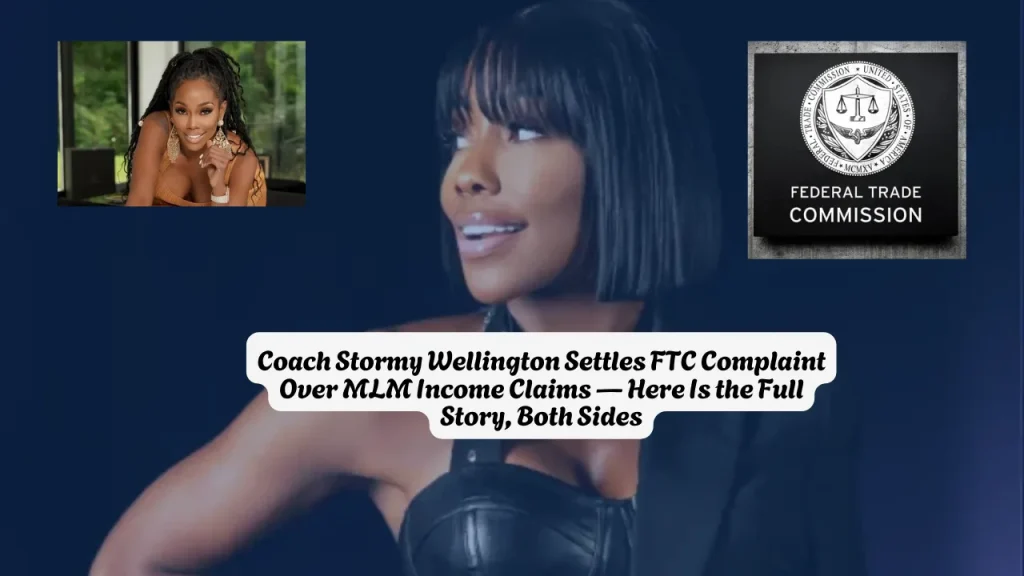
What the FTC Says She Did: The Specific Allegations
The FTC complaint, filed April 13, 2026, is precise about what regulators found objectionable. It is not about her personal success — it is about what she told others to expect.
At Total Life Changes (TLC): As a TLC participant, Wellington represented to recruits that they were likely to earn five to seven figure incomes, stating: “I will help 1,000 families make 5-7 figures in the next 90 days to 12 months!”
At Farmasi: She allegedly continued making bold income promises to recruits, stating: “I’m telling you right now, no less than six figures, no less. Repeat that to me. No less than six figures,” and claiming she would create “60 new millionaires in 2026.”
According to the complaint, Wellington utilised social media platforms and YouTube videos to promote baseless earnings claims, allegedly promising recruits they could earn between $100,000 and $1,000,000 within short timeframes.
What the Income Data Actually Shows
This is where the FTC’s case is most concrete — because the gap between what Wellington allegedly promised and what the companies’ own data disclosed is stark.
Total Life Changes: TLC reported that 76.8% of active participants — 23,124 people — earned no compensation in 2023, and only 0.4%, just 113 people, made more than $5,000.
Farmasi: Farmasi’s 2023 disclosure indicates that fewer than 1% of participants earned income in the six-figure range she promoted.
The disclosure also appears to state that no rank of participant earns an average monthly commission large enough to earn $1,000,000 a year — despite claims that she would make “60 new millionaires” in 2026.
The FTC’s conclusion: when compared to Total Life Changes’ and Farmasi’s income disclosure statements, Wellington’s claims were “deceptive.”
A Former Recruit Speaks: “I Walked Away With $28.10”
One of Wellington’s former recruits, Effie Best, claimed she lost more than $5,000 purchasing inventory while working with the motivational speaker under one of her MLM ventures. According to Best, after participating in the program from 2018 to 2022, she ultimately walked away with just $28.10.
Reflecting on her experience, Best said: “I don’t know what her standard of ‘do enough work’ means, because I took the product. I was an avid recipient of the product. I have years of emails showing that my product was streamlined.”
Best’s account represents exactly the experience the FTC says the income claims concealed — not an outlier, but statistically the norm for the vast majority of participants.
The Settlement: Exactly What Stormy Agreed To
It is important to be precise here, because the terms of the FTC order directly affect everyone in Wellington’s downline network.
Under the settlement, Wellington is permanently banned from misrepresenting potential earnings through Farmasi, or any other future business venture she may promote. She is prohibited from making direct statements or using suggestive lifestyle imagery — such as photos of luxury goods — to imply financial outcomes for recruits.
She is barred from making any future earnings claims unless they are truthful, non-misleading, and supported by written evidence at the time the claim is made. This evidence must remain available for inspection by the FTC at any time.
The settlement also outlines a notification process, requiring Wellington to inform all current participants in her recruitment network of the court order and the strict terms prohibiting deceptive financial claims.
She is not going to prison. This is a consent decree — a formal agreement to change behaviour under court supervision. But it is a formal acknowledgment that the way she was recruiting people, specifically the promises she was making about what they would earn, crossed a legal line.
In short: she can continue operating in business and network marketing. She cannot make unsubstantiated income promises — in words, in videos, or through lifestyle imagery — ever again.
Coach Stormy Speaks: What She Said After the Settlement
Wellington did not go quiet. She granted interviews to multiple outlets and addressed the settlement directly — acknowledging lessons learned while defending her intentions.
In an interview on the Isaiah Factor Uncensored podcast, Wellington stood behind her business practices but acknowledged her future endeavours would have to be presented and worded carefully. “There are some things that I use as a marketer. There are some things that I use as strategies, you know, I’m a manifestor. I believe that life and death is in the power of the tongue,” Wellington said. “I learned through this experience that you can’t do that when you become a woman of my caliber. You can’t say things that’s based on wishful thinking.”
Speaking with Fox News, Stormy said the allegations have “significantly affected” her career and confirmed she plans to shift her messaging. She also offered a warning to others in the industry: “Be mindful of the things that you say… you can get yourself into big trouble.”
In another interview, Wellington called the settlement a victory and a reset to what she loves most. “I am grateful to God number one that this is my assignment, this is what I’m supposed to do,” she said.
She also acknowledged the core tension at the heart of the case. After nearly twenty years of network marketing, she said no one ever told her she couldn’t tell other people they could be millionaires too. “I did get very deep into make money, make money, make money because I know that the sore in people’s heart right now is money,” she said.
What This Means If You Are in Her Network Right Now
If you are currently a participant in Farmasi or another venture through Wellington’s recruitment, the settlement has direct implications for you:
You will be notified. The settlement requires Wellington to inform all current participants in her recruitment network of the court order and the strict terms prohibiting deceptive financial claims. That notification is not optional — it is a legal obligation under the order.
Income claims you may have heard cannot be legally repeated. Any recruiter in her downline who continues to make the same types of income promises Wellington made may now face separate FTC scrutiny. The order extends to anyone she assists or directs.
The products are not banned. This case is specifically about income claims made to recruits — not about the safety or quality of TLC or Farmasi’s products. You can continue using and selling products.
If you lost money and want to explore options, consider contacting a consumer protection attorney in your state. The FTC also accepts complaints at ftc.gov/complaint — your submission contributes to the federal record and can trigger future enforcement.
The Bigger Legal Context: FTC’s MLM Crackdown
This case does not stand alone. As the FTC’s Bureau of Consumer Protection Director Christopher Mufarrige stated: “Today’s actions make clear that the FTC will go after individuals who deceive consumers trying to earn a living. This case highlights the FTC’s ongoing efforts to protect workers from recruiters who misrepresent potential earnings.”
The FTC has been systematically pursuing high-profile MLM income claim enforcement for several years. The Wellington case follows a pattern: target the high-earning individual recruiter — not just the company — whose social media reach amplifies misleading income expectations to millions of followers who cannot independently verify the claims.
The takeaway for anyone operating in network marketing: income claims are now under tighter federal scrutiny than ever. Testimonials, lifestyle posts, income screenshots, and aspirational promises are all on the FTC’s radar — especially when they contradict the company’s own income disclosure statements.
Frequently Asked Questions
What did the FTC accuse Coach Stormy of doing?
The FTC alleged that Stormy Wellington used deceptive earnings claims to recruit new members to Total Life Changes and Farmasi, promising potential recruits they could earn significant incomes that the companies’ own income disclosures showed were not typical outcomes for most participants.
What are the exact settlement terms?
Wellington is permanently banned from misrepresenting potential earnings, prohibited from using suggestive lifestyle imagery to imply financial outcomes, and barred from making any future earnings claims unless they are truthful, non-misleading, and backed by written evidence available for FTC inspection at any time. She must also notify all participants in her current recruitment network of these restrictions.
Is Coach Stormy going to jail or paying a fine?
No. This is a consent decree — a formal legal agreement to change behaviour. She is not facing criminal prosecution, and no fine amount has been publicly disclosed.
What did most TLC and Farmasi participants actually earn?
TLC reported that 76.8% of active participants — 23,124 people — earned no compensation in 2023, and only 0.4%, or 113 people, made more than $5,000. Farmasi’s 2023 disclosure shows fewer than 1% of participants earned income in the six-figure range Wellington allegedly promoted.
What did Coach Stormy say about the settlement?
Wellington said she learned through the experience that as a person of her level of influence, she cannot make claims based on wishful thinking. She acknowledged her marketing language will have to change going forward. She called it a reset and said she remains committed to her community.
What should I do if I joined her network and lost money?
Document your expenses and income from your time in the program. File a complaint with the FTC at ftc.gov/complaint. Consider consulting a consumer protection attorney in your state to understand your options. The FTC complaint and settlement do not automatically create a compensation fund, but your complaint contributes to the federal record.
Can she still do business?
Yes. The ban applies specifically to misrepresenting potential earnings and using unsubstantiated income claims. She can continue to operate in business and network marketing so long as any claims about earnings are truthful, documented, and not misleading.
Last Updated: April 17, 2026
This article is for informational purposes only and does not constitute legal or financial advice. The FTC complaint contains allegations. The settlement is a proposed order subject to final court approval. All parties are presumed innocent unless proven otherwise in a court of law. If you have been affected by MLM-related financial losses, consult a licensed consumer protection attorney in your jurisdiction.
About the Author
Israr Ahmad is a legal content researcher with 4+ years of experience covering class action settlements and consumer rights cases. He has researched and published coverage of 2,500+ settlements using verified court records, settlement administrator filings, and government sources. Learn more about Israr.