
Cameo Drip Celebrity Video Pricing Class Action Lawsuit, Were You Charged a Hidden Fee? Here Is What Is Happening
Cameo is facing a class action lawsuit filed in the U.S. District Court for the Central District of California, alleging the platform illegally hides a mandatory 10% service fee until the very last step of checkout — after users have already invested significant time selecting a celebrity, writing their request, and entering payment information. If you bought a personalized video on Cameo in California and paid a service fee that was not shown to you upfront, this lawsuit may include you.
Quick-Facts: Cameo Drip Pricing Lawsuit
| Field | Detail |
| Lawsuit Filed | March 16, 2026 |
| Defendant | Baron App, Inc. (operating as Cameo) |
| Alleged Violation | California Unfair Competition Law; California Consumers Legal Remedies Act (Honest Pricing Law); California False Advertising Law |
| Who Is Affected | California residents who purchased a personalized video on Cameo and paid a service fee during the applicable statute of limitations period |
| Current Court Stage | Early litigation — complaint filed, class certification pending |
| Court & Jurisdiction | U.S. District Court for the Central District of California — Ohler et al. v. Baron App, Inc., Case No. 5:26-cv-01216 |
| Lead Law Firm | Dovel & Luner LLP — Jonas Jacobson and Simon Franzini |
| Next Hearing Date | TBD — case is in initial pleading stage |
| Official Case Website | TBD — none established at this stage |
| Last Updated | April 28, 2026 |
What Is the Cameo Lawsuit About? Ohler et al. v. Baron App, Inc., No. 5:26-cv-01216
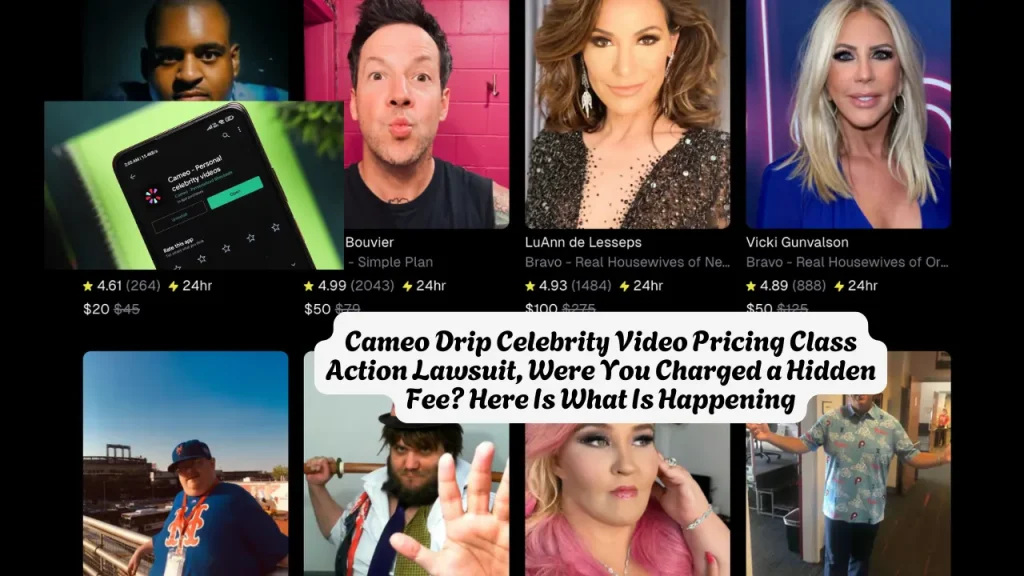
Cameo is a platform where consumers pay celebrities — athletes, actors, comedians, and other public figures — to record short personalized video messages. Prices vary widely depending on the celebrity, and buying one is not a quick impulse click. The purchase process is rather involved: consumers must browse through celebrities, select who they want, describe who the video is for, and enter any request details — all before beginning the checkout process.
Plaintiff Tyler Ohler alleges that Cameo exploits exactly that investment. The Cameo service fee is revealed only on the final checkout page in small, faded text. “At this point, consumers have already selected a celebrity, customized the video message, entered their email, and filled out their payment information,” the suit says. “And they have done all this based on the lower, up-front price.”
This practice is called drip pricing — a consumer fraud technique where a company advertises a low base price, then adds mandatory charges incrementally as the transaction progresses, revealing the true total only at the moment a buyer is most committed to completing the purchase. In California, drip pricing “always has been” illegal under the state’s Unfair Competition Law and False Advertising Law, but in July 2024, the practice also became explicitly illegal under the Honest Pricing Law, an amendment to the state’s Consumers Legal Remedies Act.
This is not Cameo’s first brush with consumer law. In July 2024, a consortium of 30 state attorneys general reached a settlement with Baron Inc. over Cameo’s failure to disclose when celebrity videos were paid advertisements — a separate issue, but one that reflects a pattern of alleged transparency failures on the platform. That prior settlement also revealed Cameo’s precarious financial position. This new false advertising class action targets how Baron App prices its consumer-facing video products, not the Business Cameo endorsement service. Similar drip pricing lawsuits have targeted other companies using the same checkout strategy — as seen in the MyPillow class action over hidden shipping fees and the Lowe’s false discount pricing lawsuit.
Are You Part of the Cameo Class Action Lawsuit?
You do not need to take any action right now to preserve your place in this class. If the court certifies the class, eligible members will be notified. Here is how to know if this lawsuit covers you.
You may be part of this class if:
- You are a California resident
- You purchased a personalized video or message on Cameo (cameo.com)
- Your purchase occurred within the applicable statute of limitations period — typically four years back from March 16, 2026, meaning purchases as early as March 2022 may qualify
- You paid a service fee that was not shown to you at the start of the checkout process
- You completed the purchase despite discovering the additional fee at the final checkout stage
You are likely NOT included if:
- You made your purchase outside California — the proposed class is limited to California consumers at this stage
- You purchased through Cameo’s Business platform rather than as an individual consumer — this lawsuit targets personal video purchases, not commercial endorsements
- You received a full refund on your transaction, including any service fees paid
Keep any order confirmation emails, bank or credit card statements, or Cameo receipts showing what you paid. That documentation will matter if a class is certified and you need to verify your purchase.
Related article: $2M Bell Ambulance Data Breach Settlement, Check If You Qualify for a Cash Payment by June 29
What Are Cameo Plaintiffs Seeking in This Lawsuit?
No money is available yet. No claim form exists. Here is what the complaint asks the court to award.
The lawsuit seeks restitution — a return of all service fees that California consumers paid as a result of the alleged drip pricing practice. The case claims that Cameo has harmed consumers by luring them with fictitious low prices to create artificial demand, only to then tack on a mandatory junk charge late in the transaction that many might not even notice.
The complaint also seeks injunctive relief — a court order requiring Cameo to disclose the full price of every video, including any service fees, at the very beginning of the checkout process rather than at the end. Beyond restitution, plaintiffs are seeking disgorgement of Cameo’s profits derived from the alleged hidden-fee scheme, along with attorneys’ fees and costs.
“If consumers do notice the service fee or the increase in the total price, they are pressured to just go through with it (and eat the service fee) so as not to waste their previous effort,” the complaint reads. “This drives consumers to pay service fees that they would not otherwise pay, if the higher price was disclosed up front.”
The pressure dynamic described in the complaint is a recognized legal theory behind drip pricing cases in California. A consumer rights lawyer or free legal consultation with the plaintiff’s firm can help you assess whether your individual situation strengthens the class’s claims.
What Should You Do If You Were Affected by Cameo’s Pricing?
Most people who purchased videos on Cameo do not need to do anything right now. Here is a practical breakdown of your options at this stage.
Save your purchase records now. Pull up your order confirmation emails from Cameo and any credit card or bank statements showing what you paid. Note whether the amount charged matched the price you saw when you first selected your celebrity or whether it was higher at final checkout. These records will be critical if the class is certified.
Do not request a Cameo refund yet expecting lawsuit compensation. A refund from Cameo directly is separate from any class recovery. Accepting a refund may or may not affect your ability to participate — consult an attorney before taking action on your account.
Monitor the case. The complaint was filed March 16, 2026. Cameo must respond, and class certification — if it comes — typically takes a year or more. Follow AllAboutLawyer.com for updates as the case moves through the court.
Consider a free consultation if your purchases were significant. Dovel & Luner LLP represents the plaintiff class. If you purchased multiple Cameo videos over the years and paid service fees each time, speaking with a class action lawsuit attorney costs you nothing and clarifies your options.
Cameo Drip Pricing Lawsuit Timeline
| Milestone | Date |
| Complaint Filed | March 16, 2026 |
| Cameo Response Deadline | TBD — typically 21 days after service of process |
| Class Certification Motion | TBD — typically 12–18 months after filing |
| Next Scheduled Hearing | TBD — none set at this stage |
| Prior 30-State AG Settlement (separate matter) | July 2024 |
| Expected Resolution Timeline | TBD — no settlement discussions publicly disclosed |
Frequently Asked Questions
Is there a class action lawsuit against Cameo?
Yes. Ohler et al. v. Baron App, Inc., Case No. 5:26-cv-01216, was filed on March 16, 2026, in the U.S. District Court for the Central District of California. The lawsuit alleges Cameo violates California’s Honest Pricing Law, Unfair Competition Law, and False Advertising Law by hiding a mandatory 10% service fee until the final checkout screen.
Do I need to do anything right now to be included in the Cameo lawsuit?
No. Class members are automatically included once a class is certified by the court. You do not need to register, sign up, or file anything at this stage. Save your purchase records and check back as the case develops.
When will a settlement be reached in the Cameo case?
TBD — the case was filed in March 2026 and remains in early litigation. No settlement discussions have been made public. Consumer class actions of this type typically take one to three years to resolve. Cameo’s documented financial difficulties, disclosed in the 2024 multistate attorney general settlement, may affect the pace and scale of any eventual resolution.
Can I file my own lawsuit against Cameo for the hidden fee instead?
You can, but only by opting out of the class action once a class is certified — which has not happened yet. Individual lawsuits over consumer pricing practices in California are complex and expensive without significant damages to justify the cost. Consult a consumer rights lawyer before making that choice.
How will I know if the Cameo lawsuit settles?
Once a settlement is reached and approved by the court, a settlement administrator will mail notices to class members and a settlement website will be established. AllAboutLawyer.com will publish a full update the moment a settlement is announced. You can also monitor the docket directly at the U.S. District Court for the Central District of California.
Has Cameo faced legal trouble over pricing or transparency before?
Yes. In July 2024, 30 state attorneys general reached a settlement with Baron Inc. over Cameo’s failure to ensure that videos promoting products were labeled as paid advertisements. That matter involved Cameo’s business endorsement service, not consumer checkout pricing. This new lawsuit is a separate claim targeting a different alleged practice.
Does this lawsuit cover Cameo purchases made outside California?
The current complaint proposes a class limited to California consumers. Purchases made by residents of other states are not included in this filing. If courts or legislators in other states pursue similar claims under their own consumer protection laws, separate actions may follow.
Sources & References
- Law360 — Cameo Sued Over Drip Pricing, April 2026
- U.S. District Court, Central District of California — Case No. 5:26-cv-01216
- California Honest Pricing Law — California Attorney General
- New York Attorney General — 30-State Cameo Settlement, July 2024
Prepared by the AllAboutLawyer.com Editorial Team and reviewed for factual accuracy against court records for Ohler et al. v. Baron App, Inc., Case No. 5:26-cv-01216, U.S. District Court for the Central District of California. Last Updated: April 28, 2026
Disclaimer: This article is for informational purposes only and does not constitute legal advice. Legal claims and outcomes depend on specific facts and applicable law. For advice regarding a particular situation, consult a qualified attorney.
About the Author
Israr Ahmad is a legal content researcher with 4+ years of experience covering class action settlements and consumer rights cases. He has researched and published coverage of 2,500+ settlements using verified court records, settlement administrator filings, and government sources. Learn more about Israr.