
Magic Spoon Class Action Lawsuits, Allulose, “0g Total Sugars” Claims and the Latest Court Updates
Magic Spoon Inc. is facing putative class actions in federal court over its protein cereals. Plaintiffs say the “0g Total Sugars,” “0g Added Sugar” and “No Added Sugar” claims are misleading because each serving allegedly contains about 5 to 10 grams of allulose, a sweetener that a federal appeals court has now held is a sugar under FDA’s labeling regulation.
Four consumers (Bianca Mirzaian, Maryam Kazemi, David Freifeld and Sabrina Royal) sued between August and September 2026. The three New York cases were consolidated in October before Judge Colleen McMahon of the Southern District of New York, who set a conference for December 17, 2026, at 10:15 a.m. Eastern. A fifth case, Trout v. Magic Spoon, was filed in Florida on October 21.
The legal tension behind all of them is simple to state. FDA has told manufacturers it will not enforce against leaving allulose out of the sugar totals on a Nutrition Facts panel. But in Franco v. Chobani, LLC, the Seventh Circuit held on July 27, 2026, that the regulation’s definition of sugars still covers allulose, and that FDA’s enforcement policy does not rewrite that regulation.
As of November 13, 2026, no class has been certified, no court has found Magic Spoon liable, and there is no settlement, claim form or payout.
Magic Spoon Class Action Lawsuits: Latest Case Details
| Detail | Information |
| Defendant | Magic Spoon Inc. |
| Products challenged | Magic Spoon Protein Cereal (see flavors below) |
| Named plaintiffs | Bianca Mirzaian, Maryam Kazemi, David Freifeld, Sabrina Royal; fifth case by Jennifer Trout |
| Filing dates | August 19 to September 23, 2026 for the four main cases; October 21, 2026 for Trout |
| Courts | S.D.N.Y. (three cases, consolidated); N.D. Illinois (Royal); M.D. Florida (Trout) |
| Presiding judge, New York | Judge Colleen McMahon |
| Challenged claims | “0g Total Sugars,” “0g Added Sugar,” “No Added Sugar” |
| Ingredient at issue | Allulose, alleged at about 5 to 10 grams per serving |
| Key appellate ruling | Franco v. Chobani, LLC, No. 25-2087 (7th Cir. July 27, 2026) |
| New York consolidation order | October 20, 2026 |
| Consolidated complaint | Filed October 22, 2026 |
| Next scheduled conference | December 17, 2026, 10:15 a.m. Eastern |
| Class certification | None |
| Settlement | None |
| Official settlement website | None. No settlement exists, so no administrator site has been set up |
| Claim form | None |
| Court finding of wrongdoing | None |
These are putative class actions: each plaintiff asks the court to let them represent a larger group of buyers, and no court has approved any group.
Why Are Bianca Mirzaian, Maryam Kazemi, David Freifeld and Sabrina Royal Suing Magic Spoon?
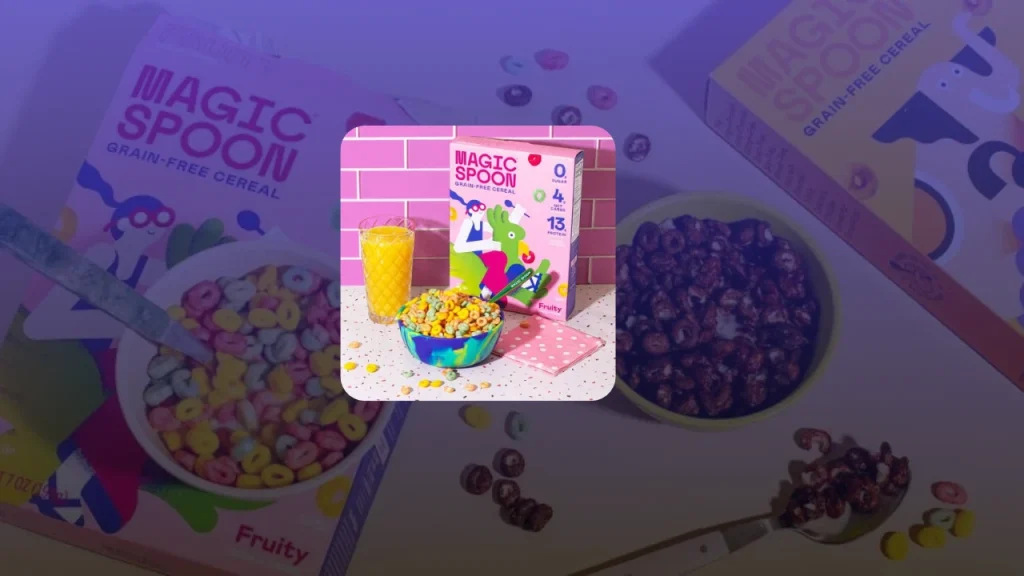
Magic Spoon sells high-protein, low-carb cereal to shoppers trying to cut sugar. Its Fruity cereal, for example, is marketed with 13 grams of protein, 4 grams of net carbs and 0 grams of total sugars per serving.
The plaintiffs argue that allulose is a monosaccharide, which is a simple sugar, so a cereal sweetened with it cannot honestly be sold as having zero sugar. They say they paid premium prices for a product they would not have bought, or would have paid less for, had the label been accurate. Magic Spoon has not been found liable, and the claims are unproven.
How much allulose do Magic Spoon cereals allegedly contain?
The complaints allege roughly 5 to 10 grams of allulose per serving, depending on the flavor. That number matters because FDA’s rule for “sugar free” claims generally requires less than 0.5 grams of sugars per serving. These amounts come from the pleadings, not from laboratory testing accepted by a court.
Which Magic Spoon Cereal Flavors Are Named in the Lawsuits?
The Protein Cereal varieties identified in reporting on the complaints include:
- Fruity
- Cocoa
- Peanut Butter
- Frosted
- Blueberry Muffin
- Honey Nut
- Chocolate Chip Cookie
- Birthday Cake
- Cinnamon Crunch
- Maple Waffle
Not every Magic Spoon product is necessarily part of every lawsuit. The company also sells granola, marshmallow cereal, pastries and other items with different formulas. Keep the exact product name and package details rather than assuming all Magic Spoon products carry the same claims.
The Four Main Magic Spoon Lawsuits Explained
| Lawsuit | Court | Case number |
| Mirzaian v. Magic Spoon | Southern District of New York | 1:26-cv-07075 |
| Kazemi v. Magic Spoon | Southern District of New York | 1:26-cv-08238 |
| Freifeld v. Magic Spoon | Southern District of New York | 1:26-cv-08281 |
| Royal v. Magic Spoon | Northern District of Illinois | 1:26-cv-10993 |
Mirzaian v. Magic Spoon (S.D.N.Y.)
Bianca Mirzaian filed on August 19, 2026, and reportedly bought Fruity cereal in California. Her complaint takes aim at Magic Spoon’s public explanation that FDA does not treat allulose as a total or added sugar for labeling. She argues that explanation treats an enforcement policy as if it had changed the legal definition of sugar.
Kazemi v. Magic Spoon (S.D.N.Y.)
Maryam Kazemi first sued in California federal court on August 31, voluntarily dismissed that case without prejudice, and refiled in the Southern District of New York on September 22. The California dismissal is not a dismissal of the New York case.
Freifeld v. Magic Spoon (S.D.N.Y.)
David Freifeld first brought a case in Illinois before filing in New York on September 23. His complaint challenges both total-sugar and added-sugar statements, including marketing outside the Nutrition Facts panel, and says the zero-sugar messaging let Magic Spoon charge a premium to shoppers avoiding sugar.
Royal v. Magic Spoon (N.D. Illinois)
Sabrina Royal sued on September 10, 2026, and Law360 reported the filing the next day. Her complaint alleges the “0 added sugar” and “no added sugar” labels are false because the cereals contain allulose, and says allulose is the predominant ingredient by weight. This case matters because Illinois sits in the Seventh Circuit, where Franco is binding. In the Second Circuit, which covers New York, Franco is persuasive but not binding.
What Is the Latest Court Update in the Magic Spoon Cases?
- October 8, 2026: the parties jointly asked to consolidate the related New York cases.
- October 20: Judge McMahon issued an order on consolidation.
- October 22: an amended consolidated complaint was filed in the Mirzaian docket.
- October 29: Judge McMahon granted a scheduling request and set the December 17, 2026, 10:15 a.m. Eastern conference, noting no further extensions under that request.
The October 29 filing also showed the parties expected that Royal (Illinois) and a Florida case might be transferred into the New York proceeding.
Is Trout v. Magic Spoon a fifth lawsuit?
Yes, according to public docket records. Jennifer Trout v. Magic Spoon Inc., No. 5:26-cv-00788, was filed October 21, 2026, in the Middle District of Florida, and the October 29 New York filing named it as a possible transfer candidate. The full Florida complaint was not reviewed for this article, so its allegations and proposed class should not be assumed to match the other four. No completed transfer of Royal or Trout into the New York case has been confirmed.
Is Allulose a Sugar? What FDA’s 2020 Guidance Says
Allulose is a monosaccharide found naturally in small amounts in foods such as figs, raisins and maple syrup. It supplies far fewer calories than table sugar. Magic Spoon’s own official FAQ describes it as a type of sugar with about one-tenth the calories of regular sugar.
In October 2020, FDA issued final guidance saying it would use enforcement discretion for allulose. Under that policy, manufacturers may leave allulose out of the Total Sugars and Added Sugars amounts on Nutrition Facts labels, pending further rulemaking, and may use 0.4 calories per gram for allulose.
Read the official FDA allulose guidance.
Guidance is not a binding rule. That distinction drives the Franco decision and these lawsuits.
What Did the Seventh Circuit Decide in Franco v. Chobani, LLC?
The Francos sued Chobani in 2023 in the Northern District of Illinois over “Zero Sugar” yogurt containing about four grams of allulose per serving, seeking to represent a nationwide class under many states’ consumer-protection laws. The district court dismissed the case, reasoning that FDA’s allulose guidance supported leaving allulose out of the sugar definition.
On July 27, 2026, the Seventh Circuit unanimously reversed in Franco v. Chobani, LLC, No. 25-2087. It looked at the definition of sugars in 21 C.F.R. § 101.9(c)(6)(ii), which covers free mono- and disaccharides, and concluded that allulose, as a monosaccharide, falls inside it. The court also held that the plaintiffs’ claims were not preempted and that they had plausibly alleged deception from an absolute “Zero Sugar” claim.
The court did not hold that Chobani, Magic Spoon or anyone else committed fraud. It decided legal questions at the motion-to-dismiss stage and sent the case back for further proceedings.
Read the July 27, 2026 Seventh Circuit opinion.
What Does 21 C.F.R. § 101.60(c) Require for a “Sugar Free” or “No Added Sugar” Claim on Magic Spoon Cereal?
Under 21 C.F.R. § 101.60(c), a “sugar free” claim generally requires less than 0.5 grams of sugars per serving, along with other conditions. Section 101.60(c)(2) separately governs “no added sugars” claims, and added sugars are defined in 21 C.F.R. § 101.9(c)(6)(iii).
So “no added sugar” and “zero total sugar” are not the same claim under the regulations, and a “0g” line in the Nutrition Facts panel is not the same as a front-of-box “zero sugar” statement. The complaints challenge different mixes of these, so the court will have to look at each exact phrase.
AllAboutLawyer.com covers another allulose-labeling case in Kroger Zero Sugar Syrup Allulose Class Action Lawsuit, Newton v. The Kroger Co..
What Federal Food Labeling Laws Apply to the Magic Spoon Lawsuits?
Federal Food, Drug, and Cosmetic Act, 21 U.S.C. § 343(a)(1)
The FDCA treats a food as misbranded if its labeling is false or misleading. Private citizens cannot sue directly under the FDCA, which is why the plaintiffs rely on state law and use the federal rules as the yardstick for what is misleading.
Nutrition Labeling and Education Act and federal preemption, 21 U.S.C. § 343-1
Federal law preempts state food-labeling requirements that are not identical to federal ones. Magic Spoon and other defendants can be expected to argue that FDA’s allulose guidance blocks the state-law claims. In Franco, the Seventh Circuit rejected that argument. Courts in the Second and Eleventh Circuits have not yet ruled on it for allulose, and a court outside the Seventh Circuit could disagree.
FDA labeling regulations, 21 C.F.R. Part 101
These include 21 C.F.R. § 101.9 (Nutrition Facts, including the definition of sugars) and § 101.60(c) (sugar and calorie claims), discussed above.
What State Consumer Protection Laws Do the Magic Spoon Lawsuits Rely On?
The complaints use different combinations of state statutes and common-law claims. Which statutes each complaint pleads should be confirmed against the filed documents, especially the consolidated New York complaint.
New York General Business Law §§ 349 and 350
Sections 349 (deceptive acts) and 350 (false advertising) are the usual vehicles for consumer food-labeling suits in New York federal court. Because three of the cases are consolidated in the Southern District of New York, these are likely to matter. They are not confirmed here as pleaded.
California Consumers Legal Remedies Act, Unfair Competition Law and False Advertising Law
California Civil Code § 1770 bars specified misleading representations about goods. California Business and Professions Code §§ 17200 and 17500 cover unfair business practices and false advertising. The California-based claims allege the zero-sugar marketing misdescribed the cereals.
Illinois Consumer Fraud and Deceptive Business Practices Act
815 ILCS 505/2 bars deceptive acts and concealment of material facts in consumer sales. The Illinois complaint alleges the labels influenced buying decisions. The Illinois Uniform Deceptive Trade Practices Act (815 ILCS 510) is often pleaded alongside it, though it mainly supports injunctive relief.
Warranty and unjust enrichment claims
Several complaints also allege breach of express warranty, based on the packaging’s statements, and unjust enrichment, based on consumers paying more than the product was worth. The Magnuson-Moss Warranty Act (15 U.S.C. § 2301 et seq.) is commonly added to such claims, but it is not confirmed as pleaded here.
Procedural rules that will shape the cases
- Federal Rule of Civil Procedure 12(b)(6): Magic Spoon can move to dismiss for failure to state a claim.
- Federal Rule of Civil Procedure 9(b): fraud-based claims must be pleaded with particularity.
- Federal Rule of Civil Procedure 23: the plaintiffs must show numerosity, commonality, typicality and adequacy, plus the requirements for the type of class they seek.
- Class Action Fairness Act (28 U.S.C. § 1332(d)): the usual basis for a large multistate class action to be in federal court.
- 28 U.S.C. § 1404(a) and the first-to-file rule: the likely tools if Royal or Trout is moved into the New York case.
Proving that a label is inaccurate does not by itself settle reliance, economic injury, class certification or the remedies available under each state’s law.
For a separate cereal-labeling dispute, see WK Kellogg Special K “Zero Sugar” Lawsuit, Were You Affected? — Bender-Long v. WK Kellogg Co., No. 2:26-cv-09438.
Is Magic Spoon Cereal Unsafe Because It Contains Allulose?
The lawsuits do not claim, and no court has found, that Magic Spoon cereal is unsafe. They are labeling and economic-loss cases. The plaintiffs say they got a product different from what the packaging led them to expect. No court has found that the allulose in these cereals caused illness or any physical harm.
People managing diabetes or other dietary conditions should talk to a doctor or dietitian about their own needs rather than read a labeling lawsuit as a medical finding.
Who Could Qualify for a Magic Spoon Class?
The proposed classes differ by complaint. Some seek nationwide classes of people who bought qualifying products for personal use, with California or Illinois subclasses. Others propose narrower state or multistate groups. Eligibility would depend on the product, purchase date and location, the challenged label, and the class definition a court eventually approves.
For now:
- No class has been certified.
- No final list of qualifying purchasers exists.
- No purchase-date range has been approved by a court.
- There is no official claim form.
Buying Magic Spoon cereal does not automatically entitle you to compensation.
How Much Could Consumers Receive From a Magic Spoon Settlement?
No settlement amount has been announced. The complaints seek damages, restitution, attorneys’ fees and changes to the labeling. Any payment would depend on a settlement or judgment, court-approved eligibility rules, documented losses and the governing law. A central question will be whether the plaintiffs can show, with reliable evidence across a large group of buyers, how much less the cereal was worth than what they paid. Do not estimate a payment from the retail price alone.
For another example of alleged “sugar-free” marketing, see Target Class Action Lawsuit Claims “Sugar-Free” Up & Up Hydration Powder Contains Sugar, Williams v. Target Corporation.
What Should Magic Spoon Buyers Do Now?
You can protect yourself without waiting for the court:
- Keep proof of purchase. Save receipts, online order confirmations and any subscription records.
- Photograph the packaging. Capture the front label, the Nutrition Facts panel and the ingredient list for the exact flavor you bought.
- Note the details. Write down the flavor, size, store or website, and purchase dates.
- Avoid look-alike claim sites. Do not give payment or personal details to websites promising Magic Spoon payouts. There is no official claims process.
- Raise concerns through proper channels. You can contact Magic Spoon or the retailer, or file a food-labeling complaint with FDA.
None of these steps establishes eligibility or guarantees a refund. There is no verified settlement website or payout deadline as of November 13, 2026.
Who Represents the Magic Spoon Plaintiffs?
As publicly reported:
| Plaintiff | Attorneys |
| Bianca Mirzaian | Adrian Gucovschi, Gucovschi Law Firm PLLC |
| Sabrina Royal | Kevin Laukaitis, Laukaitis Law LLC |
| Maryam Kazemi | Andrew Shamis and Katherine Phillips, Shamis & Gentile P.A.; Scott Edelsberg and Gabriel Mandler, Edelsberg Law P.A. |
| David Freifeld | Raphael Janove, Janove PLLC; Valter Malkhasyan and Erik Pogosyan, Malk & Pogo Law Group LLP |
A lawyer’s involvement does not mean a class has been certified or that any allegation has been proven.
What Happens Next in the Magic Spoon Lawsuits?
The consolidated New York case is the one to watch. At the December 17, 2026 conference, Judge McMahon and the parties may address a schedule, the amended complaint, possible transfer of Royal and Trout, and expected motions. Magic Spoon may move to dismiss, arguing among other things that FDA’s guidance and federal law shield its labels. The court may later decide whether any class can be certified under Rule 23.
Consolidation is a procedural step, not a finding that the labels are unlawful. No trial date, certification ruling or settlement has been verified.
Frequently Asked Questions About the Magic Spoon Lawsuits
Is Magic Spoon being sued over sugar?
Yes. Several consumers allege its “0g Total Sugars,” “0g Added Sugar” and “No Added Sugar” claims are misleading because the cereals contain allulose.
How much allulose is allegedly in Magic Spoon cereal?
The complaints allege about 5 to 10 grams per serving, depending on the flavor. No court has established those figures.
Why can Magic Spoon say zero sugar if its cereal contains allulose?
FDA guidance lets manufacturers leave allulose out of the declared Total Sugars and Added Sugars on Nutrition Facts labels. The plaintiffs argue that guidance does not make every zero-sugar claim lawful.
Did a court rule that allulose is sugar?
Yes, in a different case. The Seventh Circuit held in Franco v. Chobani, LLC on July 27, 2026, that allulose is a sugar under the federal regulation. That is not a ruling against Magic Spoon.
Did FDA ban or recall Magic Spoon cereal?
No ban or recall tied to these lawsuits has been verified.
Are there four or five Magic Spoon lawsuits?
Four main cases (three in New York, one in Illinois), plus Trout v. Magic Spoon, filed October 21, 2026, in Florida.
Have the Magic Spoon cases been combined?
The three New York cases have been consolidated. The Illinois and Florida cases were named as possible transfers, but no completed transfer has been confirmed.
Can I get money from the Magic Spoon lawsuit?
Not now. There is no settlement, claim form, official settlement website or payout deadline.
When is the next Magic Spoon court date?
A conference is set for December 17, 2026, at 10:15 a.m. Eastern in the consolidated New York case, subject to later changes.
Bottom Line
Magic Spoon’s zero-sugar marketing is under growing legal pressure after four consumers filed putative class actions and a fifth case appeared in Florida. They turn on one question: FDA has said it will not enforce against leaving allulose out of sugar totals, but the Seventh Circuit has held that the regulation still treats allulose as a sugar.
That ruling gives the plaintiffs a strong legal argument, especially in Illinois, but it does not decide whether Magic Spoon’s packaging is misleading or whether anyone is owed money. Until a court approves a class, a settlement or a judgment, the claims remain allegations. For buyers, the practical points are to keep records, ignore guaranteed-payout claims, and watch the December 17 conference in New York.
Sources and Legal References
- Mirzaian v. Magic Spoon, No. 1:26-cv-07075 (S.D.N.Y.) docket
- Kazemi v. Magic Spoon, No. 1:26-cv-08238 (S.D.N.Y.) docket
- Freifeld v. Magic Spoon, No. 1:26-cv-08281 (S.D.N.Y.) docket
- Royal v. Magic Spoon, No. 1:26-cv-10993 (N.D. Ill.) docket
- Trout v. Magic Spoon, No. 5:26-cv-00788 (M.D. Fla.) docket
- Judge McMahon’s October 29, 2026 scheduling order
- FDA: Declaration of Allulose and Calories From Allulose
- Franco v. Chobani, LLC, No. 25-2087 (7th Cir. July 27, 2026)
- 21 C.F.R. § 101.9: Nutrition labeling of food
- 21 C.F.R. § 101.60: Nutrient content claims for calorie and sugar content
- Law360: Magic Spoon Is Healthwashing Protein Cereals, Suit Says (September 11, 2026)
- Morrison & Foerster: Allulose Claims Face Growing Class Action Scrutiny
- Magic Spoon: Official FAQ
Disclaimer: This is general legal information, not legal or medical advice. The claims described are allegations that have not been proven in court.
Researched and written by Israr Ahmad, legal content researcher and founder of AllAboutLawyer.com. All facts verified against the federal dockets and the October 29, 2026 scheduling order, the Seventh Circuit’s Franco opinion, FDA’s allulose guidance and labeling regulations, and contemporary legal reporting (Law360, Morrison & Foerster), as of November 13, 2026. Last Updated: November 13, 2026.
About the Author
Israr Ahmad is a legal content researcher with 4+ years of experience covering class action settlements and consumer rights cases. He has researched and published coverage of 2,500+ settlements using verified court records, settlement administrator filings, and government sources. Learn more about Israr.