
Are Tasers and Stun Guns Legal in New York? Why the Answer Depends on Where You Are
There’s no clean yes-or-no answer here, and anyone who gives you one is oversimplifying. New York’s Penal Law still criminalizes possessing a stun gun or Taser statewide. A federal court said that ban is unconstitutional back in 2019. The legislature never changed the law. New York City has its own, separate ban that’s now sitting in front of the U.S. Supreme Court. All four of those things are true at the same time.
New York Taser & Stun Gun Law — Key Facts
| Field | Detail |
| Statewide law | N.Y. Penal Law § 265.01 — bans possession of “electronic dart guns” (Tasers) and “electronic stun guns” as a Class A misdemeanor |
| Federal ruling on that ban | Avitabile v. Beach, N.D.N.Y. (2019) — declared the statewide ban unconstitutional under the Second Amendment |
| Has the statute been changed? | No — the New York Legislature has never repealed or amended § 265.01 |
| State court position | People v. Johnson, 65 Misc. 3d 1024 — a New York state court held Avitabile is not binding on state courts |
| New York City’s separate ban | NYC Administrative Code § 10-135 — bans sale and possession of electronic stun guns citywide |
| NYC ban’s current status | Upheld by a federal district court (March 2025) and the Second Circuit (April 13, 2026) in Calce v. City of New York |
| Where the NYC case stands now | Supreme Court has called for a response from NYC, due October 8, 2026; conference expected October 15, 2026 |
| Pending state legislation | Senate Bill S9623 — would create a regulated framework; not yet enacted |
| Maximum penalty for illegal possession | Up to 364 days in jail and a $1,000 fine (Class A misdemeanor) |
| Last Updated | September 22, 2026 |
Why the State Law Is Still a “Gray Zone”
New York Penal Law § 265.01 lists possessing an electronic dart gun or electronic stun gun as fourth-degree criminal possession of a weapon — a crime, full stop, on the statute’s face. In 2019, a federal judge in Avitabile v. Beach ruled that a total, no-exceptions ban like this one violates the Second Amendment, even for someone who just wants one for self-defense at home. New York State never appealed that ruling.
Here’s where it gets messy: a federal district court decision doesn’t automatically rewrite a state statute. The legislature would still need to repeal or amend § 265.01, and it hasn’t. On top of that, at least one New York state court — in People v. Johnson — has ruled that Avitabile doesn’t bind state courts at all, meaning a state prosecutor in a different jurisdiction could still bring charges under the unchanged law.
The New York courts’ own law library describes this bluntly: it’s a genuine “gray zone,” and there’s no simple answer without weighing all of it — the statute, the federal ruling, and the state court’s pushback.
In practice, that means your actual risk depends heavily on where you are and who you run into. State troopers are unlikely to make an issue of simple possession given Avitabile. A local police department in a different part of the state, or a local prosecutor who agrees with People v. Johnson, might not see it the same way.
Related article: Is Lane Splitting Legal in New York? What VTL § 1252 Actually Says
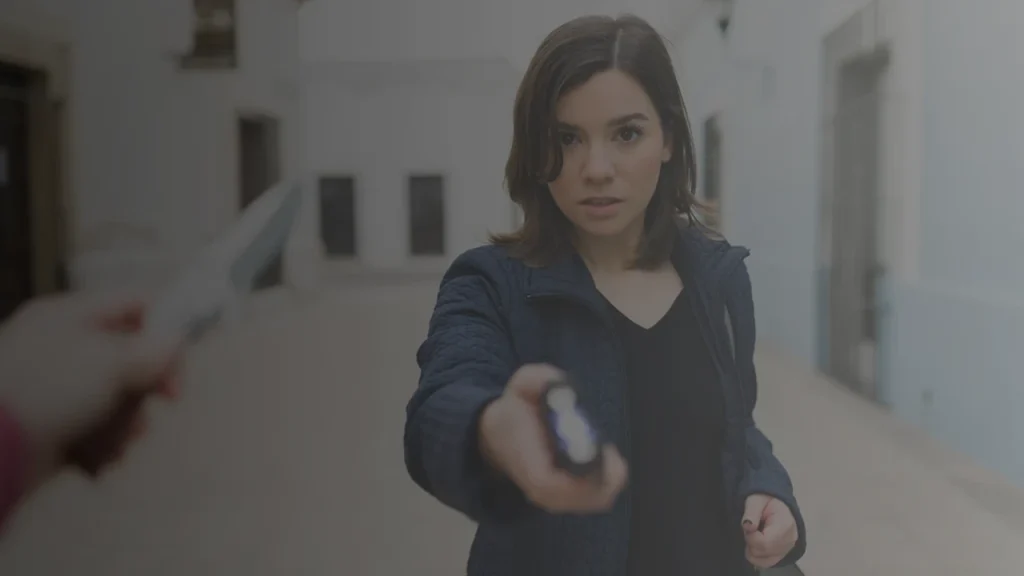
New York City Has Its Own, Separate Ban — And It’s Stricter
None of the above touches New York City, which enforces its own rule under NYC Administrative Code § 10-135. That code section bans selling or possessing an “electronic stun gun” within city limits, with narrow exceptions only for police officers on duty and for manufacturers shipping devices through the city to somewhere else.
There’s a technical wrinkle: NYC’s code defines “electronic stun gun” in a way that excludes “electronic dart guns” (Taser-style, projectile-firing devices) as the state Penal Law defines them. That might sound like a loophole for Tasers specifically inside city limits — it isn’t one you should rely on, because the state ban under § 265.01 still covers dart guns regardless of what the city code says, and NYPD enforces both.
This ban has already been tested in court and is currently headed to the highest court in the country:
- A federal district judge granted summary judgment upholding NYC’s ban in March 2025, in Calce v. City of New York, ruling the plaintiffs hadn’t shown stun guns and Tasers are in “common use” for lawful purposes — the threshold test after the Supreme Court’s 2022 Bruen decision.
- The Second Circuit affirmed that ruling on April 13, 2026, in a short, non-precedential summary order.
- The plaintiffs — the Firearms Policy Coalition, the Second Amendment Foundation, and individual New Yorkers — petitioned the Supreme Court, arguing the Second Circuit put the burden on the wrong side: it should be up to the city to prove the devices aren’t commonly used, not up to challengers to prove they are.
- As of this week, the Supreme Court has called for a response from New York City, due October 8, 2026, with the justices likely to discuss whether to take the case at their October 15, 2026 conference.
That’s not a guarantee the Court will hear the case, but it does mean at least one justice found the petition worth a closer look. If the Court eventually takes it up and rules against the city, that could resolve the broader statewide gray zone too, since the legal question — how “common use” gets proven — is the same one underlying both bans.
What Actually Counts as a “Stun Gun” vs. a “Taser” Under New York Law
The state draws a real legal distinction, and it matters for which rule applies:
- Electronic dart gun (the statutory term for a Taser-style device): fires a projectile that delivers a shock at a distance.
- Electronic stun gun: requires direct contact with the target to deliver a shock.
Both fall under the same state penalty in § 265.01. Only the “stun gun” category is named in NYC’s local code — but again, dart guns are still covered by state law wherever you are in the state, New York City included.
If You Use One in Self-Defense: New York’s Justification Rules Still Apply
Owning or carrying one of these devices is a separate question from whether you’re legally justified in using it. New York’s self-defense statute, Penal Law § 35.15, allows physical force against another person when you reasonably believe it’s necessary to defend against imminent unlawful force. Two limits matter a lot here:
- You can lose the defense if you started it. If you were the initial aggressor, self-defense generally isn’t available unless you clearly withdrew and the other person kept coming anyway.
- New York has a duty to retreat before using deadly force, except inside your own home (the “castle doctrine”). Whether a Taser or stun gun counts as “deadly physical force” is decided case by case — prosecutors may argue it does, particularly against someone elderly or with a heart condition — so treat the duty to retreat as the safer assumption anywhere outside your home.
Penalties If You’re Charged
Simple possession in violation of § 265.01 is a Class A misdemeanor: up to 364 days in jail (deliberately one day short of a full year, to reduce immigration consequences for noncitizens) and a fine of up to $1,000.
The stakes go up sharply if the device is used during another crime. Using a stun gun or Taser in a robbery, for instance, can support a charge of first-degree robbery under Penal Law § 160.15, since the device qualifies as a “dangerous instrument” — a Class B violent felony carrying five to twenty-five years in state prison.
Traveling With One In or Out of New York
Federal and carrier rules add another layer, separate from state and city law:
- TSA prohibits stun guns and Tasers in carry-on bags. Checked baggage is generally allowed, packed to prevent accidental discharge, though the final call belongs to the individual TSA officer at the checkpoint. Lithium-battery rules apply on top of that.
- Amtrak bans stun guns entirely, in both carry-on and checked baggage — no checked-bag exception like TSA’s.
- Clearing airport or station security doesn’t clear you of state or city law. If your destination is New York, you’re still subject to everything above once you land.
What’s Being Proposed to Fix the Gray Zone
Senate Bill S9623 would replace the outright ban with a regulated framework: possession allowed only at your home, on property you own or lease, or at a business you operate — not carried on the street. It would bar anyone under 18, anyone with a prior felony, and anyone with any assault conviction (felony or misdemeanor) from possessing one, cap dealer sales at two devices per buyer, and require a sworn statement of eligibility at purchase. It would also create a new Class D felony for using either device against a police or peace officer. As of this writing, S9623 has not passed, and an earlier, similar version (S2421) also didn’t advance.
Frequently Asked Questions — New York Taser and Stun Gun Law
Are Tasers legal to own in New York State right now?
Technically, state law still bans possession, but a 2019 federal ruling found that ban unconstitutional and the state never appealed. No court has ordered the statute changed, so risk varies by location and which authority you encounter.
Are stun guns legal in New York City?
No. NYC enforces its own separate ban under Administrative Code § 10-135, and that ban has been upheld twice in court, most recently by the Second Circuit in April 2026. It’s currently pending at the U.S. Supreme Court.
Could the Supreme Court change this?
Possibly. The Court has asked New York City to respond by October 8, 2026, and may decide whether to hear the case around October 15, 2026. A ruling against the city could affect the legal reasoning behind the statewide ban too, though that’s not guaranteed.
What’s the penalty for illegal possession?
Up to 364 days in jail and a $1,000 fine as a Class A misdemeanor — significantly more if the device is used during another crime like a robbery.
Can I carry a Taser or stun gun for self-defense on the street?
Even where possession is arguably protected under Avitabile, carrying one in public is riskier than keeping one at home, and New York’s duty-to-retreat rule still applies to how you can use it.
Can I fly with a stun gun into New York?
TSA allows one in checked baggage only (never carry-on); Amtrak bans them entirely in any bag. Either way, landing in New York still subjects you to the state and city laws above.
Is there a difference between a “Taser” and a “stun gun” under the law?
Yes — a Taser (legally, an “electronic dart gun”) fires a projectile; a stun gun requires direct contact. Both carry the same state penalty, though NYC’s local code technically only names stun guns.
Will pending legislation make this clearer?
Senate Bill S9623 would create actual rules — age limits, criminal history restrictions, a two-device purchase cap — but it hasn’t passed as of this writing.
Sources Used in This Article
- N.Y. Penal Law § 265.01: https://www.nysenate.gov/legislation/laws/PEN/265.01
- N.Y. Penal Law § 35.15 (self-defense justification): https://www.nysenate.gov/legislation/laws/PEN/35.15
- N.Y. Penal Law § 160.15 (first-degree robbery): https://www.nysenate.gov/legislation/laws/PEN/160.15
- NYC Administrative Code § 10-135: https://codelibrary.amlegal.com/codes/newyorkcity/latest/NYCadmin/0-0-0-128127
- New York State Unified Court System, Ask a Law Librarian — stun gun/Taser gray-zone explainer: https://askalawlibrarian.nycourts.gov/legalresearch/faq/360755
- Senate Bill S9623: https://www.nysenate.gov/legislation/bills/2025/S9623
- Second Circuit summary order, Calce v. City of New York, April 13, 2026 (reported): https://bearingarms.com/camedwards/2026/04/13/second-circuit-keeps-nyc-stun-gun-ban-in-place-n1232202
- Supreme Court call-for-response reporting, September 8, 2026: https://bearingarms.com/camedwards/2026/09/08/scotus-directs-nyc-to-offer-defense-of-its-stun-gun-ban-n1233736
- TSA — Stun Guns/Shocking Devices: https://www.tsa.gov/travel/security-screening/whatcanibring/items/stun-gunsshocking-devices
- Amtrak — Prohibited Items in Baggage: https://www.amtrak.com/prohibited-items
Researched and written by Israr Ahmad, legal content researcher and founder of AllAboutLawyer.com. All facts verified against N.Y. Penal Law, NYC Administrative Code, the New York courts’ own guidance, and current Supreme Court docket reporting, as of September 22, 2026. Last Updated: September 22, 2026.
This article is for informational purposes only and does not constitute legal advice. Laws vary by state and individual circumstances differ. For advice about your specific situation, consult a qualified attorney.
About the Author
Israr Ahmad is a legal content researcher with 4+ years of experience covering class action settlements and consumer rights cases. He has researched and published coverage of 2,500+ settlements using verified court records, settlement administrator filings, and government sources. Learn more about Israr.