
Trump Executive Privilege Kennedy Center Lawsuit, What Was Asserted, What the Court Must Decide and What It Means
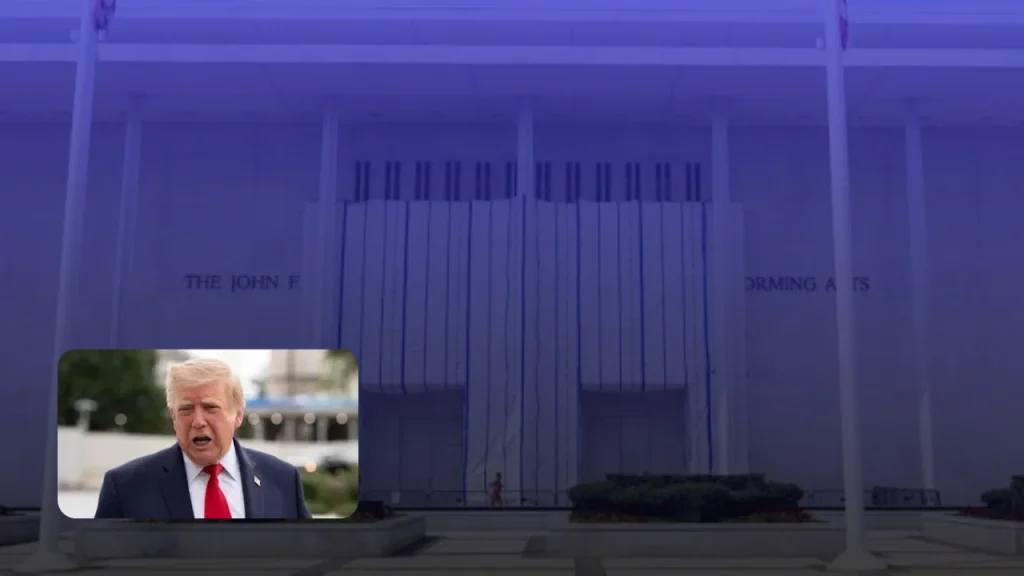
President Donald Trump has formally invoked presidential communications privilege, a form of executive privilege, to withhold certain documents and testimony in Rep. Joyce Beatty’s lawsuit challenging the planned two-year closure of the John F. Kennedy Center for the Performing Arts. Deputy White House Counsel Joshua T. Hoyt signed a declaration, filed October 14, 2026, saying he acted at the President’s direction. The news was widely reported October 15.
The court has not ruled. Judge Christopher R. Cooper must decide whether the privilege covers the disputed records, because Trump is both President and chairman of the Kennedy Center board. This is a federal civil lawsuit, not a settlement. There is no claim form, refund program or payout for the public. Primary filing: https://storage.courtlistener.com/recap/gov.uscourts.dcd.287972/gov.uscourts.dcd.287972.106.0.pdf
Independent publisher notice: AllAboutLawyer.com is an independent legal information website. We are not a law firm, we do not represent any party, and we take no side in this dispute. The parties’ arguments below are their positions, not court findings.
Quick Facts: Beatty v. Trump Executive Privilege Dispute
| Item | Details |
| Primary court filing | Defendants’ Response to Motion to Compel, Doc. 106: https://storage.courtlistener.com/recap/gov.uscourts.dcd.287972/gov.uscourts.dcd.287972.106.0.pdf |
| Claim form / public fund | None. Civil litigation only |
| Case | Joyce Beatty v. Donald J. Trump et al., No. 1:25-cv-04480-CRC |
| Court / judge | U.S. District Court for the District of Columbia; Judge Christopher R. Cooper |
| Plaintiff | Rep. Joyce Beatty (D-Ohio), an ex officio member of the Kennedy Center board |
| Defendants | President Trump and other Kennedy Center-related defendants |
| Privilege asserted | Presidential communications privilege |
| Formal assertion | Declaration of Joshua T. Hoyt, Doc. 106-1, filed October 14, 2026 (reported October 15) |
| Beatty’s motion | Motion to Compel, Doc. 96, filed October 5, 2026 |
| Records at issue | Listed document requests, interrogatories, requests for admission and parts of deposition testimony about Kennedy Center management and operations |
| Status | Privilege dispute unresolved; no ruling verified as of October 15, 2026 |
| Kennedy Center status | Closed to the public since September 15, 2026 |
What Trump’s Declaration Covers
Hoyt’s five-page declaration invokes the privilege over information, documents and communications among Trump, his advisers (inside and outside government) and Kennedy Center staff about the institution’s management and operation. It also reaches some communications that do not directly include Trump, such as exchanges meant to gather information, explore options, prepare recommendations for the President or relay presidential decisions. Specifically it lists:
- Document requests numbered 1, 4, 6, 12, 13, 15, 23, 38, 39 and 45.
- Interrogatories numbered 5, 6, 13, 19, 21 and 23.
- Requests for admission numbered 42, 43, 44, 46, 48 through 51, 53, 54 and 55.
- Parts of deposition testimony of Kennedy Center executive director Matthew Floca and discussions involving Joe Lafauci, where answers would reveal covered communications.
- Communications involving Commerce Secretary Howard Lutnick when they relayed presidential decisions or were meant to inform presidential deliberations.
This is not a blanket seal. It targets specific requests. The court has separately allowed discovery of other materials in the case.
Why Beatty Wants the Records
Beatty’s October 5 motion argues that Trump’s instructions to Kennedy Center management as board chairman are not presidential communications, and that the records will show whether the board made an independent, prudent closure decision or simply followed its chairman. She notes she is seeking records from Kennedy Center management, not a search of the Executive Office of the President. She also argues the defense relied on conversations between Trump and Floca to describe how the closure plan developed, then withheld related evidence. Her lawyers told the court that a broad privilege would “obstruct the search for the truth.” No other sitting president has also been the center’s chairman, which commentators call novel.
The Administration’s Defense
In its October 14 response, the Justice Department asks the court to deny the motion to compel. It argues that:
- The President’s statutory duties under the Kennedy Center Act, including appointing trustees, require him to receive advice about the center’s operations, so communications informing those duties are official.
- Beatty has already received substantial discovery (five depositions, 25 interrogatories, responses to 44 requests for admission and about 7,500 pages of documents).
- Her requests are overbroad, she has not shown the required need, and the board’s materials and expert reports are enough to decide whether it acted within its authority.
- The requests raise separation-of-powers concerns.
Related article: Posey Meadows Wedding Venue Lawsuit, Fiancée Seeks $15,909.28 Refund After Diego Hernandez’s Death, Venue Countersues
How the Case Got Here
| Date | Event |
| February 2025 | Trump joins the Kennedy Center board and is elected chairman |
| December 2025 | Board votes to add Trump’s name; Beatty sues |
| February 1, 2026 | Trump announces a roughly two-year closure for renovation (about $250 million) |
| March 16, 2026 | Board approves the original closure plan |
| May 29, 2026 | Judge Cooper rules for Beatty on renaming and ex officio trustee voting rights and grants preliminary relief against the original closure decision, finding she was likely to show a breach of the board’s duty of prudence. He did not bar closure forever; the board could reconsider after an independent, prudent review |
| June 2026 | Court orders Trump’s name removed from the building’s exterior (administration has appealed aspects of the rulings) |
| August 13, 2026 | Board adopts a resolution on recognizing Trump; the board votes again on closure in August and September |
| September 15, 2026 | Court opinion on the board’s August resolution; board votes again to close for two years and the center closes |
| September 2026 | Court allows additional discovery after a photo showed Trump with a poster reading “Kennedy Center DEMOLISHED”; reports say the judge required advance notice before any demolition-related steps |
| October 5, 2026 | Beatty files motion to compel |
| October 14, 2026 | Defendants respond; Hoyt declaration invokes privilege |
Executive Privilege: The Law
Source and purpose. Executive privilege is rooted in Article II and separation of powers. The presidential communications privilege protects confidential communications made in the course of presidential decision-making so the President can get candid advice.
It is qualified, not absolute: United States v. Nixon, 418 U.S. 683 (1974). The Supreme Court recognized the privilege but held a generalized interest in confidentiality can yield to a demonstrated, specific need for evidence. Courts can review disputed material privately (in camera).
Who and what it covers: In re Sealed Case, 121 F.3d 729 (D.C. Cir. 1997), and Judicial Watch, Inc. v. DOJ, 365 F.3d 1108 (D.C. Cir. 2004). The D.C. Circuit has held the presidential communications privilege covers communications by the President and immediate White House advisers with broad operational responsibility, including those who gather information for the President, but it does not reach every official or every communication. A party seeking the material must show it is demonstrably critical to the case and not available elsewhere. This is a higher bar than for the deliberative-process privilege.
Civil-case limits on discovery: Cheney v. U.S. District Court, 542 U.S. 367 (2004). The Court said courts must avoid unnecessarily broad discovery against the executive branch and should consider other ways to protect the privilege, though it did not create blanket immunity.
Who may invoke it: United States v. Navarro (D.C. Cir. 2026). The article’s source material says the D.C. Circuit held the assertion must come from the President or an authorized designee and described the privilege as qualified. Hoyt’s declaration says he acted at the President’s direction, answering Beatty’s procedural objection but not the question of substantive scope. (Check the citation, reported as 182 F.4th 1005, before publishing.)
Related cases. Nixon v. Administrator of General Services, 433 U.S. 425 (1977), addressed a former president’s privilege claim and the public interest in the records, and Trump v. Thompson, 20 F.4th 10 (D.C. Cir. 2021), addressed a former president’s privilege assertion against a congressional request.
Federal discovery rules. Fed. R. Civ. P. 26(b)(1) sets the scope (relevant and proportional), 26(b)(5)(A) requires a privilege log describing withheld material, and Rule 37(a) governs motions to compel. Fed. R. Evid. 501 provides that federal common law governs privileges in federal question cases.
The Kennedy Center’s Legal Status
Congress created the Kennedy Center as a living memorial to President Kennedy and as a bureau of the Smithsonian Institution (20 U.S.C. § 76h). The statute provides for the board of trustees, including presidentially appointed general trustees and ex officio members drawn from Congress and the executive branch, and the President appoints general trustees and members of the advisory committee. The board’s powers and duties are addressed in 20 U.S.C. § 76l. The center also runs as a nonprofit, and trust-law principles such as a duty of prudence informed Judge Cooper’s May ruling.
The statute’s status matters because Beatty relies on Dong v. Smithsonian Institution, 125 F.3d 877 (D.C. Cir. 1997), to argue the Kennedy Center is not an executive-branch entity, while the government points to the President’s statutory appointment duties. Any change to the memorial’s name or character is a question of congressional authority under the Act, which is the heart of Beatty’s renaming claim.
What Judge Cooper Could Do
The judge could deny the motion to compel, order production of some material, narrow the privilege claim, require a more detailed privilege log, or review specific documents privately. These are possible options, not predictions. Separately, the government has asked to lift the preliminary injunction and for summary judgment, so those motions must also be resolved. A losing side may seek appellate review, and executive-privilege disputes have historically reached the D.C. Circuit through mandamus or after a contempt-type ruling, which can delay the case.
What This Means for the Public
Nothing in this dispute creates refunds or compensation for ticket holders, performers or staff. Those issues turn on individual ticket terms, contracts and employment agreements. The privilege fight affects what evidence the court sees when it decides whether the board’s closure decision was lawful. Follow the docket in the U.S. District Court for the District of Columbia and Kennedy Center statements for updates.
Frequently Asked Questions
What did Trump assert?
The presidential communications privilege, a form of executive privilege, over specified discovery requests and testimony.
Who filed the declaration?
Deputy White House Counsel Joshua T. Hoyt, saying he acted at the President’s direction. It was filed October 14 and reported October 15.
Has the judge decided whether the privilege applies?
No ruling has been verified.
Does this make all Kennedy Center records secret?
No. It covers specified requests. Other discovery has been allowed.
Is executive privilege absolute?
No. Under Nixon and later cases it is qualified and can yield to a specific, demonstrable need for evidence.
Is the Kennedy Center part of the executive branch?
Congress established it within the Smithsonian as a living memorial, and it also operates as a nonprofit. The parties dispute how that status affects the privilege.
Why does Beatty say the privilege should not apply?
She argues Trump acted as board chairman, not only as President, and that the evidence is needed to test whether the board acted independently.
Is the Kennedy Center open?
No. It has been closed to the public since September 15, 2026.
Can the public file a claim?
No. This is not a class action or settlement.
Where can I follow the case?
The docket in No. 1:25-cv-04480-CRC through PACER or CourtListener.
Related Coverage on AllAboutLawyer.com
Sources
- Defendants’ Response to Motion to Compel, Beatty v. Trump, No. 1:25-cv-04480-CRC, Doc. 106 (October 14, 2026): https://storage.courtlistener.com/recap/gov.uscourts.dcd.287972/gov.uscourts.dcd.287972.106.0.pdf
- Declaration of Joshua T. Hoyt, Doc. 106-1 (October 14, 2026): https://storage.courtlistener.com/recap/gov.uscourts.dcd.287972/gov.uscourts.dcd.287972.106.1.pdf
- Beatty’s Motion to Compel, Doc. 96 (October 5, 2026): https://storage.courtlistener.com/recap/gov.uscourts.dcd.287972/gov.uscourts.dcd.287972.96.0.pdf
- Memorandum opinion and order, Doc. 50 (May 29, 2026): https://law.justia.com/cases/federal/district-courts/district-of-columbia/dcdce/1%3A2025cv04480/287972/50/
- Memorandum opinion and order, Doc. 77 (September 15, 2026): https://law.justia.com/cases/federal/district-courts/district-of-columbia/dcdce/1%3A2025cv04480/287972/77/
- “Ohio Democrat objects to DOJ citing executive privilege to withhold Kennedy Center records” (October 2026, citing The New York Times): https://abcnews4.com/news/nation-world/ohio-democrat-objects-to-doj-citing-executive-privilege-to-withhold-kennedy-center-records-president-trump-lawsuit-federal-judge-joyce-beatty
- CBS News, “Trump formally asserts executive privilege in legal fight over Kennedy Center’s closure” (October 15, 2026)
- 20 U.S.C. §§ 76h, 76l: https://uscode.house.gov/
- United States v. Nixon, 418 U.S. 683 (1974): https://www.govinfo.gov/app/details/USREPORTS-418/USREPORTS-418-683
- Cheney v. U.S. District Court, 542 U.S. 367 (2004): https://www.govinfo.gov/app/details/USREPORTS-542/USREPORTS-542-367
- In re Sealed Case, 121 F.3d 729 (D.C. Cir. 1997); Judicial Watch, Inc. v. DOJ, 365 F.3d 1108 (D.C. Cir. 2004); Dong v. Smithsonian Institution, 125 F.3d 877 (D.C. Cir. 1997); Nixon v. Administrator of General Services, 433 U.S. 425 (1977); Trump v. Thompson, 20 F.4th 10 (D.C. Cir. 2021)
- United States v. Navarro (D.C. Cir. 2026): https://law.justia.com/cases/federal/appellate-courts/cadc/24-3006/24-3006-2026-07-21.html
- Fed. R. Civ. P. 26, 37; Fed. R. Evid. 501
Disclaimer: This article provides general legal information, not legal advice. It describes opposing legal positions in a pending case, and the privilege claim has not been adjudicated.
About the Author
Israr Ahmad is a legal content researcher with 4+ years of experience covering class action settlements and consumer rights cases. He has researched and published coverage of 2,500+ settlements using verified court records, settlement administrator filings, and government sources. Learn more about Israr.