
Accenture Agrees to Pay $25 Million to Resolve DOJ False Claims Act Allegations Over Race- and Sex-Based Employment Practices
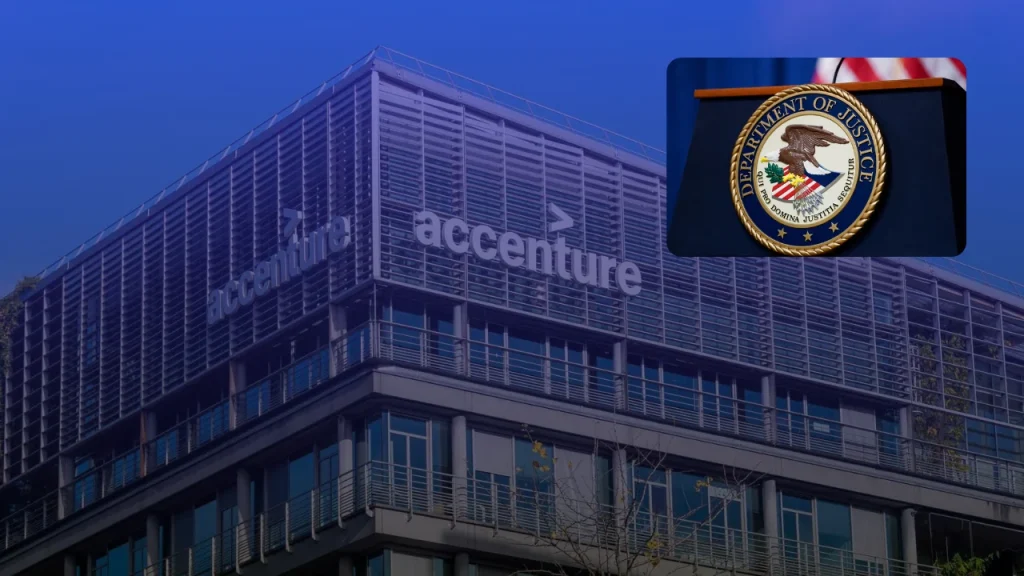
On September 14, 2026, the U.S. Department of Justice announced that Accenture Federal Services (AFS), Accenture plc and Accenture LLP agreed to pay the United States $25,000,000 to resolve alleged False Claims Act violations. The government alleged that AFS certified compliance with anti-discrimination requirements in its federal contracts while taking race or sex into account in hiring, promotions and access to training programs. Accenture denies the conduct, and the DOJ states that the resolved claims are allegations only, with no determination of liability.
There is no claim form, settlement administrator or deadline. The $25,000,000 is paid to the United States, not to Accenture employees, job applicants or the public. This is not a class action.
Accenture Federal Services $25 Million False Claims Act Settlement: Quick Facts
| Detail | Information |
| Settlement amount | $25,000,000, inclusive of civil penalties |
| Restitution portion | $11,627,000 |
| Interest | 4% per year from September 9, 2026 |
| Payment due | No later than 14 days after the agreement’s Effective Date |
| Paying parties | Accenture plc, Accenture LLP and Accenture Federal Services |
| Recipient | United States |
| Government agencies | DOJ Civil Division (Commercial Litigation Branch, Fraud Section) and the U.S. Attorney’s Office for the Northern District of Illinois |
| Law involved | False Claims Act, 31 U.S.C. §§ 3729–3733 |
| Contract requirements cited | Title VII of the Civil Rights Act of 1964 and FAR 52.222-26 (Equal Opportunity) |
| Alleged conduct period | January 1, 2017 through the agreement’s Effective Date |
| Admission of liability | None; Accenture denies the Covered Conduct |
| Cooperation credit | Yes, under Justice Manual § 4-4.112 |
| Venue for disputes over the agreement | U.S. District Court for the Northern District of Illinois |
| Court case number | None identified in the DOJ materials |
| Public claim form or deadline | None |
What Did the United States Allege Against Accenture Federal Services?
According to the settlement agreement, the government contended that AFS was required to follow anti-discrimination requirements incorporated into its federal contracts, including FAR 52.222-26, and that it certified compliance while knowingly maintaining the following practices (the “Covered Conduct”). It also alleged that AFS charged costs tied to those practices to its federal contracts.
Hiring. The government alleged AFS used race or sex to make progress toward non-public workforce-composition goals for business units, which one employee internally called “stealth” goals. Business unit leaders received monthly summaries of each race and sex’s share of the unit, color-coded green, yellow or red against the goals. The government alleged these goals drove changes in hiring, citing an entry-level hiring round at the end of 2020 and beginning of 2021 that AFS conducted after concluding an earlier round did not yield enough employees from its preferred racial demographics.
Promotions. For managing director promotions, the government alleged AFS discussed candidates who advanced its demographic goals separately, sometimes ranked them separately, highlighted their names in color and kept a separate “pipeline” of such candidates.
Training and development. The government alleged AFS limited eligibility for certain training, mentoring, leadership development and educational opportunities by race or sex. The example named is the Amplify to Elevate training program, which it said ran from August 2022 to February 2025 and reserved participation based on race.
These are the government’s contentions, not findings. Accenture denies engaging in the Covered Conduct, and the agreement says it is neither an admission of liability by Accenture nor a concession by the United States that its claims lack merit.
Why Did the Department of Justice Use the False Claims Act Against Accenture Federal Services?
The False Claims Act targets false claims for payment and false statements made to the federal government. The DOJ’s theory is that most federal contracts require contractors to certify that they will not discriminate because of race or sex and will treat employees and applicants “without regard to” those characteristics. If a contractor certifies that while allegedly doing the opposite, the government says its payment requests can be false claims. Here, the DOJ also alleged that AFS billed costs related to the challenged practices to federal contracts.
Related article: Dallas County Considers $1.5 Million Settlement in Spencer Swearnger Jail Death Case
What Are the Key Terms of the Accenture Settlement Agreement?
- Payment: $25,000,000, including civil penalties and interest at 4% per year from September 9, 2026, of which $11,627,000 is restitution.
- Release: Conditioned on payment, the United States releases Accenture and related entities from civil and administrative monetary claims for the Covered Conduct under the False Claims Act, the Program Fraud Civil Remedies Act, and common-law theories of breach of contract, payment by mistake, unjust enrichment and fraud.
- Reserved claims: The government kept criminal liability, tax liability, suspension and debarment rights, individual liability, liability for conduct outside the Covered Conduct, and any pending or future EEOC charges, including charges alleging the same conduct.
- Unallowable costs: Costs tied to the matter, the investigation, Accenture’s defense and corrective actions, negotiating the agreement and the payment itself are unallowable under FAR 31.205-47. Accenture must identify and repay any such costs previously billed within 90 days of the Effective Date, and the government keeps audit rights.
- Benefit: The agreement states it is for the benefit of the parties only.
Can Accenture Employees, Applicants or the Public File a Claim for the $25,000,000?
No. The agreement sets up no fund, claim process or administrator, and it provides for payment to the United States. Anyone who believes they were discriminated against at work can still contact the EEOC, which the agreement expressly leaves free to act on pending or future charges. This settlement does not decide any individual’s claim.
Does the Accenture Settlement Have a Court Case Number?
Not in the DOJ materials reviewed. The settlement agreement lists the parties as the United States, Accenture plc, Accenture LLP and Accenture Federal Services, and does not give a civil action number or caption for a filed complaint. It names the U.S. District Court for the Northern District of Illinois only as the exclusive venue for disputes about the agreement itself, which does not by itself show a numbered case was filed there.
How Does the Accenture Settlement Relate to Executive Order 14398 and FAR 52.222-90?
The Accenture settlement rests on longstanding contract requirements (Title VII as incorporated into contracts, and FAR 52.222-26), not on the newer rules. Still, contractors now face an additional layer. President Trump signed Executive Order 14398, “Addressing DEI Discrimination by Federal Contractors,” on March 26, 2026. In April 2026 the FAR Council issued implementation guidance adding a new clause, FAR 52.222-90, to be used in new solicitations and resulting contracts beginning April 24, 2026, and in existing contracts. Law-firm summaries report that the clause flows down to subcontracts, gives contracting officers access to records for compliance checks, and makes noncompliance a cause for suspension and debarment. Those summaries also note that the order focuses on race and ethnicity, and that a lawsuit seeking to block it was filed in federal court in Maryland, so its status should be checked before relying on it.
What Does the Accenture Settlement Mean for Native-Owned Federal Contractors, Alaska Native Corporations and Tribal Enterprises?
Nothing in the settlement says Native-owned businesses violated the False Claims Act, and there is no fund for them. The practical question is how documented preference, tracking or development programs compare with the certifications a contractor makes.
Federal law treats tribal and Native preferences differently from race-based ones in several ways. Morton v. Mancari, 417 U.S. 535 (1974), treated Indian hiring preferences tied to tribal membership as political rather than racial classifications. Title VII excludes Indian tribes from the definition of “employer” (42 U.S.C. § 2000e(b)) and permits certain Indian preferences (42 U.S.C. § 2000e-2(i)). The Alaska Native Claims Settlement Act, at 43 U.S.C. § 1626(g), places certain Native corporations outside Title VII’s definition of “employer.” Section 7(b) of the Indian Self-Determination and Education Assistance Act, codified at 25 U.S.C. § 5307(b), requires Indian preference in training, employment and certain subcontracts under covered contracts and grants.
None of this guarantees that a given program is lawful under a given contract. A whistleblower, investigator or contracting officer could look at color-coded demographic dashboards or restricted-eligibility programs and question them, so the contract clauses, the legal authority for each preference, and the paper trail all matter. Native-owned contractors should have qualified counsel review their specific contracts, including whether FAR 52.222-26, FAR 52.222-90 or program-specific Indian preference clauses apply.
For a comparable example of a government False Claims Act action that created no payout fund for the public, see Dr. Michael Neret Medicare Fraud Lawsuit Bay City, TX Doctor.
Accenture Federal Services Settlement Timeline
| Date | Event |
| January 1, 2017 | Start of the period covered by the alleged conduct |
| December 2018 | Internal communications later cited by the government about demographic targets for senior manager promotions and top “inclusion and diversity” individuals |
| End of 2020 to early 2021 | Additional entry-level hiring round the government says was meant to reach demographic goals |
| August 2022 – February 2025 | Amplify to Elevate training program alleged to have been limited by race |
| March 26, 2026 | Executive Order 14398 signed |
| April 24, 2026 | FAR 52.222-90 begins to appear in new solicitations and contracts |
| September 9, 2026 | Interest at 4% per year begins to accrue |
| September 14, 2026 | DOJ announces the $25,000,000 settlement |
| Within 14 days of the Effective Date | Settlement payment due |
| Within 90 days of the Effective Date | Accenture must identify and repay previously billed unallowable costs |
Accenture Federal Services $25 Million Settlement FAQ
Is there a claim form for the Accenture $25 million settlement?
No. The $25,000,000 is payable to the United States. The agreement creates no public claim process or administrator.
Is there a deadline to claim money from the Accenture settlement?
No public deadline exists because there is no public claims process. The only deadlines in the agreement are Accenture’s: payment within 14 days of the Effective Date and repayment of unallowable costs within 90 days.
What did the DOJ allege Accenture Federal Services did?
It alleged AFS certified compliance with anti-discrimination requirements in federal contracts while taking race or sex into account in hiring and promotion decisions and limiting certain training and development opportunities by race or sex.
Did Accenture admit wrongdoing?
No. Accenture denies engaging in the Covered Conduct, and the agreement is not an admission of liability. The DOJ says the claims are allegations only.
Can Accenture employees or applicants receive money from the settlement?
The agreement does not provide payments to employees or applicants. It does preserve the EEOC’s ability to pursue pending or future charges against Accenture.
Is the Accenture settlement a class action?
No. It is a False Claims Act settlement between the United States and Accenture entities.
How much of the Accenture settlement is restitution?
$11,627,000 of the $25,000,000 is designated as restitution.
Does the Accenture settlement release all government claims?
No. The government reserved criminal liability, tax liability, suspension and debarment rights, individual liability, claims for other conduct, and EEOC charges.
Does FAR 52.222-90 apply to the Accenture conduct?
The Accenture settlement is based on longstanding contract requirements, including FAR 52.222-26. FAR 52.222-90 is a separate, newer clause issued under Executive Order 14398.
Does the Accenture settlement apply to Native-owned federal contractors?
It does not bind them or create a claim for them. It is a reminder to review contract clauses, the legal authority for any preference program, and internal documentation.
For general information only; not legal advice. AllAboutLawyer.com is not a law firm. Native-owned and other federal contractors should consult qualified counsel about their own contracts.
Sources: (1) U.S. Department of Justice, Office of Public Affairs, “Accenture Agrees to Pay $25M to Resolve Alleged Employment Discrimination Violations,” Press Release No. 26-1054 (Sept. 14, 2026). (2) Settlement Agreement among the United States, Accenture plc, Accenture LLP and Accenture Federal Services (justice.gov/opa/media/1461181/dl). (3) Executive Order 14398 and FAR Council implementation guidance (April 2026), as summarized by law-firm client alerts. (4) 31 U.S.C. §§ 3729–3733; 25 U.S.C. § 5307; 42 U.S.C. § 2000e; 43 U.S.C. § 1626(g); Morton v. Mancari, 417 U.S. 535 (1974).
Researched and written by Israr Ahmad, legal content researcher and founder of AllAboutLawyer.com. All facts about the settlement verified against the official DOJ press release and the signed Settlement Agreement, as of October 6, 2026; Executive Order 14398 and FAR 52.222-90 details are drawn from the FAR Council implementation materials as reported by law-firm summaries. Last Updated: October 6, 2026.
About the Author
Israr Ahmad is a legal content researcher with 4+ years of experience covering class action settlements and consumer rights cases. He has researched and published coverage of 2,500+ settlements using verified court records, settlement administrator filings, and government sources. Learn more about Israr.