
Westlake PVC Pipe Price-Fixing Settlement, Who Qualifies and What Buyers Need to Know
The Federal Trade Commission filed suit — and Westlake Corporation agreed to settle — allegations that PVC pipe manufacturers conspired to artificially raise prices paid by builders, contractors, plumbers, and businesses across the United States. On March 26, 2026, Westlake and direct purchaser plaintiffs entered into a $67 million settlement agreement covering ten class action lawsuits filed in Illinois between August 2024 and June 2025. The settlement still requires court approval. Indirect purchaser claims — meaning everyday consumers and end users — remain active in ongoing litigation.
Quick Facts: Westlake PVC Pipe Antitrust Settlement
| Field | Detail |
| Defendant | Westlake Corporation (and subsidiary NAPCO) |
| Settlement Amount | $67,000,000 |
| Case Name | In re: PVC Pipe Antitrust Litigation, Case No. 1:24-cv-07639 |
| Court | U.S. District Court for the Northern District of Illinois |
| Claim Deadline | TBD — claim portal not yet open |
| Who Qualifies (This Settlement) | Direct purchasers of PVC pipe and fittings in the United States |
| Payout Per Person | TBD — pro-rata after court approval |
| Proof Required | TBD |
| Settlement Status | Proposed — preliminary approval motion filed April 13, 2026 |
| Administrator | Kroll Settlement Administration LLC |
| Official Website | pvcantitrust.com |
Current Status & What Happens Next
- On April 13, 2026, direct purchaser plaintiffs filed a motion for preliminary approval of the Westlake settlement agreement with the U.S. District Court for the Northern District of Illinois. The court must grant both preliminary and final approval before any money is distributed.
- A separate, earlier settlement with defendant OPIS has a Final Fairness Hearing scheduled for June 3, 2026, at 10:00 a.m. CT. That settlement covers a different defendant and different purchaser classes, but the same overall litigation.
- Claims by indirect purchaser plaintiffs — including end users — remain pending and are not covered by the Westlake settlement agreement. Those claims continue against Westlake and other defendants.
What Is the Westlake PVC Pipe Price-Fixing Lawsuit About?
Plaintiffs allege that Westlake and other PVC pipe and fittings manufacturers conspired with each other and industry publication OPIS to fix, raise, maintain, and stabilize the prices of PVC pipe and fittings in the United States — resulting in artificially high prices paid by purchasers.
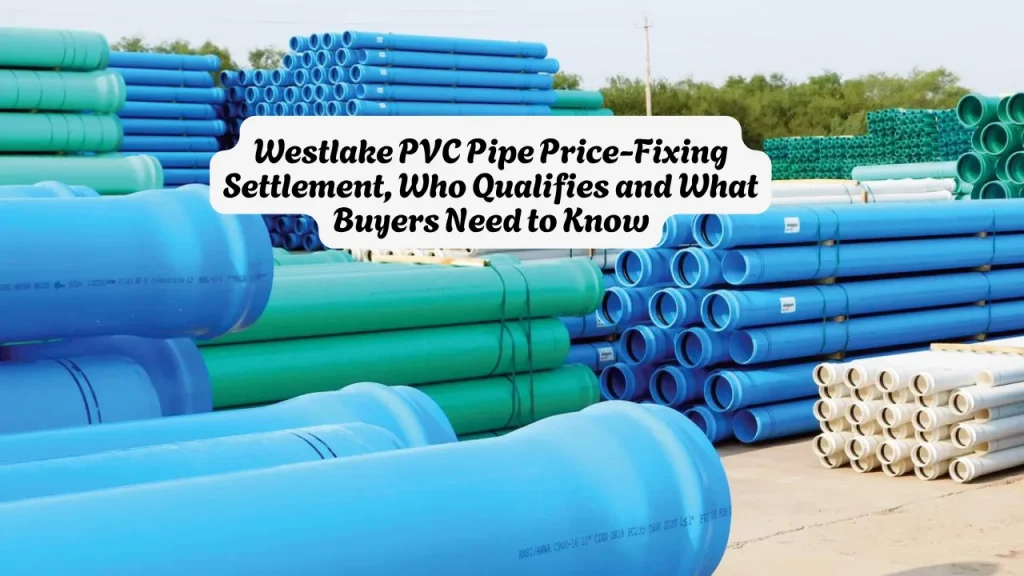
The case targets what plaintiffs describe as a post-pandemic price-fixing scheme. End-user plaintiffs allege that OPIS, converter defendants, and co-conspirators conspired to fix PVC pipe prices from January 1, 2021, through May 16, 2025. PVC pipe is widely used in residential and commercial construction, plumbing, electrical conduit, and irrigation systems — making this case relevant to a wide range of buyers.
The defendants named in the broader litigation include OPIS, Atkore, Cantex, Charlotte Pipe, Cresline, Diamond Plastics, IPEX/Multi Fittings, JM Eagle, National Pipe, Northern Pipe, Otter Tail, Prime Conduit, Sanderson Pipe, Southern Pipe, Westlake (NAPCO), and Vinyltech. Westlake is the first major manufacturer — and largest settlement to date — to resolve direct purchaser claims in this litigation.
Related article: FTC “Made in USA” False Advertising Settlements, Which Consumers Are Eligible for Refunds? Americana Liberty, TouchTunes, Oak Street
The plaintiffs bring these claims under federal antitrust law, specifically the Sherman Act, which prohibits competitors from colluding to control prices. The $67 million Westlake deal marks the largest settlement so far in nationwide U.S. antitrust litigation over the PVC pipe market.
Who Is Eligible to File a Claim?
The $67 million Westlake settlement covers direct purchasers only. The claim portal has not opened yet — it will open after the court grants preliminary approval.
Based on court filings and the structure of this litigation, here is what we know about eligibility:
- You may qualify if you are a business or entity that purchased PVC pipe or fittings directly from Westlake Corporation or its subsidiary NAPCO in the United States.
- You may qualify if you are a distributor, wholesaler, contractor, or reseller who bought PVC pipe at the manufacturer level — not through a middleman.
- You may qualify if your purchases occurred during the alleged conspiracy period. The alleged price-fixing period runs from January 1, 2021, through May 16, 2025.
- You may qualify under the OPIS End-User Settlement (a separate $3 million fund) if you are a consumer, plumber, electrician, or contractor who purchased PVC pipe at retail or through a distributor during the same period.
- You may not qualify for the Westlake $67 million settlement if you purchased PVC pipe indirectly — for example, through a retailer or distributor rather than directly from the manufacturer. Indirect purchaser claims remain in active litigation.
- You may not qualify if you excluded yourself from the OPIS settlement class before the April 9, 2026 opt-out deadline.
Note for everyday consumers and contractors: If you are a consumer, plumber, electrician, or other contractor who purchased PVC pipe or fittings, you may be able to get involved in the ongoing case by contacting class counsel directly. The broader litigation against remaining defendants — including claims covering indirect purchasers — continues.
How Much Can You Receive?
Individual payout amounts for the Westlake settlement are TBD. The court must approve the settlement and a distribution plan before per-claimant amounts are calculated.
Here is what the settlement fund structure looks like across all related settlements so far:
| Settlement | Defendant | Amount | Class Covered |
| Westlake / NAPCO | Westlake Corp. | $67,000,000 | Direct purchasers |
| OPIS Settlement | Oil Price Information Service | $3,000,000 | End-users + NCSPs |
| Total So Far | $70,000,000 | Multiple classes |
Distribution in antitrust price-fixing cases typically works on a pro-rata basis: the fund is divided among eligible claimants based on the volume of purchases each claimant can document. Larger-volume buyers (distributors, large contractors) typically receive larger shares.
The FTC has not issued individual payout estimates. Once the court approves the distribution plan, the administrator will publish how amounts will be calculated.
How to File a Claim (Steps to Follow When the Portal Opens)
The Westlake direct purchaser claim portal has not yet opened as of April 2026. The claim process will launch after the court grants preliminary approval of the settlement. Here are the steps you will need to take:
Step 1 — Visit the official settlement website at pvcantitrust.com to confirm the claim portal is open and review updated eligibility criteria.
Step 2 — Enter your business name, contact details, and tax identification number (required for antitrust business claims).
Step 3 — Identify the class you belong to: direct purchaser (manufacturer-level buyer) or a separate indirect purchaser/end-user class.
Step 4 — Calculate and document your total PVC pipe purchases from Westlake or NAPCO during the eligible period (January 1, 2021–May 16, 2025). Gather invoices, purchase orders, or account statements.
Step 5 — Upload your proof of purchase documentation as required by the claim form.
Step 6 — Submit your claim and save your confirmation number or take a screenshot for your records.
Estimated time to complete: 15–30 minutes for businesses with purchase documentation readily available.
Do not submit claims through any website other than pvcantitrust.com or the court-authorized portal announced by Kroll Settlement Administration.
Important Deadlines & Dates
| Milestone | Date |
| Alleged Price-Fixing Period Begins | January 1, 2021 |
| Ten Lawsuits Filed in Illinois | August 2024 – June 2025 |
| OPIS Settlement Agreement Reached | May 16, 2025 |
| OPIS Preliminary Approval Granted | July 15, 2025 |
| OPIS Opt-Out / Objection Deadline | April 9, 2026 (passed) |
| Westlake Settlement Agreement Signed | March 26, 2026 |
| Westlake Preliminary Approval Motion Filed | April 13, 2026 |
| OPIS Final Fairness Hearing | June 3, 2026 |
| Westlake Preliminary Approval Hearing | TBD |
| Westlake Claim Filing Deadline | TBD — opens after court approval |
| Westlake Final Approval Hearing | TBD |
| Expected Payment Date | TBD |
Frequently Asked Questions
Do I need a lawyer to file a claim?
No. Once the claim portal opens at pvcantitrust.com, eligible businesses can file directly at no cost. However, if you believe your company purchased large volumes of PVC pipe and fittings, consulting an attorney may help you maximize your recovery and ensure your documentation is correct.
Is this settlement legitimate?
Yes. Westlake Corporation disclosed the $67 million settlement in an official SEC Form 8-K filing. The case is pending before Judge LaShonda A. Hunt in the U.S. District Court for the Northern District of Illinois, Case No. 1:24-cv-07639. Kroll Settlement Administration is the court-approved administrator.
When will I receive my payment?
Payments will not go out until after the court grants final approval of the Westlake settlement, the claim period closes, and the administrator processes all submissions. Based on the current timeline, payments are unlikely before late 2026 or 2027 at the earliest. The court will publish a confirmed payment timeline.
What if I missed the claim deadline?
The Westlake claim deadline has not been set yet as of April 2026. The opt-out and objection deadline for the earlier OPIS settlement was April 9, 2026, and has passed. Watch pvcantitrust.com for updates on the Westlake-specific claim deadline once the court sets it.
Will this settlement payment affect my taxes?
Possibly. The IRS generally treats antitrust overcharge recoveries as taxable income for businesses, because they offset previously deducted business expenses. Consult your accountant or tax advisor before filing your claim, particularly if your recovery may be substantial.
What is the difference between a direct purchaser and an indirect purchaser?
A direct purchaser bought PVC pipe straight from Westlake or another manufacturer — typically a distributor, wholesaler, or large contractor. An indirect purchaser bought through an intermediary, like a hardware store or a sub-distributor. Only direct purchasers are covered by the Westlake $67 million settlement. Indirect purchaser claims remain pending in the ongoing litigation.
What is OPIS, and why is it named in this lawsuit?
OPIS — Oil Price Information Service — is an industry publication that Non-Converter Seller Purchaser plaintiffs allege conspired with PVC pipe manufacturers to fix, raise, maintain, and stabilize the price of PVC pipe from January 1, 2021, to May 16, 2025. The theory is that OPIS’s pricing data was used as a coordination mechanism among competing manufacturers. OPIS already agreed to a separate $3 million settlement.
Does Westlake admit wrongdoing in this settlement?
No. The settlement agreement states that the resolution shall not be deemed or construed to be an admission of liability or wrongdoing by any party. This is standard in antitrust class action settlements.
Sources & References
- Westlake Corporation SEC Form 8-K Filing — April 14, 2026
- Official NCSP Settlement Website — pvcantitrust.com
- Official End-User Settlement Website — enduserpvclitigation.com
- Kroll Settlement Administration — Case Administrator
Last Updated: April 16, 2026
Disclaimer: This article is for informational purposes only and does not constitute legal advice. Legal claims and outcomes depend on specific facts and applicable law. For advice regarding a particular situation, consult a qualified attorney.
About the Author
Israr Ahmad is a legal content researcher with 4+ years of experience covering class action settlements and consumer rights cases. He has researched and published coverage of 2,500+ settlements using verified court records, settlement administrator filings, and government sources. Learn more about Israr.