
Live Nation Monopoly Verdict 2026, Jury Rules Ticketmaster Overcharged Fans What It Means for You
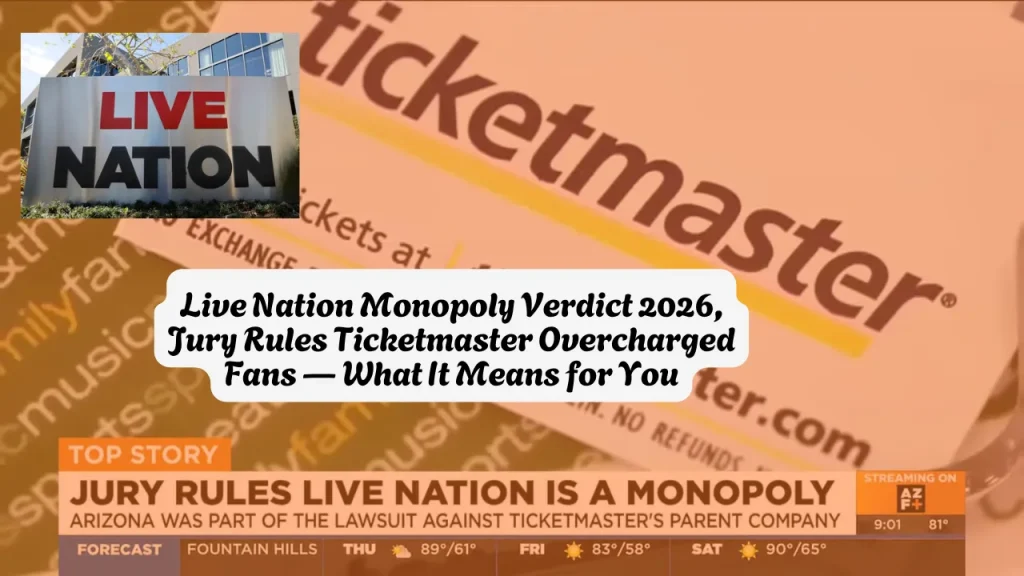
A federal jury in Manhattan ruled on April 15, 2026, that Live Nation and its subsidiary Ticketmaster operated an illegal monopoly that overcharged concert fans. The verdict, reached after four days of deliberations and six weeks of trial, found fans paid $1.72 too much per ticket at major venues. Thirty-four states won the case. A judge will now decide penalties — which could include a forced breakup of the two companies. No claims process is open yet, but a separate consumer class action is active in California.
Quick Facts
| Field | Detail |
| Verdict Date | April 15, 2026 |
| Court | U.S. Federal Court, Manhattan (Southern District of New York) |
| Judge | Judge Arun Subramanian |
| Plaintiffs | 34 U.S. States + District of Columbia |
| Defendants | Live Nation Entertainment, Inc. & Ticketmaster, LLC |
| Jury Finding | Illegally maintained monopoly power — liable on ALL counts |
| Overcharge Amount Found | $1.72 per ticket (at major venues, 22 states) |
| Potential Total Damages | Hundreds of millions of dollars (TBD by court) |
| States Included in $1.72 Finding | 22 states |
| Venues Covered | 257 major concert amphitheaters (~20% of total tickets) |
| Next Step | Remedies trial — Judge Subramanian sets penalties |
| Possible Remedy | Forced breakup of Live Nation and Ticketmaster |
| Consumer Class Action (separate) | Active — filed 2022, certified December 2025, Central District of California |
| Who Qualifies (class action) | Ticket buyers at major venues since 2010 |
| Open Claims Process | None yet — TBD pending remedies and class action resolution |
| Live Nation Response | Plans to appeal; calls verdict “not the last word” |
Where Things Stand Right Now: 3 Things That Matter
- The jury ruled. On April 15, 2026, jurors found Live Nation and Ticketmaster liable on every monopolization count — including illegally tying venue access to Ticketmaster’s ticketing services and strong-arming artists and promoters.
- Damages are not final. The $1.72 per ticket figure applies to a specific set of venues in 22 states. Judge Subramanian will hold a second remedies trial to determine the total payout and whether a structural breakup is ordered.
- A separate class action is live. Consumers who bought tickets since 2010 are part of a certified federal class action in California. That case runs independently from the states’ case and could result in a direct consumer claims process.
What Is the Live Nation Monopoly Lawsuit About?
Live Nation owns Ticketmaster — the company that sells most major concert tickets in the United States. In 2024, the U.S. Department of Justice and 40 state attorneys general sued Live Nation, accusing it of illegally locking up the entire live music industry: venues, ticket sales, artist promotion, and resale markets.
The DOJ argued that Ticketmaster controlled roughly 80% of concert ticketing in the primary marketplace. The lawsuit alleged that Live Nation used that control to block venues from using competing ticket sellers, shut out smaller promoters, and drive up fees for everyday fans.
During the trial, witnesses including Live Nation CEO Michael Rapino and AEG Presents CEO Jay Marciano testified. Jurors heard six weeks of evidence before delivering a total defeat to Live Nation — finding the company guilty on all monopolization counts, including illegally tying venue use to its promotion services.
Related article: Messi $7 Million Lawsuit, Promoter Says He Skipped a Match He Was Paid to Play Did He Break His Contract at a Florida Soccer Match?
What the Jury Actually Found — and What It Means
The jury made four specific findings against Live Nation:
- Live Nation illegally monopolized the market for ticketing services at major venues
- Live Nation illegally monopolized the concert ticketing market more broadly
- Live Nation illegally monopolized the use of amphitheaters by coercing venues to use Ticketmaster
- Live Nation illegally tied access to its concert venues to the use of its ticketing services
On damages, the jury determined Ticketmaster overcharged fans by $1.72 per ticket — a figure close to what state economists argued at trial. That overcharge applies to tickets sold at 257 venues in 22 states over a six-year period. The total damages bill could run into hundreds of millions of dollars, potentially more, when the court calculates the final number.
Under antitrust law, the court can also triple the damages — meaning fans who paid $1.72 extra could have that overcharge multiplied by three in the final award.
Who Qualifies and What You Could Receive
There are two separate legal tracks that could benefit different consumers.
Track 1: The State AG Verdict (Breaking — April 2026)
The 34-state verdict does not yet have an open claims process. The judge must first hold a remedies trial. If the court orders damages paid to consumers, a claims process will likely follow. At this stage, no action is required from ticket buyers.
You may be affected if:
- You purchased tickets through Ticketmaster for major concerts at large amphitheaters in the U.S.
- Your ticket was to an event at one of the 257 venues covered by the verdict
- You live in one of the 22 states included in the $1.72 overcharge finding (specific state list TBD in court’s final order)
Track 2: The Private Consumer Class Action (Active — California Federal Court)
A separate nationwide class action — certified in December 2025 by U.S. District Judge George Wu in Los Angeles — covers a much broader group of consumers.
You may qualify for the class action if:
- You bought tickets directly from Ticketmaster or a Live Nation affiliate
- Your tickets were for events at major U.S. concert venues
- You purchased tickets any time since 2010
- Your claim is not subject to a binding arbitration agreement
This class is estimated to cover hundreds of millions of ticket purchases. No settlement or claim deadline exists yet — the case is active and moving toward trial.
How Much Could Fans Actually Receive?
The short answer: it depends on what the court orders, and when.
The jury pegged the overcharge at $1.72 per ticket at major venues in 22 states. Under antitrust law (the Clayton Act), the court can treble that amount — making each ticket potentially worth $5.16 in damages before fees and legal costs.
Legal analysts estimate the total damages tied to six years of ticket sales at 257 venues could reach hundreds of millions of dollars. If the private class action also resolves favorably, a separate payout covering tickets since 2010 — more than 400 million tickets — could push the total into the billions.
However, no money reaches consumers until:
- The judge finalizes the remedies order
- Any appeals by Live Nation are resolved
- A claims administrator sets up a payout process
Live Nation has already stated it will appeal. That means final resolution could be years away.
What Could Happen to Live Nation and Ticketmaster Next
The verdict is historic — but the most consequential decisions still lie ahead.
Remedies Trial: Judge Subramanian will hold a second trial to decide penalties. The states are expected to file a remedy proposal in the coming weeks. Options on the table include:
- A structural breakup of Live Nation and Ticketmaster into separate companies
- Prohibiting Ticketmaster from participating in the ticket resale market
- Capping the percentage of tours Live Nation can promote
- Requiring Live Nation to open venues to competing ticket sellers
DOJ Settlement (separate): During the trial, the Justice Department settled separately, allowing Live Nation to keep Ticketmaster in exchange for behavioral changes — including divesting 13 amphitheater agreements and capping ticketing service fees at 15%. The 34 states rejected that deal as too lenient and pushed forward.
Live Nation’s Response: The company stated the verdict “is not the last word” and confirmed it will file motions challenging both the liability and damages findings, with appeals to follow if necessary.
Important Dates & Timeline
| Milestone | Date |
| DOJ + States File Antitrust Suit | 2024 |
| Trial Begins | March 2026 |
| DOJ Settles Mid-Trial | March–April 2026 |
| Jury Verdict | April 15, 2026 |
| States Submit Remedy Proposal | TBD (expected weeks after verdict) |
| Remedies Trial | TBD |
| Live Nation Appeals | TBD |
| Consumer Class Action Trial (California) | TBD |
| Open Claims Process for Consumers | TBD — not yet available |
| Expected Final Resolution | TBD |
Frequently Asked Questions
Did the jury rule that Ticketmaster overcharged concert fans?
Yes. A federal jury in Manhattan found on April 15, 2026, that Ticketmaster overcharged fans by $1.72 per ticket at major concert venues. The overcharge finding applies to 22 states and approximately 257 large amphitheaters over a six-year period.
Can I file a claim right now to get my money back?
No claims process is open yet. The court still needs to hold a remedies trial and finalize the damages order. Once that happens — and if a consumer payout is ordered — a claims administrator will set up a process. Check back for updates as the case progresses.
Does this affect me if I bought tickets before 2026?
Potentially yes on both tracks. The state verdict covers tickets at major venues in 22 states over the past six years. The separate California class action covers tickets purchased from Ticketmaster or a Live Nation affiliate at large venues going back to 2010.
What is the difference between the states’ case and the private class action?
The state AG case (which produced the April 2026 verdict) was brought by 34 state governments seeking antitrust enforcement and damages. The private class action in California was filed by consumers directly and seeks money damages for ticket buyers. Both run separately, and both could result in consumer payouts.
Will Live Nation and Ticketmaster be broken up?
The jury verdict creates a legal basis for a structural breakup, but the judge decides remedies — not the jury. The states are expected to push for a breakup, while Live Nation plans to fight any such order. A final answer on structure will not come until the remedies phase concludes, likely in late 2026 or later.
Do I need a lawyer to participate in the class action?
No. If you bought qualifying tickets since 2010, you are automatically part of the certified class action. You do not need to hire a lawyer or do anything now. Class counsel represents all class members. You will receive notice if and when a settlement or judgment requires action from you.
When will I receive any payment?
No payment timeline is confirmed. Live Nation plans to appeal, which could delay any consumer payouts by years. The remedies trial, appeals process, and separate class action all need to work through the courts before money reaches individual fans.
Will a settlement payment affect my taxes?
Damages from antitrust overcharge cases are generally treated as a refund of an overpayment, not income. However, tax treatment depends on your individual circumstances. Consult a tax professional for guidance specific to your situation.
Sources & References
- Pennsylvania AG Office — Official Verdict Announcement
Last Updated: April 16, 2026
Disclaimer: This article is for informational purposes only and does not constitute legal advice. Legal claims and outcomes depend on specific facts and applicable law. For advice regarding a particular situation, consult a qualified attorney.
About the Author
Israr Ahmad is a legal content researcher with 4+ years of experience covering class action settlements and consumer rights cases. He has researched and published coverage of 2,500+ settlements using verified court records, settlement administrator filings, and government sources. Learn more about Israr.