
Conservation Groups Sue the Trump Administration Over Pygmy Rabbit Endangered Species Protections
Western Watersheds Project and WildEarth Guardians sued the U.S. Fish and Wildlife Service to secure Endangered Species Act protections for the pygmy rabbit — the world’s smallest rabbit species. The lawsuit was filed on May 13, 2026, in U.S. District Court in Eugene, Oregon. The agency missed a legally required deadline by more than two years, and conservation groups say that delay is putting the species and the entire sagebrush ecosystem at risk.
Quick Facts: Pygmy Rabbit ESA Lawsuit
| Field | Detail |
| Lawsuit Filed | May 13, 2026 |
| Plaintiffs | Western Watersheds Project, WildEarth Guardians |
| Defendants | U.S. Fish and Wildlife Service, USFWS Director Brian Nesvik, Secretary of the Interior Doug Burgum |
| Legal Basis | Endangered Species Act (ESA), 16 U.S.C. § 1533(b)(3)(B) |
| Court & Jurisdiction | U.S. District Court, District of Oregon, Eugene |
| Case Number | TBD — not yet publicly docketed in available records as of May 22, 2026 |
| Representing Plaintiffs | Earthjustice (Rocky Mountain Office) |
| Relief Sought | Court declaration that USFWS violated the ESA; court order compelling the agency to issue its 12-month listing determination |
| Settlement Status | Active Litigation |
| Last Updated | May 22, 2026 |
What the Pygmy Rabbit Lawsuit Is About
The suit says the Fish and Wildlife Service failed to issue a finding on a 2023 petition to list the pygmy rabbit as threatened or endangered within the required 12-month period.
Conservation groups petitioned the U.S. Fish and Wildlife Service to protect the pygmy rabbit under the Endangered Species Act in March 2023. The service determined in January 2024 that the petition presented substantial scientific or commercial information that listing may be warranted — which triggered a March 2024 deadline for a final listing determination. The service has failed to meet that deadline and now indicates it does not anticipate completing the listing determination until fiscal year 2028, four years after the date required by law.
That is not a minor scheduling issue. Under the Endangered Species Act, once the agency issues a positive 90-day finding, a 12-month determination is mandatory — not optional. The lawsuit asks the federal court in Oregon to hold the agency to the law it is required to enforce.
What the Pygmy Rabbit Is and Why It Matters
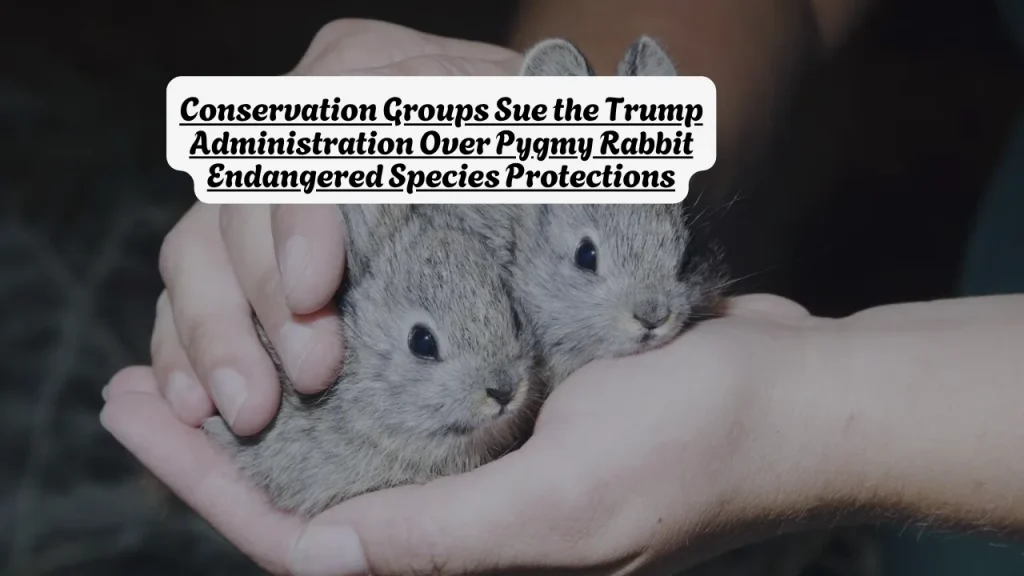
The pygmy rabbit weighs about a pound and can fit in the palm of your hand. It lives exclusively in areas of deep soil covered by mature sagebrush — a very specific habitat that is disappearing fast
The tiny rabbit lives in sagebrush habitat across eight Western states: Nevada, Idaho, Wyoming, Utah, Montana, California, Oregon, and Washington. The Columbia Basin population in Washington State was already listed as endangered in 2003. The petition seeks to add protections for rabbit populations in other states, where their habitat — areas of deep soil among tall, dense sagebrush — is at risk of loss due to wildfires, development, and agricultural uses
The lawsuit states: “Grazing, vehicle traffic, and infrastructure increase disturbance and invasion risk, invasive annual grasses promote more frequent and intense fires, and repeated fires can convert sagebrush steppe to annual grassland — resulting in progressive loss of the mature, connected, big sagebrush habitat needed for pygmy rabbit survival and recovery.”
Related article: Philadelphia School District Accelerating Opportunity School Closure Board Votes to Close 17 Schools City Council Threatens Lawsuit to Stop It
Are You Affected by This Lawsuit?
This is not a consumer class action — no claim form exists and no payment is available. But if you live, work, or recreate in sagebrush country across the Mountain West, the outcome of this case directly affects the public lands you use.
You are likely affected by this lawsuit if:
- You own or manage land in Nevada, Idaho, Wyoming, Utah, Montana, California, Oregon, or Washington where pygmy rabbit habitat is present
- You are a rancher, energy developer, or road builder operating on federal public lands in the sagebrush steppe — a federal listing would require closer review of how your activities affect rabbit habitat
- You are a conservationist, hunter, hiker, or outdoor recreation user who depends on healthy sagebrush ecosystems in the West
A federal listing could require agencies to more closely evaluate how activities like energy development, road building, and livestock grazing affect pygmy rabbit habitat on public lands. That is exactly why Western Watersheds Project’s deputy director said the lawsuit is about more than one species — when the rabbit is in trouble, it means the whole sagebrush ecosystem is in trouble.
What Plaintiffs Are Seeking
The plaintiffs are not asking for money. They are asking the court to do two things:
The lawsuit asks the court to declare that the Fish and Wildlife Service violated the Endangered Species Act by failing to issue a 12-month listing determination, and to compel the service to issue their finding.
The lawsuit cites Fish and Wildlife Service planning documents indicating the agency does not expect to complete a final listing determination until 2028 — roughly four years later than required under the Endangered Species Act. The plaintiffs argue that delay is not a scheduling inconvenience — it is a violation of federal law, and every additional year of inaction means more habitat lost.
What You Should Do If You Are Concerned About This Case
Most people will not need to take any legal action. But if this case matters to you:
- Monitor the U.S. District Court for the District of Oregon docket for case updates
- Follow Earthjustice at earthjustice.org and Western Watersheds Project at westernwatersheds.org for filings and rulings
- If you have a specific legal concern about how a federal ESA listing could affect your land or business, consult an environmental damage lawsuit attorney or a public lands attorney in your state
- Save any documentation you have about land use, grazing permits, or energy development approvals in pygmy rabbit habitat — it may be relevant if the listing moves forward
If you are a landowner facing regulatory pressure related to sagebrush habitat, getting a free legal consultation from a toxic exposure attorney or environmental law specialist is a reasonable first step before any new federal protections take effect.
Pygmy Rabbit Lawsuit Timeline
| Milestone | Date |
| ESA petition submitted by conservation groups | March 2023 |
| USFWS issues positive 90-day finding | January 2024 |
| Legal deadline for 12-month listing determination | March 2024 |
| USFWS misses deadline — no determination issued | March 2024–May 2026 |
| Lawsuit filed in U.S. District Court, Eugene, Oregon | May 13, 2026 |
| USFWS projected listing determination (per agency documents) | Fiscal Year 2028 |
| Next scheduled court hearing | TBD — pending assignment |
Frequently Asked Questions
Is there a lawsuit against the U.S. Fish and Wildlife Service over the pygmy rabbit?
Yes. Western Watersheds Project and WildEarth Guardians filed suit on May 13, 2026, in U.S. District Court in Eugene, Oregon, represented by Earthjustice. The lawsuit alleges the agency violated the Endangered Species Act by failing to issue a required 12-month listing determination for the pygmy rabbit.
Do I need to do anything right now to be part of this case?
No. This is not a consumer class action. No claim form exists. The plaintiffs are environmental organizations seeking a court order to force a federal agency ruling — individual members of the public are not part of the plaintiff class.
When will a decision be reached in the pygmy rabbit ESA case?
TBD — no hearing date has been scheduled as of May 22, 2026. The court must first assign the case and set a briefing schedule. ESA deadline-failure cases like this typically resolve within one to two years.
Can I file my own lawsuit against the U.S. Fish and Wildlife Service for not listing a species?
Potentially yes. The ESA’s citizen suit provision at 16 U.S.C. § 1540(g) allows individuals and organizations to sue the agency for failing to perform nondiscretionary duties — including missing listing deadlines. Consult an environmental or consumer rights lawyer familiar with federal wildlife law before filing.
How will I know if the pygmy rabbit gets listed as threatened or endangered?
The USFWS must publish any listing determination in the Federal Register. You can monitor the agency’s website at fws.gov or sign up for updates from Earthjustice and Western Watersheds Project directly.
Does this lawsuit affect existing grazing or energy permits on federal land?
Not immediately. A court order would only compel the agency to issue its listing determination — not automatically restrict land use. But if the pygmy rabbit is listed, federal agencies would then be required to consult with USFWS before approving new activities that could affect the species or its habitat, under ESA Section 7.
What states does this lawsuit affect most directly?
The lawsuit covers pygmy rabbit populations in Nevada, Idaho, Wyoming, Utah, Montana, California, Oregon, and Washington — all eight states where the species currently lives outside the Columbia Basin population already listed in 2003.
Sources & References
- Earthjustice — Press Release: “Conservation Groups Sue Trump Administration to Protect World’s Smallest Bunnies,” May 13, 2026: earthjustice.org
- Boise State Public Radio, May 20, 2026
- Daily Montanan, May 15, 2026
Prepared by the AllAboutLawyer.com Editorial Team and reviewed for factual accuracy against Earthjustice’s official press release, the filed complaint, and court filings as of May 22, 2026. Last Updated: May 22, 2026
Disclaimer: This article is for informational purposes only and does not constitute legal advice. Legal claims and outcomes depend on specific facts and applicable law. For advice regarding a particular situation, consult a qualified attorney.
About the Author
Israr Ahmad is a legal content researcher with 4+ years of experience covering class action settlements and consumer rights cases. He has researched and published coverage of 2,500+ settlements using verified court records, settlement administrator filings, and government sources. Learn more about Israr.