
Walmart Great Value Shrimp Lawsuit, Were You Affected? Baptist v. Walmart Inc., No. 2026CH09745: Ice Glaze, Underweight Claims and What Illinois Shoppers Need to Know
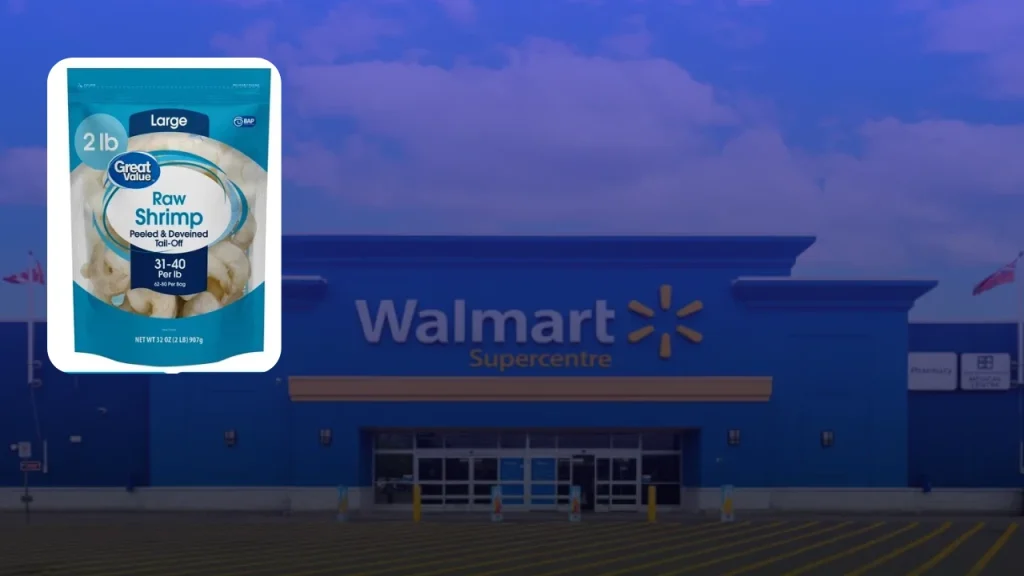
If you have ever thawed a bag of Great Value frozen shrimp and thought it looked smaller than the weight on the front, a new Illinois lawsuit says you may have been right. A proposed class action filed in Cook County accuses Walmart of counting the ice coating on its Great Value shrimp as part of the weight printed on the package.
There is no settlement, no claim form and no payout in this case. Nothing has been decided, and Walmart has not been found to have done anything wrong. The allegations have not been proven.
Quick Facts: Walmart Great Value Shrimp Lawsuit
| Detail | Information |
| Case name | Baptist v. Walmart Inc. |
| Case number | 2026CH09745 |
| Court | Circuit Court of Cook County, Illinois |
| Plaintiff | Baptist (reported as Elijah Baptist) |
| Defendant | Walmart Inc. |
| Product | Great Value frozen shrimp |
| Core claim | The ice glaze is counted in the weight advertised on the package, so the shrimp itself weighs less once thawed and drained |
| Reported shortfall | As much as 11% in some packages, per one published report (the plaintiff’s allegation) |
| Filing date | Reported as October 8, 2026 by one outlet. First press coverage October 13, 2026 |
| Plaintiff’s lawyers | Gary Klinger and Alexander Wolf of Milberg PLLC; Daniel O. Herrera and Alex Lee of Cafferty Clobes Meriwether & Sprengel LLP |
| Proposed class | Illinois consumers who bought the covered Great Value shrimp products (reported) |
| Status | Newly filed putative class action. No class certified |
| Settlement, claim form or deadline | None |
Not yet confirmed from the complaint itself: the plaintiff’s first name, the exact filing date, the 11% figure and the claims pleaded. They come from published coverage, and the complaint was not reviewed directly.
What the Lawsuit Alleges
According to Law360’s October 13, 2026 report, Walmart is accused in Illinois state court of shorting customers by including the ice glaze in the weight advertised on its Great Value shrimp packaging. The plaintiff says this can leave a real gap between the weight on the bag and the weight of the shrimp once it is thawed and drained.
Glaze is a thin layer of ice that frozen seafood producers commonly add to protect shrimp from freezer burn. The lawsuit does not, as reported, take issue with glazing itself. The dispute is over whether the ice is counted when Walmart states how much product is in the bag.
One published report adds that the plaintiff bought several bags of Great Value shrimp over about three years, including shrimp for a seafood party in June 2026, relied on the label weight, and would not have bought the product, or would have paid less, had he known the shrimp weighed less. The same report says the complaint pleads state consumer-protection and warranty claims, demands a jury, and seeks damages, restitution and an injunction. Because it is a proposed class action, the plaintiff asks the court to let him sue for other Illinois shoppers in the same position. A judge has not decided whether that is allowed.
The Difference Between Gross and Net Weight
Net weight is the declared quantity of the food itself, excluding packaging and material that cannot be counted as food. If ice is improperly included, shoppers may believe they are buying more shrimp than the bag holds.
As a hypothetical, if a bag claimed 16 ounces and the actual shrimp were 11% under that, the gap would be 1.76 ounces. That is an illustration of the allegation, not a measurement of any Great Value product. The lawsuit does not establish that every package is underweight or that every bag has the same amount of ice.
What the FDA Says About Ice Glaze and Net Weight
The FDA has addressed this practice for decades. In a June 4, 1991 letter to seafood manufacturers, posted on its guidance page, the agency warned that the net weight of frozen seafood may not include the weight of glazing. The letter names shrimp, lobster and fish fillets. It points to:
- Section 402(b) of the Federal Food, Drug, and Cosmetic Act (21 U.S.C. § 342(b)), which treats a food as adulterated if a substance has been added to increase its bulk or weight or make it appear better or of greater value than it is.
- Section 403(e)(2) of the Act (21 U.S.C. § 343(e)(2)) and Section 4(a)(2) of the Fair Packaging and Labeling Act (15 U.S.C. § 1453(a)(2)), which require an accurate statement of net quantity. FDA regulations on net quantity are at 21 C.F.R. § 101.105.
The FDA says overstating net quantity by counting glaze misbrands the product. Two cautions apply:
- The FDA says its guidance does not itself create legally enforceable responsibilities. The statutes and regulations are what bind.
- Federal food-labeling law is generally enforced by the government. The Act does not give private citizens a right to sue (21 U.S.C. § 337(a)), and state requirements that differ from federal labeling rules can be preempted (21 U.S.C. § 343-1). Shoppers who sue over label weights therefore usually plead state-law claims that parallel the federal requirements. How this complaint is built and whether it holds up is for the Cook County court to decide.
The FDA’s 2025 Short-Weighting Findings
In a September 2025 announcement, the FDA reported testing 28 samples of imported packaged frozen seafood collected from 2022 to 2024, including 25 shrimp products. Ten samples (36%) violated net-weight requirements, with shortfalls from 2.3% to 9.9%, according to the agency. It said shipments with violating samples were refused entry and the firms placed on an import alert. This shows short-weighting is a known regulatory concern in frozen seafood. It does not show that Walmart’s Great Value shrimp was tested or violated any rule. Verify the details on the FDA’s page before relying on them.
What Laws Could Apply?
None of these theories is established by the filing of a class action.
Illinois Consumer Fraud and Deceptive Business Practices Act (815 ILCS 505). Section 2 bars unfair or deceptive acts in trade or commerce. Section 10a lets a person harmed by a violation sue for actual damages and, in some cases, injunctive relief, punitive damages and attorney’s fees. The plaintiff would need to prove a deceptive act, intent that consumers rely on it, deception in trade or commerce, actual damage and proximate cause. The limitations period is generally three years. Walmart may dispute whether the label was misleading, whether the actual net quantity differed from the declared quantity, and whether the plaintiff suffered recoverable harm.
Illinois Uniform Deceptive Trade Practices Act (815 ILCS 510). This law generally supports injunctive relief rather than money damages.
Breach of express warranty (810 ILCS 5/2-313). A seller’s description of goods, such as a stated net weight, can create an express warranty. The plaintiff would have to show the goods did not conform.
Breach of implied warranty of merchantability (810 ILCS 5/2-314). This concerns whether goods are fit for ordinary purposes and pass without objection in the trade. Ice glaze is not unlawful in itself. The question is whether the declared weight was accurate.
State weights and measures law. States set rules for net contents of packaged goods and enforce them through state agencies. Official testing follows standardized methods that account for glaze.
Restitution and injunctive relief. Restitution seeks to return money paid for a quantity not received. Injunctive relief would be a court order changing practices. The court has ordered neither.
Procedure. Walmart may respond with a motion to dismiss. Because the case is in state court, it may also try to move it to federal court under the Class Action Fairness Act (28 U.S.C. § 1332(d)), which applies to larger class actions. Illinois state-court class actions follow 735 ILCS 5/2-801. Class certification, if reached, is normally months or more away.
Who Could Be in the Class?
The reported proposed class is Illinois consumers who bought the covered Great Value shrimp products. It is a proposed class, not a certified one. Filing a class action does not automatically make every shopper a member. Shoppers in other states should not assume they are included, and the reported allegations concern Great Value shrimp, not every shrimp brand or seafood product Walmart sells.
Is There a Settlement or Claim Form?
No. The case is at the very beginning. No class has been certified, no money has been offered, and there is nowhere to submit a claim. Sites inviting you to “join” or “sign up” are not offering a payout, and you should not pay anyone to join. If a class is certified or the case settles, the court would order notice to the people affected, and we will update this page.
What Happens Next
As of October 20, 2026, no Walmart response or court ruling had been reported. Typical next steps are a response or motion to dismiss, a possible move to federal court, discovery on the products, labels and measurements, and eventually a class certification fight. Expect months.
Key Dates
| Date | Event |
| June 4, 1991 | FDA letter says glaze may not count toward the net weight of frozen seafood |
| September 2025 | FDA announces short-weighting test results for imported frozen seafood (verify on FDA’s page) |
| October 8, 2026 | Complaint reportedly filed (one outlet) |
| October 13, 2026 | Law360 reports the lawsuit |
| October 20, 2026 | No class certified, no Walmart response or ruling reported, no settlement or claim form |
What Shoppers Can Do Now
Do not assume every package is underweight. Ice glaze is common and legitimate. If you are concerned:
- Keep packaging and receipts. Photograph the net weight, product name, barcode and lot code.
- Be careful with home tests. Thawing, draining and weighing shrimp can give a rough idea, but regulators use standardized sampling and methods, so a home result is not an official finding. Keeping the receipt and a photo of the label gives you a record either way.
- Report a concern to the FDA or your state’s weights and measures or consumer protection office. A complaint does not guarantee an investigation or compensation.
- Check for reliable updates from court records and credible reporting, not social posts promising automatic payment.
- Talk to an attorney if you want advice on your own rights.
Related Walmart and Food Label Coverage
This is separate from earlier Walmart cases. For the weighted-groceries litigation, see Walmart Class Action Lawsuit, Shoppers Are Getting Checks Right Now: Here’s How to Claim Your $45 Million Settlement Money in December 2025. That settlement does not entitle anyone to payment in the shrimp case. For the separate food-safety allegations over Great Value shrimp, see Walmart Class Action Lawsuit Recent November 45 Million Settlement Payments Updates, Radioactive Shrimp Claims, And Employment Violations. For another disputed food label, see Gruns Sugar-Free Gummies Lawsuit, Were You Affected? Ulberg v. Gruns Nutrition Inc., No. 2:26-cv-11269.
Frequently Asked Questions
What is the Walmart Great Value shrimp lawsuit about?
A proposed class action, Baptist v. Walmart Inc., alleging that Walmart includes ice glaze in the weight stated on Great Value shrimp packaging, so the shrimp weighs less once thawed and drained.
Is there a Walmart shrimp class action settlement?
No. There is no settlement, claim form, payment amount or deadline.
Who is suing Walmart?
The plaintiff is named Baptist, represented by Gary Klinger and Alexander Wolf of Milberg PLLC and Daniel O. Herrera and Alex Lee of Cafferty Clobes Meriwether & Sprengel LLP.
Which court is hearing the case?
The Circuit Court of Cook County, Illinois, Case No. 2026CH09745.
Is ice glaze illegal?
No. It is commonly used to protect frozen seafood. The issue is whether its weight is improperly counted in the net weight.
Does the FDA allow glaze to count toward net weight?
Per the FDA’s 1991 letter, no. The FDA also says the guidance itself is not legally binding, but the underlying statutes require accurate net quantity labeling.
How much less shrimp does the lawsuit claim?
One report says as much as 11% in some packages. That is the plaintiff’s allegation, not a confirmed measurement.
Can I join the lawsuit?
There is nothing to join now. If a class is certified, people who fit it would normally be notified by the court.
Can people outside Illinois join?
The reported proposed class is Illinois consumers. The final scope depends on the complaint and any certification.
Has Walmart admitted anything?
No. No admission or finding of liability has been reported.
What happens next?
Walmart will likely respond, possibly by seeking dismissal or a move to federal court. We will log any ruling or settlement below.
Update Log
- October 20, 2026: Article published. No class certified, no Walmart response or ruling reported, and no settlement or claim form.
Sources
- Lauraann Wood, “Walmart Shorts Customers On Shrimp Weight, Ill. Suit Says,” Law360 (October 13, 2026): https://www.law360.com/productliability/articles/2537420
- Top Class Actions, “Class action lawsuit claims Walmart sells underweight Great Value shrimp with ice glaze” (for the plaintiff’s first name, filing date, 11% figure and claims, not confirmed from the complaint).
- U.S. Food and Drug Administration, “Guidance for Industry: 1991 Letter to Seafood Manufacturers Regarding the Fraudulent Practice of Including Glaze (ice) as Part of the Weight of Frozen Seafood”: https://www.fda.gov/regulatory-information/search-fda-guidance-documents/guidance-industry-1991-letter-seafood-manufacturers-regarding-fraudulent-practice-including-glaze
- U.S. Food and Drug Administration, constituent update on results of testing for short-weighting of seafood (September 2025).
- 21 U.S.C. §§ 337(a), 342(b), 343(e)(2) and 343-1; 15 U.S.C. § 1453; 21 C.F.R. § 101.105.
- 815 ILCS 505 (Consumer Fraud and Deceptive Business Practices Act); 815 ILCS 510 (Uniform Deceptive Trade Practices Act); 810 ILCS 5/2-313 and 2-314; 735 ILCS 5/2-801; 28 U.S.C. § 1332(d).
Written by Israr Ahmad, legal content researcher at AllAboutLawyer.com. Last updated October 20, 2026. This article is general information, not legal advice, and AllAboutLawyer.com is not a law firm. The allegations have not been proven. Class membership and remedies depend on the court proceedings and applicable law. For advice about your situation, consult a qualified attorney.
About the Author
Israr Ahmad is a legal content researcher with 4+ years of experience covering class action settlements and consumer rights cases. He has researched and published coverage of 2,500+ settlements using verified court records, settlement administrator filings, and government sources. Learn more about Israr.