
UPS Illegal Tariff Class Action Lawsuit, Did You Pay Unlawful Shipping Charges?
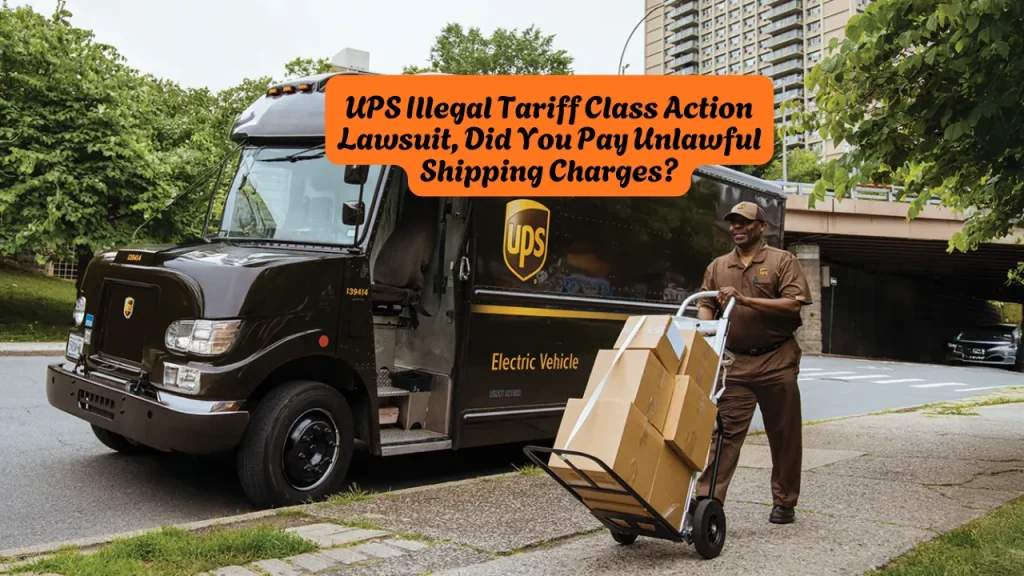
A proposed class action lawsuit filed against United Parcel Service Inc. on February 20, 2026 alleges that UPS collected tariff charges, surcharges, duties, and fees from consumers and importers based on tariffs the U.S. Supreme Court declared unlawful — and has failed to return that money. The lawsuit seeks a full refund of all unlawful charges collected. No settlement has been reached. The case is in its earliest stages.
Quick Facts
| Field | Detail |
| Defendant | United Parcel Service Inc. (NYSE: UPS) |
| Case Name | Anastopoulo v. United Parcel Service Inc. |
| Case Number | 1:26-cv-01005 (N.D. Ga.) |
| Court | U.S. District Court for the Northern District of Georgia |
| Date Filed | February 20, 2026 |
| Allegations | Breach of contract, unjust enrichment |
| Who May Be Affected | Any U.S. consumer or importer who paid UPS tariff charges, surcharges, duties, or fees under IEEPA |
| Settlement Status | None — litigation phase only |
| Plaintiff’s Counsel | Poulin Willey Anastopoulo LLC |
Current Status
- The lawsuit was filed on February 20, 2026 — the same day the U.S. Supreme Court ruled IEEPA tariffs unlawful. The case is in its earliest litigation stage.
- Class certification has not yet been granted. UPS has not responded to the complaint as of the date of this article.
- No settlement has been proposed, no administrator has been appointed, and no claim deadline exists. This article will be updated as the case progresses.
- A parallel lawsuit against UPS was also filed in the U.S. District Court for the District of South Carolina on the same date, Case No. 2:26-cv-00754.
What Is the UPS Tariff Lawsuit About?
On February 20, 2026, the United States Supreme Court issued a landmark ruling in Learning Resources, Inc. v. Trump declaring that tariffs imposed by President Trump under the International Emergency Economic Powers Act (IEEPA) exceeded presidential authority and were unlawful. The Court ruled that IEEPA does not authorize the President to impose broad-based tariffs — striking down a sweeping series of import duties that had been in place since early 2025.
Prior to the Supreme Court ruling, record levels of tariff revenue were collected on all goods imported into the United States, generating a massive $30 billion revenue in January 2026 alone — equivalent to a 304 percent increase from the previous year. Importers in the United States paid the tariffs to U.S. Customs and passed the costs on to consumers.
On the same day as the ruling, plaintiff Hali Anastopoulo — a freight forwarder and customs broker based in South Carolina — filed a proposed class action lawsuit against UPS in Georgia federal court. The lawsuit alleges that UPS imposed tariff charges and increased shipping costs on customers based on those now-invalid tariffs, but has failed to reimburse consumers.
The lawsuit makes two core legal claims. First, by charging and collecting unlawful tariff charges, UPS breached the express terms of its shipping contracts. Second, UPS was unjustly enriched by collecting and retaining charges derived from tariffs that were subsequently declared unlawful. The complaint demands a full refund of all tariff-related charges collected by UPS under IEEPA, plus interest, fees, and costs.
While the Supreme Court ruling ended the unlawful collection of tariffs under the IEEPA, the Court provided no guidance regarding whether, when, or how the federal government should return the billions of dollars of tariff fees collected from importers and consumers. The lawsuit argues that UPS — which collected the charges directly from customers — should not wait for a government refund process to reimburse the people who actually bore the financial burden.
Who May Be Affected?
The class action lawsuit seeks to represent anyone in the United States who paid unlawful tariff charges to UPS under the IEEPA. This is a broad class that could include:
- Individual consumers who paid UPS import duties, tariff surcharges, or customs fees on packages shipped from overseas between early 2025 and February 20, 2026
- Small businesses and importers who used UPS as their shipping carrier and were charged IEEPA-related tariff fees
- Freight forwarders and customs brokers who paid UPS tariff charges on behalf of their clients
- Anyone charged by UPS for brokerage and clearance fees that were directly tied to the now-invalid IEEPA tariffs
The complaints are tied to the elimination of a duty exemption enjoyed by importers of low-value goods, typically shipped directly to consumers through parcel and postal channels. The end of the exemption subjected merchandise to high tariffs being imposed on countries around the world.
If you received a UPS invoice showing IEEPA tariff charges, import duty fees, or tariff-related surcharges on a shipment between approximately February 2025 and February 20, 2026, you may be a potential class member. Keep all shipping invoices, receipts, and correspondence from UPS showing these charges.
Related article: Savannah Bee Company Recalls Honey BBQ Sauce-Mustard Over Undeclared Wheat and Soy Allergens
What UPS and FedEx Are Accused of — and How Their Responses Differ
The UPS lawsuit is one of several filed in the wake of the Supreme Court’s ruling. At least five putative consumer class actions have already been filed in federal district courts across the country in Florida, Georgia, South Carolina, and Tennessee against FedEx and UPS.
The cases against UPS and FedEx follow the same legal theory — but the companies have responded very differently. FedEx stated that it will return to shippers and customers any tariff refund it might receive from the government. UPS, by contrast, has made no such public commitment. At the time of filing, no automatic refunds had been issued to consumers by UPS.
The broader argument — that any company that passed through tariff costs must return corresponding refunds — has potentially sweeping implications for businesses. As refund litigation proceeds and more companies seek recovery of IEEPA duties, further consumer class action litigation is likely to follow.
This type of consumer protection lawsuit — where a company charges fees that turn out to have no valid legal basis — follows a pattern seen in other deceptive fee cases. The MyPillow class action over hidden shipping protection fees raised similar arguments about charges that consumers never validly agreed to pay.
What Happens Next
Because this case was filed just weeks ago, it faces several legal hurdles before any consumers receive a refund:
Class certification: The court must certify the proposed class before the lawsuit can proceed as a class action. UPS will likely challenge whether the class is too broad and whether common legal questions predominate across all potential class members.
Government refund process: It could be some time before the U.S. Court of International Trade and U.S. Customs and Border Protection roll out a process for issuing refunds on IEEPA tariff duties and determine who is eligible. The UPS lawsuit proceeds independently of this government process — but the outcome of federal refund proceedings may affect how much UPS owes and to whom.
UPS response: UPS has not yet filed a formal response to the complaint. The company is expected to challenge both the legal theories and the scope of the proposed class.
Possible settlement: If the court certifies the class and litigation proceeds, UPS may eventually negotiate a settlement — as has happened in many consumer protection cases of this type. This article will be updated with settlement details, claim deadlines, and filing instructions as soon as they become available.
What You Should Do Right Now
No claim form exists yet. But there are practical steps you can take today to protect your potential claim:
- Save all documentation — Keep every UPS invoice, receipt, delivery notification, or customs bill showing IEEPA tariff charges, import duty fees, or tariff-related surcharges paid between February 2025 and February 20, 2026
- Check your bank and credit card statements — Look for UPS charges labeled as tariff fees, import duties, brokerage fees, or IEEPA-related surcharges and save records of every one
- Do not discard shipping notices — Paper and email delivery notifications that reference tariff charges are valuable documentation
- Monitor this case — Track the docket at PACER using Case No. 1:26-cv-01005 (N.D. Ga.) for updates on class certification and any proposed settlement
- Consult a consumer protection attorney — If you paid significant IEEPA tariff charges through UPS, a consumer protection attorney can advise you on your options before any class action deadlines are set
Frequently Asked Questions
Is there a claim deadline for the UPS tariff lawsuit?
No. The lawsuit was filed on February 20, 2026, and no settlement has been reached. No claim form exists and no claim deadline has been set. The case must first proceed through class certification before any settlement or payment process begins. Check this article and the official court docket at PACER (Case No. 1:26-cv-01005) for updates.
How long will the UPS tariff lawsuit take to resolve?
It is too early to predict a timeline. Consumer class actions of this complexity typically take one to three years from filing to settlement or trial verdict, depending on whether UPS contests class certification, whether the case is consolidated with related lawsuits, and whether the parties negotiate. Cases tied to major government policy changes can move faster or slower depending on parallel regulatory proceedings.
Do I need a lawyer to participate in the UPS tariff class action?
You do not need your own lawyer to eventually file a claim if a settlement is reached — class counsel represents all class members at no cost. However, if you paid a significant amount in IEEPA tariff charges through UPS, consulting a consumer protection attorney now can help you understand your options, preserve your documentation, and potentially participate as a named plaintiff.
What is the International Emergency Economic Powers Act (IEEPA)?
The International Emergency Economic Powers Act is a federal law that grants the President broad authority to regulate commerce during a national emergency. President Trump used IEEPA to impose sweeping import tariffs on goods from most countries beginning in early 2025. On February 20, 2026, the U.S. Supreme Court ruled in Learning Resources, Inc. v. Trump that IEEPA does not authorize the President to impose broad-based tariffs, striking down those duties as unlawful.
Why is UPS being sued instead of the U.S. government?
The lawsuit targets UPS — not the government — because UPS directly collected tariff-related charges from its customers and retained them. The argument is that because the underlying tariffs were unlawful, UPS had no valid contractual or legal basis to charge those fees, and holding onto them constitutes breach of contract and unjust enrichment. The government refund process through U.S. Customs and Border Protection is a separate track that addresses refunds to importers — not directly to end consumers who bore the cost.
Last Updated: March 22, 2026
Disclaimer: This article is for informational purposes only and does not constitute legal advice. Legal claims and outcomes depend on specific facts and applicable law. For advice regarding a particular situation, consult a qualified attorney.
About the Author
Israr Ahmad is a legal content researcher with 4+ years of experience covering class action settlements and consumer rights cases. He has researched and published coverage of 2,500+ settlements using verified court records, settlement administrator filings, and government sources. Learn more about Israr.