
Brandon Citibank Shooting, What Happened, Why Was a Citi Employee Killed, and Could a Lawsuit Follow?
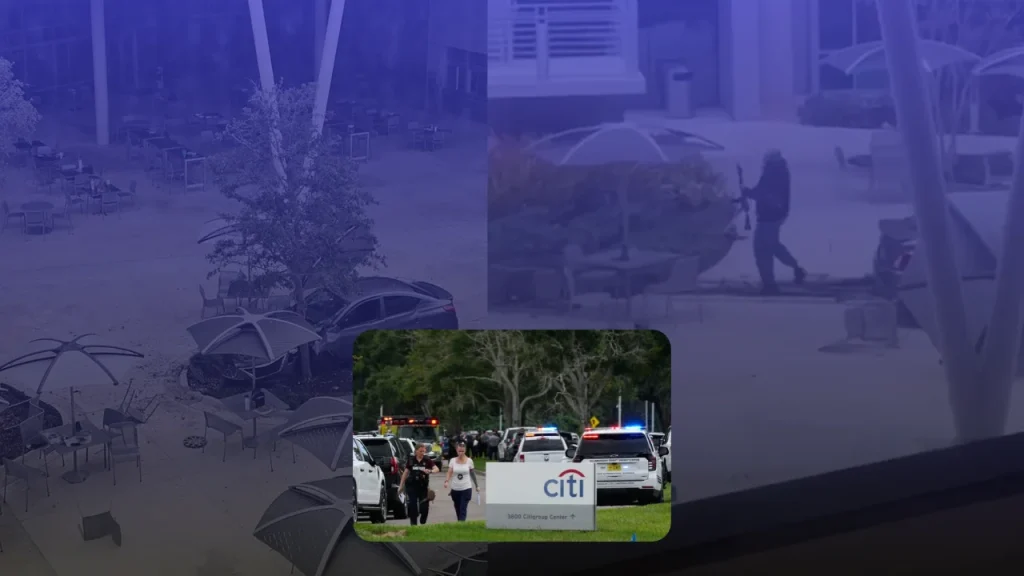
A shooting at Citibank’s Tampa-area corporate campus left a Citi employee and the suspected gunman dead on Wednesday, November 4, 2026. An armed Citibank security guard confronted the suspect inside the cafeteria and shot him, after the gunman had driven onto the campus, crashed into an outdoor dining area and opened fire.
The Hillsborough County Sheriff’s Office (HCSO) says 911 calls began at 12:11 p.m. and the first marked deputy arrived within one minute. More than 3,200 people were on the campus at the time.
The biggest questions are still open. Authorities have not publicly identified the victim or the suspect, explained the motive, or confirmed whether the two knew each other.
The shooting also raises legal questions that most news coverage has not answered. Could the victim’s family bring a Florida wrongful-death claim against Citibank, the property owner or a security contractor? Does Florida workers’ compensation apply, and does it block a lawsuit against the employer? What rights do injured Citibank employees have?
Florida law offers several routes to compensation, but none is automatic. The outcome will depend on the investigation, the employment relationship, who controlled the property and what the evidence shows about security before the shooting.
Quick Facts: Brandon Citibank Shooting
| Detail | What is confirmed |
| Incident | Fatal shooting at Citibank’s Tampa-area corporate campus |
| Date | Wednesday, November 4, 2026 |
| Location | Sabal Center, 3800 Citibank Center, Tampa (Brandon area), Hillsborough County, Florida |
| People killed | One woman and the suspected gunman |
| Victim | Described by Citi CEO Jane Fraser as a company colleague; name not publicly released |
| Suspect | Name not publicly released |
| Security response | A Citibank armed security guard confronted and shot the suspect |
| Other injuries | Reports describe at least four additional people treated or hospitalized with non-life-threatening injuries; CNN also reported the guard was injured |
| Campus population | More than 3,200 people |
| Law enforcement response | 367 HCSO deputies; more than 400 law-enforcement personnel including partner agencies |
| Investigation | HCSO homicide investigation (Release No. 26-185) |
| Motive | Not publicly established |
| Relationship between suspect and victim | Not publicly established |
| Lawsuit | No publicly reported lawsuit or settlement tied to this shooting identified as of November 5, 2026 |
| Putative class action | None identified; no public claim form or deadline |
Where Did the Citibank Center Shooting Happen in Brandon, Florida?
The shooting took place at the Sabal Center, 3800 Citibank Center in Tampa, Florida. News outlets commonly describe the site as being in Brandon, an unincorporated area of Hillsborough County in the Sabal Park business district, roughly 13 miles east of downtown Tampa. That is why some headlines say “Brandon” while the sheriff’s written release says “Tampa.”
This was a corporate office campus, not a neighborhood Citibank customer branch. It has multiple interconnected office buildings and employee amenities, including an outdoor dining area and a cafeteria.
Citibank Center Shooting Timeline: What Happened on November 4, 2026
12:11 p.m. — 911 calls begin. The HCSO 911 Dispatch Center started receiving calls reporting gunfire.
Within one minute — first deputy arrives. The first marked unit arrived and deputies entered the building immediately.
The gunman drives onto the campus. Chief Deputy Frank Losat told reporters the suspect drove a sedan over medians and grass and crashed through a secure fence into an outdoor dining area where people were eating lunch.
A woman is shot. The suspect got out carrying a rifle and shot a woman in the outdoor area. She was pronounced dead at the scene.
The guard confronts the suspect. The suspect continued inside. In the cafeteria, a Citibank armed security guard confronted him. They exchanged gunfire and the guard shot him.
12:24 p.m. — suspect taken to Tampa General Hospital.
1:12 p.m. — suspect pronounced dead.
HCSO reported that 367 deputies responded, with more than 400 law-enforcement personnel on scene once partner agencies are counted, and that the buildings were cleared within about two hours. Employees were directed to a triage area at the Sheraton Tampa Brandon Hotel, and family members were directed to the Staybridge Suites Tampa East, according to local media reports.
Sources: HCSO Release No. 26-185, Associated Press, Reuters and CNN (listed at the end of this article).
How Many People Were Injured in the Citibank Center Shooting?
Early reports do not describe the injuries in exactly the same way.
- The Associated Press reported four additional people were hospitalized with non-life-threatening injuries, and said authorities had not established whether they were shot or hurt in the vehicle crash.
- CNN reported that the security guard was injured in the exchange of gunfire and that at least four other people were treated at a local hospital for non-life-threatening injuries.
- HCSO’s written November 4 release confirmed the two deaths but did not give a single, final injury count.
Until HCSO issues an update, a combined total would be a guess. What is confirmed is that people beyond the two who died were hurt.
Who Was the Woman Killed at the Citibank Center in Brandon?
Citi CEO Jane Fraser told employees a company colleague had been killed. Reuters reported that Fraser said Citi was still gathering details and cooperating with local law enforcement.
The victim’s name had not been publicly released in the reporting reviewed for this article. Her identity matters legally because it bears on her employment status, her surviving family members, her job duties and whether there were earlier threats or disputes. Until authorities or her family release verified information, readers should not rely on names circulating on social media.
Who Was the Citibank Center Gunman, and Did He Know the Victim?
As of November 5, 2026, HCSO had not publicly identified the gunman or explained any relationship between him and the woman he killed. Investigators have not publicly said whether he was a current or former Citi employee, a contractor or vendor, a visitor, someone with a personal dispute with the victim, someone who had threatened the company, or a person with no connection to the campus.
These are open investigative questions, not facts. No report reviewed for this article establishes that the suspect worked for Citi or knew the victim.
The distinction matters legally. A suspect who was a former employee and had made specific, reported threats raises very different negligent-security and negligent-retention questions than a stranger with no prior warning signs.
Why Did the Brandon Citibank Shooting Happen? Motive Has Not Been Confirmed
HCSO has not publicly confirmed a motive.
Sheriff Chad Chronister wrote that the department believed this was a “targeted incident.” HCSO’s later release also quoted him saying the victim was killed by someone who appeared intent on killing as many people as possible.
Those statements are the sheriff’s assessment. They do not establish why the suspect attacked, who he intended to target or why the woman was shot. “Targeted” can mean investigators believe the attack was directed rather than random without having identified the reason. Some outlets have mentioned a possible financial grievance involving the bank, but that has not been confirmed by HCSO.
Questions authorities have not yet answered:
- Did the suspect know the woman?
- Was she the intended target?
- Did the suspect have a grievance against Citi?
- Was there a workplace dispute or a prior threat?
- Was there a personal dispute unrelated to the company?
- Did anyone warn Citi or law enforcement about the suspect before November 4?
Until investigators release evidence, any stated motive is speculation.
Was the Citibank Security Guard Legally Justified Under Florida Statutes § 776.012?
Florida law allows deadly force in defined circumstances. Under Florida Statutes § 776.012, a person may use or threaten deadly force if he or she reasonably believes it is necessary to prevent imminent death or great bodily harm to self or another, or to prevent the imminent commission of a forcible felony. Florida’s stand-your-ground provision removes any duty to retreat for a person who is not engaged in criminal activity and is in a place he or she has a right to be.
HCSO’s account is that the guard confronted a gunman who had already killed one person with a rifle and had moved into a building holding thousands of employees. That account is consistent with a reasonable belief that deadly force was necessary to protect others. Public reports are not a legal ruling, though, and the complete evidence would control any formal determination. Officials have publicly praised the guard’s actions, and no charges against him have been reported.
Florida Statutes § 776.032 gives immunity from criminal prosecution and civil action for justified use of force under the statutory conditions. That civil immunity protects the person who used force from claims by the person the force was used against, or that person’s representative or heirs. It is not blanket immunity for Citibank against a separate negligent-security claim by the deceased victim’s family.
What Florida Law Says About Armed Security Guards Like the One at the Citibank Center
Security guards in Florida are licensed under Chapter 493 of the Florida Statutes by the Florida Department of Agriculture and Consumer Services. Armed guards generally need both a security officer license (Class “D”) and a statewide firearm license (Class “G”). A license does not give a guard greater use-of-force authority than an ordinary private citizen has under § 776.012; it authorizes the guard to carry and use a firearm in connection with duties, within the scope of employment and the law.
The guard’s licensing status, employer, training and post orders would all be relevant if a civil claim is later filed. Public reports so far call him a Citibank security guard and do not state whether he was employed directly by Citi or by an outside security company.
Could Citibank Face a Wrongful-Death or Negligent-Security Lawsuit in Florida?
Potentially, but a fatal shooting on company property does not automatically make the company legally responsible. A civil claim needs evidence connecting a defendant’s legal duty and conduct to the death. The main theories are wrongful death, negligent security, negligent hiring, retention or supervision (where the facts support it), and claims against a separate property owner, manager or security contractor.
Florida’s Wrongful Death Act (Florida Statutes §§ 768.16–768.26)
Under Florida Statutes § 768.19, a wrongful-death claim may arise when a person dies from another’s wrongful act, negligence, default or breach of contract or warranty, where the deceased could have sued had she survived.
Under § 768.20, the suit must be brought by the deceased person’s personal representative for the benefit of the survivors and the estate. Family members do not each file separately. Under § 768.18, survivors can include a spouse, children and parents, and certain dependent relatives.
Under § 768.21, recoverable damages may include:
- Lost support and services;
- A surviving spouse’s loss of companionship and protection and mental pain and suffering;
- Certain children’s loss of parental companionship, instruction and guidance;
- Certain parents’ mental pain and suffering;
- Medical and funeral expenses (where paid by a survivor or the estate);
- Specified estate losses, such as lost earnings and net accumulations.
Not every survivor qualifies for every category. A parent of an adult child, for example, may recover for mental pain and suffering only where there is no other qualifying survivor, subject to the statute’s terms.
Punitive damages are governed separately by Florida Statutes § 768.72 and § 768.73. They require clear and convincing evidence of intentional misconduct or gross negligence, and they are not part of an ordinary negligence claim.
Time limits matter. Florida’s statute of limitations in Florida Statutes § 95.11 sets the filing deadline for wrongful-death and negligence claims, and Florida shortened the general negligence deadline in 2023. A family should confirm the current deadline with a Florida attorney immediately rather than relying on older articles.
Florida’s Negligent-Security Law: Florida Statutes § 768.0701
Florida Statutes § 768.0701 governs premises-liability claims against an owner, lessor, operator or manager of commercial or real property for injuries caused by a third party’s criminal act to a person lawfully on the property. Under the statute, the factfinder must consider the fault of all persons who contributed to the injury, including the criminal attacker.
That is central here. A jury would not look only at Citibank or a security contractor. It would also weigh the gunman’s conduct against any proven contribution by a property defendant.
Negligent-security analysis generally asks whether the operator owed a duty to take reasonable precautions, whether the criminal attack was foreseeable, whether the security measures were unreasonable, and whether any failure caused the harm. Florida’s Supreme Court discussed the “zone of risk” concept in McCain v. Florida Power Corp., 593 So. 2d 500 (Fla. 1992). That was not a shooting case, but it is foundational to Florida duty analysis.
For the Citibank Center, investigators and civil lawyers would likely examine:
- Whether Citi or any other entity received threats before the shooting;
- Whether there were earlier violent incidents at the campus;
- Whether any employee or visitor reported threatening behavior;
- Whether access-control and perimeter systems worked as intended;
- Whether vehicle barriers were adequate for known risks;
- Whether guards were properly positioned, staffed and trained;
- Whether Citi had a workplace-violence assessment and response plan;
- Whether prior complaints or incidents were investigated.
Reports that the sedan breached a secure fence are relevant to the investigation. They do not by themselves prove the fence or security system was legally inadequate. Florida also imposes no general duty on private employers to hire armed guards, but once security is provided, ordinary reasonable-care standards apply.
Florida’s Comparative Fault Law: Florida Statutes § 768.81
Florida Statutes § 768.81 controls how fault is divided in negligence cases. Damages are apportioned by each party’s percentage of fault, and a claimant found more than 50% at fault for her own harm is generally barred from recovery in covered negligence actions. These rules do not mean a victim is to blame for being attacked. They describe how Florida courts allocate fault if a negligence suit is filed.
Could a Security Contractor or Property Manager Be Sued After the Citibank Center Shooting?
Possibly, depending on the corporate arrangements and the evidence. The public record does not establish the guard’s exact employer, whether an outside security company was involved, or which entity owned, leased or controlled each part of the campus. Possible defendants in a properly supported suit could include a property owner, property manager, campus operator, security contractor or another company with relevant control. A company is not liable simply because its name is associated with the location.
If the suspect turns out to have been a known employee or contractor who made threats, evidence about hiring, retention, supervision and prior warnings could also become important. No such connection has been established publicly.
What If the Citibank Center Gunman’s Estate Is Named in a Civil Case?
The suspect is dead, so there will be no criminal prosecution of him. Florida’s wrongful-death statute addresses this situation: under § 768.20, if the alleged wrongdoer dies, the wrongdoer’s personal representative can be named as defendant. Claims against a decedent’s estate are also subject to Florida’s probate creditor-claim deadlines in Chapter 733, which are short and strictly enforced, so a family’s lawyer would need to watch for any estate opened for the suspect.
Florida Workers’ Compensation After the Citibank Center Shooting: Can the Victim’s Family and Injured Employees Collect Benefits?
This may be the most important legal route because Citi’s CEO described the woman as a company employee.
Florida’s Workers’ Compensation Law generally requires an employer to provide benefits when an employee suffers a compensable injury or death arising out of work performed in the course and scope of employment. See Florida Statutes § 440.09. A shooting at work does not automatically resolve the claim. The employer’s carrier may ask whether she was working or on an ordinary break, whether she was on company premises, and whether the death arose out of the employment.
The July 9, 2026 Florida Supreme Court Decision in Bouayad v. Normandy Insurance Company
On July 9, 2026, the Florida Supreme Court decided Bouayad v. Normandy Insurance Company, No. SC2023-1576. A car-rental manager had been shot at work by an unknown assailant. It was not a robbery, and the shooter’s identity and motive were unresolved.
The Court rejected a narrow reading that would have required the specific task being performed at the instant of the shooting to cause the injury. It held that a workplace assault can qualify for workers’ compensation if the employee shows that the job duties or overall work environment exposed the employee to an increased risk of the assault. A work-related motive is one way to show work-relatedness, but not the only way. The Court sent the case back for further proceedings and did not decide anything about the Citibank incident.
This matters because the motive here is unknown. Under Bouayad, an unknown motive does not automatically defeat a workers’ compensation claim, although the family would still need to meet the legal standard. Read the Florida Supreme Court’s July 9, 2026 opinion.
Workers’ Compensation Death Benefits Under Florida Statutes § 440.16
Under Florida Statutes § 440.16, qualifying death benefits can include:
- Funeral expenses, subject to a statutory maximum of $7,500;
- Dependency-based compensation for qualifying survivors, subject to statutory rules. The statute sets a $150,000 maximum for the wage-benefit compensation described in that section, subject to its detailed provisions.
These are not automatic payments to every relative. Amounts depend on eligibility, dependency and the statutory calculation.
Deadlines and Notice Rules for Injured Citibank Employees
Florida Statutes § 440.185 requires an injured employee to notify the employer of a work injury within 30 days, and § 440.19 sets a limitations period for filing a petition for benefits (generally two years from the date of injury, subject to tolling and exceptions). Survivors of a deceased worker should confirm the specific deadlines that apply to a death claim with a Florida workers’ compensation attorney without delay.
Psychological Injuries for Employees Who Witnessed the Shooting
Employees who were on campus but not physically hurt may have mental or emotional injuries. Under Florida Statutes § 440.093, mental or nervous injuries are generally compensable only when they are accompanied by a physical injury, with a limited exception for certain first responders. This is a significant limit for employees who witnessed the shooting without being physically hurt, and it means such an employee’s options may be narrower than the physical-injury claims of someone who was wounded.
Can the Victim’s Family Sue Citibank Separately Under Florida Statutes § 440.11?
Under Florida Statutes § 440.11, workers’ compensation is generally the exclusive remedy against the employer for a covered work-related injury or death. Limited exceptions include an employer’s failure to secure required coverage and a narrowly defined intentional tort requiring deliberate intent to injure or knowledge that the conduct was virtually certain to cause injury or death.
So a direct negligence claim against Citi as the employer may face the exclusive-remedy bar if the death is covered. A claim against a legally separate property owner, manager or security contractor may remain possible if that entity qualifies as a third party and the evidence supports liability.
Florida Statutes § 440.39 addresses claims when a worker is injured or killed by a third-party tortfeasor. Workers’ compensation benefits and a third-party recovery can interact through the carrier’s lien or reimbursement rights, so a family should not assume it keeps every dollar from both routes. Collateral-source setoffs under Florida Statutes § 768.76 may also affect a final recovery.
Could OSHA Investigate Citibank’s Workplace Security After the Tampa Shooting?
Potentially. The federal General Duty Clause, 29 U.S.C. § 654(a)(1), requires employers to provide a workplace free from recognized hazards likely to cause death or serious physical harm. OSHA says there is no specific federal workplace-violence standard, but it can use the General Duty Clause where a serious hazard was recognized and a feasible means of reducing it existed.
A violent incident does not by itself prove an OSHA violation. OSHA would look at whether Citi knew or should have recognized a relevant risk and whether practical measures were available. Prior threats, documented workplace violence, known access problems or inadequate response procedures would be relevant evidence. An OSHA inquiry is separate from a wrongful-death lawsuit and from a workers’ compensation claim.
Victims’ Rights and Crime-Victim Compensation in Florida After the Hillsborough County Shooting
Article I, Section 16 of the Florida Constitution (commonly called Marsy’s Law) includes the next of kin of a homicide victim within the definition of a “victim,” subject to its conflict-of-interest qualification. The Florida Attorney General’s Crime Victims’ Bill of Rights explains rights to information, participation and being heard in criminal proceedings. Because the suspect died, a criminal prosecution of him will not occur, but the Hillsborough County Sheriff’s Office investigation and any related proceedings may still involve victim-services contacts.
Florida’s crime-victim compensation law, Florida Statutes § 960.13, can help qualifying victims and survivors with certain expenses. Compensation is subject to need requirements and is generally secondary to other available benefits, including workers’ compensation. Eligibility and covered expenses should be confirmed with the Florida Department of Legal Affairs.
What Evidence Could Decide a Citibank Center Shooting Lawsuit?
Important evidence may include:
- Security video: Footage of the outdoor dining space, fence, parking areas, entrances, cafeteria and surrounding buildings.
- Access records: Badge logs, visitor records, gate controls and records showing how the vehicle entered the campus.
- Threat reports: Emails, complaints, human-resources records and reports of prior threats involving the suspect, the victim or the workplace.
- Security contracts: Agreements showing who employed the guard, who controlled the campus and who was responsible for security systems.
- Training and staffing records: Guard training, post orders, emergency procedures and staffing levels.
- Prior incidents: Earlier assaults, threats, unauthorized entries or other security problems.
- Emergency-response records: 911 calls, dispatch records, incident reports and witness statements.
Families should preserve communications, employment records, medical bills and witness information. Video and electronic data can be overwritten, so prompt preservation requests can matter. Requesting records or filing a lawsuit does not establish liability; each claim must be proven.
For examples of how alleged security failures appear in other wrongful-death litigation, see Family Sues Twin Peaks and Jeremiah Matkins Over Fatal 2024 Huntsville Shooting of Ray’Shun Markelle Bates, which involves Alabama law; Chun Ki Kim Lawsuit, Daughters Sue Janet Williams and Atlanta Housing Defendants After Senior Housing Stabbing Acquittal, which involves Georgia law; and Drakeo the Ruler Estate Live Nation Settlement, What Was Settled, What Wasn’t, and What Happens Next, which involves California litigation. None of those cases decides whether Citi is liable under Florida law, and allegations in them are not findings of liability.
Has Anyone Filed a Lawsuit Over the Citibank Center Shooting in Tampa?
As of November 5, 2026, no publicly reported lawsuit or settlement specifically connected to this shooting was identified in the reporting and indexed material reviewed for this article. There is also no verified putative class action, public settlement fund, claim form or claim deadline for Citi employees, customers or members of the public.
That does not establish that no lawyer has been contacted, that no insurance claim has been submitted or that no pre-suit demand is being prepared; those steps often happen privately before a complaint becomes public. Any wrongful-death claim would ordinarily be an individual case brought by the victim’s personal representative, and an injured employee’s workers’ compensation claim would follow a separate process.
What Happens Next in the Hillsborough County Sheriff’s Office Investigation?
Watch for:
- Official identification of the victim and the suspect;
- Whether the suspect and victim knew each other;
- A confirmed motive or evidence of why the woman was attacked;
- A final injury count and an update on the guard’s condition;
- Evidence of the suspect’s employment or other connection to Citi;
- Details of any prior threats or security warnings;
- Any OSHA action, workers’ compensation dispute or civil complaint.
Citi CEO Jane Fraser told employees the company was cooperating with law enforcement and would consider additional security measures at other locations as needed. Reuters reported the Tampa campus was secure after the incident. HCSO asked the public to submit any relevant video or information.
Frequently Asked Questions About the Brandon Citibank Shooting
Where did the Citibank Center shooting happen?
At the Sabal Center, 3800 Citibank Center in Tampa, Florida, in the Brandon-area Sabal Park business district of Hillsborough County.
When did the Brandon Citibank shooting happen?
On Wednesday, November 4, 2026, around lunchtime. HCSO began receiving 911 calls at 12:11 p.m.
How many people died in the Citibank Center shooting?
Two: a woman Citi’s CEO described as a company colleague, and the suspected gunman, who was shot by an armed Citibank security guard and pronounced dead at Tampa General Hospital at 1:12 p.m.
Has the Citibank shooting victim been identified?
Not in the reporting reviewed as of November 5, 2026.
Why did the gunman shoot the woman at the Citibank Center?
HCSO has not publicly established the motive or the relationship between the suspect and the victim. The sheriff called it a targeted incident, which is not the same as a confirmed reason for the attack.
Did the Citibank Center gunman work for Citi?
No report reviewed for this article confirms that he was a current or former Citi employee.
Who stopped the gunman at the Citibank Center?
A Citibank armed security guard confronted him in the cafeteria and shot him during an exchange of gunfire, according to HCSO.
Was the Citibank security guard injured?
CNN reported that the guard was injured in the exchange of gunfire. HCSO’s written release did not provide a consolidated injury count.
Can the family of the Citibank Center victim sue Citibank under Florida law?
Possibly, depending on the evidence and the legal relationship among Citi, the employer, the property owner and any security contractor. If the death is covered by Florida workers’ compensation, Florida Statutes § 440.11 may bar a negligence claim against the employer, while a qualifying third-party claim may remain available.
Can a negligent-security lawsuit be filed over the Brandon Citibank shooting?
A claim may be possible if the evidence shows a duty, a foreseeable risk, unreasonable security measures and causation under Florida Statutes § 768.0701. A shooting on commercial property does not by itself prove negligent security.
Can injured Citibank employees receive workers’ compensation in Florida?
They may, if their injuries arose out of and in the course of employment. The Florida Supreme Court’s July 9, 2026 decision in Bouayad v. Normandy Insurance Company is relevant to workplace assaults where the motive is unknown. Under Florida Statutes § 440.093, psychological injuries without a physical injury face significant limits.
Was the Citibank security guard protected by Florida’s stand-your-ground law?
Florida Statutes §§ 776.012 and 776.032 allow justified deadly force to prevent imminent death, great bodily harm or a forcible felony, and give immunity from criminal prosecution and civil action for justified use of force. HCSO officials have publicly praised the guard, and no charges have been reported.
Is there a Citibank shooting putative class action or settlement?
None had been identified as of November 5, 2026.
Is there still a public safety threat at the Citibank Center in Brandon?
HCSO said the buildings were cleared and the campus secured, and reported no continuing public threat in its November 4 briefing.
Bottom Line: Citibank Center Shooting, Florida Law and What Comes Next
The Brandon-area Citibank shooting left a Citi employee and the suspected gunman dead, with additional people treated for injuries. The armed guard’s intervention stopped the attack, but the reason for the shooting and the relationship between the suspect and the victim remain unresolved.
The central legal issue is not simply that the attack happened on company property. It is whether the evidence will show that a defendant had advance knowledge of a foreseeable danger and failed to take reasonable precautions. The victim’s family may face wrongful-death and workers’ compensation questions, and injured employees may have separate benefits claims. The July 2026 Bouayad decision makes the workers’ compensation analysis especially important even when the attacker’s motive is unknown.
No public lawsuit or settlement has been verified. Any future claim will depend on what the investigation and the records actually show.
Sources and Official Legal Records
- Hillsborough County Sheriff’s Office, Release No. 26-185, November 4, 2026: https://teamhcso.com/News/PressRelease/c1a319e4-9992-4e27-bd57-c74db6ac4ccc/en-US
- Associated Press, Florida authorities say 2 dead at Tampa office complex, November 4, 2026: https://apnews.com/article/6243ee93c43ff9c56d15268c12643507
- Reuters, Citi employee killed in shooting at Florida office, November 4, 2026: https://www.reuters.com/world/us/two-dead-after-incident-citigroups-complex-florida-2026-11-04/
- CNN Newsource, Suspect among two dead after shooting at Citibank Center near Tampa: https://www.kq2.com/cnn/cnn-national/2026/11/04/suspect-among-two-dead-after-shooting-at-citibank-center-near-tampa-sheriff-says/
- Florida Statutes §§ 768.16–768.26 (Wrongful Death Act), 768.0701, 768.72, 768.73, 768.76 and 768.81.
- Florida Statutes §§ 440.09, 440.093, 440.11, 440.16, 440.185, 440.19 and 440.39.
- Florida Supreme Court, Bouayad v. Normandy Insurance Company, No. SC2023-1576, July 9, 2026.
- Florida Statutes §§ 776.012, 776.032, 960.13, 95.11, Chapter 493 (security services) and Chapter 733 (probate claims); Fla. Const. art. I, § 16.
- Occupational Safety and Health Act, 29 U.S.C. § 654(a)(1), and OSHA workplace-violence enforcement guidance.
Disclaimer: AllAboutLawyer.com is an independent legal information website, not a law firm, and nothing here is legal advice. Deadlines and eligibility depend on the facts, so consult a licensed Florida attorney. Nothing in this article establishes that Citi or any other party acted negligently.
Researched and written by Israr Ahmad, legal content researcher and founder of AllAboutLawyer.com. All facts verified against the Hillsborough County Sheriff’s Office Release No. 26-185, Associated Press, Reuters and CNN reporting, the Florida Statutes and the Florida Supreme Court’s opinion in Bouayad v. Normandy Insurance Company, as of November 5, 2026. Last Updated: November 5, 2026.
About the Author
Israr Ahmad is a legal content researcher with 4+ years of experience covering class action settlements and consumer rights cases. He has researched and published coverage of 2,500+ settlements using verified court records, settlement administrator filings, and government sources. Learn more about Israr.