
Trader Joe’s E. Coli Lawsuit 2026, Tarragon Chicken Salad Wraps, 50 Illnesses and What Victims Can Claim
Consumer Action Box: If You Ate a Trader Joe’s Tarragon Chicken Salad Wrap
| Step | What to do |
| 1. Get medical care for warning signs | Contact a healthcare provider promptly for bloody diarrhea, severe stomach cramps, persistent vomiting, signs of dehydration, or a fever. Go to emergency care for very little urine, unusual bruising or paleness, extreme tiredness or confusion, which can signal kidney complications (HUS) |
| 2. Do not self-treat | The CDC warns that antibiotics and anti-diarrheal medicines can raise the risk of HUS in Shiga toxin-producing E. coli infections. Ask a clinician before taking either |
| 3. Tell your doctor what you ate and when | Mention the wrap, the purchase date and store, and ask whether a stool test is appropriate |
| 4. Report to your health department | Local and state health departments use these reports to link illnesses to the outbreak. USDA’s Meat and Poultry Hotline is 1-888-674-6854 |
| 5. Do not eat any remaining wraps | Ask your health department how to dispose of food you still have |
| 6. Keep your records | Receipt, loyalty or card purchase record, package or label photo, medical records and lab results, bills, pay records and a timeline of symptoms |
| 7. Consider legal advice if you were seriously ill | Time limits apply (see Section 8). A lawyer can assess your evidence and which state’s law applies |
Quick Facts: Trader Joe’s E. Coli Lawsuit
| Detail | Reported information |
| Case | Gottlieb and Bright v. Trader Joe’s Company, No. 2:26-cv-12017 |
| Court | U.S. District Court for the Central District of California |
| Filing date | October 15, 2026, according to the plaintiffs’ attorneys |
| Plaintiffs | Gayle Gottlieb (Pembroke, North Carolina) and Meaghan Egan Bright (Somerville, Massachusetts) |
| Defendant | Trader Joe’s Company |
| Product | Trader Joe’s Tarragon Chicken Salad Wrap |
| Bacterium | Shiga toxin-producing E. coli O157 |
| Outbreak references | FDA investigation No. 1421; USDA FSIS reference 2026-04 |
| Reported outbreak size | 50 illnesses on the FDA tracker as of October 24, 2026 |
| Claims | Strict product liability, negligence, negligence per se, breach of implied warranty |
| Product removal | Trader Joe’s says it removed the wraps from stores in nine states in September 2026 |
| Formal recall | No Trader Joe’s-specific public recall notice identified |
| Class action? | No. An individual personal-injury suit by two named plaintiffs |
| Official settlement website or claim form | None. No settlement or claim form verified |
Two women allege they were hospitalized with E. coli O157 infections after eating Trader Joe’s Tarragon Chicken Salad Wraps in late August 2026. They sued on October 15, 2026. The case sits inside a multistate outbreak that the FDA listed at 50 illnesses as of October 24. On October 23, USA TODAY reported that USDA’s Food Safety and Inspection Service (FSIS) confirmed by email that the Trader Joe’s wraps were the product linked to the outbreak, while the FDA’s public table still described a generic suspect “multi-ingredient wrap with chicken.” The contaminated ingredient has not been publicly identified.
These are allegations. No court has found Trader Joe’s liable, and no settlement, certified class or consumer payment program has been verified.
1. What Is the Lawsuit About?
The plaintiffs allege they separately bought the wraps in late August 2026, Gottlieb at a Trader Joe’s in Myrtle Beach, South Carolina, and Bright at a store in Allston, Massachusetts. Both say they became ill within days, were hospitalized, and tested positive for Shiga toxin-producing E. coli. Their local health departments reportedly told them their illnesses were part of a multistate outbreak.
The complaint pleads four theories: strict product liability (a contaminated, unsafe product), negligence (failure to use reasonable care), negligence per se (reliance on an alleged safety-law violation) and breach of the implied warranty of merchantability (product unfit for ordinary use). The plaintiffs seek damages and a jury trial. The complaint was reviewed through the plaintiffs’ attorneys’ public summary and reporting, so the exact wording of each allegation and the specific statutes behind the negligence per se claim should be checked against the full filing.
2. The Two Plaintiffs’ Reported Accounts
Gayle Gottlieb
According to the attorneys’ summary, Gottlieb bought three wraps on August 23, 2026, and ate the first on August 27. Severe cramps began about two days later. By August 30 she had bloody diarrhea and went to an emergency department in Lumberton, North Carolina, where a stool sample tested positive for E. coli O157. She was discharged August 31, returned that night severely dehydrated, was taken by ambulance to Scotland Memorial Hospital in Laurinburg, and was admitted September 2. The North Carolina State Laboratory of Public Health reportedly confirmed E. coli O157 and Shiga toxin 2, and the state health department classified her as a confirmed outbreak case that recorded a Trader Joe’s wrap as the source.
Meaghan Egan Bright
Bright bought and ate a wrap on August 24, 2026, became ill August 27, had bloody diarrhea by August 30, was initially sent home from one hospital, then went by ambulance to Massachusetts General Hospital, where she was hospitalized from August 31 to September 6. Her stool sample tested positive for Shiga toxin-producing E. coli, and her physicians reportedly warned her about HUS. The complaint does not say she developed HUS. Somerville and Massachusetts public health officials reportedly told her that her illness was part of the outbreak.
Why two plaintiffs matter
The same named product, purchased at different stores in two states, with similar timelines and lab-confirmed infections matching the outbreak, supports an argument for a common source. It does not by itself prove each element of liability, and plaintiffs still must connect the product, the defendant’s responsibility and their damages.
3. What Is E. Coli O157 and What Is HUS?
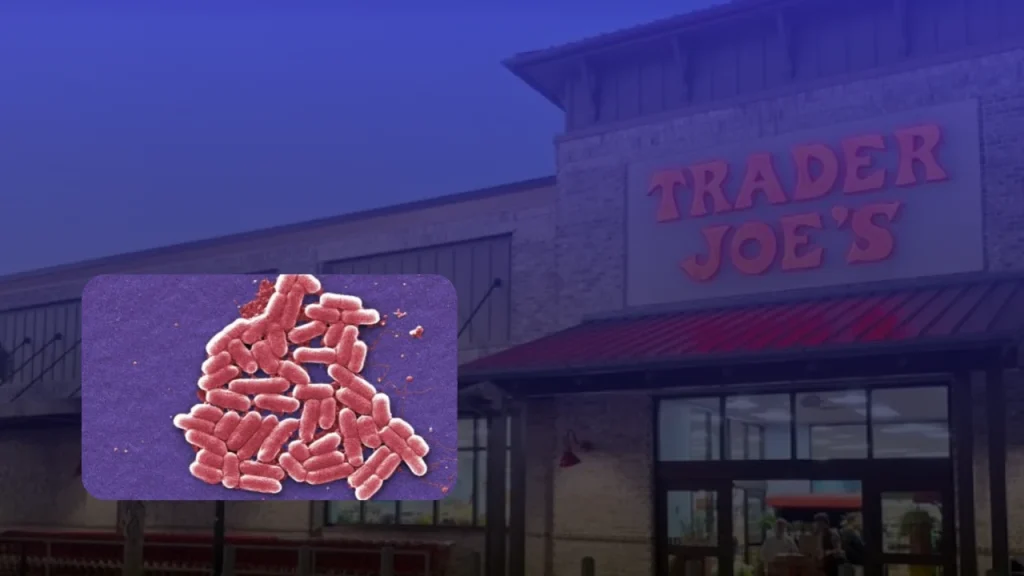
Certain Shiga toxin-producing E. coli (STEC) strains, including O157, produce toxins that damage the intestinal lining. The CDC lists severe stomach cramps, diarrhea that may be bloody, vomiting and sometimes fever, usually beginning several days after exposure. Many people recover without treatment, but some need hospital care.
Hemolytic uremic syndrome (HUS) is a serious complication that can destroy red blood cells and injure the kidneys. It can lead to kidney failure, permanent harm or death, and it is most common in young children and older adults. Warning signs include urinating much less, unusual bruising, blood in the urine, pallor, extreme fatigue and reduced alertness. HUS is a medical emergency.
Neither plaintiff has been publicly reported as diagnosed with HUS, and the public sources do not give a count of HUS cases or deaths in the outbreak.
Related article: Logan Paul–Dillon Danis Lawsuit 2026, Nina Agdal’s Claims, the $500,000 Cost Claim and What Happens Next
4. The Outbreak: What Is and Is Not Confirmed
- Case count: The FDA tracker listed 50 illnesses and an ongoing investigation on October 24, 2026. FDA opened investigation No. 1421 on September 23 with 25 cases, according to the plaintiffs’ attorneys, and the count rose to 38 and then 50 by October 15. 50 is the latest listed figure, not necessarily the final number.
- Brand naming: The FDA table did not name Trader Joe’s. USA TODAY reported on October 23 that an FSIS email identified Trader Joe’s Tarragon Chicken Salad Wraps as the source product.
- Hospitalizations: Both plaintiffs say they were hospitalized, but no complete hospitalization or death breakdown is public. It would be inaccurate to say all 50 people were hospitalized.
- Ingredient: FSIS said the responsible ingredient was still under investigation and that extensive product testing had been negative. The wrap has multiple ingredients, so the chicken itself is not confirmed as the source.
- Supplier: FDA and FSIS have not publicly named the maker. The plaintiffs’ attorney, Bill Marler, wrote that he believes a New Jersey manufacturer made the wraps. That is an attorney’s account, not an agency finding, and the supplier is not confirmed here.
5. Was There a Recall?
No Trader Joe’s-specific public recall notice was found in the FDA and FSIS listings reviewed as of October 24, 2026. That does not mean the product stayed on shelves.
In an October 20 email to USA TODAY, Trader Joe’s said the FDA told the company in September of a possible issue and that it immediately pulled the wraps from stores in nine states: Massachusetts, Michigan, Minnesota, North Carolina, Rhode Island, New York, Maryland, Maine and Virginia. The company said FDA and USDA testing at the regional supplier’s facility came back negative for E. coli and that it had received no reports of additional illnesses since early September. FSIS said the wraps were removed before the outbreak link was established and were past their shelf life.
One detail is unexplained: Gottlieb says she bought wraps in Myrtle Beach, South Carolina, which is not on Trader Joe’s nine-state list.
A store removal is different from a formal recall notice with lot codes and consumer instructions. The absence of a recall neither proves the product was safe nor shows that Trader Joe’s broke any law. No public list of lot codes, UPCs or use-by dates was found. Do not assume other Trader Joe’s wraps or chicken products are affected just because they contain chicken.
6. History: Trader Joe’s and Earlier Salad and Wrap Outbreaks
This is not Trader Joe’s first E. coli outbreak involving ready-to-eat items. In fall 2013, Glass Onion Catering recalled about 181,620 pounds of ready-to-eat salads and wraps with cooked chicken and ham tied to an E. coli O157:H7 outbreak. Trader Joe’s was among the retailers that sold them, including the Field Fresh Chopped Salad with Grilled Chicken, and the retailer was named alongside the maker in multiple lawsuits. Reporting at the time counted at least 32 illnesses in four states by late November 2013. That outbreak involved different products and a different supplier, and it does not show how the 2026 case will turn out.
7. The Law in Brief
| Theory | What it requires | Notes for this case |
| Strict product liability | A defective product that caused injury. For food, contamination with a pathogen is generally treated as a manufacturing defect (see Restatement (Third) of Torts: Products Liability § 2(a)). California holds retail sellers in the distribution chain strictly liable (Greenman v. Yuba Power Products, 59 Cal. 2d 57 (1963); Vandermark v. Ford Motor Co., 61 Cal. 2d 256 (1964)) | Plaintiffs still must prove the wrap was the source and caused the illness. A retailer may seek indemnity from the supplier |
| Negligence | Duty, breach, causation, damages (Cal. Civ. Code § 1714) | Discovery into sourcing, testing and handling will matter |
| Negligence per se | A statute or regulation violation that caused the type of harm it targets, to a protected class (Cal. Evid. Code § 669) | The statutes relied on are not confirmed. Federal food laws, such as the Poultry Products Inspection Act (21 U.S.C. §§ 451-472) and the Federal Food, Drug, and Cosmetic Act, have no general private right of action (21 U.S.C. § 337(a)), so such a claim must fit state law |
| Implied warranty of merchantability | Goods fit for ordinary use (Cal. Com. Code § 2314) | Contaminated ready-to-eat food is the textbook example |
Which state’s law applies?
The suit was filed in California federal court, but the purchases and illnesses were in South Carolina and Massachusetts and the plaintiffs live in North Carolina and Massachusetts. The court may need to decide which state’s law governs each claim, and Trader Joe’s could argue for a different state’s law. No ruling had been identified as of October 24, 2026.
8. Deadlines to File a Claim
Every state sets a statute of limitations for personal injury. These are general rules and can vary with the facts, so check with a lawyer:
| State | General personal-injury limit |
| California | 2 years (Code Civ. Proc. § 335.1) |
| North Carolina | 3 years (N.C. Gen. Stat. § 1-52) |
| South Carolina | 3 years (S.C. Code § 15-3-530) |
| Massachusetts | 3 years (M.G.L. c. 260, § 2A) |
Minors’ claims are often tolled, and the discovery rule can affect when the clock starts. Because which state’s law applies may be disputed, people with serious illness should not wait.
9. What Compensation Are the Plaintiffs Seeking?
The plaintiffs seek compensation for medical expenses, pain and suffering, emotional distress and other damages, plus a jury trial. Categories commonly claimed in foodborne illness cases include past and future medical costs, lost wages, pain and suffering, emotional distress and other proven losses. No amount has been awarded or agreed, and the figures cannot be calculated from the public record. A punitive damages demand was not verified.
10. Is It a Class Action?
No. The reported case is an individual lawsuit by two named plaintiffs. The 50 outbreak illnesses do not automatically make everyone part of this case, and no class-certification order, class notice, settlement administrator or claim form was found. Consumers should not assume they can sign up for a class payout.
11. What Happens Next?
Trader Joe’s must respond to the complaint, and it may deny the claims or move to dismiss on legal grounds, which would not show the allegations are false. If the case proceeds, discovery may reach manufacturing, ingredients, quality control, regulator communications and the removal decision. The defense may contest causation, responsibility or damages. A settlement is possible, but none has been announced. Watch for the company’s formal response, any early ruling, an FDA or FSIS update naming the product, supplier or ingredient, and any settlement.
12. Frequently Asked Questions
Is there a Trader Joe’s E. coli lawsuit in 2026?
Yes. Gayle Gottlieb and Meaghan Egan Bright sued Trader Joe’s Company on October 15, 2026, in the Central District of California, No. 2:26-cv-12017.
How many people are sick?
The FDA tracker listed 50 illnesses as of October 24, 2026, and the investigation was ongoing. There is no public full breakdown of hospitalizations or deaths.
What product is linked to the outbreak?
The lawsuit names Trader Joe’s Tarragon Chicken Salad Wrap. USA TODAY reported on October 23 that FSIS confirmed this by email. The FDA’s public table still used a generic description.
Has Trader Joe’s recalled the wraps?
No product-specific public recall notice was identified. Trader Joe’s says it removed the wraps from stores in nine states.
Which ingredient caused the contamination?
It has not been publicly identified. FSIS says testing has been negative and the ingredient is still under investigation.
Did either plaintiff get kidney failure?
No. Bright was warned of the HUS risk, but neither plaintiff has been reported as diagnosed with HUS or kidney failure.
Can I join the lawsuit?
There is no verified class action or public sign-up. If you were seriously ill after eating the wrap, you may wish to speak with a qualified attorney about your own rights.
How much money could a victim receive?
No settlement amount or payment has been announced. Any recovery depends on proof of liability and damages under the governing law.
Can I sue without the packaging?
Possibly. Receipts, card or loyalty records, medical and lab records and public health reports can help, and a lawyer can assess what proof remains.
Does this lawsuit prove Trader Joe’s caused the outbreak?
No. The complaint contains allegations. The FSIS identification reported by USA TODAY does not itself decide legal liability.
Has it settled?
No settlement or court-approved compensation program was found as of October 24, 2026.
The Bottom Line
Two women allege that Trader Joe’s Tarragon Chicken Salad Wraps gave them E. coli O157 infections that put them in the hospital, and they have sued for strict liability, negligence, negligence per se and breach of warranty. The outbreak stood at 50 illnesses on the FDA tracker as of October 24. FSIS reportedly confirmed the wraps as the source to USA TODAY, but the contaminated ingredient and the supplier are not publicly confirmed, and no recall notice, class action or settlement exists. If you ate the wrap and are ill, get medical care first, avoid antibiotics and anti-diarrheals unless a clinician says otherwise, keep your records and mind the filing deadlines. The next updates will come from the court docket and the FDA and FSIS outbreak pages.
Legal disclaimer: This article is for general informational purposes only and is not legal or medical advice. AllAboutLawyer.com is a legal information website, not a law firm. The allegations described are unproven unless established through the legal process. Seek medical care for symptoms and consult a licensed attorney about your own situation.
Related Reading on AllAboutLawyer.com
- Trader Joe’s Probiotic CFU False Advertising Lawsuit
- Trader Joe’s Frozen Chicken Fried Rice Recalled for Glass
- Trader Joe’s Lawsuits: Union Trademark Fight, 401(k) Fee Claims and Product Disputes
Sources
- Marler Clark / PR Newswire, Two women hospitalized with E. coli O157 sue Trader Joe’s over Tarragon Chicken Salad Wraps (October 16, 2026): https://www.prnewswire.com/news-releases/two-women-hospitalized-with-e-coli-o157h7-sue-trader-joes-over-tarragon-chicken-salad-wraps-complaint-names-the-product-and-the-retailer-that-fda-and-usda-have-not-302910826.html
- Complaint, Gottlieb and Bright v. Trader Joe’s Company: https://www.marlerblog.com/files/2026/10/Gottlieb-Bright-Complaint.pdf
- FDA, Investigations of Foodborne Illness Outbreaks, reference No. 1421: https://www.fda.gov/food/outbreaks-foodborne-illness/investigations-foodborne-illness-outbreaks
- USA TODAY (October 23, 2026), Trader Joe’s wraps named as source of ongoing E. coli outbreak: https://www.aol.com/articles/trader-joes-wraps-named-source-220526000.html
- Bill Marler, FSIS confirmation and unanswered supplier questions: https://www.marlerblog.com/case-news/usa-today-asked-fsis-answered-fifty-people-sick-with-e-coli-o157h7-and-the-government-finally-named-trader-joes-tarragon-chicken-salad-wraps-in-an-email-to-a-reporter/
- CDC, E. coli symptoms, treatment and HUS: https://www.cdc.gov/ecoli/signs-symptoms/ ; https://www.cdc.gov/ecoli/signs-symptoms/hus.html ; https://www.cdc.gov/ecoli/treatment/index.html
- Food Safety News (November 2013), coverage of the Glass Onion Catering outbreak: https://www.foodsafetynews.com/2013/11/second-lawsuit-filed-against-salad-maker-in-trader-joes-e-coli-outbreak
- Marler Clark, Glass Onion Catering salads and wraps outbreak: https://marlerclark.com/salads-and-wraps-sold-by-glass-onion-catering-linked-to-e.-coli-outbreak
- California Civil Code § 1714; Evidence Code § 669; Commercial Code § 2314; Code of Civil Procedure § 335.1 (leginfo.legislature.ca.gov)
- Greenman v. Yuba Power Products, Inc., 59 Cal. 2d 57 (1963); Vandermark v. Ford Motor Co., 61 Cal. 2d 256 (1964); Restatement (Third) of Torts: Products Liability § 2
- Poultry Products Inspection Act, 21 U.S.C. §§ 451-472; 21 U.S.C. § 337(a) (uscode.house.gov)
- N.C. Gen. Stat. § 1-52; S.C. Code § 15-3-530; M.G.L. c. 260, § 2A
About the Author
Israr Ahmad is a legal content researcher with 4+ years of experience covering class action settlements and consumer rights cases. He has researched and published coverage of 2,500+ settlements using verified court records, settlement administrator filings, and government sources. Learn more about Israr.