
Target’s Good & Gather Tuna Claims It’s “Sustainably Caught” — A New Lawsuit Says That’s Not True
If you bought Good & Gather canned or pouched tuna at Target believing it was caught sustainably, a new federal lawsuit says you may have been misled. Filed on March 18, 2026, in California federal court, the proposed class action accuses Target of marketing its private-label tuna as eco-friendly while its suppliers allegedly use large-scale fishing methods that kill sea turtles, sharks, and endangered marine animals. No settlement exists yet, but this case could affect millions of Target shoppers across the country.
Quick Facts
| Field | Detail |
| Case Filed | March 18, 2026 |
| Court | U.S. District Court, Central District of California |
| Defendant | Target Corporation |
| Lead Plaintiff | Sarah Kim |
| Law Firm | Pearson Warshaw (Sherman Oaks, California) |
| Settlement Amount | No settlement — active litigation |
| Claim Deadline | TBD — no claims open yet |
| Who May Be Affected | Anyone who purchased Good & Gather tuna products at Target |
| Settlement Status | Litigation phase — complaint just filed |
Where Things Stand Right Now
- The complaint was filed on March 18, 2026 — just weeks ago. Target has not yet formally responded in court.
- No class has been certified, no settlement has been proposed, and no claims process is open.
- The case will next move toward Target filing a response or a motion to dismiss, followed by class certification proceedings if the case survives.
What Does Target Put on Its Tuna Labels?
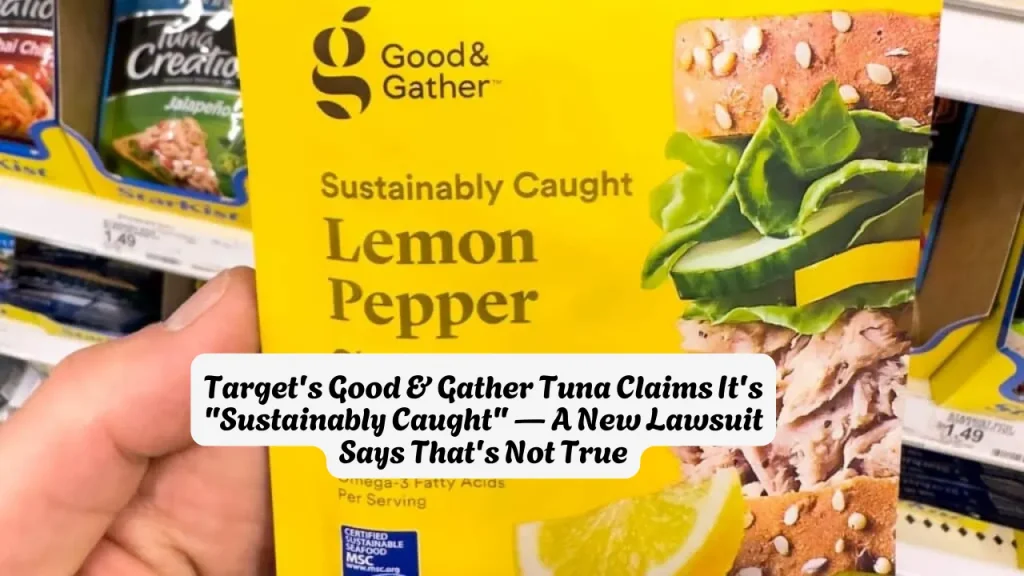
Good & Gather is Target’s own private-label food brand. The canned and pouched tuna products carry prominent sustainability marketing on both the front and back of their packaging.
The front label of Target’s Good & Gather canned and pouched tuna states that it is “sustainably caught” and includes the Marine Stewardship Council (MSC) checkmark logo. Back-of-label statements include “sustainable seafood” and “wild caught using sustainable practices to help protect ocean resources for future generations to enjoy.”
Those are strong promises. The lawsuit says the reality behind them tells a very different story.
Related article: Prince Harry Is Being Sued for Defamation by the Charity He Co-Founded, Here Is What We Know
What Does the Lawsuit Actually Claim Target Did Wrong?
The 59-page complaint filed by plaintiff Sarah Kim lays out a straightforward accusation: Target knows exactly how its tuna gets caught, and it knows those methods are harmful — but keeps running the sustainability marketing anyway because it drives sales.
The lawsuit contends that Target deliberately “turns a blind eye” to the dangerous fishing practices used by its tuna suppliers so as to keep up its sustainability claims, which the case notes are highly marketable to environmentally-conscious consumers.
Target’s tuna supplier is The Tuna Store LLC, a wholly owned subsidiary of Bellevue, Washington-headquartered Tri Marine Group, which itself is owned by the Bolton Group in Milan, Italy. The complaint describes the Bolton Group as a massive global fishing conglomerate, and notes that Greenpeace has issued reports on its failures to meet its own marketed sustainability goals.
The lawsuit frames Target’s position bluntly. “Target seeks to have it both ways: pleading ignorance to the harmful practices of the fisheries that source the tuna products, while also using the Sustainability Promise to promote the sale of the tuna products.”
What Fishing Methods Are Actually Being Used?
This is where the case gets specific. The complaint identifies two large-scale commercial fishing methods that Target’s suppliers use — and argues neither one belongs on a product labeled “sustainably caught.”
Longline fishing targets Target’s albacore tuna products. Longline vessels utilize heavy-duty, miles-long fishing lines with thousands of harmful hooks, and though they catch target fish, they also catch non-targeted species such as endangered sea turtles that slowly drown.
Purse-seine fishing is used for non-albacore tuna products. Purse-seine vessels utilize large nets that encircle schools of fish and indiscriminately capture all marine life within the net, severely injuring and killing seals, sharks, and endangered sea turtles.
The industry term for this unintended catch is “bycatch” — and the complaint argues it is directly at odds with any honest definition of sustainable fishing.
What About the MSC Certification on the Label?
The Marine Stewardship Council (MSC) is a nonprofit that certifies seafood products as sustainably caught. Its blue checkmark logo appears on Target’s Good & Gather tuna packaging. The lawsuit takes direct aim at whether that certification means anything at all.
The complaint charges that MSC certifications can be effectively “rushed” or bought by fisheries, as the MSC charges retailers 0.5 percent of net wholesale value as a royalty fee for using its label, and the organization has rarely denied an applicant in the last 20 years.
The lawsuit argues this financial arrangement creates an inherent conflict of interest — the MSC profits from certifying fisheries, which incentivizes it to approve rather than reject applicants. Because Target’s sustainability initiatives are only supervised internally by the fisheries and their vendors, any “violations” or actions deemed harmful for the environment are much more likely to be ignored, underreported, or otherwise swept under the rug.
In short, the complaint argues the MSC label on the package gives consumers false confidence and does not reflect what actually happens at sea.
Which Specific Products Does the Lawsuit Cover?
The varieties of Good & Gather tuna mentioned in the lawsuit include the portable pouch Chunk Light Tuna in Water, portable pouch Lemon Pepper Chunk Light Tuna, portable pouch Albacore Chunk White Tuna in Water, portable pouch Sweet and Spicy Chunk Light Tuna, tinned Solid White Albacore Tuna in Water, and tinned Chunk Light Tuna in Water.
If you bought any of these products at Target, you may fall within the class the lawsuit seeks to represent.
Who Does This Lawsuit Seek to Represent?
The lawsuit seeks to represent all individuals who purchased a Good & Gather tuna product in California, or any state with similar laws, for personal or household use within the applicable statute of limitations period.
The complaint invokes consumer protection laws across more than a dozen states, including California’s Unfair Competition Law, the California Consumers Legal Remedies Act, the California False Advertising Law, the New York General Business Law, the New Jersey Consumer Fraud Act, the Washington Unfair Business Practices Act, and several others. This means the lawsuit is designed to potentially reach tuna buyers nationwide, not just in California.
Is Target the Only Company Facing a Lawsuit Like This?
No — and that broader context matters. The Target complaint is one of numerous lawsuits related to sustainability claims and eco-labels filed in recent years, with similar cases brought against Mowi, Gorton’s, ALDI, Conagra, Bumble Bee Foods, and Red Lobster. Courts across the country are increasingly scrutinizing “greenwashing” — marketing products as environmentally responsible when the underlying supply chain practices do not support that claim.
The Target lawsuit fits squarely into this growing legal trend, and its outcome could influence how seafood companies market sustainability to consumers going forward.
Key Dates
| Milestone | Date |
| Complaint Filed | March 18, 2026 |
| Target Response Due | TBD |
| Class Certification Hearing | TBD |
| Settlement / Claims Open | TBD |
| Claim Deadline | TBD |
Frequently Asked Questions
Do I need a lawyer to be part of this class action against Target?
No. If the case is certified and you bought Good & Gather tuna during the covered period, class counsel will automatically represent you as part of the group at no cost to you. You do not need to hire your own attorney to be included. If you want separate representation, you can hire one at your own expense.
Is this lawsuit against Target legitimate?
Yes. Pearson Warshaw, a law firm based in Sherman Oaks, California, filed the 59-page complaint on March 18, 2026, in the U.S. District Court for the Central District of California. It is a verified federal court filing. No settlement administrator or claims website exists yet — the case is in its earliest stage.
When will I receive any payment from this lawsuit?
No payment timeline exists yet. The case is brand new — Target has not even formally responded to the complaint. Any compensation would come only after the court certifies the class, the parties go through discovery, and either a settlement is reached or the case goes to trial. That process typically takes several years.
What if I already threw away my receipts or packaging?
You may still qualify if a settlement is eventually reached. Many consumer false advertising class actions allow claims without receipts, sometimes for a reduced payout tier. Nothing is required from you right now — no claims process is open and no deadline exists.
What does “sustainably caught” actually mean — and why does it matter legally?
“Sustainably caught” tells consumers that the tuna was harvested using methods that protect fish populations and ocean ecosystems. A company that puts this promise on its packaging must be able to back it up. The lawsuit argues that Target cannot, because its suppliers use purse-seine nets and longlines — methods the complaint says cause significant bycatch, killing sea turtles, sharks, and seals as unintended catch.
What is the Marine Stewardship Council (MSC) and why is it under scrutiny here?
The MSC is a nonprofit that certifies seafood products as sustainably sourced. Target displays the MSC checkmark on its Good & Gather tuna. However, the complaint alleges MSC certifications can be effectively “rushed” or bought by fisheries, as the MSC charges retailers a royalty fee for using its label, and the organization has rarely denied an applicant in the last 20 years. The lawsuit argues this creates a conflict of interest that undermines what the certification is supposed to mean for consumers.
What fishing methods does Target’s tuna supplier actually use?
Longline fishing is used to catch Target’s albacore tuna products, while purse-seine fishing is used for non-albacore tuna products. Longline vessels use miles-long fishing lines with thousands of hooks that catch non-targeted species — including endangered sea turtles that slowly drown. Purse-seine vessels use large nets that encircle entire schools of fish and indiscriminately capture all marine life within the net, severely injuring and killing seals, sharks, and endangered sea turtles.
Has Target responded to the lawsuit yet?
No public response from Target has been issued as of April 2026. In federal court, a defendant typically has 21 days after being served to respond to a complaint, though extensions are routinely granted. Target has not admitted any wrongdoing, and no court has ruled on the merits of the claims.
Will a future settlement payment affect my taxes?
Possibly. Settlement payments in false advertising class actions may be considered taxable income depending on how the settlement is structured. If and when a settlement is reached, consult a tax professional about how any payment you receive should be reported to the IRS.
Are other tuna brands facing similar lawsuits?
Yes. The Target complaint is one of numerous lawsuits related to sustainability claims and eco-labels filed in recent years, with similar cases brought against Mowi, Gorton’s, ALDI, Conagra, Bumble Bee Foods, and Red Lobster. “Greenwashing” litigation is accelerating across the food industry, and the results of these cases will likely shape how seafood companies communicate with consumers for years to come.
Last Updated: April 11, 2026
Disclaimer: This article is for informational purposes only and does not constitute legal advice. Legal claims and outcomes depend on specific facts and applicable law. For advice regarding a particular situation, consult a qualified attorney.
About the Author
Israr Ahmad is a legal content researcher with 4+ years of experience covering class action settlements and consumer rights cases. He has researched and published coverage of 2,500+ settlements using verified court records, settlement administrator filings, and government sources. Learn more about Israr.