
Sempio Korean Ginseng Chicken Stew Recalled — Here’s What “Missing Import Reinspection” Actually Means
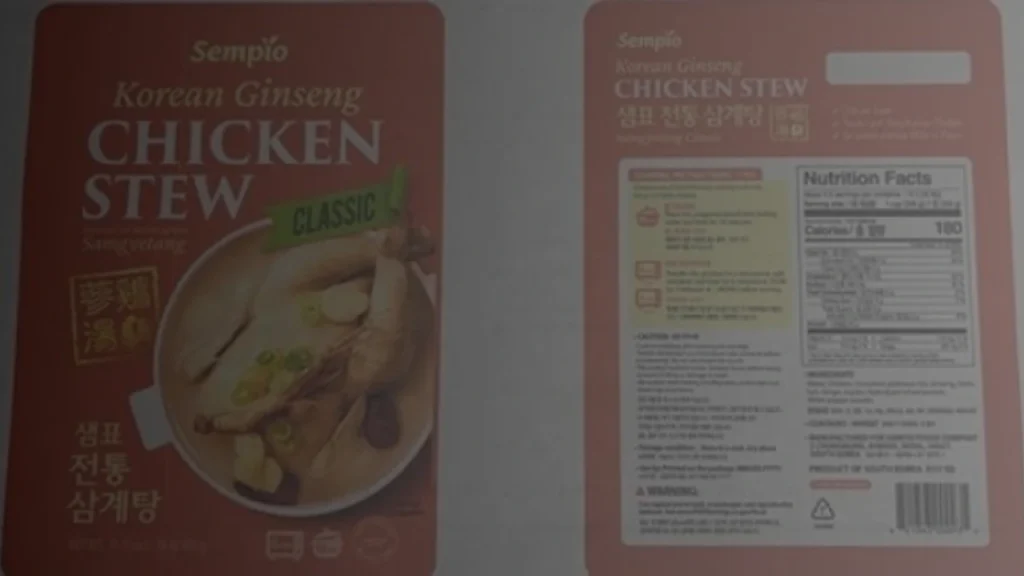
If you bought Sempio Korean Ginseng Chicken Stew in Georgia or one of seven other states, check your pouch before eating it. The USDA’s Food Safety and Inspection Service says nearly 4,600 pounds of the product never went through the reinspection required for imported meat and poultry to enter the U.S. — meaning nobody has confirmed it meets American food safety standards.
Quick Facts
| Field | Detail |
| Recalling Company | Sempio Food Services Inc. |
| Products | Sempio Korean Ginseng Chicken Stew Classic; Sempio Korean Ginseng Chicken Stew Rich |
| Packaging | 31.75-ounce (900-gram) pouches |
| Amount Recalled | About 4,596 pounds |
| Production Date | March 30, 2026 |
| Best-By Date | September 29, 2027 |
| Korean Establishment Number | GIA15001 |
| Shipping Mark | MK-2026-0422-01 |
| Reason for Recall | Products did not receive required U.S. import reinspection |
| States Where Sold | Georgia, Florida, Illinois, Maryland, New Jersey, New York, Pennsylvania, Virginia |
| Illnesses/Injuries Reported | None confirmed |
| How It Was Found | FSIS routine import surveillance |
| Company Contact | Daniel Park, President, Sempio Food Services USA — 562-207-9540, ext. 101, [email protected] |
| USDA Meat and Poultry Hotline | 888-674-6854 |
Is This About Your Chicken Stew?
Check your pouch for the Korean establishment number GIA15001 and shipping mark MK-2026-0422-01, printed with the Republic of Korea mark of inspection. If your pouch of Sempio Korean Ginseng Chicken Stew Classic or Rich matches, don’t eat it — throw it away or take it back to where you bought it for a refund. If you’re a retailer, pull it from shelves.
Why “Missing Import Reinspection” Is Treated Seriously
Every shipment of meat and poultry entering the U.S. from another country is supposed to go through USDA reinspection at the port of entry — a check confirming the product actually meets American food safety requirements, on top of whatever inspection happened in the country of origin. This recall exists because that step didn’t happen for this shipment.
That doesn’t automatically mean something is wrong with the stew itself. It means nobody has verified that it isn’t. FSIS caught this through routine surveillance of import shipments, not because of a reported illness or a contamination finding — and as of this recall, no illnesses or injuries have been confirmed. But skipping reinspection removes a safety check that exists specifically to catch problems before they reach your kitchen, which is why FSIS treats these recalls as more than a paperwork issue.
This Isn’t a New Problem for Imported Korean Foods
This is worth knowing: FSIS has recalled Korean-produced chicken stew for this exact reason before. A similar case years earlier involved a different company’s ginseng chicken stew, recalled after it wasn’t presented at the U.S. port of entry for inspection at all. Missing or skipped import reinspection has shown up repeatedly across various imported ready-to-eat meat and poultry products over the years — it’s a recognized failure point in the import supply chain, not a one-off mistake unique to this product or company.
Related article: JKMAX Heated Blanket and Heating Pad Recall, Check Your Model — Recall No. 26-778
What You Should Do
- Check your pouch for establishment number GIA15001 and shipping mark MK-2026-0422-01.
- Do not eat the recalled stew if it matches.
- Throw it away or return it to the place of purchase for a refund.
- If you’re a retailer or distributor, stop selling it immediately.
- Direct recall-specific questions to Daniel Park at Sempio Food Services USA, 562-207-9540, ext. 101, or [email protected].
- Direct general food safety questions to the USDA Meat and Poultry Hotline at 888-674-6854.
Frequently Asked Questions
Has anyone gotten sick from this product?
No illnesses or injuries have been confirmed as linked to this recall, according to FSIS.
Does “missing reinspection” mean the stew is definitely contaminated?
Not necessarily. It means the required U.S. safety check wasn’t completed, so there’s no confirmation either way. FSIS is recalling the product out of caution because that verification step was skipped, not because a specific contaminant was identified.
What FSIS risk classification did this recall receive?
UNVERIFIED — this article could not directly access the FSIS notice to confirm the official risk classification (Class I, II, or III). Recalls for products imported without required reinspection have historically often been classified at the higher end by FSIS, since the product’s safety status is unconfirmed, but this specific recall’s classification wasn’t independently verified here.
Can I still eat other Sempio products?
This recall covers only the two specific chicken stew products, production date, and establishment/shipping mark combination listed above. It doesn’t extend to other Sempio products unless FSIS states otherwise.
Do I need a receipt to get a refund?
The FSIS notice doesn’t specify a receipt requirement. Check with the store where you purchased it, or contact Sempio Food Services USA directly with questions.
Could I have a legal claim if I ate this product and got sick?
Possibly, if you experienced a documented illness after eating this specific product. A products liability or food safety attorney can evaluate whether your situation, medical records, and the recalled lot support a claim.
Sources Used in This Article
- U.S. Department of Agriculture, Food Safety and Inspection Service — “Sempio Food Services Inc. Recalls Ready-to-Eat Chicken Stew Products Imported Without the Benefit of Reinspection”: https://www.fsis.usda.gov/recalls-alerts/sempio-food-services-inc–recalls-ready-eat-chicken-stew-products-imported-without
- Cobb County Courier — “Chicken stew sold in Georgia and other states recalled after missing import reinspection,” September 26, 2026: https://cobbcountycourier.com/2026/09/chicken-stew-sold-in-georgia-and-other-states-recalled-after-missing-import-reinspection/
Researched and written by Israr Ahmad, legal content researcher and founder of AllAboutLawyer.com. Facts verified against FSIS-sourced reporting on September 26, 2026; this article could not independently access the FSIS notice directly, and any gaps are flagged above. Last Updated: September 26, 2026.
This article is for informational purposes only and does not constitute legal advice. Laws vary by state and individual circumstances differ. For advice about your specific situation, consult a qualified attorney.
About the Author
Israr Ahmad is a legal content researcher with 4+ years of experience covering class action settlements and consumer rights cases. He has researched and published coverage of 2,500+ settlements using verified court records, settlement administrator filings, and government sources. Learn more about Israr.