
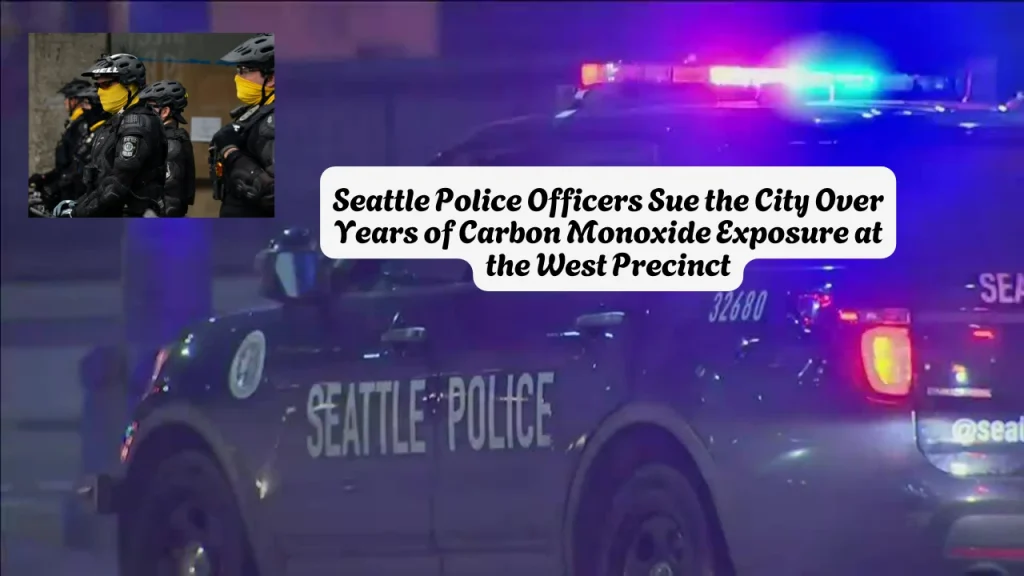
Seattle Police Officers Sue the City Over Years of Carbon Monoxide Exposure at the West Precinct
Multiple Seattle police officers are moving forward with a proposed class action lawsuit against the City of Seattle, alleging they spent years breathing dangerous levels of carbon monoxide and other vehicle exhaust inside the West Precinct’s underground garage and adjoining workspaces. The suit claims city leadership knew about the hazard since at least 2015 and failed to fix it. No settlement exists, no claims process is open, and no money is available at this time.
Case Snapshot
| Field | Detail |
| Lawsuit Type | Proposed class action — workplace toxic exposure / negligence |
| Defendant | City of Seattle / Seattle Police Department |
| Lead Plaintiffs | Sgt. Chad McLaughlin, Lt. Greg Fliegel, Lt. Gabe Conrad |
| Plaintiff Attorney | Sumeer Singla |
| Court | TBD — complaint proceeding in Washington state |
| Location at Issue | West Precinct, downtown Seattle (opened 2000) |
| Hazard Alleged | Carbon monoxide and vehicle exhaust from idling patrol cars in enclosed underground garage |
| Knowledge Alleged Since | At least 2015 (internal emails cited in complaint) |
| Estimated Class Size | Approximately 200 officers or more |
| Settlement Amount | None — litigation phase only |
| Claims Process Open | No |
Where This Case Stands Right Now
- The lawsuit is a proposed class action proceeding forward in Washington state. Class certification — the court’s formal approval to treat this as a group lawsuit rather than individual claims — has not yet been granted.
- No settlement has been negotiated or proposed. There is no claim form, no settlement website, and no money available to affected officers at this time.
- The City of Seattle has not responded publicly to the complaint. The Seattle Police Department referred all comment to the City Attorney’s Office, which did not respond to initial press inquiries. The Seattle Police Officers Guild confirmed it is monitoring the case.
What Is This Lawsuit Actually About?
The Seattle Police Department’s West Precinct opened in 2000 and serves as the main law enforcement hub for downtown Seattle. Its underground garage — known internally as the “Patrol Deck” — is where officers park and prep their patrol vehicles before heading out on shift.
The problem the lawsuit describes is straightforward: officers routinely kept their vehicles running in that enclosed garage, and for years the ventilation system was inadequate to clear the exhaust. Carbon monoxide — a colorless, odorless gas that causes headaches, nausea, confusion, and at high levels can be fatal — built up in the space. The complaint alleges the fumes did not stay in the garage. They drifted upward into the bullpen and sergeants’ offices directly above, where officers were writing reports, taking briefings, and carrying out regular day-to-day duties.
Related article: GM Cadillac Lyriq Class Action Lawsuit, Are You Affected by the EV Defect?
According to the complaint, internal emails show city and SPD leadership were warned about this hazard as far back as 2015. One email specifically stated that unnecessary idling was creating “excess carbon monoxide in the garage” and warned it was going to get “somebody hurt.” Officers were also, the complaint alleges, encouraged to write reports while sitting in their running vehicles on the Patrol Deck — because stepping outside the garage raised safety concerns about ambush. That protocol, the lawsuit argues, made chronic exhaust exposure unavoidable for anyone doing their job as directed.
The named plaintiffs — Sgt. Chad McLaughlin, Lt. Greg Fliegel, and Lt. Gabe Conrad — say they suffered real physical harm as a result. Reported symptoms include severe headaches, nausea, vomiting, and shortness of breath. The plaintiffs’ attorney, Sumeer Singla, said officers continue to report those same symptoms today, and that the underlying ventilation problem has still not been fixed. He described the West Precinct as “a poisonous building” and said relatively simple solutions — including large industrial fans — could substantially improve airflow.
This Case Has a Proven Precedent Behind It
This class action does not emerge from nowhere. It builds directly on a previously litigated individual case brought by Seattle Police Sergeant David Hockett — a case the City of Seattle already lost.
Hockett worked at the West Precinct for 17 years. He repeatedly raised concerns about carbon monoxide exposure, documented his own health problems — including chronic headaches, fatigue, memory issues, and sinus problems — and was told by his doctors they could not identify a cause. He connected his symptoms to the garage environment and formally reported his concerns to SPD leadership and the department’s safety officer.
A jury heard Hockett’s case and found the Seattle Police Department and the City of Seattle liable for negligently exposing him to carbon monoxide at the West Precinct. The jury also found SPD violated Seattle’s whistleblower protection provisions by retaliating against Hockett after he raised his safety concerns. In May 2024, the Washington Court of Appeals affirmed that verdict in all respects except for a remand on a specific attorney-fee issue. The city’s liability for the underlying harm was upheld.
Court records in the Hockett case also revealed a significant detail: in November 2017, SPD discovered that the West Precinct’s ventilation system had been malfunctioning for years. An incorrectly installed part reduced the fan’s effectiveness, and — critically — the system had been manually set to low speed since 2013 to reduce noise, which disabled its ability to automatically ramp up when carbon monoxide levels spiked. SPD fixed those mechanical problems at the time. But the new class action alleges the building’s fundamental ventilation inadequacy was never fully resolved, and that officers continued to be harmed after those partial repairs.
The class action lawsuit essentially argues: if one officer proved in court that the city knowingly exposed him to this hazard, what about the roughly 200 or more other officers who worked in that same building over the same years?
Who Could Be Included in This Proposed Class?
The complaint seeks to represent all officers and other personnel who worked at the West Precinct’s Patrol Deck, bullpen, and sergeants’ offices and were exposed to vehicle exhaust over the years. The plaintiffs’ attorney estimates the class could include approximately 200 people or more.
You may fall within the proposed class if:
- You are a current or former Seattle Police Department officer or personnel member who worked at the West Precinct
- You spent time in the underground garage (Patrol Deck), the bullpen above the garage, or the sergeants’ offices during routine duties
- You experienced symptoms consistent with carbon monoxide or exhaust exposure — including persistent headaches, nausea, vomiting, confusion, fatigue, or breathing problems — during or after shifts at the West Precinct
- You worked at the West Precinct at any point during the period the complaint covers, which the city allegedly knew about since at least 2015
No action is required to join the class at this stage. If the court certifies the class and a settlement is eventually reached, class members would receive formal notice with instructions on how to participate.
What the Lawsuit Is Asking the Court to Do
The complaint makes the following requests:
- Class certification — formal recognition that this lawsuit can proceed on behalf of all affected officers as a group, not just the three named plaintiffs
- Class notification at the city’s expense — requiring Seattle to pay to notify all potential class members of the lawsuit and their rights
- Injunctive relief — a court order requiring the City of Seattle and SPD to actually fix the ventilation problem at the West Precinct, not just pay damages
- Compensatory damages — money to compensate officers for physical harm, medical costs, and other losses caused by the exposure
- Attorneys’ fees and costs
The request for injunctive relief is notable. The plaintiffs are not just seeking compensation for past harm — they are asking the court to compel the city to make the building safe for the officers who still work there today.
What Affected Officers Should Do Right Now
No claim form exists and no settlement has been proposed. But the steps taken now can be important if this case moves toward class certification or settlement.
Document your symptoms and medical history. If you worked at the West Precinct and experienced persistent headaches, fatigue, confusion, nausea, or breathing issues — especially during or after garage duty — write it down now. Note the dates, frequency, and severity, and gather any relevant medical records or doctor’s notes.
Preserve records of your assignment history. Any documentation showing when and how long you were assigned to the West Precinct — duty rosters, payroll records, shift logs — could be relevant to establishing your membership in the proposed class.
Contact the plaintiffs’ attorney if you believe you were affected. Sumeer Singla is the attorney of record for the named plaintiffs. If you worked at the West Precinct and believe your health was harmed, speaking with a lawyer now — before the case reaches class certification — can help protect your rights and ensure your experience is considered.
Do not rely on the city or SPD to tell you your rights. SPD has referred all comment to the City Attorney’s Office, which represents the defendant — the City of Seattle — not the officers filing claims against it.
This lawsuit follows a pattern seen in other occupational toxic exposure cases involving public safety workers. For a comparable example of how workplace toxic exposure litigation against an employer that knew of the risk has developed in another public safety context, see our coverage of the AFFF firefighting foam lawsuit and the $10.3 billion settlement coming for exposed firefighters. For a recent example of a jury holding an employer directly accountable for knowingly ignoring a documented employee health risk, the TQL wrongful death verdict and its implications for workplace safety lawsuits is instructive on how courts evaluate employer knowledge and inaction.
Frequently Asked Questions
Can I file a claim against the City of Seattle right now?
No. There is no settlement, no claim form, and no active claims process. The lawsuit is in early litigation. If the case settles or a judgment is entered, affected officers will receive formal notice. The only productive step right now is to document your exposure history and consult an attorney if you believe you were harmed.
Is this connected to the earlier Hockett case?
Yes, directly. The Hockett case established through a jury verdict — upheld on appeal in May 2024 — that the City of Seattle was liable for negligently exposing a West Precinct officer to carbon monoxide. The new class action builds on that foundation and seeks the same accountability for the roughly 200 or more other officers who worked in the same building.
What is carbon monoxide and why is it dangerous?
Carbon monoxide is a colorless, odorless gas produced by vehicle engines and other combustion sources. Even at lower concentrations, prolonged exposure causes headaches, dizziness, nausea, and cognitive problems — symptoms that can be easy to mistake for stress or illness. At higher concentrations it can cause loss of consciousness and death. Because it has no smell or color, people are often unaware they are being exposed until symptoms appear.
Did the city know about this problem?
The complaint says yes — since at least 2015. It cites internal emails in which city and SPD leadership warned that idling vehicles were creating “excess carbon monoxide in the garage” and that someone was going to get hurt. Court records from the Hockett case also revealed the ventilation system had been manually set to low speed since 2013 and had a faulty component — problems discovered internally in 2017 and partially repaired, but allegedly never fully resolved.
How long will this lawsuit take to resolve?
Workplace toxic exposure class actions at this early stage typically take one to three years or more to resolve, depending on whether the court certifies the class, the complexity of discovery, and whether both sides reach a negotiated settlement. The existence of the Hockett verdict — already establishing city liability — may strengthen the plaintiffs’ position in settlement negotiations.
Do I need a lawyer to be included in the class action?
You do not need your own lawyer to eventually receive compensation if the case settles and you qualify as a class member. However, if you believe you suffered significant harm, consulting an attorney now — while the case is in early stages — can help ensure your specific situation is properly documented and considered.
What does injunctive relief mean and why does it matter?
Injunctive relief means a court order requiring a party to take a specific action — in this case, actually fixing the West Precinct’s ventilation system. The plaintiffs are asking the court not just to award money but to force the city to make the building safe. Officers who still work there today have a direct stake in that outcome regardless of whether they eventually receive financial compensation.
Sources & References
- Washington Court of Appeals — Hockett v. Seattle Police Department (May 2024): FindLaw case summary
Last Updated: April 7, 2026
Disclaimer: This article is for informational purposes only and does not constitute legal advice. Legal claims and outcomes depend on specific facts and applicable law. For advice regarding a particular situation, consult a qualified attorney.
About the Author
Israr Ahmad is a legal content researcher with 4+ years of experience covering class action settlements and consumer rights cases. He has researched and published coverage of 2,500+ settlements using verified court records, settlement administrator filings, and government sources. Learn more about Israr.