
Sapphire Nursing at Wappingers Hit With $6.8 Million Understaffing Verdict, What the Dutchess County Jury Decided and What Residents and Families Should Do Next
Quick Facts: Why Did a Dutchess County Jury Award More Than $6.8 Million Against Sapphire Nursing at Wappingers?
A Dutchess County, New York jury returned a verdict of more than $6.8 million against Sapphire Nursing at Wappingers, LLC, finding that the nursing home deprived residents of their legal rights by failing to provide sufficient staffing. The jury also found four individual defendants liable as controlling owners of the roughly 62-bed facility.
The award includes more than $3.2 million in compensatory damages and $3.6 million in punitive damages. The punitive award was assessed against Sapphire Nursing and individual defendant Richard Platschek. The case was brought by Susan Schmidt, acting for her mother Regina Pinkall and other residents of the facility, under New York Public Health Law § 2801-d.
The suit, filed in 2019, alleged that residents did not get timely bathing, cleaning, feeding, medication or incontinence care because the facility did not employ enough nurses and aides. Source: Cohen Milstein, October 16, 2026.
| Detail | Information |
| Case name | Susan Schmidt, for Regina Pinkall, et al. v. Sapphire Nursing at Wappingers, LLC, et al. |
| Court | New York Supreme Court, Dutchess County |
| Index number | 2019-52328 |
| Facility | Sapphire Nursing at Wappingers (formerly Elant at Wappingers Falls) |
| Address | 37 Mesier Avenue, Wappingers Falls, New York |
| Size | Approximately 62 beds |
| Lead plaintiff | Susan Schmidt, attorney-in-fact for Regina Pinkall |
| Individual defendants | Machla Abramczyk, Esther Farkovits, Richard Platschek and Robert Schuck |
| Class period | April 27, 2017 through March 7, 2020 |
| Verdict announced | October 16, 2026 |
| Compensatory damages | More than $3.2 million |
| Punitive damages | $3.6 million |
| Total | More than $6.8 million |
| Main law | New York Public Health Law § 2801-d |
| Status | Jury verdict reported; judgment, post-trial motions and appeal status not verified |
| Claim form or settlement | None announced |
Sources: Official class-action website and plaintiffs’ counsel’s verdict announcement.
What Happened at Sapphire Nursing at Wappingers in Wappingers Falls?
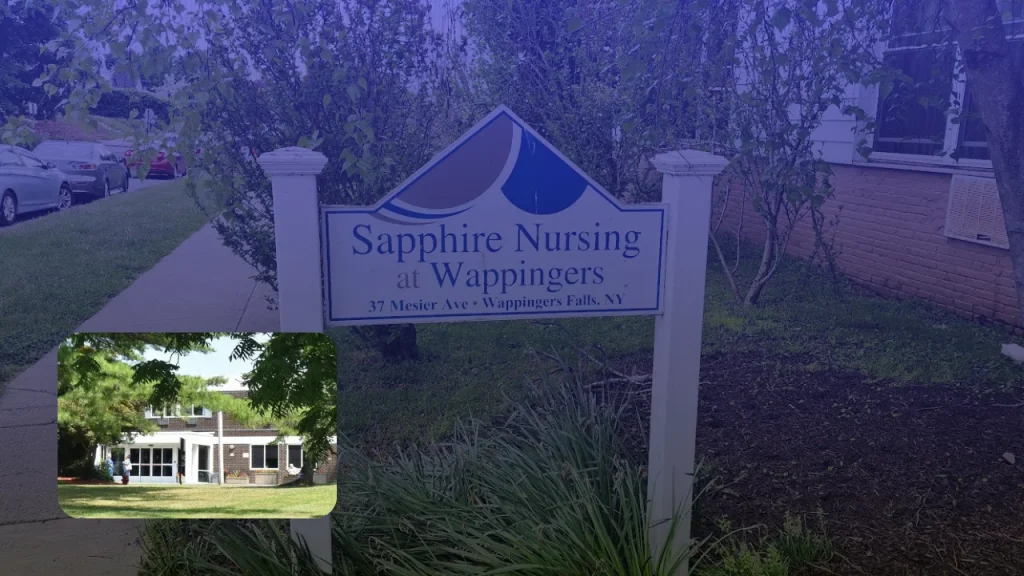
Sapphire Nursing at Wappingers is a nursing home at 37 Mesier Avenue in Wappingers Falls, Dutchess County. The complaint, filed June 21, 2019, alleged that the facility’s new operators cut staffing after taking over in April 2017. According to the complaint and the later trial announcement, residents faced delays in bathing, cleaning, feeding, medication, dressing and incontinence care. Some were allegedly left in soiled clothing or bedding for long periods, and the plaintiffs said the inadequate care sometimes contributed to illness and infection.
Residents often depend on staff for getting out of bed, using the bathroom, eating, taking medication and staying clean. The legal question is not whether employees were busy. It is whether the facility had enough qualified personnel to meet residents’ needs and its legal obligations. According to plaintiffs’ counsel, the jury found the facility was understaffed every day of the class period.
What Did State Inspectors Find at Sapphire Nursing at Wappingers Before the Lawsuit?
An inspection completed on April 4, 2018 identified deficiencies involving resident dignity, care planning, infection prevention and nursing staffing. Read the 2018 inspection report.
- Resident complaints: 12 of 19 residents interviewed confidentially said the facility lacked enough staff. Reported problems included slow call-bell responses, waits for toileting help, missed showers and being kept in bed longer than they wanted. Some said they waited up to an hour for a call bell to be answered.
- Group meeting: All seven residents at a group meeting said showers were not done as scheduled because of staffing shortages.
- Staffing records: On a day when the census was 54 residents, the report listed two certified nursing assistants on the night shift, an average of about 27 residents per aide. Inspectors found staffing often fell below the levels in the facility’s own assessment.
- Staff comments: Employees described having more residents than they could adequately care for and difficulty completing showers.
The 2018 report is a regulatory record, separate from the 2026 civil verdict. It is background, not proof of every allegation in the lawsuit.
What Did the Dutchess County Jury Decide in October 2026?
According to Cohen Milstein, one of the plaintiffs’ firms, the jury ruled for the plaintiff and class on all claims. It held Sapphire Nursing at Wappingers liable for depriving residents of their rights to sufficient staffing under New York and federal law. It found four individuals liable as controlling owners: Machla Abramczyk, Esther Farkovits, Richard Platschek and Robert Schuck. It awarded more than $3.2 million in compensatory damages and $3.6 million in punitive damages against Sapphire Nursing and Richard Platschek.
What Is the Difference Between Compensatory and Punitive Damages Under Public Health Law § 2801-d?
Compensatory damages compensate for the injury caused by the deprivation of rights. Punitive damages are a separate award meant to punish and deter. Under § 2801-d, they may be assessed when the deprivation was willful or in reckless disregard of residents’ lawful rights.
What the Sapphire Nursing Verdict Does and Does Not Decide
This is the one place this article covers the verdict’s limits and payments:
- Not a settlement. It is a jury verdict in an existing class action, with no new claim form, administrator or payment deadline announced.
- No per-resident amount yet. The announcement gives no resident-by-resident breakdown. The compensatory award is not necessarily split equally, and the punitive award is not a guaranteed payment to each resident. The final judgment and later distribution orders will decide.
- Individual liability needs the judgment. The announcement says four individuals were found liable as controlling owners but names only Sapphire Nursing and Richard Platschek for punitive damages. Whether liability is joint or several, and what each defendant owes, must come from the verdict sheet and judgment. Do not say each owner owes the full $6.8 million.
- Not necessarily final. The materials reviewed do not show whether post-trial motions or an appeal have been filed, whether judgment has been entered, or whether any post-verdict settlement exists.
Who Is Covered by the Sapphire Nursing at Wappingers Class Action?
The official class website identifies residents of Sapphire Nursing at Wappingers who lived at the facility from April 27, 2017 through March 7, 2020, or their legal representatives, with claims under Public Health Law § 2801-d. The original notice let class members stay in or opt out, with an exclusion deadline of December 5, 2024. That date has passed, so the notice describes the class’s original rights and is not a newly opened claim process.
Does the Verdict Cover Other Sapphire Nursing Homes or Other Dates?
No. It concerns the facility at 37 Mesier Avenue and the defined class period. It does not automatically cover other Sapphire-operated facilities, other New York nursing homes, or residents who lived at this facility only outside those dates.
What if a Sapphire Nursing at Wappingers Resident Has Died?
Under the law, an appropriate legal representative or the resident’s estate may be able to pursue qualifying claims. Families should review the class notice and ask class counsel how the verdict applies. Official source: class-action website.
Who Were the Defendants in the Sapphire Nursing at Wappingers Lawsuit?
The complaint named Sapphire Nursing at Wappingers, LLC; Machla Abramczyk; Esther Farkovits; Richard Platschek; Robert Schuck; and unnamed defendants. The plaintiffs argued the individuals had enough control over operations to be responsible. The court-approved class notice stated that the defendants denied wrongdoing and said they provided sufficient staffing. The later jury verdict ruled for the plaintiff and class. Case documents.
Which New York Laws Apply to the Sapphire Nursing at Wappingers Verdict?
New York Public Health Law § 2801-d: Private Actions by Nursing Home Residents
Section 2801-d lets a resident of a residential health care facility sue when the facility deprives the resident of a right or benefit created for the resident’s well-being by contract, statute, regulation or federal law, and the deprivation causes injury. It also:
- Makes the facility liable for resulting injuries, though the facility can avoid liability by showing it exercised all care reasonably necessary to prevent and limit the deprivation and resulting injuries.
- Provides for compensatory damages, with a statutory minimum tied to the daily per-patient payment rate or average daily charges for each day of injury.
- Allows punitive damages for willful deprivation or reckless disregard of residents’ rights.
- Allows qualifying actions to proceed as class actions and permits injunctive and declaratory relief.
How the minimum-damages provision applies depends on the facts and the court’s findings. Official law: Public Health Law § 2801-d.
New York Public Health Law § 2803-c: Nursing Home Residents’ Rights
Section 2803-c requires facilities to give residents a statement of rights, including respect for civil liberties and personal decisions, private communication, the ability to raise grievances without retaliation, and participation in efforts to improve care. Official law: Public Health Law § 2803-c.
New York CPLR Article 9: Class Actions
CPLR Article 9 governs class actions in New York courts. Section 901 sets the prerequisites, § 902 covers the certification order, § 904 covers notice to the class, § 908 requires court approval of any class settlement with notice to members, and § 909 lets the court award reasonable attorneys’ fees from the recovery. Class members generally can object to a proposed settlement or fee request under that framework.
New York Staffing Regulation: 10 NYCRR § 415.13
New York’s nursing home regulations require sufficient nursing staff to meet residents’ needs. The obligation is tied to residents’ assessed needs, not just headcount.
Federal Nursing Home Requirements
Federal law requires Medicare and Medicaid nursing facilities to provide adequate nursing services:
- 42 U.S.C. § 1395i-3(b)(4)(A)(i): nursing services needed to attain or maintain each resident’s highest practicable physical, mental and psychosocial well-being.
- 42 U.S.C. § 1396r(b)(4)(C)(i)(I): sufficient 24-hour licensed nursing services.
- 42 C.F.R. § 483.35: federal nursing services requirements. Official text.
These federal provisions come from the Nursing Home Reform Act provisions of the 1987 omnibus budget law and apply to facilities that take part in Medicare and Medicaid.
Was the Sapphire Nursing Verdict Based on New York’s 3.5-Hour Minimum Staffing Rule?
No. New York now requires nursing homes to provide at least 3.5 hours of care per resident per day, including at least 2.2 hours from certified nurse aides and at least 1.1 hours from licensed practical or registered nurses. Compliance is checked through CMS Payroll Based Journal data, and civil penalties can follow. New York Department of Health staffing guidance.
That requirement took effect in 2022, after the class period ended on March 7, 2020. The jury evaluated the laws and obligations that applied in 2017 to 2020, so the verdict should not be described as a finding that the facility violated the 3.5-hour standard. The federal government’s 2024 minimum-staffing rule was later repealed in December 2025 and is also different from the baseline federal requirements in force during this class period. HHS, December 2, 2025.
What Happens Next After the Dutchess County Jury Verdict Against Sapphire Nursing?
Several steps may follow, though none are confirmed in the materials reviewed:
- Judgment. The court enters judgment, which fixes amounts and the form of the award. Interest on a New York money judgment generally runs at 9% per year under CPLR 5004, subject to the court’s judgment and any exceptions.
- Post-trial motions. A party may ask the trial court to set aside or reduce the verdict under CPLR 4404, and such motions must be made within 15 days after the verdict is rendered, under CPLR 4405.
- Appeal. Dutchess County cases are heard by the Appellate Division, Second Department. A notice of appeal is generally due within 30 days of service of the judgment with notice of entry (CPLR 5513), and an appeal does not automatically stop enforcement unless a stay or undertaking is in place (CPLR 5519).
- Attorneys’ fees and costs. Class counsel can apply for fees under CPLR 909, subject to court review.
- Distribution. The court will decide how the award is allocated and paid.
- Possible settlement. The parties could settle after trial, but a class settlement would need court approval under CPLR 908. None has been verified as of October 17, 2026.
A verdict can be reduced or overturned only through a court order, so no reduction or reversal should be reported unless one exists.
What Should Nursing Home Residents and Families Do Next After the Sapphire Nursing Verdict?
If You or a Relative Lived at Sapphire Nursing at Wappingers Between April 27, 2017 and March 7, 2020
- Check the official case website at sapphireatwappingersclassaction.com for updates and documents.
- Contact class counsel to confirm whether the resident is in the class and what post-verdict steps apply. The earlier opt-out deadline (December 5, 2024) has passed.
- Gather records: admission and discharge dates, the resident’s name as it appeared at the facility, your authority to act (power of attorney, guardianship or estate papers) and any correspondence from the case.
- Update your contact information with class counsel so you receive any notice.
- Ignore unsolicited payment offers. Do not give personal or financial details to any website or caller promising to “register” you for this verdict. No new claim portal was announced.
- Keep copies of everything you send or receive, and do not sign releases or settlement papers without reading them. Consider asking a lawyer to review them.
If You Think a Different Nursing Home Is Understaffed
- Protect the resident first. If there is an emergency, call 911.
- Document specific problems: dates, times, names, unanswered call bells, missed medication, hygiene lapses, unexplained injuries and changes in condition. Keep copies of written complaints.
- Raise it in writing with the administrator or director of nursing and ask for a written response.
- Ask for care records. Federal rules give nursing home residents the right to inspect their records within 24 hours and to get copies with two working days’ notice (42 C.F.R. § 483.10(g)(2)). HIPAA gives a separate right of access under 45 C.F.R. § 164.524.
- Contact outside help. File a complaint with the New York State Department of Health and ask the Long-Term Care Ombudsman Program for help with resident-rights concerns.
- Review the facility’s record. New York publishes inspection and enforcement information on New York State Nursing Home Profiles.
- Watch the deadlines. Time limits can be short. New York generally gives two and a half years for medical malpractice claims (CPLR 214-a) and three years for many personal-injury claims (CPLR 214), and which applies depends on how a claim is framed. Speak with a New York nursing home attorney promptly.
A complaint to a regulator and a private lawsuit are different routes. A regulator checks compliance, while a lawsuit seeks damages and depends on facts, injury, causation, evidence and defenses.
Questions to Ask Before Choosing a New York Nursing Home
- How many residents does each aide care for on each shift, including nights and weekends?
- How quickly are call bells answered?
- Are showers, meals and medications on schedule?
- How are complaints handled and answered?
- Do recent inspection reports show repeated staffing or resident-care problems?
For more background, see our earlier article, Nursing Home Abuse Lawsuit: Signs, Evidence, And How To Sue.
Frequently Asked Questions About the Sapphire Nursing at Wappingers $6.8 Million Verdict
What is the Sapphire Nursing at Wappingers lawsuit?
It is Susan Schmidt, for Regina Pinkall, et al. v. Sapphire Nursing at Wappingers, LLC, et al., Index No. 2019-52328, a class action in Dutchess County, New York alleging understaffing that deprived residents of legal rights.
How much did the jury award against Sapphire Nursing at Wappingers?
More than $3.2 million in compensatory damages and $3.6 million in punitive damages, for a total above $6.8 million.
What is the class period in the Sapphire Nursing at Wappingers case?
April 27, 2017 through March 7, 2020.
Which law did the Sapphire Nursing plaintiffs use?
Mainly New York Public Health Law § 2801-d, along with state and federal nursing home care and staffing requirements.
Who were the individual defendants in the Sapphire Nursing case?
Machla Abramczyk, Esther Farkovits, Richard Platschek and Robert Schuck. The jury found all four liable as controlling owners, and punitive damages were assessed against Sapphire Nursing and Richard Platschek.
Did the Sapphire Nursing verdict rely on the 3.5-hour minimum staffing rule?
No. That rule took effect in 2022, after the class period ended.
Did state inspectors find staffing problems at Sapphire Nursing at Wappingers?
Yes. An April 4, 2018 inspection documented staffing concerns and resident complaints about delayed care. It is background, separate from the verdict.
How much will each Sapphire Nursing class member receive?
Not yet known. It depends on the final judgment, the jury’s findings, the damages rules and later distribution orders.
Is there a claim form for the Sapphire Nursing verdict?
None has been announced. This is a verdict in an existing class action, so follow the official case website and class counsel.
Is the Sapphire Nursing at Wappingers verdict final?
Not verified. The reviewed materials do not show whether post-trial motions or an appeal have been filed.
Can residents of other Sapphire nursing homes join the Sapphire Nursing at Wappingers case?
Not automatically. The class covers this facility and this period only.
Where can I find the official Sapphire Nursing at Wappingers class-action documents?
On the official case website.
Conclusion: The Sapphire Nursing at Wappingers Verdict Shows the Legal Risk of Understaffing
A Dutchess County jury awarded more than $6.8 million against Sapphire Nursing at Wappingers after finding that inadequate staffing deprived residents of legally protected rights, with four individual defendants held liable as controlling owners. Inspection records from 2018 had already documented staffing concerns, and the 2026 verdict established liability on the claims tried.
The key open questions are the final judgment, post-trial motions, any appeal and how the award will be distributed. For now, residents from April 27, 2017 through March 7, 2020 and their representatives should follow the official case website and contact class counsel rather than rely on third parties.
Sources and Official Records
- Cohen Milstein, Jury Holds Sapphire Nursing at Wappingers Liable for More Than $6.8M, October 16, 2026
- Official Schmidt v. Sapphire Nursing at Wappingers Class-Action Website
- Class-Action Documents and Original Complaint
- April 4, 2018 Nursing Home Inspection Report
- New York Public Health Law § 2801-d
- New York Public Health Law § 2803-c
- New York State Department of Health, Nursing Home Minimum Staffing Standards
- 42 C.F.R. § 483.35
- New York State Nursing Home Profiles
- 10 NYCRR § 415.13; New York CPLR 214, 214-a, 901, 902, 904, 908, 909, 4404, 4405, 5004, 5513 and 5519; 42 U.S.C. §§ 1395i-3(b)(4)(A)(i) and 1396r(b)(4)(C)(i)(I); 42 C.F.R. § 483.10(g)(2); 45 C.F.R. § 164.524
For more background on resident rights and legal options, see Nursing Home Abuse Lawsuit: Signs, Evidence, And How To Sue.
This article provides general legal information, not legal advice. The verdict is not a settlement, and the final judgment, any appeal and payment procedures remain unverified.
Researched and written by Israr Ahmad, legal content researcher and founder of AllAboutLawyer.com. All facts verified against the Cohen Milstein verdict announcement of October 16, 2026, the official case website and court documents (sapphireatwappingersclassaction.com) and the New York statutes and Department of Health pages cited above, as of October 17, 2026. Last Updated: October 17, 2026.
About the Author
Israr Ahmad is a legal content researcher with 4+ years of experience covering class action settlements and consumer rights cases. He has researched and published coverage of 2,500+ settlements using verified court records, settlement administrator filings, and government sources. Learn more about Israr.