
San Diego County Sues Polymaker, California Accuses 3D-Printer Filament Maker of Marketing for Ghost Guns
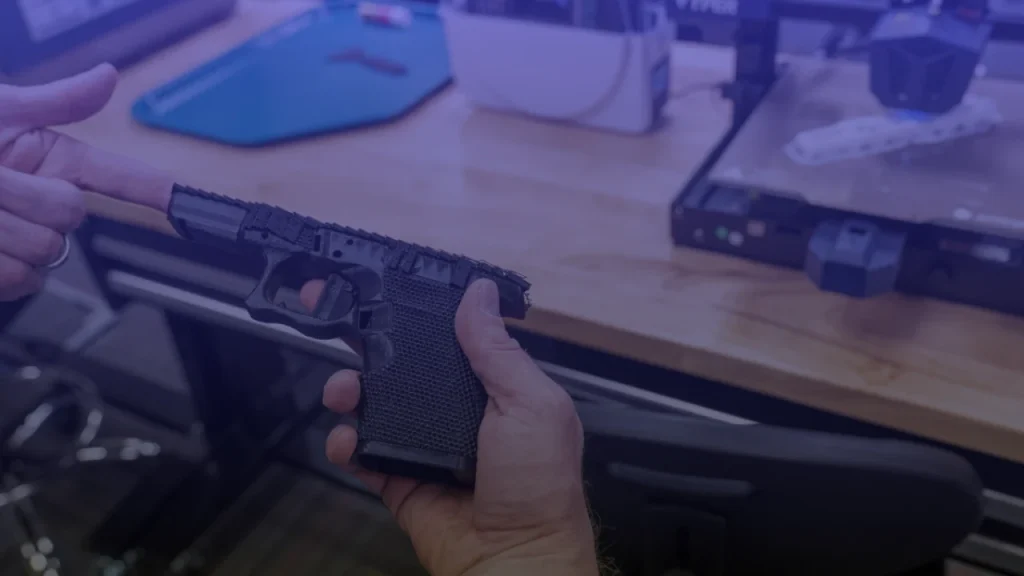
San Diego County has sued Polymaker LLC, a manufacturer and retailer of 3D-printer filament, alleging the company marketed certain filaments in ways that facilitate the making of 3D-printed “ghost guns,” meaning unserialized, untraceable firearms. The complaint is dated October 5, 2026 and was filed in San Diego Superior Court.
The county says filament has many lawful uses and that the lawsuit does not seek to ban filament sales in California. Its theory is that Polymaker’s marketing, partnerships and technical guidance aimed at the 3D-printed-gun community turn certain products into regulated “firearm precursor parts.”
This is not a class action or a consumer settlement. No payments, claim forms or deadlines are associated with it. The allegations have not been proven, and Polymaker’s side is not yet established in any ruling.
Quick Facts: People v. Polymaker LLC
| Detail | Information |
| Plaintiff | The People of the State of California, through the County of San Diego |
| Defendants | Polymaker LLC (reported as a Delaware LLC with its principal place of business in Missouri City, Texas), and Does 1 to 50 |
| Court | Superior Court of California, County of San Diego |
| Complaint dated | October 5, 2026 |
| Case number | Not independently verified; look it up by party name on the court’s case search |
| County’s lawyers | San Diego County Counsel Damon M. Brown, with Giffords Law Center to Prevent Gun Violence; White & Case is also reported as co-counsel |
| Cause of action | California Unfair Competition Law, Business and Professions Code § 17200 (“unlawful” and “unfair” prongs); reported as the single cause of action |
| Core theory | Marketing makes certain filaments “firearm precursor parts” under Penal Code § 16531 |
| Relief sought | Injunction, civil penalties of up to $2,500 per violation (each day potentially counted separately), disgorgement of revenue, other relief |
| Local incident cited | May 2026 San Diego police case involving a 16-year-old |
| Class action? | No |
| Settlement | None |
| Consumer claim form | None |
| Status | Early stage; no ruling reported |
What Does the County Allege?
The complaint, which is pleaded on information and belief, says Polymaker went beyond selling a dual-use product that some customers might misuse. According to descriptions of the filing, the county alleges Polymaker:
- Created and sold firearm-themed or “creator-edition” filament in collaboration with a prominent 3D-printed-gun influencer, identified in reporting as Sean Aranda, known online as “3D Print General.”
- Later hired that influencer as Head of Customer Experience, which the county treats as evidence Polymaker knew how its filament was being used.
- Featured firearm or gun-related imagery in marketing.
- Paid affiliate commissions or otherwise promoted products to gun-printing audiences.
- Engaged on online forums dedicated to 3D-printed firearms.
- Gave technical guidance, including on adhesives for bonding printed parts to metal components, that the county says is aimed at firearm applications.
These are allegations. A creator partnership or marketing choice does not by itself establish a legal violation, and a large part of the complaint quotes forum users and influencers, so the county must show that the statements are Polymaker’s own marketing and not just its customers’ words.
The local incident
The county ties the marketing to a May 2026 San Diego Police Department case in which a 16-year-old was arrested at a high school with a loaded handgun. A subsequent search allegedly recovered a 3D printer, Polymaker filament, four 3D-printed handgun frames, machine-gun conversion devices and more than 100 rounds of ammunition. The county uses this to argue concrete harm locally. The incident does not by itself show that Polymaker caused any crime or knew how a particular customer would use its product.
Why the county says filament counts as a “precursor part”
Under California law, a “firearm precursor part” can include a component that is marketed or sold to the public to become or be used as the frame or receiver of a functional firearm once completed, assembled or converted (Penal Code § 16531). The county argues Polymaker’s marketing is what transforms ordinary filament into regulated precursor material. Ordinary filament is not automatically a precursor part just because someone could print a firearm with it.
Is 3D-Printer Filament Illegal in California?
No. The lawsuit does not ban filament, printers or 3D printing. The complaint itself says filament is not inherently illicit and has many lawful, productive purposes. The dispute is whether Polymaker’s specific products, marketing and conduct fall within California’s firearm laws. If the county wins, the result could be orders restricting particular marketing or business practices, not a finding that every filament maker, printer owner or hobbyist broke the law.
What Laws Are Involved?
California Unfair Competition Law, Business and Professions Code § 17200 et seq.
The UCL prohibits unlawful, unfair or fraudulent business acts or practices. The county relies on the “unlawful” prong (conduct that violates another law) and the “unfair” prong. The UCL authorizes injunctions (§ 17203) and civil penalties of up to $2,500 per violation (§ 17206). Penalties and disgorgement are remedies the court may award only if the county proves its case, and the UCL does not make every unpopular practice illegal.
Who may sue: UCL civil-penalty actions are generally brought by the Attorney General, district attorneys and certain city and county attorneys, and county counsel authority can depend on an agreement with the district attorney (§§ 17204 and 17206). Defendants often probe that point, so check how the complaint pleads the county’s authority.
Penal Code § 16531: “firearm precursor part”
Defines the term, including the marketing-based test described above. This is the central legal question: whether Polymaker’s alleged marketing makes specific filaments precursor parts.
California firearm manufacturing and precursor-part laws
California requires serial numbers on firearms and restricts unlicensed manufacture of unserialized firearms, including by 3D printing (for example, Penal Code § 29180), and regulates sales of precursor parts. The complaint and reporting also refer to provisions on facilitating unlicensed manufacture. The exact statutes and their roles should be confirmed against the filed complaint, since descriptions differ. The filing alone does not establish a violation of any of them.
Firearm industry standard of conduct, Civil Code §§ 3273.50 to 3273.51
California’s firearm industry responsibility law sets standards of conduct for “firearm industry members,” including reasonable controls to prevent unlawful use of products in certain circumstances. Reports indicate the county relies on related provisions. A threshold issue is whether a general-purpose filament maker qualifies as a covered firearm industry member.
Federal law
Federal law, including the Gun Control Act and the Undetectable Firearms Act (18 U.S.C. § 922(p)), separately regulates firearms and undetectable firearms. The lawsuit is a California state-law case.
Constitutional questions
- First Amendment. The First Amendment protects much speech, but commercial speech that promotes unlawful activity receives limited protection under Central Hudson Gas & Electric Corp. v. Public Service Commission, 447 U.S. 557 (1980). Polymaker may argue its marketing and the influencers’ content are protected speech, and the county will argue the speech is part of unlawful commercial conduct.
- Second Amendment. Challenges to firearm-related restrictions are analyzed under New York State Rifle & Pistol Ass’n v. Bruen, 597 U.S. 1 (2022), and later decisions. No ruling on any constitutional defense has been reported.
Related San Diego County litigation
San Diego County and Giffords Law Center previously sued Defense Distributed and related companies over a milling machine (the “Ghost Gunner,” later sold as the “Coast Runner”) that the county said was marketed to produce untraceable firearms. Giffords reported that the court granted a preliminary injunction in that case. It is a separate case against a different company and does not decide anything about Polymaker.
What Is the County Asking the Court to Order?
- Injunctive relief prohibiting the challenged marketing, partnerships, technical guidance and related practices.
- Civil penalties of up to $2,500 per violation, with the county asking that each day Polymaker marketed filament for printed guns “in a manner accessible to California audiences” count as its own violation. The $2,500 figure is a statutory maximum, not a penalty imposed.
- Disgorgement of revenue obtained through the alleged practices. This is not a consumer fund and does not mean customers receive payments.
- Costs and other relief the court considers proper.
The complaint is civil. It does not include criminal charges against Polymaker.
Is This a Class Action? Can Customers Get Money?
No. It is a civil enforcement action brought for the People of the State of California. There is no class certification, opt-out process, claim form or administrator. There is no verified settlement or consumer compensation program. Be cautious of websites or social media posts claiming Polymaker customers can claim money, and never pay a fee or give sensitive personal information based on such a claim.
What Does It Mean for 3D-Printer Owners and Hobbyists?
Owning a 3D printer or buying ordinary filament is not made illegal by this lawsuit, and customers and hobbyists are not parties to the case or automatically liable. California’s firearm laws apply to making unserialized firearms however they are made, whether with traditional tools or a printer. If you have questions about whether a particular activity is lawful, consult the current California statutes or a California attorney.
The case tests how far California’s marketing-based definition of “firearm precursor part” reaches for dual-use materials, and the outcome could influence how other manufacturers market similar products. Nothing about a broader legal effect can be assumed before a ruling.
For background, see AllAboutLawyer.com’s New California Gun Laws 2026, What Every Gun Owner Needs To Know.
What Happens Next?
The case is at an early stage. Likely steps include:
- Service and response. Polymaker may answer or file a demurrer challenging the complaint’s legal sufficiency, including the county’s authority and the application of the precursor-part definition.
- Possible early motions, including a request for a preliminary injunction, which has not been announced.
- Discovery, if the case proceeds, into marketing materials, communications and sales.
- Rulings, settlement or trial. The case could be narrowed, dismissed, settled or tried.
No hearing date, trial date, response from Polymaker or ruling has been verified. Readers can search the San Diego Superior Court’s online case search by party name for the case number and docket.
Key Dates
| Event | Date |
| Local incident cited in the complaint | May 2026 |
| Complaint dated and filed | October 5, 2026 |
| Polymaker’s response | Not reported |
| Hearings or trial | Not announced |
| Settlement or consumer claim deadline | None |
Frequently Asked Questions
Why is San Diego County suing Polymaker?
It alleges Polymaker marketed 3D-printer filament in ways that facilitate the unlawful making of ghost guns, violating California’s Unfair Competition Law and firearm-related laws.
Is filament illegal in California because of this lawsuit?
No. The complaint says it does not seek to ban filament sales.
What is a ghost gun?
A privately made firearm that may lack the serial number and manufacturing records of firearms sold through licensed channels. Some are assembled from unfinished parts, and others can be made by 3D printing.
What is a “firearm precursor part”?
Under California law, a component that is marketed or sold to the public to become or be used as the frame or receiver of a functional firearm once completed, assembled or converted (Penal Code § 16531).
What laws does the complaint rely on?
Reports describe the Unfair Competition Law as the single cause of action, with firearm precursor-part and related laws supporting the “unlawful” theory. Check the complaint for exact citations.
What penalties could Polymaker face?
If the county wins, injunctive orders, civil penalties of up to $2,500 per violation and disgorgement of related revenue. Amounts depend on findings and the number of violations proven.
Has a court ruled that Polymaker broke the law?
No. The county’s statements are allegations in a new lawsuit.
Is this a class action?
No.
Can Polymaker customers receive money?
No settlement or compensation program exists.
What is the case number?
Not independently verified. Search by party name on the San Diego Superior Court’s case search.
Could this affect other 3D-printing companies?
Possibly, if a court adopts the county’s reading of the precursor-part definition, but no broader outcome can be assumed before a ruling.
Is this connected to the county’s earlier ghost gun lawsuit?
It is a separate case against a different company, although the county and Giffords have partnered before.
Editorial Note and Disclaimer
This article is general legal information about a newly filed government lawsuit and is not legal advice. The allegations are the county’s and have not been established as facts by a court. California firearm, precursor-part and unfair competition laws are complex and subject to court interpretation. Consult a qualified California attorney about any specific situation. AllAboutLawyer.com corrects errors promptly when they are identified.
Sources and References
- Complaint, The People of the State of California v. Polymaker LLC et al., Superior Court of California, County of San Diego (dated October 5, 2026). A copy was hosted at https://www.ammoland.com/wp-content/uploads/2026/10/Complaint_Polymaker.pdf
- Ammoland, “San Diego Sues Polymaker, Claims 3D-Printer Filament Is a Firearm Precursor Part” (October 2026). https://www.ammoland.com/2026/10/san-diego-polymaker-lawsuit-3d-printer-filament/
- San Diego County official statements on the launch of the Consumer Fairness and Public Protection Unit and the Polymaker filing (October 2026).
- Superior Court of California, County of San Diego, online case search. https://sdcourt.ca.gov/sdcourt/generalinformation/courtrecords2/onlinecasesearch
- California Business and Professions Code §§ 17200, 17203, 17204 and 17206; Penal Code §§ 16531 and 29180; Civil Code §§ 3273.50 to 3273.51. https://leginfo.legislature.ca.gov
- Giffords Law Center, announcement on the preliminary injunction against Defense Distributed, Ghost Gunner and Coast Runner; NBC 7 San Diego report on the county’s earlier lawsuit (March 2024).
- 18 U.S.C. § 922(p); Central Hudson Gas & Electric Corp. v. Public Service Commission, 447 U.S. 557 (1980); New York State Rifle & Pistol Ass’n v. Bruen, 597 U.S. 1 (2022).
By Israr Ahmad, Legal Content Researcher Last updated: October 12, 2026 Status: Newly filed government enforcement lawsuit. Allegations unproven. No settlement. No consumer claim form.
About the Author
Israr Ahmad is a legal content researcher with 4+ years of experience covering class action settlements and consumer rights cases. He has researched and published coverage of 2,500+ settlements using verified court records, settlement administrator filings, and government sources. Learn more about Israr.