
Salem Witch House Lawsuit, Tourist Says Historic “Death Stairs” Caused Serious Fall
A Pennsylvania tourist who says she suffered serious injuries after falling on the stairs inside Salem’s historic Witch House is suing the City of Salem. She alleges the city failed to address safety problems with the centuries-old staircase.
The lawsuit, reported by Law360 on October 9, 2026, raises a question that matters to visitors and municipalities alike: can a city be held responsible when someone is injured inside a historic building it operates for paying visitors? The woman reportedly argues that the staircase was not brought up to current safety and building-code requirements.
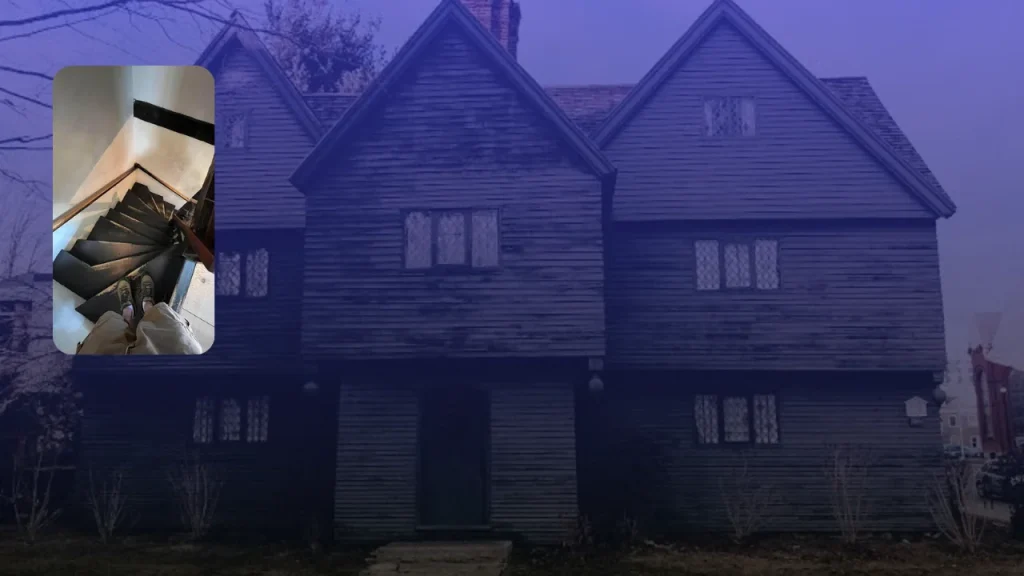
The Witch House, at 310 Essex Street in Salem, Massachusetts, is a historic house museum associated with Judge Jonathan Corwin, who took part in the Salem Witch Trials of 1692. The City of Salem identifies the property as a municipal facility that offers public tours.
This is a negligence and premises-liability dispute, not a product liability case and not a class action. The central questions are whether the staircase presented an unreasonable safety risk, whether the city had a legal duty to address it, and whether any failure caused the injuries.
Everything described here is an allegation, not a finding by a court. The case caption, docket number, complaint filing date, damages claimed and the city’s response have not been confirmed from an accessible court filing. The reporting is based on the Law360 account of the lawsuit.
Quick Facts: Salem Witch House Staircase Lawsuit
| Detail | What is known |
| Defendant | City of Salem, Massachusetts |
| Property | The Witch House (Jonathan Corwin House), 310 Essex Street, Salem |
| Plaintiff | A Pennsylvania woman; name not verified from a court filing |
| Type of case | Reported personal injury and negligence lawsuit |
| Reported incident | A fall on the Witch House staircase during a visit |
| Alleged safety issue | The historic stairs reportedly did not meet current safety and building-code requirements |
| Reported injuries | Described as serious; diagnoses and damages not verified |
| Court | Massachusetts state court, per the report; specific court unverified |
| Case number | Not verified |
| Settlement or verdict | None verified |
| Official settlement website | None. No settlement or claims program exists. |
| Claim form link | None. No claim form exists. |
| Claim deadline for other visitors | No public claims program or general deadline. Individual deadlines apply under Massachusetts law (see below). |
| Official property page | City of Salem: The Witch House |
| Governing law | Massachusetts negligence law, the Massachusetts Tort Claims Act (M.G.L. c. 258), and applicable building-safety requirements |
What Happened at Salem’s Witch House?
The Witch House is one of Salem’s best-known historic attractions. The City of Salem says it was built between 1642 and 1675 and is listed on the National Register of Historic Places as part of Salem’s McIntire District. It is the only structure still standing in Salem with direct ties to the 1692 witchcraft trials.
According to the reported lawsuit, a Pennsylvania woman fell on the interior staircase while visiting. She alleges the city failed to bring the old staircase into line with current safety and building codes.
The phrase “death stairs” comes from the news headline describing the dispute. It is not a judicial finding that the staircase was defective or that the city knowingly exposed visitors to danger.
The available reporting does not establish the exact circumstances of the fall. It does not say whether the visitor slipped, tripped, lost her balance or met a specific defect. It also does not establish the staircase’s dimensions, handrail setup, inspection history or the code provisions at issue. Those details could be decisive evidence.
Why the City of Salem Is the Defendant
The City of Salem identifies the Witch House as a municipal property within its Park and Recreation Department, offering public tours and educational programming. Ownership and operation by a city matters because injury claims against public entities follow special rules that do not apply to private property owners.
A suit against a city involves more than whether a staircase was unsafe. The plaintiff must also show the city was legally responsible for the condition, that statutory requirements were met, and that no immunity or statutory defense defeats the claim.
What Must the Tourist Prove in a Negligence Case?
Stair-fall claims generally rest on negligence. The plaintiff must prove four elements.
1. The City Owed the Visitor a Legal Duty
Under Massachusetts law, a property owner owes lawful visitors a duty of reasonable care under the circumstances. In Papadopoulos v. Target Corp. (2010), the Supreme Judicial Court held that a hazard being open and obvious does not automatically end the owner’s duty. It is one factor in deciding whether reasonable care was used.
For a museum open to paying visitors, the analysis can include how the property is maintained, what risks are foreseeable, and which precautions are practical. A building’s age may be relevant, but age alone neither excuses a dangerous condition nor proves negligence.
2. The Staircase Presented an Unreasonable Risk
The plaintiff needs evidence identifying the hazard and explaining why it was unreasonably dangerous. In stair-fall cases, evidence can include:
- Measurements of riser height, tread depth and consistency
- Photographs and video of the staircase and surrounding area
- The condition and placement of handrails and guards
- Lighting conditions
- Maintenance and repair records
- Inspection reports and prior complaints
- Warnings or instructions given to visitors
- Expert testimony on building-safety standards
These are categories of evidence typical in stair cases, not confirmed findings about the Witch House.
Related article: Nippon Dynawave Says Washington Workers’ Compensation Law Bars Wrongful Death Lawsuit After Deadly Longview Mill Tank Failure
3. The City Knew or Should Have Known
Depending on the theory, actual or constructive notice can matter. Actual notice means the city knew, for example through a prior complaint or inspection. Constructive notice asks whether the condition existed long enough, or was obvious enough, that reasonable care would have found it. The reporting does not say whether Salem received earlier complaints or what inspections found.
4. The Hazard Caused the Injuries
The plaintiff must connect the unsafe condition to the fall and prove the injuries and damages. Medical records, incident reports, witness statements and expert testimony may become relevant. A serious injury does not by itself prove negligence.
Which Massachusetts Laws Could Affect the Case?
Several statutes may apply. Their application depends on the complaint, the allegations and the evidence.
M.G.L. c. 258, § 2: Municipal Liability and the $100,000 Cap
The Massachusetts Tort Claims Act (Chapter 258) sets when public employers such as cities can be held liable for negligent acts or omissions of employees acting within the scope of their employment. Section 2 generally makes a public employer liable as a private person would be in like circumstances.
Section 2 also imposes limits. Damages against a public employer are generally capped at $100,000 per claim, subject to statutory exceptions. A public employer is also not liable for punitive damages or for prejudgment interest.
Because the Witch House is a city property, this framework is highly relevant. It does not establish that Salem is liable here.
M.G.L. c. 258, § 4: Written Presentment and Deadlines
Before suing a public employer under the Tort Claims Act, a claimant must present the claim in writing to the employer’s executive officer within two years after the cause of action arises. For a city, that is generally the mayor.
The statute also governs the response. The city has six months to act on the claim, and a final written denial, or failure to respond in that time, opens the door to a lawsuit. The civil action must then be filed within three years after the cause of action arose.
The reporting does not give the incident date, whether presentment occurred or whether the city denied the claim. No conclusion about compliance can be drawn.
M.G.L. c. 258, § 10: Exclusions and Immunities
Section 10 lists claims the Tort Claims Act does not cover. Two provisions are especially relevant to a municipal building case:
- Section 10(b), the discretionary function exclusion. It generally bars claims based on the exercise or failure to exercise a discretionary function or duty. A challenge to a policy-level decision, such as how to allocate a preservation budget, may raise this defense.
- Section 10(j), conditions not originally caused by the public employer. It excludes claims based on a failure to prevent or diminish the harmful consequences of a condition or situation that the employer did not originally cause, with limited exceptions. Whether a historic staircase counts as originally caused by the city is likely to be contested.
A claim of negligent maintenance of an existing staircase raises different issues from a challenge to a discretionary policy choice. The allegations and evidence will determine which provisions matter. Not every injury on public property leads to municipal liability.
M.G.L. c. 260, § 2A: Three-Year Statute of Limitations
Massachusetts generally requires tort actions for personal injury to be started within three years after the cause of action accrues. For a claim against a city, the Chapter 258 presentment requirement runs alongside this deadline. The two-year presentment deadline is the shorter one, so it is the practical trap for injured visitors.
M.G.L. c. 231, § 85: Comparative Negligence
If the defendant argues the visitor was partly at fault, for example by not using a handrail or by rushing, Massachusetts uses modified comparative negligence. A plaintiff whose negligence is greater than the total negligence of the defendants is barred from recovery. Otherwise, damages are reduced in proportion to the plaintiff’s share of fault.
M.G.L. c. 143, § 2A: Safety Rules for Public Buildings
Chapter 143, Section 2A applies specified building-safety provisions to buildings owned, operated or controlled by the Commonwealth and its political subdivisions, including municipalities, as the statute describes. It may be relevant to the safety requirements for a municipal facility.
The tourist reportedly says the staircase did not meet current requirements, but the specific code provisions allegedly violated have not been identified. It would be premature to say the stairs violated a particular code section.
M.G.L. c. 143, § 51: Building-Code Violations and Injury
Section 51 addresses compliance with certain building requirements and provides for damages where an injury is caused by a violation of applicable provisions. Its application depends on the building’s classification, the requirements at issue and the facts. Whether it applies to the Witch House cannot be determined from the reporting. An allegation of a code violation is not proof of one.
M.G.L. c. 143, § 92 and the State Building Code (780 CMR)
Massachusetts regulates construction and existing buildings through the Massachusetts State Building Code, 780 CMR, which contains stair, handrail and guard requirements and separate provisions for existing and historic buildings. Chapter 143, Section 92 addresses the retroactive effect of building-code rules and amendments, which can decide whether a newer requirement reaches an older building.
Which edition of the code applied, whether the staircase was original or altered, and whether any renovation triggered upgrades are questions of evidence, not assumptions.
Does a Historic Building Have to Meet Modern Safety Codes?
Historic status does not settle the question either way. Preservation goals, original construction and modern safety expectations can pull in different directions.
The analysis may turn on:
- Which building code and edition applied at the relevant time
- Whether the staircase is original or was altered
- Whether specific provisions apply retroactively
- Whether renovations or a change in use triggered additional requirements
- Whether an exception or approved alternative applied
- Whether the property was kept reasonably safe for its intended use
Historic designation does not automatically exempt a building from every safety requirement, and an old building does not automatically violate current law. The staircase’s history and the relevant provisions must be established first.
What Could the Lawsuit Mean for Other Visitors?
The case may draw attention to the safety duties of museums and attractions operating in historic buildings. For visitors, the question is whether a property is kept with reasonable care and whether known or foreseeable hazards are handled. For museums and municipalities, it highlights the value of maintenance records, inspections, incident reports, warnings and documented repair decisions.
The lawsuit does not establish that Witch House visitors face an unreasonable risk, that every historic staircase must be rebuilt to modern specifications, or that the city has been found liable. No court ruling on those points has been verified.
Does the Lawsuit Create a Compensation Program for Visitors?
No. This is an individual personal injury lawsuit, not a settlement fund or a certified class action. Other visitors cannot assume they are entitled to compensation because they visited or used the stairs. A person with a separate injury would need to assess their own facts, evidence and deadlines.
What Should You Do After a Fall at a Historic Attraction?
- Get medical care. Keep records of treatment, diagnoses and expenses.
- Report the fall. Tell staff or management and ask for a copy of any incident report.
- Preserve evidence. Keep photos, video, witness contacts, ticket records and communications about the incident.
- Write down the details. Record when and where you fell, what happened just before, and what you noticed about the stairs and surroundings.
- Find out who owns the property. If a city, town or other public body operates it, special claim rules apply, including the two-year written presentment requirement under M.G.L. c. 258, § 4.
- Get advice promptly. A Massachusetts personal injury lawyer can assess deadlines, public-entity requirements and defenses. Do not assume the ordinary three-year filing deadline is the only one that matters.
These steps are general information. They do not mean a particular visitor has a valid claim.
How This Case Compares With Other Attraction-Injury Lawsuits
Premises-liability disputes arise at historic sites, amusement venues, performance spaces and other public places. The issues vary with the property, the hazard, the defendant’s role and the governing law.
For another injury lawsuit tied to a public attraction, see our article on the Cirque du Soleil acrobat fall lawsuit. The cases are not legally identical. A fall on a historic staircase and a performer’s accident involve different duties, evidence and defenses. The comparison only shows how injury claims turn on circumstances and governing law.
What Happens Next?
Key developments to watch for:
- Public access to the filed complaint, confirming the caption, docket number and causes of action
- The city’s formal answer, which will show what it admits, denies or contests
- Any motion to dismiss based on presentment, immunity or the Tort Claims Act exclusions
- Discovery, including inspection and maintenance records
- Expert testimony on the applicable building-code provisions
- Any settlement talks or court rulings
No settlement, verdict or finding of negligence has been verified. The deciding question is not whether the staircase is old. It is whether the evidence shows a legally actionable safety failure under the rules that apply to the property and the City of Salem.
Frequently Asked Questions About the Salem Witch House Staircase Lawsuit
Who is being sued?
The City of Salem, Massachusetts. The plaintiff is described as a Pennsylvania woman whose identity has not been verified from a court filing.
What caused the tourist’s fall?
The reporting says she fell on the interior stairs during a visit. The exact condition that allegedly caused the fall has not been verified. It is not established whether she slipped, tripped or lost her balance.
Did the Witch House violate Massachusetts building codes?
That has not been established. The plaintiff reportedly alleges the staircase did not meet current safety and building-code requirements. No court finding or verified inspection evidence of a violation has been identified.
Can the City of Salem be sued for an injury at the Witch House?
Potentially, depending on the facts and the law. Chapter 258 governs many claims against public employers. The plaintiff must prove the elements of negligence and comply with the procedural rules, and the city can raise statutory defenses.
What is the deadline for a claim against the City of Salem?
Under M.G.L. c. 258, § 4, a written claim must generally be presented to the city’s executive officer within two years after the cause of action arises. A lawsuit must then be filed within three years after the cause of action arose, after the city denies the claim or fails to respond within six months. Because individual facts matter, get legal advice promptly.
What is the most a person can recover from the City of Salem?
Under M.G.L. c. 258, § 2, damages against a public employer are generally capped at $100,000 per claim, subject to statutory exceptions. Punitive damages are not available against a public employer.
Does the lawsuit mean other visitors can claim compensation?
No. No public compensation program or class settlement has been identified. Each visitor would need to evaluate their own injury, evidence and deadlines.
Is this a product liability case?
No. The allegations concern a fall on a staircase and the city’s alleged failure to address the property’s condition. That is a premises-liability and negligence dispute, not a case about a defective manufactured product.
Can the visitor’s own conduct reduce her recovery?
Possibly. Under M.G.L. c. 231, § 85, if a plaintiff is found partly at fault, damages are reduced in proportion. If her fault is greater than the defendants’ combined fault, recovery is barred.
Has the City of Salem settled the lawsuit?
No settlement has been verified. A lawsuit does not mean the parties have settled or that the plaintiff has won.
Where is the Salem Witch House?
At 310 Essex Street, Salem, Massachusetts. Visitors can check the official Witch House page for current visitor information.
Disclaimer: This article provides general legal information and is not legal advice. AllAboutLawyer.com is an independent legal information website, not a law firm. Allegations in a lawsuit are not findings of fact, and the court documents and statutes control. This article is based on the October 9, 2026 Law360 report and public legal sources; details such as the plaintiff’s name, the court, the docket number, the incident date and damages claimed have not been confirmed from the filed complaint.
About the author: Researched and written by Israr Ahmad, legal content researcher at AllAboutLawyer.com. Coverage focuses on court filings, official government announcements, settlement documents and legal developments that affect consumers.
Sources
- Law360, report on the lawsuit by a Pennsylvania tourist against the City of Salem over a fall at the Witch House, October 9, 2026 (paywalled). https://www.law360.com/
- City of Salem, The Witch House. https://www.salem.com/witch-house
- City of Salem, Fiscal Year 2026 Adopted Budget Book. https://salemma.gov/DocumentCenter/View/8409/FY2026__City-of-Salem-Adopted-Budget-Book
- M.G.L. c. 258, § 2 (public employer liability and limits). https://malegislature.gov/Laws/GeneralLaws/PartIII/TitleIV/Chapter258/Section2
- M.G.L. c. 258, § 4 (presentment of claims). https://malegislature.gov/Laws/GeneralLaws/PartIII/TitleIV/Chapter258/Section4
- M.G.L. c. 258, § 10 (exclusions). https://malegislature.gov/Laws/GeneralLaws/PartIII/TitleIV/Chapter258/Section10
- M.G.L. c. 260, § 2A (three-year limitation for tort actions). https://malegislature.gov/Laws/GeneralLaws/PartIII/TitleV/Chapter260/Section2A
- M.G.L. c. 231, § 85 (comparative negligence). https://malegislature.gov/Laws/GeneralLaws/PartIII/TitleIII/Chapter231/Section85
- M.G.L. c. 143, § 2A (public building safety). https://malegislature.gov/Laws/GeneralLaws/PartI/TitleXX/Chapter143/Section2A
- M.G.L. c. 143, § 51 (building-code violations and injury). https://malegislature.gov/Laws/GeneralLaws/PartI/TitleXX/Chapter143/Section51
- M.G.L. c. 143, § 92 (retroactive effect of building-code rules). https://malegislature.gov/Laws/GeneralLaws/PartI/TitleXX/Chapter143/Section92
- Massachusetts State Building Code, 780 CMR. https://www.mass.gov/orgs/board-of-building-regulations-and-standards
- Papadopoulos v. Target Corp., 457 Mass. 368 (2010).
Researched and written by Israr Ahmad, Legal Content Researcher at AllAboutLawyer.com.
Last updated: October 10, 2026
About the Author
Israr Ahmad is a legal content researcher with 4+ years of experience covering class action settlements and consumer rights cases. He has researched and published coverage of 2,500+ settlements using verified court records, settlement administrator filings, and government sources. Learn more about Israr.