
Nippon Dynawave Says Washington Workers’ Compensation Law Bars Wrongful Death Lawsuit After Deadly Longview Mill Tank Failure
Nippon Dynawave Packaging Co. is asking a Washington court to dismiss a wrongful death lawsuit over the May 26, 2026 chemical tank failure at its Longview pulp and paper mill, which killed 11 workers. The company argues that Washington’s workers’ compensation law is the exclusive remedy and shields it from the widow’s civil claim.
The motion puts one question before the Cowlitz County Superior Court: can a worker’s family sue the employer directly after a fatal industrial disaster, or does the workers’ compensation system bar the claim?
Washington law generally gives covered employers immunity from civil suits over workplace injuries and deaths. It makes one narrow exception, when the injury results from the employer’s “deliberate intention” to produce it. The company says the lawsuit cannot meet that standard. The family alleges the company ignored repeated warnings about the tank. Neither side’s position has been decided by a court.
This is litigation, not a settlement. There is no settlement fund, claim form or claim deadline for this case. Families of affected workers can, however, apply for state workers’ compensation survivor benefits (see below).
Quick Facts: Ammons v. Nippon Dynawave Wrongful Death Suit
| Detail | Information |
| Company | Nippon Dynawave Packaging Co. LLC and related Nippon Paper entities |
| Facility | Pulp and paper mill, Longview, Washington |
| Incident date | May 26, 2026 |
| Confirmed deaths | 11 |
| Incident | Failure of a chemical storage tank (“G Tank”) releasing about 900,000 gallons of white liquor |
| Plaintiff | Mackenzie Ammons, widow and personal representative of the estate of Jared Ammons, a 35-year-old plant electrician |
| Court | Cowlitz County Superior Court, Washington |
| Company’s defense | Exclusive remedy under the Washington Industrial Insurance Act; the complaint does not meet the “deliberate intention” exception |
| Status | Motion to dismiss filed in early October 2026; no ruling verified |
| Related lawsuit | Wrongful death action by Sheri Lynn King (estates of Tyler and Bradley Covington), Case No. 26-2-00831-08, filed August 10, 2026 |
| Ammons case number | Not independently verified |
| Main laws | RCW 51.04.010, RCW 51.32.010, RCW 51.24.020, RCW 51.24.030 |
| Safety investigations | Washington Department of Labor & Industries (L&I) and the U.S. Chemical Safety and Hazard Investigation Board (CSB) |
| Official settlement website | None. No settlement or claims program exists. |
| Claim form link | None for the lawsuit. Survivor benefits are claimed through L&I. |
| Official information page | Washington L&I: Response to Nippon Dynawave Tank Rupture |
What Happened at the Nippon Dynawave Mill?
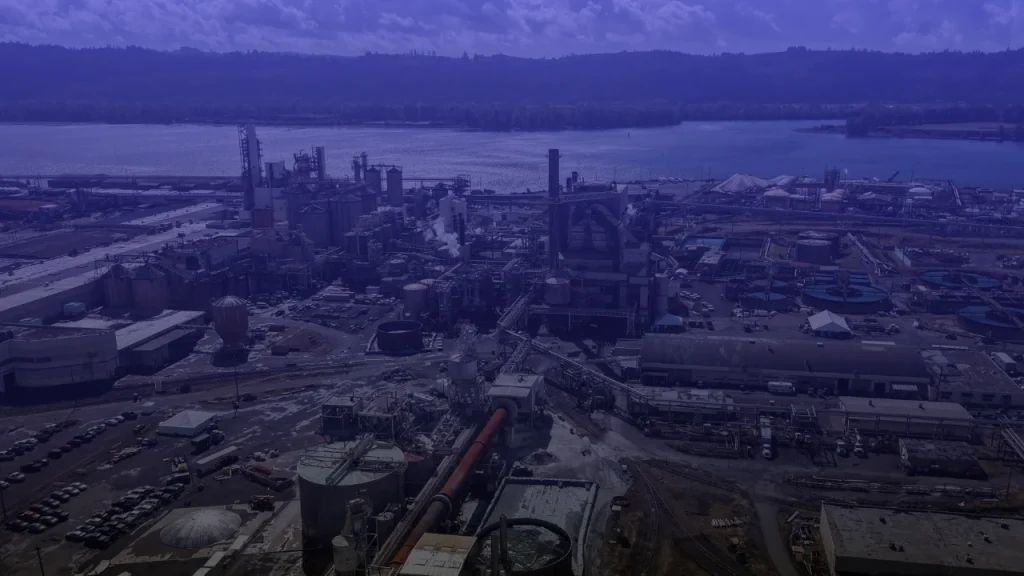
Just after 7 a.m. on May 26, 2026, a chemical storage tank failed at the Nippon Dynawave mill in Longview. The tank, known as G Tank, held about 1.2 million gallons’ capacity and was releasing roughly 900,000 gallons of white liquor, a hot, highly caustic mixture used to break wood down into pulp. L&I confirmed that 11 people died and others were seriously injured. State officials have described it as one of the deadliest industrial accidents in modern Washington history.
The U.S. Chemical Safety and Hazard Investigation Board reported in an investigation update that an external inspection of the tank in July 2025 found parts of its carbon-steel shell had thinned below the calculated minimum safe thickness. Further inspections in October 2025 and February 2026 reportedly reached the same conclusion. The tank stayed in service until it failed.
The Ammons Lawsuit
Mackenzie Ammons filed a wrongful death lawsuit in Cowlitz County Superior Court after her husband, Jared Ammons, a plant electrician, died in the incident. Her complaint alleges that the company followed a “run-to-failure” approach, ignored repeated contractor warnings that failure was highly likely, kept storing caustic white liquor in the tank, and failed to take it out of service, repair it or warn workers.
These are allegations, not findings. The company’s response is its motion to dismiss. A separate lawsuit by Sheri Lynn King over the deaths of brothers Tyler and Bradley Covington raises similar issues.
What Is Washington’s Exclusive-Remedy Rule?
Washington’s workers’ compensation system is the Industrial Insurance Act, Title 51 of the Revised Code of Washington. Established in 1911, it is a “grand compromise”: injured workers and surviving families receive no-fault benefits without proving the employer was negligent, and covered employers receive protection from ordinary civil lawsuits.
- RCW 51.04.010 declares the policy behind the system and replaces common-law remedies with a system of compensation.
- RCW 51.32.010 provides that, except as the title otherwise provides, compensation under the act is in place of all other rights of action against the employer for covered injuries and deaths.
L&I has confirmed that Nippon Dynawave participates in the state workers’ compensation system. The exclusive-remedy rule is not a finding that the company acted properly. It is a legal rule about which remedies are available and against whom.
Related article: Ron DeSantis Withdraws William Lee Thompson’s Death Warrant, Halting the Florida Execution Set for October 13, 2026
The “Deliberate Intention” Exception: RCW 51.24.020
The main exception appears in RCW 51.24.020. If a worker’s injury results from the employer’s deliberate intention to produce the injury, the worker or beneficiary may receive workers’ compensation benefits and also sue the employer for damages beyond those benefits.
Washington courts read “deliberate intention” narrowly. In Birklid v. Boeing Co., 127 Wn.2d 853 (1995), the Washington Supreme Court held that the employer must have had actual knowledge that an injury was certain to occur and willfully disregarded that knowledge. Later decisions, including Walston v. Boeing Co., 181 Wn.2d 391 (2014), apply the same standard. Under this test:
- Negligence is not enough.
- Gross negligence and even reckless disregard are generally not enough.
- Knowing that a dangerous condition exists, or that injury is likely or possible, is not enough.
- The employer must know the injury is certain to occur and willfully disregard that.
In its motion, Nippon Dynawave reportedly argues that the plaintiff would have to prove the company had actual knowledge that an injury to Mr. Ammons was certain to occur and willfully disregarded it, and that the complaint does not allege this.
The family’s response is likely to rely on the alleged inspection findings and ignored warnings. A court at this stage will look at whether the complaint’s allegations, taken as true, could meet the standard. It will not decide who is right on the facts. Whether repeated warnings that a tank was likely to fail amount to “certain” injury is the central legal question, and no court has answered it here.
What Happens If the Court Grants or Denies the Motion?
- If the court grants the motion, the Ammons claim against the employer would be dismissed, and workers’ compensation benefits would remain the main recovery against Nippon Dynawave. The family could appeal, and claims against third parties would not be affected.
- If the court denies the motion, the lawsuit continues into discovery, where inspection reports, internal communications and testimony about what the company knew would be examined.
The outcome in one case would not decide every claim from the disaster. Different plaintiffs, defendants and allegations can raise different issues.
Wrongful Death Law in Washington
If the case proceeds, the claims arise under Washington’s wrongful death and survival statutes:
- RCW 4.20.010 and 4.20.020: A wrongful death action is brought by the personal representative of the deceased for the benefit of statutory beneficiaries, such as a spouse and children.
- RCW 4.20.060: The survival statute allows certain claims of the deceased to continue after death.
- RCW 4.16.080(2): The general three-year limitation period for personal injury and wrongful death actions applies. Because limitation periods are measured from the date of death, families should act promptly.
Can Families Sue Third Parties?
The exclusive-remedy rule protects the employer. It does not protect every other business. RCW 51.24.030 allows a worker or beneficiary to sue a third party who is not in the worker’s same employ and may be liable for the injury. Depending on the evidence, potential defendants could include equipment manufacturers, inspection contractors or maintenance firms. Their liability cannot be assumed simply because they worked on the facility or its equipment.
RCW 51.24.050 and 51.24.060 protect the state’s interest. L&I (or a self-insurer) has a right to be reimbursed from a third-party recovery to the extent of benefits paid, and the statute sets how a recovery is divided. Receiving workers’ compensation benefits therefore does not necessarily end every possible claim, and a third-party recovery can affect the benefits.
What Workers’ Compensation Benefits Are Available?
L&I has published information for workers and families affected by the Longview incident. A family member seeking benefits after a worker’s death must submit a Beneficiary Application for Claim Benefits to L&I, which can be filed online, by mail, by fax or in person at the Kelso office. Benefits are available regardless of fault.
Under RCW 51.32.050 and agency guidance, survivor benefits generally include:
- An immediate payment after claim approval (about $7,930 in recent L&I guidance)
- Funeral expense reimbursement (up to about $15,860 in recent figures)
- A monthly survivor pension, generally 60% of the worker’s wages for a surviving spouse, with additional amounts for dependent children, subject to statutory limits
These benefits are far more limited than the damages in a successful civil wrongful death case, which can include lost future earnings and loss of consortium. Families should confirm current amounts and individual eligibility directly with L&I. Applying for benefits is separate from the civil case, and the company’s legal defense does not cancel eligibility for statutory benefits.
What Are the Safety Investigations Examining?
L&I opened a workplace safety investigation immediately after the rupture. It examines what happened, whether workplace safety rules were violated and whether penalties apply. The work includes collecting documents, reviewing safety plans and hazard assessments, interviewing witnesses and inspecting the site. The CSB, a federal agency, separately investigates root causes and issues recommendations, but it does not issue fines.
L&I enforces the Washington Industrial Safety and Health Act (WISHA), RCW 49.17, which requires employers to provide a workplace free from recognized hazards. Citations can carry civil penalties, and willful violations that cause an employee’s death can carry criminal consequences under the act. L&I has also published a history of earlier inspections at the facility and cautioned that at least one, involving a tank and a broken valve, was unrelated to the fatal failure.
A regulatory finding that a rule was violated can be relevant evidence in civil litigation. It does not automatically decide whether workers’ compensation immunity applies or whether the deliberate-intention exception is met.
Timeline: The Nippon Dynawave Tank Failure and Lawsuits
| Date | Event |
| July 2025 | External inspection reportedly finds G Tank shell below minimum safe thickness (per CSB) |
| October 2025 and February 2026 | Follow-up inspections reportedly reach the same conclusion |
| May 26, 2026 | G Tank fails; 11 workers killed |
| June 1, 2026 | L&I announces its investigation into the circumstances and possible safety violations |
| August 10, 2026 | King wrongful death complaint filed (Covington estates), Case No. 26-2-00831-08 |
| Early September 2026 | Ammons wrongful death complaint filed |
| Early October 2026 | Nippon Dynawave files motion to dismiss the Ammons suit |
| Ongoing | L&I and CSB investigations |
What Families Should Do
- Apply for survivor benefits. Contact L&I for the Beneficiary Application for Claim Benefits and current instructions.
- Keep records. Employment records, correspondence, incident and medical records, death records and anything about the worker’s role.
- Preserve safety information. Keep any lawfully obtained inspection or maintenance documents and share them with an attorney.
- Separate employer claims from third-party claims. A lawyer can assess whether the exclusive-remedy rule applies and whether other parties may be liable.
- Watch the deadlines. Workers’ compensation and civil claims have different deadlines and notice rules. The general three-year period under RCW 4.16.080 runs from the date of death.
- Get Washington counsel. Choose an attorney experienced in industrial accidents and the deliberate-intention exception.
These steps are general information and do not mean a particular family has a viable claim.
Related Reading
For background, see our guide, What Is a Wrongful Death Lawsuit? Everything Families Need to Know. For a different wrongful death case, see our article on the Six Flags X2 Christopher Hawley wrongful death lawsuit. That case involves different facts and legal rules. The common point is that a wrongful death allegation does not by itself establish liability.
Frequently Asked Questions
Why does Nippon Dynawave say workers’ compensation law bars the lawsuit?
It relies on Washington’s exclusive-remedy rule, which generally prevents covered workers and beneficiaries from suing the employer for covered workplace injuries and deaths.
What is the “deliberate intention” standard?
Under RCW 51.24.020 and cases such as Birklid v. Boeing, the employer must have had actual knowledge that an injury was certain to occur and willfully disregarded it. Negligence, gross negligence and recklessness are generally not enough.
Does ignoring safety warnings automatically allow a lawsuit against the employer?
No. Ignored warnings may show a serious safety failure, but the exception requires actual knowledge that injury was certain, not merely likely.
Can families still receive money if the lawsuit is dismissed?
Yes. Eligible survivors can receive L&I death benefits, including a pension and funeral reimbursement. Claims against third parties may also remain possible.
Can families sue someone other than Nippon Dynawave?
Potentially. RCW 51.24.030 allows claims against third parties not in the worker’s same employ, depending on the evidence. L&I has a reimbursement interest in any recovery.
How many people died in the tank failure?
L&I confirmed 11 deaths from the May 26, 2026 failure.
Has Nippon Dynawave been found liable?
No. Allegations in a lawsuit and arguments in a motion are not court findings. No ruling on the motion to dismiss has been verified.
Are there other lawsuits over the disaster?
Yes. At least one other wrongful death action, by Sheri Lynn King for the estates of Tyler and Bradley Covington, is pending in the same court, and more filings are possible.
What is the deadline to file a wrongful death lawsuit in Washington?
Generally three years from the date of death under RCW 4.16.080(2), though individual circumstances can change this. Get legal advice early.
Where can families find official information?
On the Washington L&I response page and from L&I’s Kelso office.
Disclaimer: This article provides general legal information and is not legal advice. AllAboutLawyer.com is an independent legal information website, not a law firm. Allegations in a lawsuit are not findings of fact, and court orders and statutes control. The lawsuit and motion details are based on reporting of the court filings; readers should verify the current status on the Cowlitz County Superior Court docket and consult a Washington-licensed attorney about their situation.
About the author: Researched and written by Israr Ahmad, legal content researcher at AllAboutLawyer.com. Coverage focuses on court filings, official government announcements, settlement documents and legal developments affecting consumers and workers.
Sources
- Washington State Department of Labor & Industries, “Response to Nippon Dynawave Tank Rupture.” https://lni.wa.gov/agency/messages/response-nippon-dynawave-tank-rupture/
- Washington State Department of Labor & Industries, June 1, 2026 incident update. https://lni.wa.gov/news-events/article/26-07
- U.S. Chemical Safety and Hazard Investigation Board, investigation update on the Nippon Dynawave Longview tank failure. https://www.csb.gov/
- Law360, “Mill Co. Says It’s Immune To Suit Over Deadly Tank Collapse,” October 9, 2026. https://www.law360.com/personal-injury-medical-malpractice/articles/2536505/mill-co-says-it-s-immune-to-suit-over-deadly-tank-collapse
- RCW 51.04.010. https://app.leg.wa.gov/RCW/default.aspx?Cite=51.04.010
- RCW 51.32.010 and 51.32.050. https://app.leg.wa.gov/rcw/default.aspx?cite=51.32
- RCW 51.24.020. https://app.leg.wa.gov/rcw/default.aspx?cite=51.24.020
- RCW 51.24.030, 51.24.050 and 51.24.060. https://app.leg.wa.gov/rcw/default.aspx?cite=51.24
- RCW 4.20.010, 4.20.020 and 4.20.060 (wrongful death and survival). https://app.leg.wa.gov/rcw/default.aspx?cite=4.20
- RCW 4.16.080 (three-year limitation period). https://app.leg.wa.gov/rcw/default.aspx?cite=4.16.080
- RCW 49.17 (Washington Industrial Safety and Health Act). https://app.leg.wa.gov/rcw/default.aspx?cite=49.17
- Birklid v. Boeing Co., 127 Wn.2d 853 (1995).
- Walston v. Boeing Co., 181 Wn.2d 391 (2014).
Researched and written by Israr Ahmad, Legal Content Researcher at AllAboutLawyer.com.
Last updated: October 10, 2026
About the Author
Israr Ahmad is a legal content researcher with 4+ years of experience covering class action settlements and consumer rights cases. He has researched and published coverage of 2,500+ settlements using verified court records, settlement administrator filings, and government sources. Learn more about Israr.