
Quebec Judge Authorizes Class Action Lawsuit Over 68 COVID-19 Deaths at Résidence Angelica
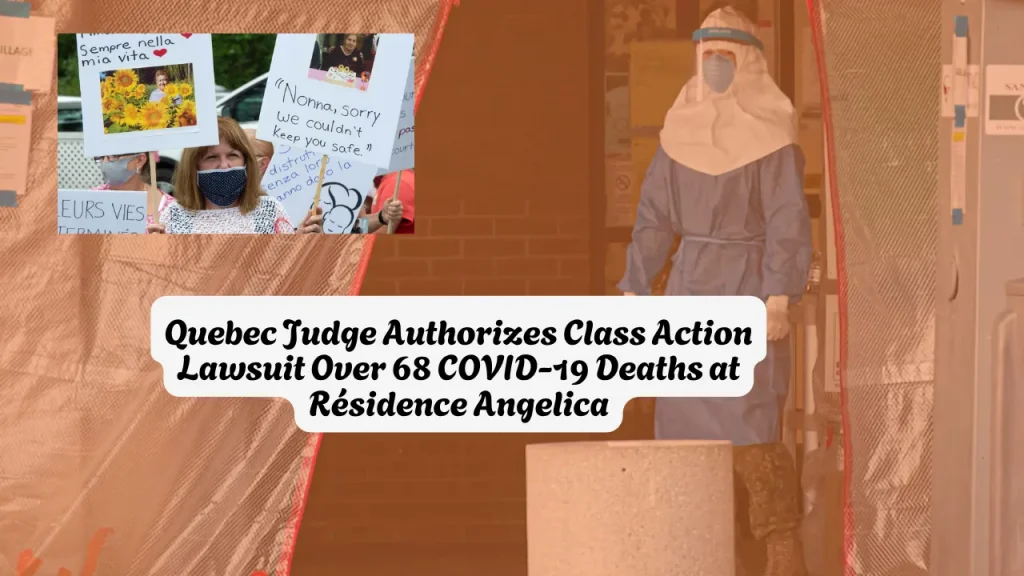
On April 7, 2026, a Quebec Superior Court judge officially authorized a class action lawsuit against Résidence Angelica, a private long-term care home in the Montréal-Nord borough. The lawsuit centers on the catastrophic mismanagement of a COVID-19 outbreak in the spring of 2020, which resulted in the deaths of at least 68 residents. Lead plaintiff Antonio Capobianco, whose 95-year-old mother Filomena Greco died at the facility, alleges that the residence’s “negligent and reckless” actions directly contributed to the high death toll and caused lasting trauma to survivors and their families.
Quick Facts
| Field | Detail |
| Defendant | Résidence Angelica (Private Montreal North Care Home) |
| Class Period | April 9, 2020 – June 26, 2020 |
| Death Toll | At least 68 residents |
| Lead Plaintiff | Antonio Capobianco |
| Core Allegations | Protocol failures, improper patient transfers, and staffing negligence |
| Current Status | Authorized by Quebec Superior Court (April 7, 2026) |
Key Allegations of Mismanagement
The lawsuit outlines several specific failures that plaintiffs argue led to the preventable loss of life:
- Improper Patient Transfers: Allegations that the facility moved COVID-positive patients into units with uninfected residents, effectively spreading the virus through “clean” zones.
- Infection Control Breaches: Failure to follow government-mandated protocols, including allowing staff members who were symptomatic or exposed to the virus to continue working.
- Lack of Leadership: The suit claims the residence failed to implement a proactive response even as the death toll climbed rapidly during the peak of the first wave.
Related article: Province Agrees to $400,000 Payment in $10M Elliot Lake Mall Collapse Settlement
Who is Eligible to Join?
The class action is seeking damages for a wide group of individuals impacted by the residence’s actions. Eligible members include:
- Residents: All individuals who resided at Résidence Angelica at any point between April 9, 2020, and June 26, 2020.
- Family Members: Spouses, children, and grandchildren of the residents (living or deceased).
- Caregivers & Heirs: Designated caregivers and the legal heirs of residents who passed away due to COVID-19 or related neglect.
The Broader Legal Context in Quebec
This authorization is part of a growing wave of litigation regarding Quebec’s long-term care facilities (CHSLDs).
- Public CHSLD Class Action: In January 2024, a judge authorized a massive suit against the Quebec government covering 118 public long-term care homes that experienced outbreaks between March 2020 and March 2021.
- Vigi Santé Lawsuit: Similar litigation is moving forward against other private entities like Vigi Mont-Royal, following a coroner’s report that highlighted “gross negligence” in the private sector.
Frequently Asked Questions
Has the court ruled that the residence is guilty?
No. The authorization (certification) means the judge believes there is a “serious appearance of right” and that the case should proceed to a full trial. The allegations have not yet been proven in court.
Do I need to sign up right now?
In Quebec class actions, you are generally included automatically if you meet the criteria (April 9 – June 26, 2020 residency). However, families are encouraged to keep records of their connection to the facility and any related expenses.
What kind of damages are being sought?
The lawsuit seeks both compensatory damages for moral and material injury and punitive damages to deter future negligence in elder care.
“Missing Pillars” of Legal Reporting
- Discovery Insights: Plaintiffs’ lawyers are expected to subpoena internal staffing logs from April 2020. These logs may reveal exactly how many staff members were forced to work while symptomatic, a key point in proving “gross negligence.”
- Bellwether Context: This case is a “bellwether” for private care home liability in Canada. It will determine if private corporations can be held to a higher standard of care than public institutions when government directives are ignored.
- Objector Status: The residence has not yet filed a formal defense, but in preliminary hearings, private homes have often argued that “unprecedented pandemic conditions” made it impossible to meet standard care requirements.
- Tax Implications: Under Canadian law, settlements for personal injury or “loss of care, guidance, and companionship” are generally non-taxable.
- Attorney Fee Breakdown: In Quebec, class action lawyers typically receive 20% to 30% of the final settlement or judgment, subject to court approval to ensure the majority of funds reach the victims.
Last Updated: April 8, 2026
Disclaimer: This article is for informational purposes only and does not constitute legal advice. Legal claims and outcomes depend on specific facts and applicable law. For advice regarding a particular situation, consult a qualified attorney.
About the Author
Israr Ahmad is a legal content researcher with 4+ years of experience covering class action settlements and consumer rights cases. He has researched and published coverage of 2,500+ settlements using verified court records, settlement administrator filings, and government sources. Learn more about Israr.