
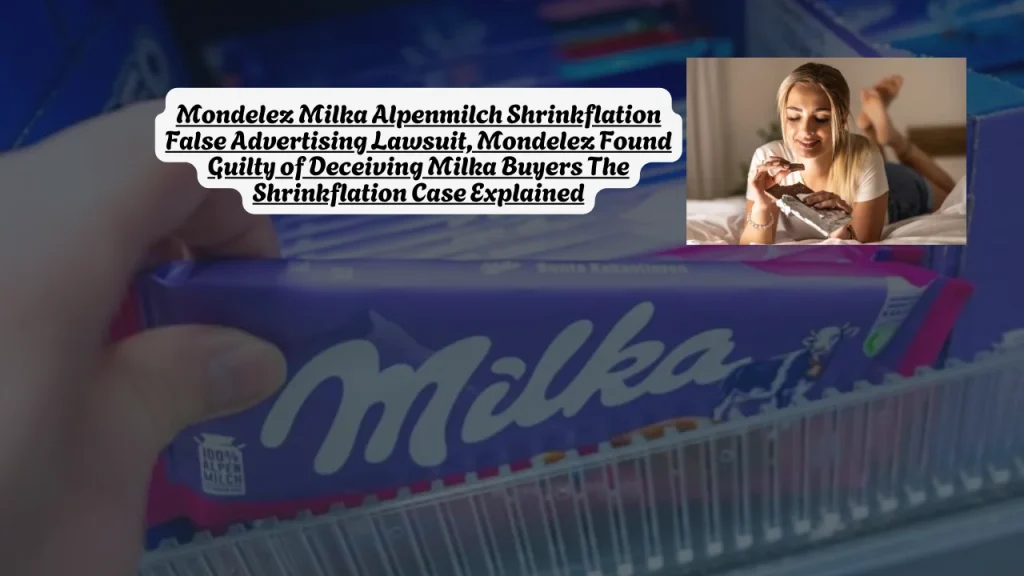
Mondelez Milka Alpenmilch Shrinkflation False Advertising Lawsuit, Mondelez Found Guilty of Deceiving Milka Buyers The Shrinkflation Case Explained
A German court ruled on May 13, 2026 that Mondelez International breached competition law by reducing the weight of its Milka Alpenmilch bars from 100 grams to 90 grams while making only minimal changes to the packaging, in a landmark ruling that consumer advocates are calling a turning point for shrinkflation accountability across Europe. The case, Verbraucherzentrale Hamburg v. Mondelez International, case number 12 O 118/25, was brought before the Landgericht Bremen (Bremen Regional Court) by Hamburg’s consumer protection office. No settlement exists. No claim form is open. This is a completed court ruling, not yet final, with Mondelez having one month to appeal.
Quick Facts: Milka Shrinkflation Lawsuit
| Field | Detail |
| Case Filed | September 1, 2025 |
| Ruling Issued | May 13, 2026 |
| Defendant | Mondelez International (U.S.-based; German HQ in Bremen) |
| Alleged Violation | Unfair competition and consumer deception under German competition law |
| Product at Issue | Milka Alpenmilch (Alpine Milk) chocolate bar |
| Weight Change | 100g reduced to 90g — packaging largely unchanged |
| Price Change | Rose from €1.49 to €1.99 in early 2025 |
| Who Brought the Case | Verbraucherzentrale Hamburg (VZHH) — Hamburg consumer protection office |
| Court & Jurisdiction | Landgericht Bremen (Bremen Regional Court), Germany |
| Case Number | 12 O 118/25 |
| Ruling Status | Not yet final — Mondelez has one month to appeal |
| Who Is Affected | European consumers who purchased Milka products; no U.S. claim form exists |
| Last Updated | May 13, 2026 |
What Is the Milka Shrinkflation Lawsuit About? VZHH v. Mondelez, Case No. 12 O 118/25
Milka bars now weigh only 90 grams, down from the prior 100 grams, and the company made almost no alterations to its packaging, leading consumers to make disappointing discoveries when opening the purple wrapping. While the packaging and design are identical to before, the bar itself became thinner by one millimetre — almost impossible to notice.
At the same time, the retail price rose from €1.49 to €1.99 at the start of 2025 — a 34% price increase paired with a 10% reduction in product weight. That combination was enough for Hamburg’s consumer watchdog to take Mondelez to court. The legal theory behind the case is consumer fraud through deceptive packaging — a growing area of European competition law that holds manufacturers to account when they exploit brand familiarity to hide what amounts to a hidden price increase.
The court ruled that the 90-gram bars may not be sold in the same packaging if 100-gram versions had been offered in the preceding four months. The presiding judge put it plainly during hearings: “This is a form of deceptive packaging. The consumer cannot tell the difference.” This ruling follows a pattern of similar cases across Europe — comparable to the Rawlings Sporting Goods false advertising class action on AllAboutLawyer.com, where consumers alleged a product was misrepresented through its labeling and packaging.
Are You Part of the Milka Shrinkflation Case?
This is a German court ruling, not a U.S. class action. There is no U.S. claim form, no American plaintiff class, and no payout mechanism for consumers outside Germany. Here is who this ruling directly affects and what it means for everyone else.
You are directly affected if you:
- Purchased Milka Alpenmilch or other affected Milka varieties in Germany after the weight reduction took effect
- Paid the new €1.99 retail price while receiving a 90-gram bar under the same packaging as the old 100-gram bar
- Filed a complaint with the Verbraucherzentrale Hamburg (VZHH) that contributed to this case being brought
You are NOT part of any pending legal claim if you:
- Purchased Milka bars in the United States, the UK, or any country outside Germany — this ruling has no direct legal effect on your purchase
- Are looking for a compensation claim form — none exists in this case
- Only purchased other Milka varieties that were not specifically named in the court’s findings
If you are a U.S. consumer who feels deceived by similar shrinkflation practices in American products, the relevant avenue is a consumer fraud lawsuit through a private attorney or a complaint filed with the Federal Trade Commission. A free legal consultation with a product liability attorney can help you understand whether a domestic claim is viable for similar conduct by any U.S. food manufacturer.
Related article: TransUnion Fraudulent Credit Report Block Class Action Lawsuit, Were You Denied an Identity Theft Block on Your Credit Report?
What Mondelez Said — And Why the Court Rejected It
Mondelez did not accept the accusation quietly. The company argued during the case that customers had been informed via its website and social media, and said rising supply chain and production costs had forced weight reductions across several Milka products. Its lawyers also argued that Milka bars had historically varied in weight between 81g and 100g depending on the product range, so the change was not unprecedented.
The court was not convinced. The district court in Bremen ruled that while keeping the wrapping the same was not an issue in isolation, the deception lay in the difference between the bar’s contents and the “visually conveyed expectation” created by a wrapper long associated with a specific product by German consumers. The court said a “clear, understandable and easily perceptible notice on the wrapper was necessary” to eliminate that deception.
In short: printing the new weight on the back of the packaging was not enough. Consumers who had bought the same bar for years reasonably expected the same amount of chocolate. Mondelez’s failure to make the reduction obvious — while simultaneously raising the price by 34% — crossed the line from normal business practice into unlawful consumer deception under German competition law.
Reacting to the ruling, Mondelez told the BBC it was “taking the decision of the court seriously” and would “look at it in detail now.” The company has one month from the ruling date to file an appeal.
What Should You Do If You Were Affected?
For consumers in Germany, the ruling creates a foundation for individual claims against Mondelez if you were harmed. Here are your practical options right now:
- Document your purchases. Keep any receipts or photos of Milka products you bought at the higher price with the reduced weight.
- Contact the VZHH. Hamburg’s consumer protection office brought this case and continues to monitor Mondelez’s compliance. You can reach them at vzhh.de.
- Monitor the appeal. The decision is not yet final, and Mondelez has one month to appeal. If the ruling survives appeal, it becomes binding and sets a precedent that affects all similar products.
- Do not pay anyone to join this case. This is a regulatory enforcement action, not a consumer class action with a sign-up form.
For consumers outside Germany, including those in the U.S. and UK, this ruling does not create any direct legal rights — but it does set a powerful precedent that European consumer agencies and courts may apply to other brands. If you believe a food product you bought in the U.S. was similarly deceptive, a consumer rights lawyer can advise you on whether a false advertising class action is viable under federal or state law.
The Bigger Picture: Shrinkflation Across Europe
The Milka ruling did not happen in isolation. Ritter Sport has also changed the weight of some of its varieties — bars that previously weighed 100g now weigh just 75g in three varieties, though the packaging appears just as large as before. Ritter Sport says consumers prefer the thinner bars. Those products, too, appear on the VZHH’s annual “rip-off packaging” list.
The VZHH added 77 products to its rip-off packaging list in 2025 alone — from chocolate and confectionery to toothpaste, oats, and instant coffee. The Milka ruling is the first time a German court has found a manufacturer liable for this practice in such a clear, precedent-setting way. Legal observers across Europe expect it to trigger similar cases in other countries.
This case mirrors the legal reasoning behind the Tide Pods false advertising class action lawsuit on AllAboutLawyer.com, where U.S. consumers argued that product packaging created a specific expectation that the product did not meet — and that the gap between expectation and reality constituted an actionable consumer harm.
Milka Shrinkflation Case Timeline
| Milestone | Date |
| Milka bars reduced from 100g to 90g; packaging largely unchanged | 2024 |
| Retail price increased from €1.49 to €1.99 | Early 2025 |
| Germans vote Milka Alpenmilch “rip-off packaging of the year 2025” | 2025 |
| VZHH files lawsuit against Mondelez at Landgericht Bremen | September 1, 2025 |
| Three-week trial begins at Bremen Regional Court | April 22, 2026 |
| Bremen Regional Court rules against Mondelez | May 13, 2026 |
| Mondelez appeal deadline | TBD — approximately one month from ruling date (June 2026) |
| Final binding outcome | TBD — pending appeal decision |
Frequently Asked Questions
Is there a class action lawsuit against Mondelez for Milka shrinkflation?
Not in the U.S. The case is a German regulatory enforcement action brought by Hamburg’s consumer protection office, the VZHH, against Mondelez International. It is not a U.S. class action. No claim form exists and no payout mechanism is open for consumers anywhere.
Do I need to do anything right now as a Milka buyer?
If you are in Germany and purchased the affected bars, keep your receipts and monitor the VZHH website at vzhh.de. If you are outside Germany, no legal action is required or available to you through this specific case.
Will Mondelez appeal the ruling?
Mondelez said it is taking the decision seriously and will review it in detail. The company has one month from May 13, 2026 to file an appeal with a higher German court. The ruling is not legally binding until that window closes or an appeal is decided.
Does this ruling mean Mondelez has to give consumers their money back?
Not automatically. The ruling prohibits Mondelez from selling 90-gram bars in the same packaging as the old 100-gram bars within the transition window that has already passed. Individual consumer compensation claims are a separate legal matter and would need to be pursued through additional proceedings.
Could a similar U.S. lawsuit be filed against Milka or other chocolate brands for shrinkflation?
Potentially. U.S. law has multiple avenues for consumer fraud lawsuits against food companies that engage in deceptive packaging, including the FTC Act and state consumer protection laws. A consumer rights lawyer can assess whether the conduct meets the legal threshold in any specific U.S. state.
How did German consumers vote Milka “rip-off packaging of the year 2025”?
Hamburg’s consumer protection office (VZHH) maintains an annual list of deceptive packaging, and German consumers voted the Milka Alpenmilch bar as the worst offender of 2025 after the 100g-to-90g reduction was discovered — with no meaningful change to the packaging and a simultaneous price increase.
What is shrinkflation and is it always illegal?
Shrinkflation — reducing the amount of product inside a package while keeping the price the same or raising it — is not automatically illegal. It becomes a legal issue when manufacturers deliberately obscure the change to exploit consumer expectations built over years of brand familiarity, which is exactly what the Bremen court found Mondelez did with the Milka bar.
Sources & References
- Verbraucherzentrale Hamburg v. Mondelez International, Case No. 12 O 118/25, Landgericht Bremen (Bremen Regional Court), ruling issued May 13, 2026
- Verbraucherzentrale Hamburg — vzhh.de
- German court backs consumers in Milka shrinkflation case — Yahoo Finance / dpa, May 13, 2026
Prepared by the AllAboutLawyer.com Editorial Team and reviewed for factual accuracy against court reports and official consumer protection agency sources. Last Updated: May 13, 2026.
Disclaimer: This article is for informational purposes only and does not constitute legal advice. Legal claims and outcomes depend on specific facts and applicable law. For advice regarding a particular situation, consult a qualified attorney.
About the Author
Israr Ahmad is a legal content researcher with 4+ years of experience covering class action settlements and consumer rights cases. He has researched and published coverage of 2,500+ settlements using verified court records, settlement administrator filings, and government sources. Learn more about Israr.