
Renters Warehouse Security Deposit Settlement, Check If You Qualify Hansen and Arquette v. Renters Warehouse, LLC, No. 24-cv-2670
If you rented a Minnesota property managed by Renters Warehouse between 2019 and 2024 and had money taken out of your security deposit, you’re likely included — and you don’t have to do anything to get paid. Renters Warehouse agreed to a $195,000 settlement over deposit deductions the lawsuit calls ordinary wear and tear. Checks go out automatically unless you opt out by October 30, 2026.
Renters Warehouse Security Deposit Settlement — Key Facts
| Settlement Amount | $195,000 total fund |
| Claim Deadline | None — payments are automatic. The only deadlines are to exclude yourself or object, both October 30, 2026 |
| Who Qualifies | Former Minnesota tenants of a property managed by Renters Warehouse who moved out between May 31, 2019, and July 16, 2024, paid a security deposit, had a deduction applied to it, and never separately objected to or disputed that deduction |
| Estimated Payout | Not yet determined. Depends on the total number of Settlement Class Members and how much was deducted from each person’s deposit relative to the deposit and move-out charges. Payments under $5 won’t be issued and are redistributed to other class members |
| Proof Required (Yes/No) | No — payment is automatic for anyone in Renters Warehouse’s own tenant records. There is no claim form to submit |
| Settlement Status | Preliminarily approved; Final Approval Hearing pending |
| Court & Case Number | U.S. District Court for the District of Minnesota, Court File No. 24-cv-2670 |
| Law Alleged | Minnesota Security Deposit Statute (Minn. Stat. § 504B.178), Minnesota Consumer Fraud Statute (Minn. Stat. § 325.69), and unjust enrichment |
| Administrator | Settlement Administrator, P.O. Box 16, West Point, PA |
| Official Claim Site | https://www.renterswarehousesecuritydepositclassaction.com/ |
| Last Updated | September 19, 2026 |
Who Is Renters Warehouse and Why Are They Being Sued Over Security Deposits?
Renters Warehouse manages rental properties on behalf of individual owners across multiple states, including Minnesota. It’s the company tenants actually deal with — move-out inspections, deduction notices, deposit paperwork — even though the property owner technically has final say over the money. That in-between role is exactly what’s at issue: tenants paid deposits through Renters Warehouse, and it’s Renters Warehouse facing this lawsuit over how those deductions were calculated.
What Did Renters Warehouse Do to Tenants Between 2019 and 2024?
Plaintiffs Nick Hansen and Meghan Arquette allege Renters Warehouse deducted amounts from tenants’ security deposits that were attributable to ordinary wear and tear — deductions Minnesota’s Security Deposit Statute, Minn. Stat. § 504B.178, doesn’t allow a landlord or property manager to charge tenants for. The lawsuit also raises claims under Minnesota’s Consumer Fraud Statute and a general unjust enrichment theory, three legal angles aimed at the same core allegation.
Renters Warehouse denies any wrongdoing. It says the property owners it works for, not Renters Warehouse itself, make the final call on deposit deductions. It agreed to the $195,000 settlement anyway, partly to avoid dragging its property-owner clients into further litigation.
This case runs the same playbook as Equity Residential’s California late fee settlement — no claim form, no proof required, a check mailed automatically to anyone who doesn’t opt out. As more of these ordinary-wear-and-tear disputes get resolved this way, “do nothing to get paid” settlements like this one are becoming the norm rather than the exception.
Related article: Twin Cities Pain Clinic Data Breach Settlement, Check If You Qualify, In re Twin Cities Pain Clinic Data Breach Litigation, No. 27-CV-25-16549
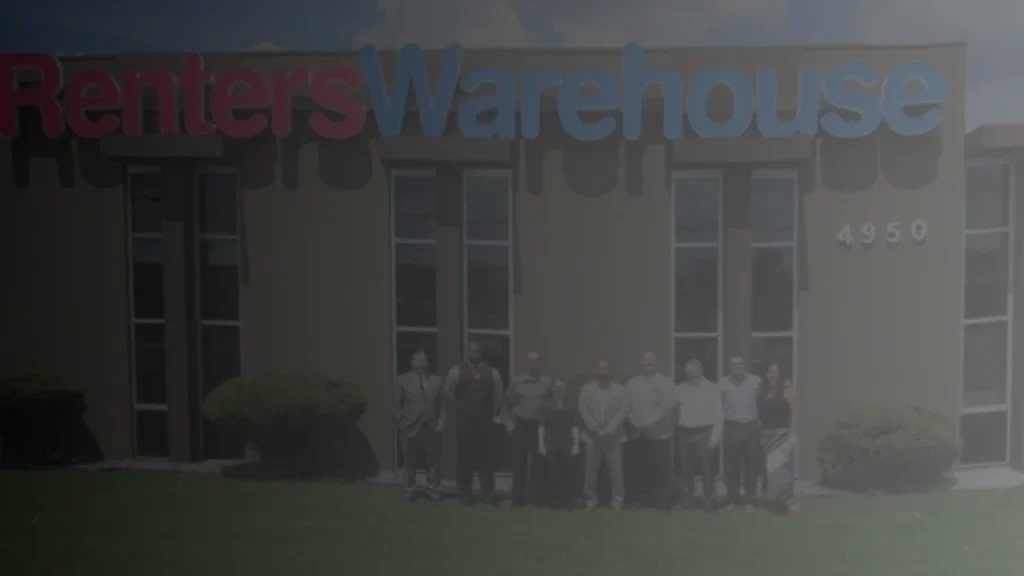
Are You Part of the Renters Warehouse Security Deposit Settlement?
Here’s exactly how to know if this case includes you.
- Anyone who rented a Minnesota property managed by Renters Warehouse and moved out between May 31, 2019, and July 16, 2024
- Tenants who paid a security deposit and had money deducted from it at move-out
- People listed in Renters Warehouse’s own records as a tenant, even if they didn’t personally sign the lease or never received any of the deposit back
- Anyone who did not previously object to, dispute, or sue over their deposit deduction when it happened
You don’t qualify if you already challenged your deduction directly with Renters Warehouse, the property owner, or a court, or if you’re an officer, director, or affiliate of Renters Warehouse.
Renters Warehouse Tenants Outside Minnesota — Are You Still Covered?
No. This settlement is limited to tenants of Minnesota properties, because the underlying claims are built on Minnesota’s own security deposit and consumer fraud statutes. If Renters Warehouse managed a rental for you in another state, this settlement doesn’t apply, though your state may have its own security deposit law worth asking a tenant attorney about.
Not sure if you qualify for the Renters Warehouse security deposit settlement? A free consultation with a consumer protection attorney can help before the October 30, 2026 deadline to exclude yourself or object.
How Much Can Renters Warehouse Security Deposit Settlement Class Members Get? Exact Amount Not Yet Known
Nobody knows the exact number yet, including the settlement administrator. Payment amounts depend on how many people are in the class, how much was actually deducted from your deposit relative to the deposit’s total value, and how much you were charged in move-out fees. What’s confirmed: $195,000 total fund. Court-approved attorneys’ fees and Class Representative Incentive Awards come out first, and whatever’s left gets split among Settlement Class Members.
Class Counsel plans to ask the court for attorneys’ fees and costs equal to 33% of the fund — roughly $64,350 — plus $7,500 Incentive Awards for each of the two named plaintiffs, Nick Hansen and Meghan Arquette, totaling $15,000. That’s a meaningful share of the fund carved out before any tenant sees a check.
One detail worth knowing: if your share works out to less than $5, you won’t get a check at all — that amount gets redistributed to other class members instead. Also, everyone tied to the same lease is treated as a single “collective” class member, with one check going to whichever tenant is listed as the primary contact on that lease. Roommates who split a deposit may need to sort out how to divide the payment themselves.
Payments over $600 may appear on a 1099. Check with a tax professional.
Given how the fees and incentive awards get carved out first, this was never going to produce large individual checks — but for a deduction you couldn’t dispute any other way at this point, it’s still money you wouldn’t otherwise see.
What Do You Need to Do to Get a Renters Warehouse Settlement Payment?
Nothing, if you’re happy to stay in the settlement. Here’s how it actually works:
- If you’re a Settlement Class Member, you don’t need to file anything — a payment is mailed to you automatically once the settlement gets final approval
- Payments under the $5 minimum aren’t issued at all, so a very small deduction may not result in a check
- If several people shared a lease, only the primary contact on file with Renters Warehouse receives the payment
- If you want out of the settlement instead, to sue on your own, send a written exclusion request by October 30, 2026
- If you want to object to the settlement but stay in it, send a written objection by that same date
- Watch your mail after the December 7, 2026 Final Approval Hearing — that’s when payments become possible, assuming no appeals
There’s no form to fill out and nothing to upload. The only real action items here are exclusion and objection, both due October 30, 2026.
Should Renters Warehouse Class Members Opt Out or Object Before October 30, 2026?
What Opting Out of the Renters Warehouse Settlement Actually Means
Opting out means no payment, but you keep the right to sue Renters Warehouse yourself over the same deposit deduction. You’ll need to mail a signed exclusion letter with your name, address, and a clear statement that you want out, postmarked by October 30, 2026.
How to Object to the Renters Warehouse Settlement
Objecting keeps you in the class while telling the court in writing what you don’t like — the 33% fee request is the obvious candidate. Objections need specific details, including whether you or your attorney have been involved in other class action objections in the past five years, and must be mailed to the Settlement Administrator by October 30, 2026.
Talk to a consumer protection attorney before October 30, 2026 if you’re considering either option.
Renters Warehouse Security Deposit Settlement — Key Dates, 2026
| Milestone | Date |
| Class Period Begins (move-out date) | May 31, 2019 |
| Class Period Ends (move-out date) | July 16, 2024 |
| Exclusion Deadline | October 30, 2026 |
| Objection Deadline | October 30, 2026 |
| Final Approval Hearing | December 7, 2026, 10:00 AM CT |
| Expected Payment Date | UNVERIFIED — payments follow final approval and resolution of any appeals, which the settlement notice says could take more than a year |
Renters Warehouse Security Deposit Settlement — Frequently Asked Questions, No. 24-cv-2670
Do I need a lawyer to receive a payment from the Renters Warehouse settlement?
No. You don’t need a lawyer or a claim form. Class Counsel — Thomas J. Lyons, Jr. of Consumer Justice Center and Ryan D. Peterson of Peterson Legal PLLC — already represents the class, and any eligible payment is mailed automatically.
Is the Renters Warehouse security deposit settlement legitimate?
Yes. It arises from Hansen and Arquette v. Renters Warehouse, LLC, Court File No. 24-cv-2670, pending in the U.S. District Court for the District of Minnesota.
When will Renters Warehouse settlement payments be sent?
Not before the Final Approval Hearing on December 7, 2026, and only after any appeals are resolved — which the settlement notice says could take more than a year.
Do I need to submit a claim form to get paid?
No. This settlement doesn’t use a claim form. If you’re a Settlement Class Member and don’t exclude yourself, a check is mailed to you automatically once the settlement becomes final.
Will my Renters Warehouse settlement payment go on a 1099?
Possibly. Payments over $600 may be reported to the IRS. Check with a tax professional about your specific situation.
Why isn’t my expected payment amount listed anywhere?
Because it depends on the total number of class members and how much was deducted from each person’s deposit — the settlement administrator can’t calculate individual amounts until the class is finalized.
What if my roommate and I split a security deposit?
Only the primary contact listed on the lease in Renters Warehouse’s records receives the payment for that lease, so you may need to work out how to divide it between yourselves.
Can I sue Renters Warehouse individually instead of accepting the settlement payment?
Yes, but only if you exclude yourself by October 30, 2026. Doing nothing means giving up that right in exchange for whatever payment you’re entitled to.
Researched and written by Israr Ahmad, legal content researcher and founder of AllAboutLawyer.com. All facts verified against the official settlement website and FAQ on September 19, 2026. Last Updated: September 19, 2026.
Disclaimer: This article is for informational purposes only and does not constitute legal advice. Laws vary by state and individual circumstances differ. For advice about your specific situation, consult a qualified attorney.
Sources Used in This Renters Warehouse Security Deposit Settlement Article
- Official Settlement Website — Hansen and Arquette v. Renters Warehouse, LLC: https://www.renterswarehousesecuritydepositclassaction.com/
- Official FAQ Page (settlement terms, Class Counsel, fee request): https://www.renterswarehousesecuritydepositclassaction.com/faq.aspx
- Class Action Settlement Agreement: https://www.renterswarehousesecuritydepositclassaction.com/pdf/sa.pdf
- Class Notice: https://www.renterswarehousesecuritydepositclassaction.com/pdf/notice.pdf
- Important Documents Page (Amended Complaint, Preliminary Approval Order): https://www.renterswarehousesecuritydepositclassaction.com/documents.aspx
About the Author
Israr Ahmad is a legal content researcher with 4+ years of experience covering class action settlements and consumer rights cases. He has researched and published coverage of 2,500+ settlements using verified court records, settlement administrator filings, and government sources. Learn more about Israr.