
L’Oréal and Revlon Face Talc and Mesothelioma Questions, FDA Warning, Lawsuits and What Consumers Should Know
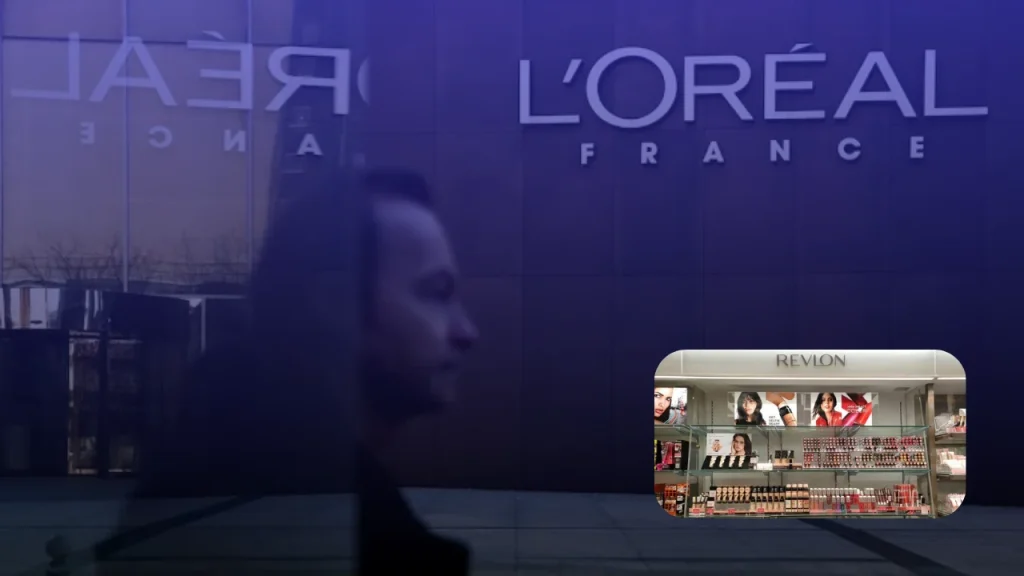
L’Oréal and Revlon are drawing fresh scrutiny over talc, a mineral used in some cosmetics and other consumer products. Talc deposits can occur near naturally occurring asbestos, which creates a contamination risk if the mineral is not properly tested. Mesothelioma, a rare cancer, is strongly associated with asbestos exposure.
This is not one new lawsuit against both companies. Recent coverage brings together three separate developments: product-liability lawsuits against L’Oréal’s U.S. business, an FDA warning letter to Revlon about talc testing, and a reported plan by L’Oréal’s U.S. unit to explore moving its talc liabilities into a separate entity. Each must be kept apart so that allegations or a reported business strategy are not mistaken for a court ruling or a consumer settlement.
No consumer class settlement, claim form or claim deadline has been verified. The lawsuits are individual or multi-plaintiff product-liability cases, and the FDA letter is a regulatory warning, not a settlement.
Quick Facts: L’Oréal and Revlon Talc Developments
| Detail | What the records show |
| Companies | L’Oréal USA (and related subsidiaries) and Revlon Group Holdings, LLC |
| Core allegations | Asbestos contamination in certain talc-containing products allegedly linked to mesothelioma and other asbestos-related diseases |
| L’Oréal lawsuits | About 760 proceedings pending in the U.S. as of June 30, 2026, up from about 620 at the end of 2025, per L’Oréal’s Half-Year Financial Report 2026 |
| L’Oréal trial status | None of the cases involving its subsidiaries had gone to trial as of June 30, 2026; some claims dismissed, others settled; L’Oréal strongly contests the claims and has recorded provisions |
| Regulatory action (Revlon) | FDA Warning Letter 320-26-89 (MARCS-CMS 722596), June 2, 2026, to Revlon’s Oxford, North Carolina facility |
| FDA’s main finding | Revlon had not demonstrated adequate testing of talc used in certain over-the-counter drug products |
| Did the FDA find asbestos in a Revlon product? | The letter does not say asbestos was found in a finished Revlon product |
| L’Oréal liability-transfer plan | Reported by the Wall Street Journal and Reuters (October 5, 2026); no completed transaction confirmed |
| Single case number | None. This is separate cases and a regulatory action. |
| Official settlement website | None. No settlement administrator or program exists. |
| Claim form link | None |
| Consumer claim deadline | None |
| Official FDA letter | FDA Warning Letter to Revlon Group Holdings, LLC (June 2, 2026) |
What the FDA Found at Revlon’s Oxford, North Carolina Facility
The FDA’s June 2, 2026 warning letter identified deficiencies in Revlon’s Current Good Manufacturing Practice (CGMP) controls for certain over-the-counter drug products containing talc as an inactive ingredient, made at its Oxford facility (FEI 1021184). Its key findings:
- Revlon did not demonstrate that it tested incoming talc for asbestos at the facility. It had indicated that it tested talc for asbestos, but the information provided showed supplier testing, not Revlon’s own.
- It relied on supplier testing and certificates of analysis without establishing, through validation, that the results were reliable.
- Other concerns included identity testing, specifications, oversight by the quality unit and distribution practices near product expiry.
The FDA explained that asbestos is a potential contaminant in talc and a known human carcinogen when inhaled, and it identified certain products as higher risk because of possible inadvertent inhalation. The letter required Revlon to provide test results and a plan to fix its quality-control problems, and asked for an update on reformulating certain products to move away from talc.
What the letter does not establish: The FDA did not say it confirmed asbestos in a finished Revlon product. The finding concerns the company’s failure to show adequate testing and compliance. That is serious, but it is not a finding that any product caused mesothelioma. The letter covers certain over-the-counter drug products made at the Oxford facility, and it should not be read as a finding about every Revlon cosmetic or every talc-based product.
Revlon has said publicly that it is cooperating with the FDA, stands by its products and is moving away from talc formulations in relevant products. Members of Congress have also written to Revlon leadership seeking more information and remediation plans.
What Is Known About L’Oréal’s Talc Lawsuits?
L’Oréal’s U.S. subsidiaries face product-liability lawsuits alleging that certain talc-containing cosmetics contained asbestos and caused mesothelioma or other asbestos-related illness. In its Half-Year Financial Report 2026, L’Oréal says about 760 such proceedings were pending in the U.S. on June 30, 2026. It also says that:
- It strongly contests the claims.
- None of the cases involving its subsidiaries has gone to trial.
- Some claims have been dismissed and others settled.
- It has recorded financial provisions.
Plaintiffs allege exposure through personal use of talc-based cosmetics. A lawsuit is not proof that a product contained asbestos or caused a person’s disease. Each case turns on its own evidence. No single case name or docket number applies to this story.
Related article: Tahnya Hyung Shafer Sentenced to 33 Months for Wire Fraud After Stealing Over $1 Million From Spokane Industries, Which Is Now in Chapter 11
L’Oréal’s Reported Plan to Move Talc Liabilities
According to reporting by the Wall Street Journal, confirmed in Reuters coverage dated October 5, 2026, L’Oréal’s U.S. unit has retained Weil, Gotshal & Manges and Ducera Partners to explore options for rising U.S. tort liabilities. One approach reportedly under consideration would move the liabilities into a separate corporate entity that could be sold to an outside investor, similar to an earlier Honeywell asbestos-liability transfer.
L’Oréal and the advisers have not publicly confirmed any completed transaction. It would be premature to say L’Oréal has transferred liabilities, filed for bankruptcy or reached a settlement. If a structure like this were pursued, it would not automatically make consumers eligible for compensation, and what it meant for existing and future claims would depend on the actual transaction, applicable law and any court approval.
Which Laws and Rules Matter?
Federal Food, Drug, and Cosmetic Act and CGMP Rules
Under the Federal Food, Drug, and Cosmetic Act, a drug made in violation of CGMP requirements is considered adulterated (21 U.S.C. § 351(a)(2)(B)). The CGMP regulations for finished pharmaceuticals are at 21 C.F.R. Parts 210 and 211. They require a quality control unit (§ 211.22), testing of components for identity, purity, strength and quality before use (§ 211.84), and, where a manufacturer relies on a supplier’s analysis, establishing the reliability of the supplier’s results through appropriate validation (§ 211.84(d)(2)). The Revlon letter’s findings track these requirements. A warning letter is not a final agency action and does not itself impose penalties, but failing to correct violations can lead to further enforcement.
Cosmetics Law and MoCRA
Cosmetics are regulated differently from drugs. The Modernization of Cosmetics Regulation Act of 2022 (MoCRA) expanded the FDA’s authority over cosmetics, including facility registration, product listing, safety substantiation and adverse event reporting, and directed the FDA to set asbestos testing standards for talc-containing cosmetics. The FDA has proposed testing-method rules, and their current status should be checked on the FDA’s website.
State Product Liability Law
Individual lawsuits are brought under state law. Common claims include strict product liability (see Restatement (Second) of Torts § 402A), negligence, failure to warn and, for deaths, wrongful death. A plaintiff generally must prove which product they used, the length and circumstances of use, that the product contained asbestos, the diagnosis and that the exposure caused the illness. Defendants often point to other possible asbestos exposures.
Statutes of Limitation and Repose
Time limits vary by state, by whether the claim is for personal injury or wrongful death, and by when the person was diagnosed or discovered the cause. Mesothelioma can take decades to appear, so discovery rules are often central. Some states have repose statutes that can bar claims regardless of discovery. Anyone with a diagnosis should get legal advice promptly.
Bankruptcy Law and Asbestos Trusts
Section 524(g) of the Bankruptcy Code (11 U.S.C. § 524(g)) lets a company facing asbestos claims channel present and future claims to a trust. Two developments shape how liability transfers are viewed. In Harrington v. Purdue Pharma L.P., 603 U.S. 204 (2024), the Supreme Court held that bankruptcy courts cannot approve nonconsensual releases of third parties. Separately, “Texas two-step” strategies used in talc litigation by Johnson & Johnson’s units were rejected by the courts, including the Third Circuit’s 2023 dismissal of the LTL bankruptcy for lack of financial distress. These decisions mean any L’Oréal separation could face challenge, but nothing here has been filed.
Fraudulent Transfer Law
If liabilities are moved to a separate entity, creditors and claimants may challenge the transfer under state voidable-transaction laws or 11 U.S.C. § 548 if it leaves the original company unable to meet its obligations.
Revlon’s Earlier Bankruptcy
Revlon filed for Chapter 11 in 2022. Some later-diagnosed claimants have argued on appeal that asbestos claims should not be strictly time-barred and that trusts for future claims are appropriate because of disease latency. Those issues are separate from the 2026 FDA letter.
Can Talc Cause Mesothelioma?
Talc and asbestos are different minerals, but they can occur near one another in nature. If talc is contaminated with asbestos, exposure may create a health risk, and asbestos exposure is an established cause of mesothelioma. But talc in a product does not by itself prove the product contained asbestos, and a diagnosis alone does not show which exposure caused the disease.
In a lawsuit, evidence may include product labels and formulas, historical testing, purchase and use records, expert testimony, medical records and evidence of other exposures. Formulas, manufacturing sites, suppliers and testing differ by product and period, so the FDA’s Revlon warning should not be generalized to every product from either company.
What This Means for Consumers
The developments do not show that every user of a talc-based product was exposed to asbestos, got ill or qualifies for compensation. If you are concerned:
- Identify the product. Record its name, type, approximate purchase dates and any packaging or ingredient information.
- Preserve records. Keep receipts, photographs, packaging and anything that helps identify the product.
- Do not assume every product is affected. The FDA letter concerns specific manufacturing and testing problems at one facility.
- Get medical advice for health concerns. News about lawsuits cannot diagnose asbestos exposure or mesothelioma.
- Get legal advice if you have a diagnosis. An attorney experienced in asbestos or talc litigation can review your exposure history, possible defendants, evidence and filing deadlines.
- Write down your medical history. Note diagnoses, treatment and years of product use.
- Don’t wait. Time limits vary by state and can be short after diagnosis.
Prior settlements or dismissals in some L’Oréal cases do not resolve or value anyone else’s claim. The National Cancer Institute and the American Cancer Society have information on mesothelioma diagnosis and treatment.
How to Tell Whether a Talc Settlement Is Real
No verified settlement claim form or payment deadline exists for these developments. Before giving personal information to a site advertising compensation, check that it names a real court case, an official settlement administrator and a court-approved notice or agreement. A news story about lawsuits is not proof that a settlement exists. For an individual lawsuit, the court docket and complaint confirm the parties, allegations and status. For background, see our guide to mesothelioma lawsuits in 2026, including verdicts, settlements and the J&J talc fight.
Key Dates
| Date | Development |
| 2022 | Revlon filed for Chapter 11 bankruptcy |
| End of 2025 | About 620 U.S. talc proceedings pending against L’Oréal subsidiaries, per L’Oréal |
| June 2, 2026 | FDA issued Warning Letter 320-26-89 to Revlon over talc testing at its Oxford, NC facility |
| June 30, 2026 | About 760 pending proceedings; none tried (L’Oréal Half-Year Financial Report 2026) |
| October 5, 2026 | Reuters coverage of Wall Street Journal reporting that L’Oréal’s U.S. unit hired restructuring advisers |
| October 9, 2026 | Mesothelioma.net published its report on concerns involving L’Oréal and Revlon |
| Claim deadline | None. No consumer settlement has been verified. |
Frequently Asked Questions
Did the FDA find asbestos in Revlon products?
No. The June 2, 2026 letter found inadequate testing and validation of supplier results for talc used in certain over-the-counter drug products. It does not say asbestos was detected in a finished product.
Is L’Oréal being sued over talc and mesothelioma?
Yes. L’Oréal reports about 760 pending U.S. proceedings as of June 30, 2026. It contests them, and none had gone to trial.
Is there a L’Oréal or Revlon mesothelioma settlement consumers can claim?
No. No settlement administrator, claim form or court-approved consumer settlement has been verified. The lawsuits are individual or multi-plaintiff actions.
Has L’Oréal admitted liability or paid a global settlement?
No. L’Oréal says it strongly contests the claims. Some individual claims were dismissed or settled.
Did L’Oréal confirm it will transfer its talc liabilities?
No. The plan has been reported but not confirmed, and no completed transaction has been announced.
Could a liability transfer affect my claim?
Possibly, depending on the structure, any court involvement and the timing of your diagnosis. It is a fact-specific question for an attorney.
Can someone sue L’Oréal or Revlon after a mesothelioma diagnosis?
Potentially, depending on the evidence and state law. A person must show product use, exposure, causation and who is responsible, and file within the deadline.
Does using talcum powder mean someone will develop mesothelioma?
No. Using a product with talc does not show it contained asbestos or that the user was exposed. Diagnosis and cause require individual assessment.
Where can I find the primary documents?
The FDA warning letter on fda.gov, L’Oréal’s Half-Year Financial Report 2026, and individual case dockets on PACER or in state courts.
Disclaimer: This article provides general legal and health information and is not legal or medical advice. AllAboutLawyer.com is an independent legal information website, not a law firm, and does not provide legal referrals. Allegations in lawsuits are not established facts unless proved or resolved. Laws and case status change, so verify with primary court and regulatory sources and consult a licensed attorney about your situation.
About the author: Researched and written by Israr Ahmad, legal content researcher at AllAboutLawyer.com. Coverage focuses on court filings, official government announcements, settlement documents and legal developments affecting consumers.
Sources
- U.S. Food and Drug Administration, “Revlon Group Holdings, LLC, Warning Letter 320-26-89 (MARCS-CMS 722596),” June 2, 2026. https://www.fda.gov/inspections-compliance-enforcement-and-criminal-investigations/warning-letters/revlon-group-holdings-llc-722596-06022026
- L’Oréal, Half-Year Financial Report 2026, note on disputes over products that may contain talc in the United States. https://www.loreal-finance.com/
- Reuters, coverage of Wall Street Journal reporting on L’Oréal’s engagement of Weil, Gotshal & Manges and Ducera Partners, October 5, 2026.
- Mesothelioma.net, “Mesothelioma Fears Hit L’Oréal and Revlon,” October 9, 2026. https://mesothelioma.net/mesothelioma-news/mesothelioma-fears-hit-loreal-and-revlon/
- 21 U.S.C. § 351 and 21 C.F.R. Parts 210 and 211 (CGMP for finished pharmaceuticals). https://www.ecfr.gov/current/title-21/chapter-I/subchapter-C/part-211
- Modernization of Cosmetics Regulation Act of 2022 (MoCRA), 21 U.S.C. § 364 et seq., and FDA cosmetics talc information. https://www.fda.gov/cosmetics
- 11 U.S.C. §§ 524(g) and 548. https://www.law.cornell.edu/uscode/text/11/524
- Harrington v. Purdue Pharma L.P., 603 U.S. 204 (2024).
- In re LTL Management LLC, Third Circuit decision (2023).
- Restatement (Second) of Torts § 402A.
- National Cancer Institute and American Cancer Society, mesothelioma information. https://www.cancer.gov/types/mesothelioma
- PACER, Public Access to Court Electronic Records. https://pacer.uscourts.gov/
Researched and written by Israr Ahmad, Legal Content Researcher at AllAboutLawyer.com.
Last updated: October 10, 2026
About the Author
Israr Ahmad is a legal content researcher with 4+ years of experience covering class action settlements and consumer rights cases. He has researched and published coverage of 2,500+ settlements using verified court records, settlement administrator filings, and government sources. Learn more about Israr.