
Ready Set Food Lawsuit, SpoonfulONE Patent Case, FDA Warning Letter, Heavy-Metal Testing Concerns and Current Status
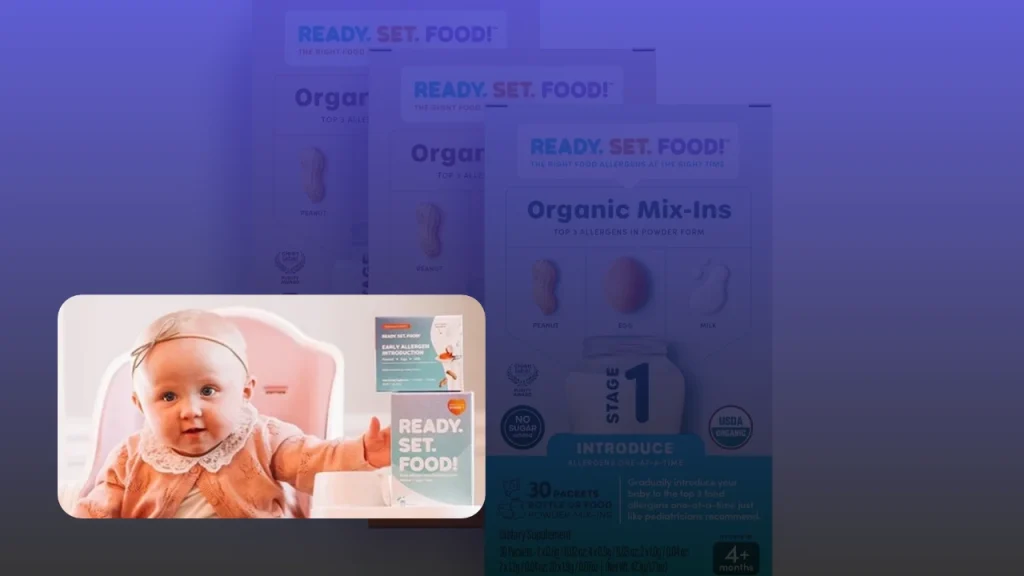
Ready, Set, Food! (also written Ready Set Food or Ready. Set. Food!) is an early allergen introduction brand operated by Prollergy Corporation. Its products are mix-ins and oatmeal that parents add to a baby’s bottle or food to introduce common allergens such as peanut, egg, milk, tree nuts, sesame and wheat.
Online searches for a “Ready Set Food lawsuit” mix together three different events, and they are easy to confuse:
- A business lawsuit. SpoonfulONE’s parent, BEFORE Brands, and Stanford University sued Prollergy in federal court in Delaware in December 2021. The case was dismissed with prejudice on March 2, 2023, and no court ever found infringement or false advertising.
- An FDA warning letter. In October 2020 the FDA warned Prollergy about allergy-prevention claims and labeling problems. A warning letter is not a lawsuit.
- A heavy-metals transparency complaint. In March 2025, Consumer Reports questioned how the company published baby-food testing results. It did not claim that any product was unsafe.
As of November 13, 2026, no Ready, Set, Food! consumer class action settlement, claim form or payment deadline was identified in the court and government records reviewed.
Ready Set Food Lawsuit: Quick Facts
| Detail | Verified information |
| Company | Prollergy Corporation, doing business as Ready, Set, Food! |
| Main lawsuit | BEFORE Brands, Inc. d/b/a SpoonfulONE and Stanford University v. Prollergy Corporation |
| Case number | 1:21-cv-01706 |
| Court | U.S. District Court, District of Delaware |
| Filed | December 2, 2021 |
| Second amended complaint | August 18, 2022 |
| Products challenged | Stage 3 Mix-Ins and Organic Baby Oatmeal |
| Claims | Patent infringement, false advertising, deceptive trade practices |
| Patents | U.S. Patent Nos. 9,731,003 and 11,278,615 |
| Judge at dismissal | U.S. Magistrate Judge Christopher J. Burke |
| Outcome | Dismissed with prejudice, March 2, 2023 (docket status: dismissed, settled) |
| FDA warning letter | October 9, 2020 (WL 606913) |
| Consumer Reports heavy-metals letter | March 13, 2025 |
| Consumer class action settlement | None verified |
| Official settlement website | None exists; there is no consumer settlement |
| Consumer claim deadline | None |
The public federal court docket shows the patent case closed in March 2023.
Why Did SpoonfulONE and Stanford University Sue Ready, Set, Food! in Delaware Federal Court?
SpoonfulONE (sold by BEFORE Brands) and Stanford University alleged that Ready, Set, Food! used patented technology for mixed-allergen compositions. Both brands sell products meant to help parents introduce allergens during infancy.
The second amended complaint named two patents:
- U.S. Patent No. 9,731,003, titled Mixed Allergen Compositions and Methods for Using the Same.
- U.S. Patent No. 11,278,615, covering related mixed-allergen technology.
The complaint targeted the Stage 3 Mix-Ins and Organic Baby Oatmeal, which contain mixtures of allergenic ingredients including peanut, walnut, cashew, almond, milk, wheat and sesame. The plaintiffs asked for money damages and an injunction.
What false advertising claims did SpoonfulONE make against Ready, Set, Food!?
The August 18, 2022 amended complaint added claims about advertising. SpoonfulONE alleged that Ready, Set, Food! misstated how much allergen protein its Stage 3 product delivers, including a claim that a weekly serving schedule supplied about two grams of protein per allergen apart from egg white. The plaintiffs said consumers could pick Ready, Set, Food! over SpoonfulONE based on that information.
The complaint relied on three legal sources:
- 35 U.S.C. § 271: patent infringement.
- 15 U.S.C. § 1125(a)(1)(B): false advertising under the Lanham Act.
- 6 Del. C. § 2532: the Delaware Deceptive Trade Practices Act.
This was a dispute between competing businesses and a university. Parents did not file it, and it did not allege that any child had an allergic reaction. None of the allegations was proven in court.
How Did the Ready Set Food Lawsuit End in March 2023?
According to the docket, the case ended in a stipulated dismissal:
- December 2, 2021: BEFORE Brands files its patent infringement complaint.
- February 25, 2022: An amended complaint is filed.
- August 18, 2022: The plaintiffs file a second amended complaint adding the advertising claims.
- September 8, 2022: Prollergy moves to dismiss for failure to state a claim.
- December 2022 to February 2023: The parties ask for, and receive, stays of the case.
- March 1, 2023: The plaintiffs file a stipulation of dismissal.
- March 2, 2023: Judge Burke approves it, and the case is closed.
The stipulation referenced an agreement dated February 28, 2023 among the plaintiffs, Prollergy and Société des Produits Nestlé S.A. All claims were dismissed with prejudice, and each side bore its own fees and costs.
What does “dismissed with prejudice” mean in the Prollergy case?
A dismissal with prejudice generally stops the same plaintiffs from refiling the same claims. It does not mean the court decided whose technology was better, that Ready, Set, Food! infringed a patent or that the advertising claims were true. It also does not mean any consumer was paid.
The public dismissal record does not disclose a consumer settlement fund, a per-customer payment or a claim process.
What Did the FDA Warning Letter to Prollergy Corporation Say?
On October 9, 2020, the FDA sent Warning Letter WL 606913 to Prollergy Corporation after reviewing the Stage 1 product labeling and company website. The agency’s main concerns were:
- Statements suggesting early allergen introduction could reduce food allergies by as much as 80%. The FDA treated those as disease-prevention claims that had not been authorized.
- Under the Federal Food, Drug, and Cosmetic Act, a product marketed to prevent a disease can be treated as an unapproved new drug (21 U.S.C. §§ 321(g)(1) and 355(a)) or as a food with an unauthorized health claim (21 U.S.C. § 343(r)).
- Labeling problems, including nutrition information, package quantity statements, manufacturer identification and dietary supplement labeling.
The full FDA warning letter is public.
Did the FDA say Ready, Set, Food! products were unsafe?
No. The letter was about marketing claims and labeling. A warning letter is an agency notice that asks a company to correct problems. It is not a recall, an injunction, a criminal case or an order to pay consumers. No public record reviewed shows the FDA took further enforcement such as a seizure or injunction after the company responded.
Did the FDA Later Allow Allergy Risk-Reduction Claims for Early Peanut Introduction?
In part, yes. On August 10, 2021, Prollergy submitted a health-claim notification to the FDA about introducing allergenic foods to infants and the risk of developing food allergies.
The FDA later described qualified wording that could be used after December 8, 2021, if the product and claim met the requirements. In general, the claim says that introducing age-appropriate peanut-containing foods may reduce the risk of peanut allergy in infants with severe eczema, egg allergy or both, and tells caregivers to consult a healthcare provider. The claim has to match the scientific evidence and the infant population it covers.
That is a much narrower claim than saying a product prevents most food allergies. The FDA did not approve every allergy statement or say the products remove the chance of a reaction. See the FDA’s health-claim notification response.
What Heavy-Metal Concerns Did Consumer Reports Raise About Ready, Set, Food!?
On March 13, 2025, Consumer Reports sent a letter to Ready, Set, Food! CEO Daniel Zakowski about how the company publishes testing results for lead, arsenic, cadmium and mercury. Consumer Reports said shoppers had to enter a product lot code to see results, which makes it hard to compare products before buying and may not satisfy California’s disclosure law.
The letter was about access to testing information. It did not find that any Ready, Set, Food! product contained unlawful levels of heavy metals.
Ready, Set, Food! states on its product safety and testing page that it uses independent laboratories and tests for heavy metals and other contaminants. Those are the company’s statements, not independent findings.
What does California Assembly Bill 899 require from baby food companies?
California Assembly Bill 899 requires covered baby-food manufacturers to test finished products for arsenic, cadmium, lead and mercury and to disclose results publicly. Testing began January 1, 2024, and website disclosure began January 1, 2025. The California Department of Public Health explains the rules in its AB 899 guidance.
On March 6, 2026, California Attorney General Rob Bonta issued an enforcement advisory reminding baby-food companies of these duties, including concerns about sites that require package-specific codes. The advisory did not find that Ready, Set, Food! broke the law. Whether the law covers a given product depends on how it is classified.
Other laws sit alongside AB 899:
- California Proposition 65 (Health and Safety Code § 25249.6) requires warnings for certain exposures to listed chemicals, including lead, cadmium, arsenic and mercury compounds, subject to its safe-harbor levels and exemptions.
- FDA’s “Closer to Zero” program has produced final guidance setting action levels for lead in foods for babies and young children. Action levels are guidance, not binding rules.
For another 2026 government matter about baby-food testing disclosures, see Plum Organics Heavy Metal Testing, Texas v. Plum PBC Agreement Requires Continued Test Result Disclosures.
Are Ready, Set, Food! Products Under an FDA Recall in 2026?
No FDA recall specific to Ready, Set, Food! was identified in the official materials reviewed. That is not a guarantee about any particular package.
A lawsuit, a warning letter and a recall are three different things. A lawsuit alleges a legal wrong. A warning letter points to compliance problems. A recall pulls or corrects specific products. To check a package, look up the lot number in the FDA recalls database and contact the manufacturer.
What Federal Food Labeling Laws Apply to Ready, Set, Food! Allergen Products?
Allergen mix-ins are regulated more heavily than most foods. The main federal laws are:
- Federal Food, Drug, and Cosmetic Act (FDCA). 21 U.S.C. § 343 covers misbranded food, including false or misleading labeling. 21 U.S.C. § 343(r) covers health claims. 21 C.F.R. §§ 101.14 and 101.70 set the rules for authorized health claims.
- Food Allergen Labeling and Consumer Protection Act of 2004 (FALCPA). It requires labels to clearly identify major food allergens.
- FASTER Act of 2021. It made sesame the ninth major food allergen, effective January 1, 2023. That matters for products that contain sesame.
- Federal Trade Commission Act, 15 U.S.C. § 45. It prohibits unfair or deceptive advertising. The FTC expects health-related claims to rest on competent and reliable scientific evidence.
Enforcement of the FDCA belongs mainly to the government under 21 U.S.C. § 337(a). A warning letter does not create a private right for consumers to sue under the FDCA.
Can Parents Sue Ready, Set, Food! Over Misleading Advertising or an Allergic Reaction?
Possibly, but it depends on the facts, the statements made when the product was bought and the state’s law. A buyer would generally need to show a material misrepresentation, a legally recognized loss and a law that allows recovery.
Consumer-protection laws a buyer might look at:
- California Unfair Competition Law (Business and Professions Code § 17200) covers unlawful, unfair or fraudulent practices.
- California False Advertising Law (§ 17500) covers untrue or misleading advertising.
- California Consumers Legal Remedies Act (Civil Code § 1750 and following) covers deceptive practices in consumer sales.
- Other states’ consumer-protection statutes, which differ on standing, damages and proof.
Legal obstacles:
- The Lanham Act false-advertising claim used in the Delaware case is for commercial injury. Under Lexmark International, Inc. v. Static Control Components, Inc. (2014), ordinary consumers generally cannot bring it.
- The FDCA has an express preemption provision, 21 U.S.C. § 343-1, that can block state labeling requirements that differ from federal ones. Courts apply it case by case.
- A group claim would need to meet class-certification rules under Federal Rule of Civil Procedure 23, or California’s class rules, and large multistate cases can also involve the Class Action Fairness Act (28 U.S.C. § 1332(d)).
Deadlines in California (general information, not advice for a specific buyer):
- Unfair Competition Law claims generally have four years (Business and Professions Code § 17208).
- False Advertising Law claims generally have three years (Code of Civil Procedure § 338(a)).
- Consumers Legal Remedies Act claims generally have three years (Civil Code § 1783).
- Personal injury claims generally have two years (Code of Civil Procedure § 335.1), and a child’s deadline may be tolled until adulthood (Code of Civil Procedure § 352).
If a child had an allergic reaction, get medical care first. Severe symptoms such as trouble breathing or throat swelling need emergency treatment. A reaction alone does not prove a product was defective. A product-liability claim would need proof about the specific product, its warnings, the child’s circumstances and what caused the injury. Parents should keep packaging, lot numbers, receipts and medical records.
The Delaware patent case does not show that Ready, Set, Food! products caused allergic reactions or that parents are owed compensation. For a different labeling dispute, see Target Mac and Cheese Lawsuit, Good & Gather and Market Pantry “No Preservatives” Claims Challenged in Vaughan v. Target Corp.
Is There a Ready Set Food Class Action Settlement or Claim Form?
No verified consumer settlement or public claim form comes from the SpoonfulONE case. That case was between businesses and a university and ended in 2023. A private agreement among companies is not a court-approved consumer class settlement.
For comparison, see Perrigo $10 Million Baby Formula Settlement, Who May Be Covered, Claim Status and What Happens Next, a separate consumer settlement with its own process. Do not enter bank or personal details on a site promising “guaranteed” Ready, Set, Food! lawsuit payments.
Was There Another Lawsuit Involving Prollergy Corporation, Quezada v. Prollergy?
Earlier research lists a case called Quezada v. Prollergy Corporation, No. 1:21-cv-04976 (S.D.N.Y.), filed in 2021 as a proposed class action under the Americans with Disabilities Act about website accessibility. We could not confirm the docket or how that case ended, so it should not be described as an active settlement or as proof of a violation. Check PACER for the current status.
It is unrelated to the patent case or to the safety of the products.
Is Ready, Set, Food! the Same Company as Ready Pac Foods?
No. Searches sometimes surface Ready Pac Foods, a different company that makes produce and salad products. It has wage-and-hour litigation that has nothing to do with Ready, Set, Food! or Prollergy Corporation.
Frequently Asked Questions About the Ready Set Food Lawsuit
Is Ready, Set, Food! being sued in 2026?
The main verified lawsuit, SpoonfulONE and Stanford University v. Prollergy Corporation, was dismissed in March 2023. No new 2026 consumer class action was identified in the records reviewed.
Why did SpoonfulONE sue Ready, Set, Food!?
SpoonfulONE and Stanford alleged patent infringement involving mixed-allergen products, plus false advertising and deceptive trade practices in an amended complaint.
Did Ready, Set, Food! lose the lawsuit?
No trial judgment found infringement. The parties dismissed all claims with prejudice, and each side paid its own costs.
Did the FDA warn Ready, Set, Food!?
Yes. The FDA sent Warning Letter WL 606913 to Prollergy Corporation on October 9, 2020, about unauthorized allergy-prevention claims and labeling problems.
Did the FDA later approve Ready, Set, Food! claims?
The FDA described qualified peanut-allergy risk-reduction wording after reviewing a 2021 health-claim notification from the company. That was not a blanket approval of all its marketing.
Do Ready, Set, Food! products contain dangerous heavy metals?
Consumer Reports raised a concern about how test results are published. It did not establish that any product contained dangerous levels.
Are the Stage 3 Mix-Ins part of the lawsuit?
Yes. The Stage 3 Mix-Ins and Organic Baby Oatmeal were named in the 2022 amended complaint.
Can I get a refund through the Ready Set Food lawsuit?
No consumer claim process exists for the resolved SpoonfulONE case. Ordinary refunds depend on the seller’s policies and consumer law.
Is there a settlement payment deadline?
No consumer settlement deadline has been verified.
Are Ready, Set, Food! products safe for babies with food allergies?
A lawsuit does not answer that medical question. Babies with known or suspected food allergies, severe eczema or other high-risk conditions should see a pediatrician or allergist before allergens are introduced.
Bottom Line: What Parents Should Know About the Ready Set Food Lawsuit
The main case, SpoonfulONE and Stanford University v. Prollergy Corporation, ended with a dismissal with prejudice on March 2, 2023. No court found infringement, and no consumer payout was created. The FDA’s October 2020 warning letter was about specific claims and labeling, and its 2021 health-claim review later allowed narrow, carefully worded peanut-allergy statements. Consumer Reports’ 2025 letter was about transparency in testing results, not a finding of harm.
There is no verified Ready, Set, Food! consumer class action settlement, claim form or payment deadline as of November 13, 2026. Parents should rely on FDA information, product lot records and their child’s doctor, not on an old business lawsuit.
Sources and legal references
Court and government sources
- Federal docket: BEFORE Brands, Inc. v. Prollergy Corporation, No. 1:21-cv-01706
- Second Amended Complaint, August 18, 2022
- FDA Warning Letter to Prollergy Corporation, October 9, 2020
- FDA Health-Claim Notification Response
- California Department of Public Health: AB 899 Requirements
- California Attorney General: March 6, 2026 Enforcement Advisory
Other sources
- Consumer Reports Letter to Ready, Set, Food!, March 13, 2025
- Ready, Set, Food! company testing and safety statements
Disclaimer: AllAboutLawyer.com provides general legal information, not legal or medical advice. Allegations in lawsuits are not proven facts unless established in court or admitted.
Researched and written by Israr Ahmad, legal content researcher and founder of AllAboutLawyer.com. All facts verified against the federal court docket for BEFORE Brands, Inc. v. Prollergy Corporation (D. Del. No. 1:21-cv-01706), the FDA’s warning letter and health-claim response, the Consumer Reports letter and California’s official AB 899 materials, as of November 13, 2026. Last Updated: November 13, 2026.
About the Author
Israr Ahmad is a legal content researcher with 4+ years of experience covering class action settlements and consumer rights cases. He has researched and published coverage of 2,500+ settlements using verified court records, settlement administrator filings, and government sources. Learn more about Israr.