
PETA’s Lawsuit Against the American Kennel Club, Why It Was Filed and Why a Judge Threw It Out
PETA sued the American Kennel Club in 2025, arguing that the AKC’s official breed standards force breeders to produce dogs with physical traits that cause lifelong suffering. A New York judge dismissed the case on April 7, 2026, ruling that the state law PETA invoked was misapplied. This is not a class action and there is no settlement. This article explains what PETA alleged, why the case was thrown out, and what it means for dog owners and buyers going forward.
Quick Facts
| Field | Detail |
| Plaintiff | PETA (People for the Ethical Treatment of Animals) |
| Defendant | American Kennel Club (AKC) |
| Lawsuit Filed | 2025 |
| Case Dismissed | April 7, 2026 |
| Presiding Judge | New York State Judge David B. Cohen |
| Reason for Dismissal | PETA lacked legal standing under the state law it invoked |
| Breeds at Issue | French bulldogs, bulldogs, Chinese shar-peis, dachshunds, pugs |
| What PETA Wanted | Court order to stop AKC from using those breed standards |
| AKC Response | Hailed dismissal; says it prioritizes canine health |
| PETA’s Next Move | Lawyers assessing remaining legal options |
| Settlement | None — case was dismissed |
Where Things Stand Right Now
- State Judge David B. Cohen filed his decision on Monday, April 7, 2026, dismissing the case without opining on the dog health issues at the heart of it.
- Following the dismissal, PETA announced its lawyers were assessing all available legal avenues.
- The underlying debate — whether AKC breed standards harm dogs — remains unresolved by any court. The dismissal was purely procedural, not a ruling on the merits of PETA’s animal welfare claims.
What This Lawsuit Was About
If you own a French bulldog, pug, English bulldog, dachshund, or Chinese shar-pei — or you’ve ever bought one — this case is directly relevant to you. It targets the rulebook that shapes how those dogs are bred.
The American Kennel Club’s Official Breed Standards — which the AKC describes as “blueprints” for each breed — specifically require physical features that PETA argues leave many dogs crippled, in almost constant pain, and in some cases facing early death.
Related article: Tyrese Maxey’s Christmas Eve House Fire Lawsuit: What Happened and How It Ended
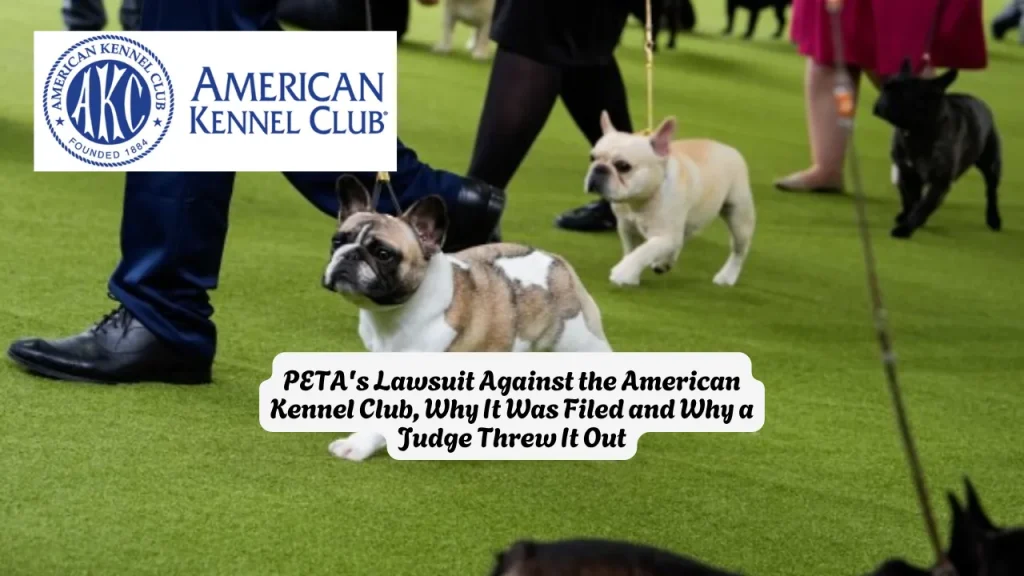
PETA’s core argument was simple: the AKC profits from setting those standards, breeders follow them to win dog shows and sell puppies, and the dogs pay the price with their health.
The AKC earned nearly $38 million from registration fees for dogs and litters of puppies in 2023. PETA argued those profits come directly from a system that incentivizes breeding dogs for looks rather than health.
What the AKC Breed Standards Actually Require — and Why PETA Says They’re Harmful
To understand why PETA sued, you need to understand what these breed standards actually say about dogs’ bodies.
French Bulldogs and English Bulldogs
French bulldogs and English bulldogs are required to have narrow hips and unnaturally large, smushed faces according to AKC breed standards. These features are so extreme that bulldogs often cannot mate naturally, and breeders must manually inseminate female dogs. More than 80% of pregnant English bulldogs must undergo surgery to deliver puppies because their hips are too narrow to accommodate their puppies’ unnaturally large skulls.
The surgery requires general anesthesia — a risk that is especially dangerous for breeds that already struggle to breathe normally.
Dachshunds
According to the AKC, dachshunds must be “low to ground, long in body and short of leg.” These purposefully dwarfed features can lead to painful intervertebral disc disease, paralysis, elbow dysplasia, and other severe health problems.
Chinese Shar-Peis
Shar-peis may suffer bouts of fever and inflammation known as “shar-pei autoinflammatory disease.” The breed’s distinctive deep skin folds are a defining feature of the AKC standard and are also linked to chronic skin infections.
Pugs
Like French bulldogs, pugs have flat faces — a trait called brachycephaly — that can compress the airway and make normal breathing difficult throughout a dog’s life.
Why the Judge Dismissed the Case
The dismissal had nothing to do with whether dogs suffer from these breed standards. The judge never ruled on that question. The case fell apart on a legal technicality about which law PETA chose to use.
The suit invoked a New York law generally used to challenge state and local government decisions, though it is occasionally applied to private organizations. But those have been organizations with some authority over the people suing them — such as union members bringing complaints about their leadership or co-op apartment residents suing their building’s board.
Since PETA is not subject to the kennel club’s authority, Judge Cohen concluded the case “must be dismissed.” In other words, the law PETA used requires a specific relationship between the person suing and the organization being sued — a relationship that does not exist between PETA and the AKC.
The judge did not say the AKC’s standards are legal. He did not say dogs are fine. He said PETA picked the wrong legal tool for this fight.
What the AKC Says in Its Defense
AKC Club President Gina DiNardo hailed the decision, saying the club remains focused on “the preservation of purebred dogs, advocating for all dogs and the people who care for them, and supporting the right of individuals and families to choose the dog that is right for their household.”
The AKC says its standards reflect “decades of collaboration with veterinary experts and breeders,” and notes that it has given over $40 million since 1995 to its canine health research charity.
The AKC’s position has consistently been that breed standards do not cause suffering — and that responsible breeders prioritize health alongside appearance.
What PETA Says Now
PETA founder Ingrid Newkirk said in a statement: “No dog should be custom-made for a look that causes pain,” urging people to adopt dogs from shelters instead of buying purebred puppies.
PETA has not announced a new lawsuit or a new legal strategy as of April 8, 2026. Its lawyers are reportedly reviewing options, which could include refiling under a different legal theory, pursuing action in federal court, or pushing for legislative reform.
What This Means If You Own or Are Thinking About Buying One of These Breeds
This case does not change anything about how these breeds are currently bred or sold. The AKC’s standards remain in place. Breeders continue to follow them.
However, the health concerns PETA raised are real and documented by veterinary science — regardless of how the lawsuit ended. If you own a French bulldog, pug, bulldog, dachshund, or shar-pei, talk to your vet about breed-specific health monitoring. If you are considering buying one of these breeds, ask breeders directly about health testing, breathing evaluations, and genetic screenings they perform.
The dismissal of this lawsuit does not mean these dogs are healthy by default. It means PETA did not succeed in the legal strategy it chose.
Frequently Asked Questions
Did the judge rule that AKC breed standards are legal and safe?
No. Judge Cohen specifically avoided ruling on the dog health issues. He dismissed the case only because PETA lacked legal standing under the specific New York law it cited. The court never evaluated whether the breed standards themselves are harmful.
Can PETA refile the lawsuit?
Yes. PETA has stated its lawyers are reviewing all legal options. The organization could potentially refile using a different legal theory, a different jurisdiction, or federal law. Nothing in the dismissal bars PETA from pursuing the underlying issue through another approach.
Do French bulldogs and pugs really have breathing problems because of AKC standards?
The flat-faced structure — called brachycephaly — does compress the airway in many of these dogs. Veterinary organizations including the British Veterinary Association have issued guidance on the health risks associated with extreme brachycephalic traits. The science on this is well-established, even if the legal fight over it is unresolved.
Is there any compensation or settlement for dog owners affected by these health issues?
No. This was not a class action and no settlement was reached. Dog owners who have paid significant veterinary bills related to breed-related health conditions cannot file any claim arising from this case.
What is the AKC and why does it have this much influence over dog breeding?
The American Kennel Club is the oldest purebred dog registry in the United States. Breeders register dogs with the AKC, and the AKC’s breed standards determine how dogs are judged at shows like Westminster. Because winning at dog shows drives demand and prices for certain breeds, breeders have strong financial incentives to follow AKC standards closely.
Should I avoid buying these breeds because of this lawsuit?
That is a personal decision. The health concerns PETA raised are supported by veterinary evidence. If you are considering a French bulldog, pug, bulldog, dachshund, or shar-pei, research breed-specific health issues thoroughly, ask breeders about health testing, and consult a veterinarian before purchasing. Adopting from a shelter is always an option as well.
Who is PETA and why are they suing the AKC instead of individual breeders?
PETA — People for the Ethical Treatment of Animals — is a nonprofit animal rights organization. It targeted the AKC rather than individual breeders because the AKC sets and distributes the standards that breeders follow nationwide. PETA’s argument was that changing the standards at the source would have a broader impact than suing any single breeder.
Sources & References
- Associated Press / ABC News — Full dismissal ruling coverage, April 7, 2026
- PETA official statement — Why PETA sued the AKC
Last Updated: April 8, 2026
Disclaimer: This article is for informational purposes only and does not constitute legal advice. Legal claims and outcomes depend on specific facts and applicable law. For advice regarding a particular situation, consult a qualified attorney.
About the Author
Israr Ahmad is a legal content researcher with 4+ years of experience covering class action settlements and consumer rights cases. He has researched and published coverage of 2,500+ settlements using verified court records, settlement administrator filings, and government sources. Learn more about Israr.