
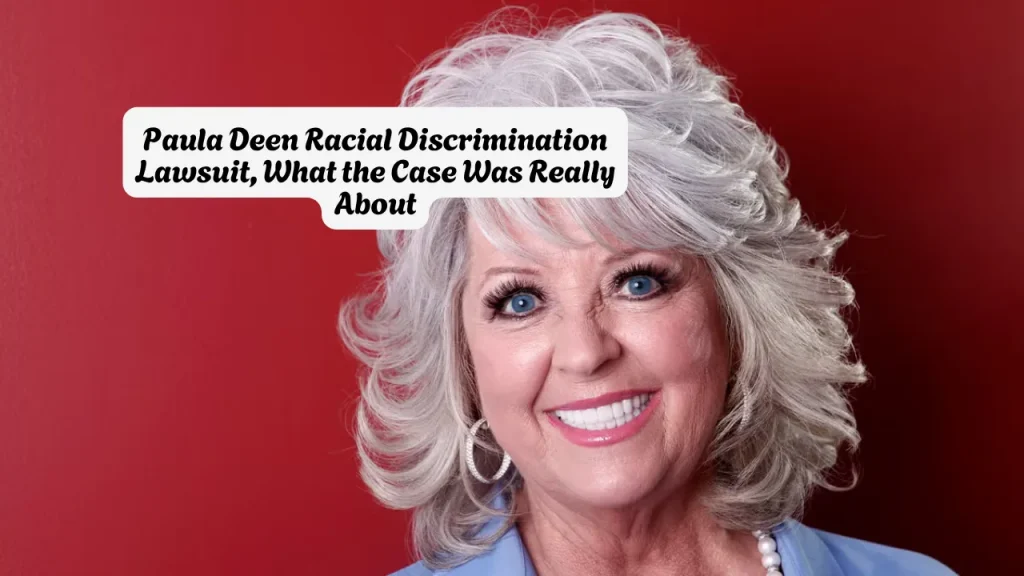
Paula Deen Racial Discrimination Lawsuit, What the Case Was Really About
In 2012, a former restaurant manager named Lisa Jackson sued celebrity chef Paula Deen and her brother for racial discrimination and sexual harassment. The racial discrimination claims were dismissed by a federal judge in August 2013. Shortly after, both sides settled the remaining claims privately. No court ever found Deen legally liable — but the lawsuit cost her nearly her entire public career.
Quick Facts
| Field | Detail |
| Case Name | Lisa T. Jackson v. Paula Deen, et al. |
| Filed | March 2012 |
| Court | U.S. District Court, Southern District of Georgia (Savannah) |
| Defendants | Paula Deen, Earl “Bubba” Hiers, Paula Deen Enterprises (corporate entities) |
| Plaintiff | Lisa Jackson (white, former general manager) |
| Claims Filed | Racial discrimination + sexual harassment |
| Race Claim Outcome | Dismissed August 12, 2013 |
| Final Outcome | Settled August 23, 2013 (terms confidential) |
| Settlement Amount | Undisclosed |
| Finding of Liability? | No |
| Case Status | Closed — dismissed with prejudice |
Case Status at a Glance
- The racial discrimination claims were fully dismissed by Judge William T. Moore Jr. on August 12, 2013.
- The sexual harassment claims survived the dismissal but were dropped as part of a private settlement reached on August 23, 2013.
- The case was dismissed “with prejudice,” meaning the same claims cannot be filed again.
What Was the Paula Deen Lawsuit About?
In March 2012, Lisa Jackson, a former general manager of Uncle Bubba’s Oyster House, filed a lawsuit against Deen, Deen’s brother Bubba Hiers, and corporate entities, alleging racial discrimination and sexual harassment.
Jackson alleged that Bubba Hiers — who managed the restaurant day-to-day — regularly made racial jokes at work, used racial slurs, and maintained a hostile environment for Black employees. Jackson claimed Hiers frequently made jokes containing racial slurs at work and prohibited Black workers from using the restaurant’s front entrance and customer restrooms.
Jackson also alleged that Deen had discussed wanting to hold a wedding with a “plantation-style theme” using Black male servers — an idea Deen reportedly rejected because, as Jackson stated, Deen said “the media would be on me about that.” In May 2013, over a year after the lawsuit was filed, Deen gave deposition testimony. During the course of her deposition, Deen was asked if she had ever used the N-word. Deen responded: “Yes, of course.” That deposition testimony became public in June 2013, and the fallout was immediate and severe.
Related article: The Amy Nelson Amazon Lawsuit, FBI Raids, Frozen Bank Accounts, and a Family’s Fight Back
Why Were the Racial Discrimination Claims Dismissed?
This is the part most people don’t fully understand — and it is important.
Claims of race discrimination by Jackson, who is white, were gutted in the 20-page opinion by U.S. District Court Judge William T. Moore Jr. The judge agreed with lawyers for Deen and Hiers that Jackson had no standing to sue her former employers for what she claimed was poor treatment of Black workers.
In plain English: a person generally needs to show they personally suffered harm from the discrimination they are suing over. Judge Moore said Jackson was, at best, “an accidental victim of the alleged racial discrimination” and that “there are no allegations that Hiers’s racially offensive comments were either directed toward plaintiff or made with the intent to harass her.”
The sexual harassment claims — which were directed at Jackson personally — did survive the dismissal. However, those claims were then dropped as part of a confidential settlement.
What Did the Settlement Say?
A document filed by the court said both sides reached a settlement “without any award of costs or fees to any party.” The details of the settlement were not made public.
This means neither side paid the other’s legal fees as part of the deal — an unusual outcome that suggested a mutual interest in putting the case to rest quickly. The lawsuit would be dismissed “with prejudice,” which means it cannot be brought again with the same claims.
There was never any finding of liability against Deen. In terms of the litigation, Deen technically did not “lose.” But in reality, Deen lost a lot: a TV show, a book deal, and several lucrative endorsements.
What Happened to Paula Deen After the Lawsuit?
Even though the court dismissed the racial discrimination claims, the reputational damage from the deposition was swift and far-reaching.
In the time between the filing of the suit and the suit being dismissed, Deen had cookery programs, publishing deals, and endorsement contracts cancelled by Food Network, Smithfield Foods, Walmart, Target, QVC, Caesars Entertainment, Novo Nordisk, J.C. Penney, Sears/Kmart, and her then-publisher Ballantine Books. She reportedly lost at least $12.5 million in endorsement deals. Her Food Network shows — which she had hosted for over a decade — were pulled from the air.
Deen issued public apologies and appeared on the Today show, but corporate partners had already made their decisions. During the same time, sales of Deen’s cookbooks soared, showing that her consumer base remained divided.
This case is a clear example of how a lawsuit — even one that is ultimately dismissed — can still carry enormous consequences when deposition testimony becomes public record.
Who Was This Lawsuit Affecting — and Did It Involve Consumers?
This was an individual employment lawsuit, not a class action. Lisa Jackson was the only plaintiff, and she sued as a former employee — not as a consumer or member of the public.
However, the case had significant public impact. Consumers who purchased Paula Deen-branded cookware, cookbooks, and food products at Walmart, Target, Sears, and other retailers saw those products removed from shelves. Fans who followed her Food Network shows watched them disappear overnight. The lawsuit ultimately reshaped what products were available to consumers and which brands chose to remain in business with Deen.
This type of reputational and commercial fallout — triggered by a single lawsuit — illustrates why workplace discrimination allegations carry weight far beyond the courtroom. If you are researching similar cases involving restaurant chains and workplace discrimination at scale, the Cracker Barrel racial discrimination lawsuit is a related case worth reading.
Key Dates in the Paula Deen Lawsuit
| Milestone | Date |
| Lawsuit Filed | March 2012 |
| Deen Deposition Taken | May 17, 2013 |
| Deposition Becomes Public | June 19, 2013 |
| Food Network Drops Deen | Late June 2013 |
| Race Discrimination Claims Dismissed | August 12, 2013 |
| Settlement Reached | August 23, 2013 |
| Case Dismissed With Prejudice | August 26, 2013 |
| Claim Deadline | N/A — individual lawsuit, no public claims |
| Expected Payment to Public | N/A — no consumer settlement fund |
Frequently Asked Questions
What did Lisa Jackson accuse Paula Deen of?
Jackson accused Deen and her brother of racial discrimination against Black employees and sexual harassment directed at Jackson personally. She alleged Bubba Hiers made racial jokes, used slurs at work, and blocked Black workers from using the front entrance and restrooms. She also alleged Deen made racially charged comments. The racial discrimination claims were later dismissed by the court.
Why did the judge dismiss the racial discrimination claims?
The judge ruled that Jackson, who is white, did not have legal standing to sue for racial discrimination against Black employees. Under federal law, a plaintiff generally must show personal harm from the discrimination they are claiming. Because the racial harassment was not directed at Jackson, she could not bring those claims on behalf of others.
Did Paula Deen admit to using a racial slur?
Yes. During a May 2013 deposition, Deen was asked under oath if she had ever used the N-word. She responded, “Yes, of course,” adding that it had been a long time ago. That admission became public in June 2013 and triggered the collapse of her endorsement deals and television career.
Was there a settlement in the Paula Deen lawsuit?
Yes. On August 23, 2013, both sides settled privately. The terms were confidential, and no money amount was ever disclosed publicly. The settlement covered the sexual harassment claims that survived the dismissal of the race claims. No finding of liability was ever made against Deen.
Can consumers file a claim from this lawsuit?
No. This was an individual employment lawsuit between one employee and her employer. There was no class action, no public settlement fund, and no claim portal. Members of the public cannot file a claim related to this case.
Do I need a lawyer to understand if discrimination happened at my job?
You do not need a lawyer to recognize potential discrimination, but you should consult one before taking legal action. Employment discrimination claims involve strict filing deadlines and legal standards. Many employment attorneys offer free consultations and work on contingency.
Will this lawsuit ever be reopened?
No. The case was dismissed “with prejudice,” which legally prevents anyone from filing the same claims again. The matter is permanently closed.
What can workers learn from this case?
The case shows that even when a racial discrimination claim is dismissed on technical legal grounds — like lack of standing — the underlying workplace environment can still be harmful and legally problematic. Employers can still face enormous reputational and financial consequences. Workers who witness discrimination should document incidents and report through proper channels. For another case involving similar themes in the restaurant industry, the SHRM racial discrimination lawsuit verdict shows how these cases play out when they go to trial.
Sources & References
- CBS News — Settlement reached in Paula Deen discrimination lawsuit (August 23, 2013)
- Courthouse News Service — Paula Deen Suit Thrown Out (August 26, 2013)
Last Updated: April 5, 2026
Disclaimer: This article is for informational purposes only and does not constitute legal advice. Legal claims and outcomes depend on specific facts and applicable law. For advice regarding a particular situation, consult a qualified attorney.
About the Author
Israr Ahmad is a legal content researcher with 4+ years of experience covering class action settlements and consumer rights cases. He has researched and published coverage of 2,500+ settlements using verified court records, settlement administrator filings, and government sources. Learn more about Israr.