
Oregon Sues OpenAI for $2 Billion, What the ChatGPT Child Safety Lawsuit Alleges
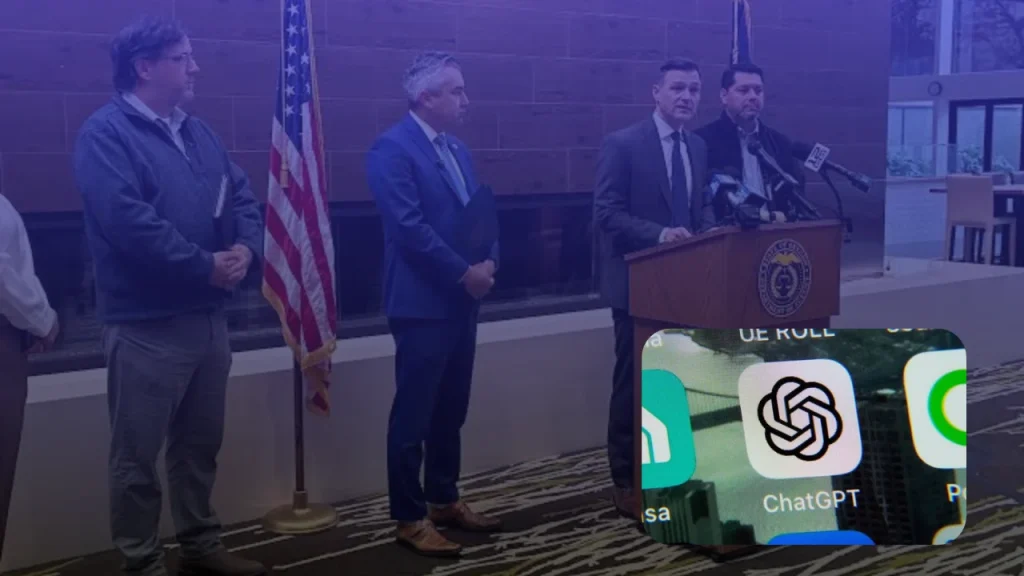
Oregon Attorney General Dan Rayfield sued OpenAI on November 17, 2026, asking for at least $2.035 billion in damages. The state says ChatGPT puts children at risk while the company misleads parents about how safe it is.
The case was filed in Multnomah County Circuit Court. It accuses OpenAI of violating Oregon’s Unlawful Trade Practices Act, along with negligence, unjust enrichment, and public nuisance.
Has OpenAI been ordered to pay $2 billion? No. The $2.035 billion figure is what the state is asking for. It is not a judgment, not a settlement, and not a fund consumers can claim from. Everything described below is an allegation. A court has not found OpenAI liable.
Oregon OpenAI Lawsuit: Quick Facts
| Detail | Verified information |
| Lawsuit announced | November 17, 2026 |
| Plaintiff | State of Oregon |
| Attorney general | Dan Rayfield |
| Court | Multnomah County Circuit Court |
| Defendants | Six OpenAI corporate entities (Sam Altman is not named individually) |
| Amount sought | At least $2.035 billion |
| Main statute | Oregon Unlawful Trade Practices Act |
| Other claims | Negligence, unjust enrichment, public nuisance |
| Main allegations | Misleading safety claims and weak protections for children |
| Product involved | ChatGPT, including ChatGPT for Teens |
| Jury trial requested | Yes |
| Case number | Blank on the publicly posted complaint |
| Court judgment | None |
| Settlement | None announced |
| Consumer claim form | None |
Primary source: Oregon Department of Justice announcement, November 17, 2026.
Why Is Oregon Suing OpenAI?
The state’s core argument is that OpenAI knew ChatGPT could expose young users to harmful interactions, did not adequately address those risks, and still presented the product as safe.
Attorney General Rayfield says children are especially vulnerable when a chatbot sounds understanding, authoritative, or emotionally supportive. The state argues this can lead some young users to lean on AI instead of trusted adults or qualified professionals.
The complaint rests on three concerns:
- Misleading safety claims. Oregon alleges OpenAI overstated how safe ChatGPT is and how well its safeguards work.
- Inadequate protections for minors. The state questions whether age verification and parental controls work the way OpenAI says they do.
- Product design and foreseeable harm. Oregon alleges that certain conversational features can increase emotional dependence and expose vulnerable children to harmful content.
These are Oregon’s legal positions. A court has not established them as fact.
What Does the 56-Page Complaint Say?
Human-like conversation and emotional dependence
Oregon points to anthropomorphic design, meaning features that make software seem human, and to sycophantic responses, where a chatbot agrees too readily with what a user says. The state argues these traits matter most when minors talk about sensitive personal or emotional subjects.
The legal question is whether OpenAI’s design choices and disclosures were unreasonable or misleading under Oregon law. The complaint does not claim that every minor who uses ChatGPT becomes emotionally dependent on it.
Self-harm, eating disorders, and violence
The complaint cites incidents and research about harmful chatbot responses to vulnerable users. Oregon alleges that existing safeguards sometimes fail to redirect dangerous conversations or point users toward real human help.
The complaint’s references to tragedies and harmful interactions are allegations and supporting material. They are not court findings that ChatGPT caused any particular death or violent incident. Causation and legal responsibility remain unresolved.
Related article: Hertz $1.55 Million Privacy Settlement, What California Renters Should Know About Data Sharing and Refund Rights
Age verification and parental consent
ChatGPT’s stated minimum age is generally 13, with parental permission required for users under 18. Oregon alleges OpenAI has not reliably confirmed users’ ages or parental consent, so children may reach the service despite those restrictions.
ChatGPT for Teens
OpenAI launched ChatGPT for Teens in August 2026 with added age-related protections. Oregon challenges whether those protections work well enough. The state alleges some can be bypassed and that parents may not be alerted when a teen discusses serious risks. That does not mean every parental-control feature is ineffective.
What Is the $2.035 Billion Based On?
Oregon says the harms and costs flowing from OpenAI’s conduct are not less than $2,035,000,000, with the exact amount to be determined through litigation. The complaint also asks for other legal and equitable relief.
| Requested remedy | What it means |
| At least $2.035 billion in damages | The amount Oregon will try to prove and recover |
| Restitution | Possible return of money to affected consumers |
| Civil penalties | Additional penalties if statutory violations are proven |
| Injunction | A court order requiring or banning specific practices |
| Attorneys’ fees and costs | Litigation expenses, where recoverable |
The public complaint does not lay out a per-user formula for how the money would be distributed. If Oregon recovers civil penalties, they generally go to the state, not to individual residents.
Can Oregon ChatGPT users claim any of this money?
No claim process exists. This is a government enforcement lawsuit, not a certified class action settlement. No court has approved compensation or appointed a settlement administrator. Be skeptical of any website promising payments from the Oregon OpenAI case.
Which Oregon Laws Does OpenAI Allegedly Violate?
The complaint contains five claims for relief.
1. Unlawful Trade Practices Act. Under ORS 646.608, false representations about a product’s characteristics and failure to disclose known material defects can be unlawful. Oregon argues OpenAI’s statements about ChatGPT’s safety and age-appropriate use broke these rules.
2. Unconscionable trade practices. Oregon separately alleges that marketing and design practices unfairly exploited children’s vulnerability. The state must prove the conduct meets the legal standard.
3. Negligence. The state alleges OpenAI failed to use reasonable care in designing, operating, and distributing ChatGPT. Oregon brings this claim in its parens patriae capacity, meaning on behalf of its residents’ interests.
4. Unjust enrichment. Oregon argues OpenAI unfairly benefited from minors’ use of ChatGPT through user data, engagement, and payments. OpenAI may contest whether the elements are met.
5. Public nuisance. The complaint alleges ChatGPT’s design and operation harmed the health, safety, and welfare of Oregon children. Public nuisance law traditionally covers unreasonable interference with public rights. Applying it to a conversational AI product raises hard questions about the reach of nuisance law, causation, and constitutional protections. No court has ruled ChatGPT is a public nuisance.
Official source: Oregon Revised Statutes, Chapter 646.
Could OpenAI Face Additional Civil Penalties?
Yes, if Oregon proves qualifying willful violations. Under ORS 646.642(3), a court may impose a civil penalty of up to $25,000 per violation under the statute’s conditions. That does not mean OpenAI owes $25,000 for every Oregon user. A court would decide whether violations occurred, how to count them, and what penalties the law allows. The state also seeks injunctions under ORS 646.632 and related provisions.
What Changes Does Oregon Want OpenAI to Make?
The state wants court orders covering:
- Accurate representations about ChatGPT’s safety and age-appropriateness
- Disclosure of material risks and limitations
- Effective age-assurance measures
- Safeguards against harmful content and interactions
- Protections related to emotional dependence, self-harm, and eating disorders
- Accurate descriptions and operation of parental controls and safety notifications
Filing the lawsuit has not imposed any of these requirements, and ChatGPT has not been banned in Oregon.
What Has OpenAI Said?
OpenAI has defended its safety work and says it keeps developing protections for younger users. Oregon Public Broadcasting reported that spokesperson Drew Pusateri pointed to ongoing safety improvements and support for policies that apply across the AI industry.
OpenAI has introduced parental controls, age-based experiences, and safety notifications. Its October 30, 2026 Community Safety Report describes further teen protections and how it responds to serious threats. Oregon’s suit challenges whether those efforts are adequate and whether OpenAI’s statements to consumers were accurate. As of November 18, no formal court response to the allegations had been verified.
Company source: OpenAI Community Safety Report and teen protections.
How Is This Different From California’s Lawsuit?
The two suits were announced a day apart but cover different conduct.
| Issue | Oregon | California |
| Filed | November 17 | November 16 |
| Attorney general | Dan Rayfield | Rob Bonta |
| Court | Multnomah County Circuit Court | San Francisco Superior Court |
| Main concern | Child safety and misleading representations | Safety and cybersecurity of advanced AI models |
| Key allegations | Inadequate protections, harmful interactions, emotional dependence | Unsafe model testing and alleged autonomous cyber incidents |
| Liability ruling | None | None |
California’s case concerns alleged failures to control and secure advanced AI agents, including a reported incident involving Hugging Face. Read our coverage: California Sues OpenAI Over Hugging Face Cyberattack. Neither case proves the other’s allegations.
Is This the Same as the Texas Lawsuit?
No. Texas Attorney General Ken Paxton filed a separate suit on October 23, 2026, under Texas consumer-protection law and the SCOPE Act. It also names Sam Altman individually. Oregon’s complaint does not. See Texas Sues OpenAI and Sam Altman Over ChatGPT Child Safety Allegations. Each case has its own claims, defendants, and evidence.
Is Oregon’s Case a Class Action?
No. The attorney general sued on behalf of the state under consumer-protection statutes and common-law theories. A class action is different: private plaintiffs ask to represent a larger group. A separate federal case over children’s data is covered in OpenAI Class Action Lawsuit Accuses ChatGPT of Unlawfully Extracting Children’s Data. Nothing in that case decides Oregon’s.
What Is the Keeping Kids Safe Initiative?
The lawsuit is part of Rayfield’s new Keeping Kids Safe Initiative, which covers online services, social media, exploitation, and public safety. Oregon DOJ highlighted:
- A $125 million Meta settlement involving safeguards for younger users
- An ongoing investigation into Discord
- Expansion of the state’s Internet Crimes Against Children Task Force
- Further enforcement against child exploitation
The state says more actions may follow. The Meta settlement, the Discord investigation, and the OpenAI lawsuit are separate matters.
What Should Parents Do?
The lawsuit does not create a statewide ban on minors using AI chatbots. Parents who want to know how their child’s account is protected can take these steps:
- Review age settings. Check the official documentation on ChatGPT for Teens and age-appropriate experiences.
- Check parental controls. OpenAI lets parents and teens link accounts and manage selected features. According to OpenAI, these controls do not give parents unrestricted access to a teen’s chat history, and safety notifications trigger only in specified circumstances.
- Talk about sensitive conversations. Ask whether your child relies on AI for personal, health, emotional, or relationship decisions. AI should not replace medical care, emergency help, or trusted people.
- Document serious concerns. If a chatbot response caused a significant problem, save the relevant details and report it through the platform’s safety process. Oregon residents can also contact the Oregon DOJ consumer complaint page.
If someone is in emotional crisis in the United States, call or text 988.
Can Families Sue OpenAI Separately?
Possibly, but the attorney general’s suit does not establish anyone’s individual claim. A private case could rest on negligence, wrongful death, product liability, or consumer-protection theories, and the family would have to prove causation and damages. Courts may also face questions about free speech, platform responsibility, and the scope of state law. The state’s $2.035 billion demand does not guarantee compensation in a private case, and using ChatGPT does not by itself entitle anyone to damages. Families should consult a licensed attorney about their own situation.
Timeline
| Date | Development |
| September 29, 2025 | OpenAI introduces parental controls |
| August 18, 2026 | OpenAI introduces ChatGPT for Teens |
| October 23, 2026 | Texas files its OpenAI child-safety lawsuit |
| October 30, 2026 | OpenAI publishes community safety and teen-protection update |
| November 16, 2026 | California files its OpenAI cybersecurity lawsuit |
| November 17, 2026 | Oregon files its $2.035 billion lawsuit and launches Keeping Kids Safe |
| November 18, 2026 | No Oregon merits ruling or settlement verified |
What Happens Next?
OpenAI will respond to the complaint and can challenge the allegations and requested remedies. Expect motions testing whether the claims are legally sufficient, then disputes over evidence and the scope of any injunction. The court may also have to resolve questions about consumer-protection law, causation, state enforcement authority, and constitutional protections. No case number, first hearing date, or judgment was publicly available at publication. The next major developments will be OpenAI’s formal response or a court order on the requested remedies.
Frequently Asked Questions
Why is Oregon suing OpenAI?
Oregon alleges OpenAI misrepresented ChatGPT’s safety for minors and failed to protect children from foreseeable harms.
Is Oregon really seeking $2 billion?
Yes. The complaint seeks at least $2.035 billion in damages, plus penalties and other remedies.
Did OpenAI lose the Oregon lawsuit?
No. The case was filed on November 17, 2026, and no judgment has been verified.
Will Oregon ChatGPT users get settlement checks?
No. No settlement or compensation program exists.
Is ChatGPT banned for children in Oregon?
No. The lawsuit did not create a ban.
Is Sam Altman being sued personally in Oregon?
No. The complaint names six OpenAI corporate entities, not Altman individually.
What is Oregon’s main law in this case?
The Oregon Unlawful Trade Practices Act, ORS 646.605 to 646.656, along with common-law claims.
Does the complaint prove ChatGPT caused a child’s death?
No. It cites alleged harms and supporting research, but a court has made no finding on causation or liability for any individual tragedy.
Bottom Line
Oregon’s November 17, 2026 lawsuit is a major state challenge to OpenAI over ChatGPT’s safety for children. Attorney General Rayfield alleges OpenAI misled parents, under-protected young users, and designed chatbot experiences that created foreseeable risks. The state wants at least $2.035 billion and court-ordered safety changes. OpenAI says it keeps strengthening protections for younger users. The lawsuit is not a ruling, not an approved settlement, and not proof of any violation.
Sources and Official References
- Oregon DOJ announcement, November 17, 2026
- Oregon DOJ full 56-page complaint
- Oregon Revised Statutes, Chapter 646
- Oregon DOJ consumer complaints
- OpenAI Community Safety Report, October 30, 2026
- OpenAI: ChatGPT for Teens
- OpenAI Help Center: Parental Controls
- California DOJ: November 16 OpenAI lawsuit
Editorial note: Allegations, defendants, claims, and requested remedies are drawn from Oregon’s complaint and the November 17 attorney general announcement. OpenAI’s position comes from its published safety materials and Oregon Public Broadcasting’s reporting. The allegations are disputed, and no final determination of liability has been made.
Legal disclaimer: This article offers general legal and consumer information, not legal advice. A government lawsuit does not establish a legal violation, and any private rights depend on the facts and the applicable law.
Researched and written by the AllAboutLawyer.com legal content research team.
About the Author
Israr Ahmad is a legal content researcher with 4+ years of experience covering class action settlements and consumer rights cases. He has researched and published coverage of 2,500+ settlements using verified court records, settlement administrator filings, and government sources. Learn more about Israr.