
Neil Gorsuch Joins Sotomayor in Raising Double Jeopardy Concerns in Immigration Case
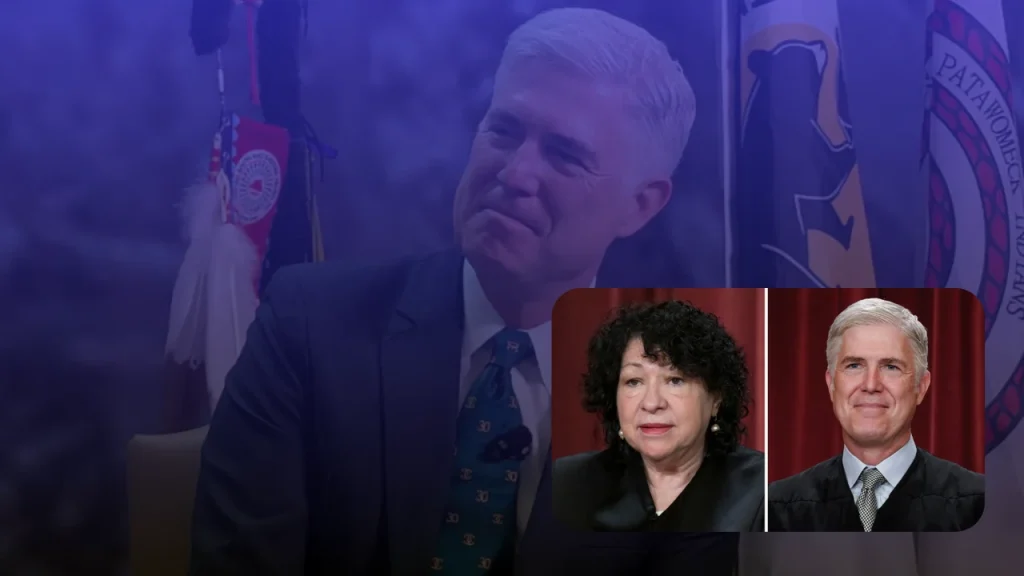
On October 13, 2026, the U.S. Supreme Court denied review in Herrera-Salazar v. United States (No. 25-6989). Justice Sonia Sotomayor, joined by Justice Neil Gorsuch, issued a statement respecting the denial. The statement warned of “serious constitutional problems” in the government’s decision to prosecute the same man twice under the federal illegal-reentry law for a single, continuous stay in the United States.
This was not a ruling on the merits. The Court did not decide the double jeopardy question, did not overturn Jesus Herrera-Salazar’s conviction, and did not strike down any part of federal immigration law. The Tenth Circuit’s judgment stands. What matters is that two Justices from opposite ends of the Court’s ideological spectrum publicly flagged the issue for lower courts.
Quick Facts
| Item | Details |
| Case | Herrera-Salazar v. United States, No. 25-6989 |
| Date of Supreme Court action | October 13, 2026 |
| Outcome | Petition for a writ of certiorari denied (the Court declined to hear the case) |
| Statement | Justice Sotomayor, joined by Justice Gorsuch, respecting the denial of certiorari |
| Lower court | U.S. Court of Appeals for the Tenth Circuit, No. 24-7029 (unpublished order and judgment, September 26, 2025), on appeal from the Eastern District of Oklahoma |
| Statute | 8 U.S.C. § 1326(a), illegal reentry after removal, including being “found in” the United States |
| Constitutional provision | Fifth Amendment Double Jeopardy Clause |
| Defendant | Jesus Herrera-Salazar, a Mexican national, since removed from the United States |
| Binding precedent created? | No. A statement respecting denial of certiorari is not a holding |
Key Takeaways
- The Supreme Court declined to hear the case. It did not reverse or vacate anything.
- Sotomayor wrote that Herrera-Salazar’s second conviction is “difficult to square” with the Double Jeopardy Clause. Gorsuch joined her.
- She concurred in the denial because she hoped the facts were “anomalous” and because Herrera-Salazar had since been removed from the United States.
- The statement urges courts, if similar cases arise, to “give the Double Jeopardy Clause its full weight and meaning.”
- Section 1326 remains fully enforceable. The government can still prosecute unlawful reentry.
What Did Gorsuch and Sotomayor Say?
Sotomayor’s statement is short but pointed. It makes three connected arguments.
1. The statute may not reach someone the government already found. She wrote that it is “not clear” that the words “found in . . . the United States” can fairly be read to cover a person who has already been found by the government and compelled to remain in the country under government supervision.
2. Even if the statute does reach him, the second conviction raises a double jeopardy problem. Assuming the language does apply, she said the second conviction is difficult to square with the Fifth Amendment’s command that no person be “twice put in jeopardy of life or limb” for the same offense.
3. The government treated one continuous crime as many. She argued that Herrera-Salazar was convicted of a crime that was continuous, extending over the whole period he was present in the country after his earlier removal. That crime could not have ended until the government allowed him to leave. Because it was still ongoing at the time of his second arrest, the second prosecution, in her view, simply focused on a different part of the same continuous presence.
She then pointed to the practical consequence of the government’s theory. The government might have charged a separate violation of § 1326(a) for each day Herrera-Salazar was “found in” prison while serving his first sentence. “Absurd as that seems,” she wrote, it is a logical outgrowth of the government’s position.
She closed by describing a “Hobson’s choice.” In the government’s eyes, whether he stayed in the Eastern District of Oklahoma or left the United States, he would be breaking the law. She encouraged courts to “avoid the constitutional absurdity that occurred here.”
The Facts: Who Is Jesus Herrera-Salazar?
Herrera-Salazar is a Mexican national. According to the Tenth Circuit’s order and judgment, he was removed from the United States in February 2015. He was later found in Brownsville, Texas, in May 2020.
First prosecution. He was indicted under 8 U.S.C. § 1326(a) for being “found in” the United States after removal. He pleaded guilty and received 15 months in prison followed by two years of supervised release.
Release and supervision. After serving his sentence, he was released in June 2021 and placed on supervised release. He was not immediately deported. He was instructed to report to federal probation officers and was expressly told not to leave the Eastern District of Oklahoma. A probation officer visited him at his home.
Second prosecution. On April 1, 2022, while still on supervised release, he was pulled over in a traffic stop in Heavener, Oklahoma. He was arrested and indicted again under the same statute, relying on the same earlier removal. A jury convicted him in 2024, and he received new terms of imprisonment and supervised release.
Appeal. He argued the second prosecution violated the Double Jeopardy Clause. The Tenth Circuit rejected that argument and affirmed the conviction on September 26, 2025.
Supreme Court. On October 13, 2026, the Supreme Court denied his petition. By then, he had been removed from the United States.
What Is 8 U.S.C. § 1326 and Why Does It Matter Here?
Section 1326 is the main federal statute criminalizing reentry after removal.
Subsection (a): the offense. A noncitizen who has been denied admission, excluded, deported, or removed, or who departed while an order of exclusion, deportation, or removal was outstanding, commits a federal crime by later doing any of three things without the required permission:
- Entering the United States,
- Attempting to enter, or
- Being “found in” the United States.
The baseline penalty is a fine, imprisonment of up to two years, or both.
Subsection (b): enhanced penalties. Higher maximums apply when the person’s earlier removal followed certain criminal convictions. In general, a prior felony conviction (or certain other convictions) raises the maximum to 10 years, and a prior aggravated felony conviction raises it to 20 years. Other categories carry their own enhancements.
Subsection (d): collateral challenges. A defendant may challenge the validity of the underlying removal order only if specific statutory conditions are met. The Supreme Court addressed the due process side of this issue in United States v. Mendoza-Lopez, 481 U.S. 828 (1987).
Sentencing. The fact of a prior conviction that triggers subsection (b) does not need to be charged in the indictment or proved to a jury, under Almendarez-Torres v. United States, 523 U.S. 224 (1998). Federal sentencing under the U.S. Sentencing Guidelines for these offenses is governed by § 2L1.2.
Why it matters in this case. The “found in” clause is the heart of the dispute. Prosecutors relied on Herrera-Salazar’s presence after a single 2015 removal to support two separate prosecutions. The question is whether each new discovery by authorities can be a new offense when the person never left the country in between.
Related provisions readers often confuse with § 1326:
- 8 U.S.C. § 1325 criminalizes unlawful entry (improper entry, entry by misrepresentation). It is a different offense from reentry after removal under § 1326.
- 8 U.S.C. § 1231(a)(5) provides that a prior removal order can be reinstated against a person who unlawfully reenters. This is an administrative immigration consequence, separate from criminal prosecution.
- 8 U.S.C. § 1182(a)(9) imposes inadmissibility bars on people who were previously removed or who accrued unlawful presence, which affects eligibility to return lawfully.
What Does the Double Jeopardy Clause Protect?
The Fifth Amendment provides that no person shall “be subject for the same offence to be twice put in jeopardy of life or limb.” Courts have long read the clause to provide three protections:
- Against a second prosecution for the same offense after an acquittal.
- Against a second prosecution for the same offense after a conviction.
- Against multiple punishments for the same offense.
The clause protects any “person,” not only U.S. citizens. The Supreme Court recognized in Wong Wing v. United States, 163 U.S. 228 (1896), that noncitizens within the country are entitled to Fifth and Sixth Amendment protections when facing criminal punishment. The clause applies to state prosecutions as well through the Fourteenth Amendment (Benton v. Maryland, 395 U.S. 784 (1969)).
The hard part in nearly every case is defining the “same offense.” In ordinary statutory cases, courts ask whether each offense requires proof of an element the other does not (Blockburger v. United States, 284 U.S. 299 (1932)). But when a single statute is charged twice, courts ask a different question: what is the “allowable unit of prosecution” that Congress chose?
The Precedents Behind the Statement
Sotomayor’s statement leans on four Supreme Court decisions.
Currier v. Virginia, 585 U.S. 493 (2018)
The Court described the clause as protecting “against a second prosecution for the same offense after conviction.” Sotomayor used it to frame the central question: what counts as the “same offense”?
Sanabria v. United States, 437 U.S. 54 (1978)
Sanabria explains that Congress decides the “allowable unit of prosecution,” meaning the amount of conduct that can be charged as a single offense. The Tenth Circuit relied on this idea. It reasoned that § 1326(a) does not require a new reentry for each “found in” violation, so each prosecution counted as a separate offense. Sotomayor noted the consequence: under that reasoning a person in Herrera-Salazar’s position could face repeated, limitless “found in” charges.
Brown v. Ohio, 432 U.S. 161 (1977)
In Brown, the defendant was convicted of joyriding and then prosecuted for auto theft over the same nine-day period. The Court held the second prosecution violated double jeopardy. It said the clause is not so fragile that prosecutors can avoid it “by the simple expedient of dividing a single crime into a series of temporal or spatial units.” Sotomayor said that is exactly what the government did here.
In re Nielsen, 131 U.S. 176 (1889)
Nielsen involved a continuing offense (unlawful cohabitation). The Court recognized that a crime that is continuous, extending over a whole period, cannot be split into separate indictments for each month or week. Sotomayor cited it to show that Herrera-Salazar’s offense continued for as long as he was present, and that the government’s logic could allow an indictment “covering every week.”
Gorsuch’s own record on double jeopardy
Justice Gorsuch has voiced concern about repeated prosecutions before. In Gamble v. United States, 587 U.S. 678 (2019), he dissented from the Court’s decision to keep the “separate sovereigns” doctrine, arguing that the government should not be able to try a person twice for the same conduct. His joining of Sotomayor’s statement fits that pattern.
Why Did the Supreme Court Decline to Hear the Case?
The Supreme Court takes only a small share of the petitions it receives. Denying certiorari is not a ruling on the merits. The Court has said for a century that a denial “imports no expression of opinion upon the merits of the case” (United States v. Carver, 260 U.S. 482 (1923)).
In this case, Sotomayor identified two reasons she concurred in the denial: she hoped the facts were anomalous, and Herrera-Salazar had since been removed from the United States. She did not say the dispute was legally “moot” in those words, so articles describing a formal mootness ruling go beyond what the statement says.
Her purpose in writing was to put the issue on the record for lower courts and for any future petitioner.
Supervised Release and the “Hobson’s Choice”
One reason the case drew attention is the role of supervised release.
Under 18 U.S.C. § 3583, a federal court may impose a term of supervised release after imprisonment and set conditions. For a person who is deportable, the court may order that he be deported and remain outside the United States. In practice, immigration officials often handle removal at the end of the prison term.
Here, Herrera-Salazar was instead released into the Eastern District of Oklahoma and told not to leave it. Sotomayor emphasized that this left him with no lawful option: staying meant violating the “found in” statute, and leaving violated the supervision condition.
This does not mean supervised release grants immigration status. The statement does not say Herrera-Salazar’s presence was lawful. The issue is whether the government could convict and punish him a second time for the same continuous presence while it was itself compelling him to remain.
What Could This Mean for Future Cases?
Impact on Herrera-Salazar. Little. He has been removed, and the Court left the Tenth Circuit’s judgment in place.
Impact on defendants. Defense lawyers facing repeated § 1326 “found in” charges can cite the statement to argue that a second prosecution splits a continuous offense. The argument is strongest where the person never left the country between prosecutions and was kept in the country by the government, such as through supervised release.
Impact on prosecutors. The government may respond that the statutory text and Sanabria allow separate “found in” prosecutions at different times. Prosecutors may also face pressure to avoid stacking charges for one uninterrupted period of presence.
Impact on lower courts. The statement is not binding. Judges may find it persuasive, but they do not have to follow it. Other circuits may decide the question differently, and a split among circuits is one of the usual reasons the Supreme Court agrees to hear a case.
Impact on immigration enforcement. Minimal. The statement does not limit the government’s power to remove people, to prosecute illegal entry or reentry, or to bring separate charges where a person actually leaves and returns.
Timeline
| Date | Event |
| February 2015 | Herrera-Salazar is removed from the United States |
| May 2020 | He is found in Brownsville, Texas, and prosecuted under 8 U.S.C. § 1326 |
| 2020 | He pleads guilty; sentenced to 15 months in prison plus two years of supervised release |
| June 2021 | Released and placed on supervised release in the Eastern District of Oklahoma |
| April 1, 2022 | Traffic stop in Heavener, Oklahoma; arrested again |
| 2024 | Jury convicts him on the second § 1326 charge; new prison term and supervised release |
| September 26, 2025 | Tenth Circuit affirms the conviction |
| October 13, 2026 | Supreme Court denies certiorari; Sotomayor statement joined by Gorsuch |
Frequently Asked Questions
Did the Supreme Court rule that the second prosecution was unconstitutional?
No. The Court denied review. Two Justices said the second conviction is “difficult to square” with the Double Jeopardy Clause, but that is a statement, not a ruling.
Did the Supreme Court overturn Herrera-Salazar’s conviction?
No. The Tenth Circuit’s judgment affirming his conviction remains in place.
Why did Gorsuch join Sotomayor’s statement?
The statement does not give separate reasons for his joinder. Gorsuch has previously written separately in Gamble v. United States against repeated prosecutions for the same conduct, so his joining the statement is consistent with his earlier views. Any further explanation would be speculation.
What law was he convicted under?
8 U.S.C. § 1326(a), which criminalizes unlawful reentry, attempted reentry, or being “found in” the United States after removal, without the required permission.
Does the Double Jeopardy Clause protect noncitizens?
Yes. The Fifth Amendment protects any “person” in a criminal case. It is not limited to U.S. citizens.
Does this stop the government from prosecuting illegal reentry?
No. Section 1326 remains valid and enforceable. The concern is limited to repeated prosecutions based on one continuous presence after a single removal.
Is the Sotomayor statement binding precedent?
No. A statement respecting denial of certiorari does not create binding law. It may still be cited as persuasive.
What is the maximum penalty under 8 U.S.C. § 1326?
Up to two years under subsection (a). Subsection (b) raises the maximum to 10 years for certain prior convictions and 20 years for prior aggravated felonies, along with other enhanced categories.
What is the difference between § 1325 and § 1326?
Section 1325 covers unlawful entry into the United States. Section 1326 covers reentry, attempted reentry, or being found in the country after a prior removal, exclusion, or deportation.
Can a person be charged more than once under § 1326?
Yes, if they leave and unlawfully reenter, those are separate acts. Whether repeated “found in” charges for one uninterrupted stay are allowed is the unresolved question raised here.
I or someone I know is facing an immigration-related federal charge. What should I do?
Speak to a licensed criminal defense or immigration attorney as soon as possible. Federal reentry cases involve strict deadlines and serious penalties, and the outcome often depends on specific facts.
Readers can follow related federal legal disputes in AllAboutLawyer.com’s Government & Civil Rights Lawsuits coverage.
Sources and References
- U.S. Supreme Court: Herrera-Salazar v. United States, No. 25-6989, Statement of Justice Sotomayor, joined by Justice Gorsuch, respecting the denial of certiorari (Oct. 13, 2026) — https://www.supremecourt.gov/opinions/26pdf/25-6989_5h26.pdf
- U.S. Supreme Court: Official docket, No. 25-6989 — https://www.supremecourt.gov/docket/docketfiles/html/public/25-6989.html
- U.S. Court of Appeals for the Tenth Circuit: United States v. Herrera-Salazar, No. 24-7029, unpublished order and judgment (Sept. 26, 2025) — https://www.ca10.uscourts.gov/opinion/24-7029
- U.S. Code: 8 U.S.C. § 1326, Reentry of removed aliens — https://www.govinfo.gov/content/pkg/USCODE-2024-title8/html/USCODE-2024-title8-chap12-subchapII-partVIII-sec1326.htm
- U.S. Code: 8 U.S.C. § 1325 (improper entry); 8 U.S.C. § 1231(a)(5) (reinstatement of removal orders); 8 U.S.C. § 1182(a)(9) (inadmissibility of previously removed noncitizens)
- U.S. Code: 18 U.S.C. § 3583, Inclusion of a term of supervised release after imprisonment — https://www.govinfo.gov/content/pkg/USCODE-2024-title18/html/USCODE-2024-title18-partII-chap227-subchapD-sec3583.htm
- U.S. Constitution: Fifth Amendment — https://constitution.congress.gov/constitution/amendment-5/
- Supreme Court cases: Currier v. Virginia, 585 U.S. 493 (2018); Sanabria v. United States, 437 U.S. 54 (1978); Brown v. Ohio, 432 U.S. 161 (1977); In re Nielsen, 131 U.S. 176 (1889); Blockburger v. United States, 284 U.S. 299 (1932); Benton v. Maryland, 395 U.S. 784 (1969); Wong Wing v. United States, 163 U.S. 228 (1896); Gamble v. United States, 587 U.S. 678 (2019); United States v. Mendoza-Lopez, 481 U.S. 828 (1987); Almendarez-Torres v. United States, 523 U.S. 224 (1998); United States v. Carver, 260 U.S. 482 (1923)
- U.S. Sentencing Commission: Guidelines Manual, § 2L1.2 (unlawfully entering or remaining in the United States)
Editorial note: This article was reviewed against the Supreme Court’s published statement. It explains what the Court did and what two Justices wrote. It is for general informational purposes only and is not legal advice. Immigration and criminal law are fact-specific; consult a licensed attorney about any individual situation.
About the Author
Israr Ahmad is a legal content researcher with 4+ years of experience covering class action settlements and consumer rights cases. He has researched and published coverage of 2,500+ settlements using verified court records, settlement administrator filings, and government sources. Learn more about Israr.