
Kyler Efinger Lawsuit Dismissed, Utah Judge Throws Out Family’s Wrongful Death Case Against Salt Lake City Over Airport Jet Engine Death
A Utah Third District judge has reportedly dismissed, with prejudice, the wrongful-death lawsuit filed by Kyler Efinger’s parents against Salt Lake City. The reported reason is Utah’s public-duty doctrine: the complaint did not establish a special relationship creating a specific legal duty to Efinger. This was an individual family lawsuit. There is no class action, settlement fund, claim form or claim deadline for the public.
Verification note: The dismissal and its reasoning are reported by Utah news outlets. The signed order and the exact case number could not be independently retrieved from accessible court records, so neither is stated here as confirmed.
Quick Facts: Efinger v. Salt Lake City
| Detail | Information |
| Official settlement website | None. This is not a settlement |
| Claim form / claim deadline | None |
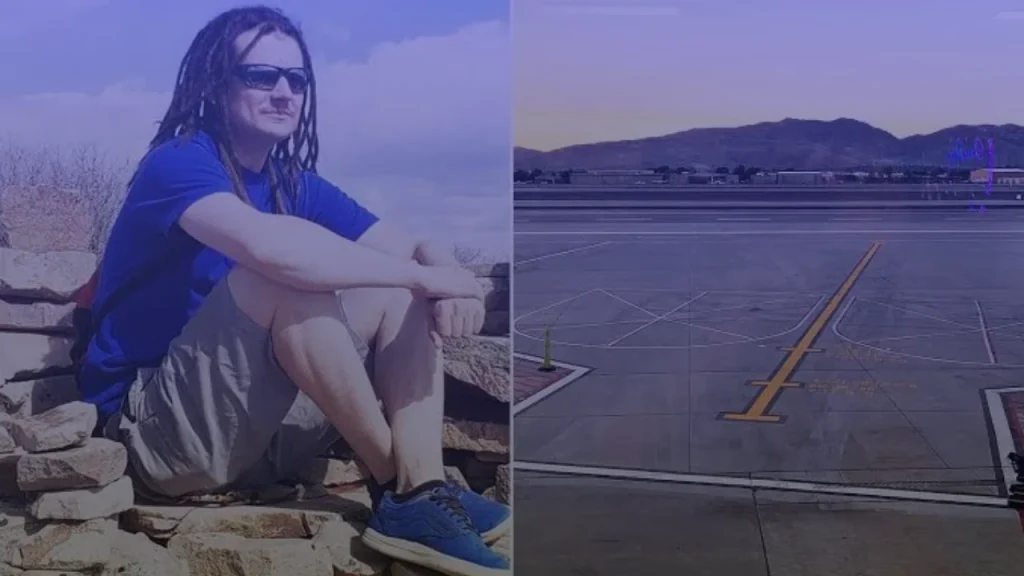
| Deceased | Kyler Efinger, 30, of Park City, Utah |
| Plaintiffs | Judd and Lisa Efinger, individually and on behalf of their son’s estate |
| Defendant | Salt Lake City (operator of Salt Lake City International Airport) |
| Incident date | January 1, 2024 |
| Lawsuit filed | December 30, 2025 (per reporting on the complaint) |
| Court | Third District Court, Salt Lake County, Utah |
| Judge | Heather Brereton |
| Case number | Not independently verified |
| Claims reported | Wrongful death, negligence, premises liability |
| Amount sought | Reportedly more than $300,000 (amount requested, not awarded) |
| Reported outcome | Dismissed with prejudice; written order reportedly signed October 16, 2026 |
| Key legal doctrine | Utah public-duty doctrine (no special relationship found) |
| Appeal status | Not independently verified |
| Class action | No |
| Public compensation program | None identified |
What Happened to Kyler Efinger at Salt Lake City International Airport?
Kyler Efinger, 30, held a ticket and boarding pass for a flight to Denver. According to the Salt Lake City Police Department’s January 2, 2024 update, airport personnel reported a disturbance involving a passenger on the secured side of the terminal at about 9:52 p.m. on January 1, 2024. The man then went through an emergency exit onto the airport’s outdoor ramp area.
The department’s published timeline:
- 9:52 p.m.: An airport store manager reports a disturbance involving a passenger.
- 9:56 p.m.: Dispatchers tell officers the man passed through an emergency exit.
- 9:59 p.m.: Officers check his last known location but do not find him.
- 10:02 p.m.: Dispatchers provide updated location information.
- 10:04 p.m.: Officers learn from airport employees that a pilot had seen the man.
- 10:05 p.m.: Officers ask that the FAA air traffic control tower be notified.
- 10:06 p.m.: Officers and airport operations staff find personal belongings, including clothing and shoes, on a runway.
- 10:08 p.m.: Dispatchers report the man is under an aircraft and has accessed its engine. Officers ask controllers to have the pilot shut down the engines.
- 10:09 p.m.: Police and airport employees remove him from the engine intake cowling and begin lifesaving efforts.
- 10:15 p.m.: CPR continues. Efinger dies at the scene.
The department’s follow-up release said the engines were rotating when officers found him and that the precise stage of engine operation was still under investigation. The initial release had described the engines as not running based on preliminary information, so the two statements should not be treated as identical accounts.
These facts come from the police department’s official release, not from the family’s later legal allegations. Details that appear in some online coverage but that this article could not confirm from primary records (such as specific gate numbers, flight numbers or personal medical details) are deliberately left out.
What Did the Efinger Family Allege Against Salt Lake City?
The complaint reportedly alleged that the city failed to maintain adequate airport security and did not respond effectively after Efinger left the secure terminal area.
Emergency exits and restricted-area access
The family alleged that the exits he used lacked sufficient delayed-opening safeguards, alarms or other controls that could have alerted staff and slowed access to the airfield. A delayed-egress mechanism holds an emergency exit closed briefly so an alarm and response can occur before someone reaches a restricted area.
Staff and emergency response
The family reportedly alleged that employees did not adequately respond to unusual behavior inside the terminal or coordinate the search. Local reporting says officers initially received incorrect information about which exit had been used, allegedly delaying the search.
Aircraft movements during the search
The complaint reportedly argued that pilots and air traffic controllers should have been promptly warned and aircraft movements held while personnel searched the airfield. The family’s position, as reported, was that finding him roughly 30 seconds sooner could have made a difference.
These are allegations. They are not findings that any employee violated a duty or that any change would certainly have prevented the death.
Why Did the Utah Judge Dismiss the Lawsuit?
The central issue was Utah’s public-duty doctrine.
What is the public-duty doctrine?
Under Utah Code § 63G-7-202, a governmental entity’s general duty to the public does not by itself create a specific duty to an individual unless a special relationship exists. Many government functions, such as policing and public security, are performed for the community as a whole. A plaintiff who says the government failed to protect one person must generally show more than a general public-safety responsibility.
In Barrani v. Salt Lake City, 2025 UT 25, the Utah Supreme Court reaffirmed that the doctrine can bar tort claims based on alleged failures to perform public duties when no special relationship creates a specific duty. That was a separate case and did not decide the Efinger lawsuit, but it explains the law Utah courts apply.
How did the doctrine apply here?
According to local reporting, the judge concluded that the complaint described safety measures the city allegedly failed to implement, rather than affirmative acts by the city that created a particular danger to Efinger, and did not establish a special relationship. In practical terms, the reported ruling treated the alleged security and response failures as failures to perform broader public duties.
Did the judge find the city did nothing wrong?
Not necessarily. A dismissal at the pleading stage decides whether the law lets the claims proceed, usually assuming the complaint’s facts are true for that purpose. It is not a trial finding that every security system worked or every response was appropriate. Equally, the family’s allegations are not proven findings of negligence. The signed order should be reviewed directly before its exact wording is quoted.
Laws and Legal Rules Behind the Case
This section is general background, not a finding about how any court will rule.
Utah law
- Governmental Immunity Act of Utah, Utah Code § 63G-7-101 et seq. Utah governmental entities are generally immune from suit unless immunity is waived. The Act waives immunity for certain negligence claims (§ 63G-7-301) but also lists exceptions (§ 63G-7-201) and contains the public-duty provision discussed above (§ 63G-7-202).
- Notice of claim, § 63G-7-401 et seq. A person with a claim against a Utah governmental entity must generally file a written notice of claim within one year after the claim arises, before suing. Failure to comply can bar the claim.
- Limitation period, § 63G-7-403. Suits against governmental entities must generally be filed within two years after the claim arises, after the notice-of-claim process is completed.
- Damages limits, § 63G-7-604. The Act caps damages recoverable against governmental entities. The cap is adjusted periodically, so the current figure should be checked in the statute.
- Wrongful death, Utah Code § 78B-3-106. Allows an action by heirs or a personal representative when a death is caused by a wrongful act or neglect of another.
- Utah Rules of Civil Procedure, Rule 12(b)(6). Allows dismissal for failure to state a claim on which relief can be granted. Under Rule 41(b), a dismissal generally operates as an adjudication on the merits unless the order says otherwise.
- Utah Rules of Appellate Procedure, Rule 4. A notice of appeal is generally due within 30 days after entry of the appealed order or judgment.
Federal airport-security background
Airport operators are also regulated by federal rules, including FAA airport certification under 14 C.F.R. Part 139 and TSA airport security requirements under 49 C.F.R. Part 1542, which address secured-area access control. These rules set federal regulatory standards, but whether a violation creates a private right to sue a city is a separate question. The reported dismissal turned on Utah’s public-duty doctrine, not on a finding about federal compliance.
What Does “Dismissed With Prejudice” Mean?
A dismissal with prejudice generally means the same claims cannot simply be refiled in the same trial court. A dismissal without prejudice may allow a plaintiff to fix a problem and try again. A dismissal with prejudice does not stop an appeal. The family may challenge the legal ruling in the Utah appellate courts, subject to procedural rules and deadlines.
Appeal timing
If the written order was entered on October 16, 2026, the general 30-day appeal window under Utah R. App. P. 4 would point to mid-November 2026. The exact deadline depends on the actual entry date and any post-judgment motions, so it must be confirmed from the docket. As of October 19, 2026, no appeal or appellate decision has been verified.
Does the Ruling Change Airport Security Rules Nationwide?
No. A state trial-court dismissal of claims against one city under Utah law does not create a nationwide airport-security standard. It also should not be read as saying airports may ignore unauthorized airfield access or that security breaches never create legal responsibility. Liability depends on the facts, the defendant’s legal duties, applicable immunities and governing law. Claims against the federal government follow different rules, such as the Federal Tort Claims Act.
Was Delta Air Lines Sued?
The lawsuit covered in the October 2026 reports was directed against Salt Lake City, which operates the airport. The reported dismissal is not a judgment for or against Delta Air Lines, and no finding that Delta was legally responsible was established.
What Happens Next?
- Confirm the order. Check whether the signed order matches news reports and whether it states additional grounds.
- Watch for an appeal. Any notice of appeal and later rulings would appear in the court record.
- No public claims process. No settlement fund, claim administrator, filing deadline or compensation program exists for this case, and the dismissal creates no claim process for other passengers or families.
How to verify the case yourself
The Utah Courts’ public case search (Xchange) lets you look up district-court case histories, orders and judgments. Search by party name and confirm the case number, order date and any appeal.
Key Dates
| Date | Event |
| January 1, 2024 | Kyler Efinger leaves the secure terminal area, reaches the airfield and is found at an aircraft engine. He dies at the scene |
| January 2, 2024 | Salt Lake City Police Department publishes an update and timeline |
| December 30, 2025 | Family’s complaint reportedly filed against Salt Lake City |
| July 29, 2026 | Local reporting says Judge Heather Brereton dismissed the lawsuit at a hearing |
| October 16, 2026 | Written dismissal order reportedly signed (actual order not independently retrieved) |
| Mid-November 2026 | Approximate general 30-day appeal window if entry was October 16 (confirm from docket) |
Frequently Asked Questions
Why did Kyler Efinger’s parents lose their lawsuit?
Local reports say the judge found the complaint did not establish a special relationship creating a specific legal duty to Efinger under Utah’s public-duty doctrine. Confirm exact wording from the signed order.
How much did the family seek?
Reports describe damages of more than $300,000. That is the amount sought, not an award or settlement.
Was the case dismissed with prejudice?
Yes, according to reporting. That generally bars refiling the same claims in the trial court, but it does not prevent an appeal.
Can the family appeal?
Potentially, subject to Utah appellate rules and deadlines. No appeal has been verified.
Is there a claim form or settlement fund?
No. This was an individual family lawsuit, not a class action, and it was not settled.
Does the dismissal mean the city was not negligent?
No. The reported ruling addressed whether the claims could proceed under the public-duty doctrine, not whether every alleged failure was factually disproven.
Does this change airport security rules across the U.S.?
No. It is a trial-court ruling under Utah law about claims against one city.
Is Delta Air Lines responsible under this ruling?
The ruling concerned claims against Salt Lake City. No finding was made about Delta.
Can other families sue a Utah city over a death on public property?
It depends on the facts, the notice-of-claim and filing deadlines, immunity rules and whether a special relationship or another exception applies. A lawyer should be consulted promptly because Utah’s notice deadlines are short.
Related Reading on AllAboutLawyer
- What Is a Wrongful Death Lawsuit? Everything Families Need to Know
- Can You Sue the Federal Government for Wrongful Death? Federal Tort Claims Act Rules and Deadlines
Sources and Verification Notes
- Salt Lake City Police Department, update on death investigation at Salt Lake City International Airport, January 2, 2024: https://slcpd.com/2024/01/02/slcpd-provides-update-on-death-investigation-at-salt-lake-city-international-airport/
- Utah Code § 63G-7-202 (public-duty provision): https://le.utah.gov/xcode/Title63G/Chapter7/63G-7-S202.html
- Utah Supreme Court, Barrani v. Salt Lake City, 2025 UT 25 (legal background; separate case): https://law.justia.com/cases/utah/supreme-court/2025/20240346.html
- Utah Courts, Xchange public case search: https://www.utcourts.gov/en/court-records-publications/records/xchange.html
- Statutes and rules referenced: Utah Code §§ 63G-7-101 et seq., 63G-7-201, 63G-7-301, 63G-7-401 et seq., 63G-7-403, 63G-7-604, 78B-3-106; Utah R. Civ. P. 12(b)(6) and 41(b); Utah R. App. P. 4; 14 C.F.R. Part 139; 49 C.F.R. Part 1542.
- Dismissal reporting: Utah local news outlets reported the dismissal and its reasoning. The signed order, exact case number and appeal status were not independently accessed. Confirm these against the official docket before relying on them.
Statutory summaries are general, and deadlines and damage caps change. Confirm against current official text before reliance.
Researched and written by Israr Ahmad, Legal Content Researcher.
AllAboutLawyer.com provides general legal information, not legal advice. It is not a law firm and does not represent any party in this matter.
About the Author
Israr Ahmad is a legal content researcher with 4+ years of experience covering class action settlements and consumer rights cases. He has researched and published coverage of 2,500+ settlements using verified court records, settlement administrator filings, and government sources. Learn more about Israr.