
Q’orianka Kilcher v. James Cameron, Indigenous Actress Sues Over Alleged Use of Her Teenage Face to Build Avatar’s Neytiri
Prepared by the AllAboutLawyer.com Editorial Team and reviewed for factual accuracy against the federal complaint, case records, and verified reporting on May 8, 2026. Last Updated: May 8, 2026
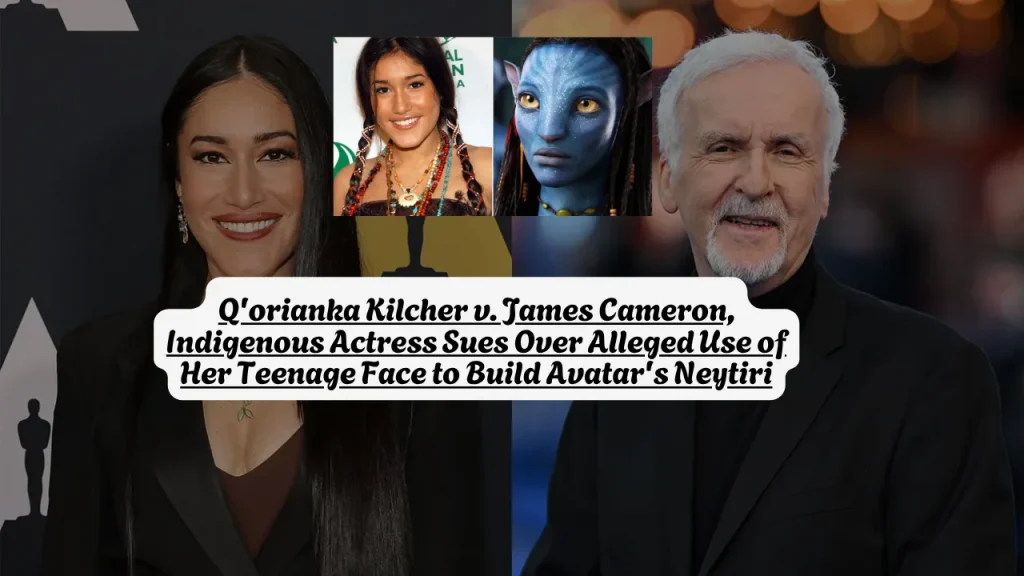
Filmmaker James Cameron and Twentieth Century Fox Film Corp. based the likeness of an Avatar character on the features of Indigenous actress Q’orianka Kilcher without her permission, she alleged in a complaint filed in the U.S. District Court for the Central District of California. The case is Kilcher v. Cameron, No. 2:26-cv-04832, filed May 5, 2026. Kilcher was 14 years old when the photograph that allegedly became the foundation of Neytiri’s face was taken. Neither Cameron nor Disney has responded to the complaint.
Quick Facts: Kilcher v. Cameron et al.
| Field | Detail |
| Lawsuit Filed | May 5, 2026 |
| Plaintiff | Q’orianka Kilcher |
| Defendants | James Cameron; The Walt Disney Company; Lightstorm Entertainment; multiple VFX vendors |
| Alleged Violations | Right of publicity; misappropriation of likeness; California deepfake statute (enacted late 2025); unjust enrichment |
| Who Is Affected | Individual plaintiff — not a class action |
| Court & Jurisdiction | U.S. District Court, Central District of California, No. 2:26-cv-04832 |
| Lead Counsel | Arnold P. Peter, Peter Law Group; co-counsel Law Offices of Asher Hoffman, APC |
| Relief Sought | Compensatory damages; disgorgement of profits from ticket sales, merchandise, and franchise extensions; injunctive relief; corrective public disclosure |
| Defendants’ Response | TBD — neither Cameron nor Disney has responded as of May 8, 2026 |
| Next Hearing Date | TBD — case in earliest litigation stage |
| Last Updated | May 8, 2026 |
What Is Q’orianka Kilcher v. James Cameron Lawsuit About?
Q’orianka Kilcher is a Native Peruvian actress who rose to international prominence at age 14 when she starred as Pocahontas in Terrence Malick’s critically acclaimed film The New World (2005). The lawsuit alleges that in that same year, Cameron saw a photograph of Kilcher published in the Los Angeles Times promoting The New World — and identified her image as the solution to a design problem he was struggling with: the Neytiri character appeared “too alien” to elicit empathy from audiences.
According to the complaint, Cameron extracted her facial features from the published photograph and directed his design team to use it as the foundation for Neytiri’s face. Kilcher’s likeness was replicated in production sketches, sculpted into three-dimensional maquettes, laser-scanned into high-resolution digital models, and distributed across multiple visual effects vendors to form the character’s final appearance — seen in theaters, on posters, in merchandise, across sequels and re-releases.
The first Avatar film earned more than $2.92 billion worldwide. The franchise is among the highest-grossing in film history. Kilcher received no compensation, no credit, and — according to the complaint — no notice that any of this was happening.
This case sits at the intersection of right-of-publicity law and the growing legal frontier around biometric identity in commercial production pipelines. For context on how courts have handled the unauthorized use of a minor’s image in commercial contexts, see our coverage of the Brooke Shields Playboy lawsuit and child privacy rights case — a foundational case in the history of minors’ rights over their own likeness.
How Kilcher Found Out — In Cameron’s Own Words
Kilcher learned the full extent of what had allegedly happened late last year when a broadcast video interview with Cameron began circulating on social media. In the interview, Cameron stands in front of the Neytiri sketch and specifically identifies Kilcher: “The actual source for this was a photo in the L.A. Times, a young actress named Q’orianka Kilcher. This is actually her…her lower face. She had a very interesting face.”
That was not the first time Cameron acknowledged the connection. Kilcher and Cameron first met at a charity event shortly after Avatar’s 2009 release. Cameron invited her to his office. When she arrived, a staff member presented her with a framed print of a sketch and a handwritten note from Cameron that read: “Your beauty was my early inspiration for Neytiri. Too bad you were shooting another movie. Next time.”
Related article: Lucky Strike Bowling Class Action, Were You Hit With Higher Prices? Here Is What Is Happening
Kilcher said in a statement: “When I received Cameron’s sketch, I believed it was a personal gesture, at most a loose inspiration tied to casting and my activism. I never imagined that someone I trusted would systematically use my face as part of an elaborate design process and integrate it into a production pipeline without my knowledge or consent.”
Are You Part of Q’orianka Kilcher v. James Cameron Lawsuit?
This is an individual lawsuit, not a class action. You cannot join this case as a plaintiff.
The only people directly affected by this specific complaint are Q’orianka Kilcher as the plaintiff and the named defendants — James Cameron, The Walt Disney Company, Lightstorm Entertainment, and the VFX vendors named in the filing.
However, if you are a performer, model, or public figure who believes your likeness, face, or biometric features were used commercially without your consent — in film, advertising, AI-generated content, or digital character design — you may have your own right-of-publicity claim. A free legal consultation with an entertainment or consumer rights lawyer can help you understand your options.
The Deepfake Statute Claim — Why This Is Legally Unprecedented
The complaint goes beyond standard right-of-publicity claims. Because Kilcher was 14 in The New World and her face model was used on a character that engaged in a sex act on film, the suit alleges that Cameron’s team violated California’s recently enacted anti-deepfake pornography law — enacted in late 2025 — which carries a fine of $2,500 per violation and up to one year in a California county jail.
This is the legal dimension that makes Kilcher’s case genuinely novel. A character built from a minor’s extracted biometric features, later depicted in intimate scenes, falls squarely into the territory the California legislature designed that statute to address — even if the production process predates the law’s existence.
Legal experts note the case could become a landmark in defining rights over digital likeness and biometric identity in entertainment, especially as AI-driven production becomes standard practice in major franchises.
For context on how California courts and legislatures have been expanding biometric and digital privacy protections, our article on the Instagram biometric privacy lawsuit and BIPA settlements shows how quickly this area of law is moving.
What the Lawsuit Demands
Kilcher seeks compensatory damages, disgorgement of all profits attributable to her likeness use — including ticket sales, merchandise, and franchise revenue across multiple sequels and re-releases — plus injunctive relief and corrective public disclosure.
Kilcher’s lead counsel Arnold P. Peter stated: “He took the unique biometric facial features of a 14-year-old Indigenous girl, ran them through an industrial production process, and generated billions of dollars in profit without ever once asking her permission.”
The complaint also frames the case in cultural terms. The filing states: “The result was a hugely lucrative film franchise that presented itself as sympathetic to Indigenous struggles, all while silently exploiting a real Indigenous youth behind the scenes.”
This connects directly to Disney’s broader legal exposure. The Walt Disney Company, which now owns the Avatar franchise, is a named defendant. For background on how Disney has handled other large-scale entertainment litigation, see our article on the Disney $50 million ESPN streaming antitrust settlement.
Kilcher v. Cameron: Case Timeline
| Milestone | Date |
| Kilcher appears in The New World as Pocahontas | 2005 (age 14) |
| Cameron allegedly extracts Kilcher’s facial features from L.A. Times photo | ~2005 |
| Avatar releases globally | December 2009 |
| Cameron gives Kilcher framed sketch with handwritten note | ~2010 |
| Avatar: The Way of Water releases | December 2022 |
| Cameron interview circulates on social media; Kilcher learns scope of alleged use | Late 2025 |
| California anti-deepfake pornography statute enacted | Late 2025 |
| Avatar: Fire and Ash releases | December 2025 |
| Kilcher files complaint — Kilcher v. Cameron, No. 2:26-cv-04832 | May 5, 2026 |
| Cameron / Disney response | TBD — no response filed as of May 8, 2026 |
| Next scheduled hearing | TBD — early litigation stage |
Frequently Asked Questions
Is there a class action lawsuit against James Cameron or Disney over Avatar?
No. Kilcher v. Cameron is an individual lawsuit filed by one plaintiff in the U.S. District Court for the Central District of California. It is not a class action. No other plaintiffs are currently named.
Do I need to do anything if I watched Avatar?
No. This case does not affect movie audiences or ticket buyers. It is a dispute between the plaintiff and the defendants over the alleged unauthorized commercial use of a specific individual’s biometric likeness.
When will this case resolve?
TBD — the case was filed May 5, 2026, and is in the earliest possible stage. Neither Cameron nor Disney has responded to the complaint yet. Individual entertainment lawsuits of this complexity typically take two to four years to reach resolution.
Can Cameron argue that Kilcher’s face was just “inspiration” rather than a legal violation?
That is exactly the central legal dispute. The lawsuit argues Cameron’s process was not artistic inspiration but a deliberate, commercial act of biometric extraction — with Kilcher’s face captured in sketches, sculpted into maquettes, laser-scanned into digital models, and distributed to VFX vendors at industrial scale. The court will decide whether that process crosses the legal line from inspiration to misappropriation.
What is the right of publicity and does it apply here?
California’s right of publicity gives individuals — including minors — the legal right to control commercial use of their name, likeness, and identity. The complaint argues that extracting and commercially deploying Kilcher’s facial features without consent violated that right, regardless of whether the resulting character looks like a blue alien rather than a human being.
Did Cameron ever publicly acknowledge using Kilcher’s likeness?
Yes. In a video interview that circulated on social media in late 2025, Cameron stood in front of the Neytiri sketch and said: “The actual source for this was a photo in the L.A. Times, a young actress named Q’orianka Kilcher. This is actually her…her lower face.” The complaint cites this interview as key evidence.
Has Kilcher spoken publicly about the lawsuit?
Yes. Kilcher stated: “It is deeply disturbing to learn that my face, as a 14-year-old girl, was taken and used without my knowledge or consent to help create a commercial asset that has generated enormous value for Disney and Cameron. That crosses a major line. This act is deeply wrong.”
Sources & References
- U.S. District Court, Central District of California — Kilcher v. Cameron, No. 2:26-cv-04832 (filed May 5, 2026)
- Variety — James Cameron Sued Over Unauthorized Use of Actress’ Likeness in Avatar (May 6, 2026)
- Bloomberg Law — James Cameron Sued Over Use of Actress’ Likeness in Avatar (May 6, 2026)
- The Hollywood Reporter — Q’orianka Kilcher v. James Cameron (May 6, 2026)
- Peter Law Group / Law Offices of Asher Hoffman, APC — case overview and complaint documents
Disclaimer: This article is for informational purposes only and does not constitute legal advice. Legal claims and outcomes depend on specific facts and applicable law. For advice regarding a particular situation, consult a qualified attorney.
About the Author
Israr Ahmad is a legal content researcher with 4+ years of experience covering class action settlements and consumer rights cases. He has researched and published coverage of 2,500+ settlements using verified court records, settlement administrator filings, and government sources. Learn more about Israr.