
$14M Intermountain Health Overtime & Wage Settlement, Are You Eligible to Claim?
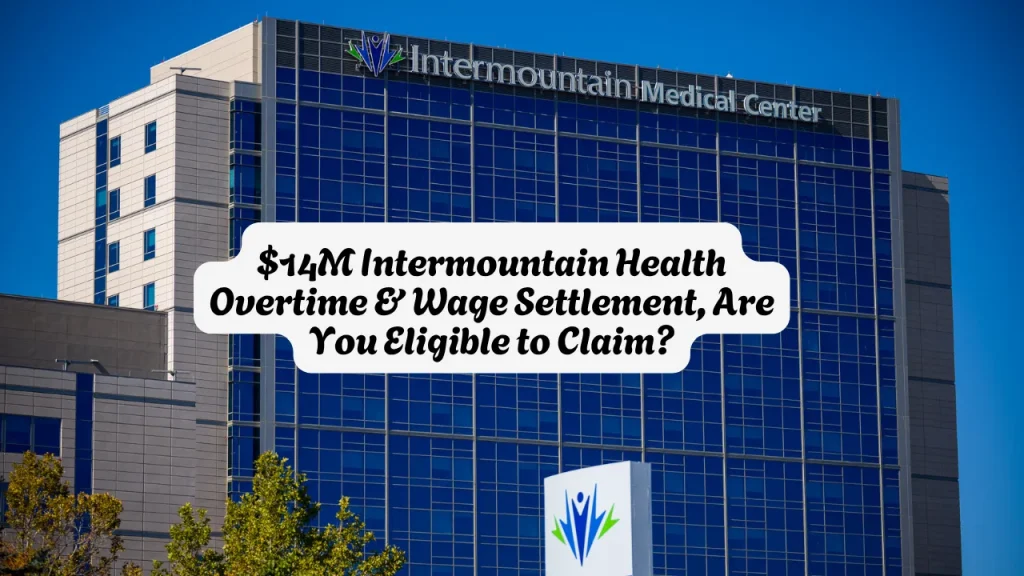
The Intermountain Health Wage Settlement is a wage-and-hour class action where eligible Colorado nurses and healthcare workers can receive compensation from a proposed $14,000,000 settlement fund by filing a claim before the deadline posted at the official settlement administrator website. Nurses urged a Colorado federal judge on April 21, 2026 to grant preliminary approval to the settlement, which resolves claims that their employer failed to properly calculate overtime and provide required breaks. The settlement is pending preliminary court approval as of the date of this article.
Quick-Facts
| Field | Detail |
| Settlement Amount | $14,000,000 |
| Claim Deadline | TBD — claim portal not yet open pending preliminary court approval |
| Who Qualifies | Nurses and healthcare workers employed by Intermountain Health Care Inc. in Colorado who were affected by improper overtime calculation or missed break policies |
| Payout Per Person | TBD — determined by individual claims resolution process after final court approval |
| Proof Required | TBD — claim form not yet released by administrator |
| Settlement Status | Proposed — Preliminary Approval Pending as of April 21, 2026 |
| Administrator | TBD — not yet publicly identified |
| Official Website | TBD — claim portal not yet open |
| Last Updated | April 22, 2026 |
Current Status & What Happens Next
- As of April 21, 2026, plaintiffs have asked a Colorado federal judge to grant preliminary approval to the $14,000,000 class action settlement. No preliminary approval order has been issued yet.
- The case is assigned to Judge Regina M. Rodriguez in the U.S. District Court for the District of Colorado. Once she grants preliminary approval, a class notice period will open and class members will receive direct notification with claim filing instructions.
- After the notice period closes, a final fairness hearing will be scheduled — only then will the settlement administrator distribute payments to eligible class members. Eligible workers should watch for direct mail or email notice from the settlement administrator.
What Is the Intermountain Health Lawsuit About? Sheehy et al. v. Intermountain Health Care Inc., No. 1:25-cv-00914
Nurses filed a proposed class action against Intermountain Health Care Inc. in the U.S. District Court for the District of Colorado, Case No. 1:25-cv-00914, alleging the company failed to account for holiday premium pay when calculating overtime wages. The lawsuit claims this practice caused workers to receive a lower overtime rate than the law requires — a violation of the Fair Labor Standards Act (FLSA) and the Colorado Minimum Wage Act (CMWA). Employees who regularly received holiday shift premiums effectively had their overtime “regular rate” deflated, reducing every overtime dollar they earned.
A federal judge ruled in May 2025 that the nurses’ claim under the Colorado Minimum Wage Act could proceed alongside the federal FLSA claim, rejecting Intermountain’s attempt to narrow the lawsuit. The dual-statute theory — federal and state — is significant because Colorado wage law can provide additional remedies beyond what federal law alone would allow.
A magistrate judge recommended class certification for the nurses’ holiday pay claims in January 2026, finding the group could move forward together as a class. That recommendation set the stage for the settlement now before the court.
Related article: $22.5M Dallas BBQ ERISA ESOP Settlement, Are You Eligible to Claim?
Who Is Eligible for the Intermountain Health Settlement?
- You may qualify if you worked as a nurse or other hourly healthcare employee at an Intermountain Health Care Inc. facility in Colorado during the covered period.
- You may qualify if your employer paid you a holiday premium or shift differential on top of your base hourly rate during weeks when you also worked overtime.
- You may qualify if Intermountain calculated your overtime rate using only your base hourly wage — excluding the holiday or shift premium — resulting in a lower overtime payout than you were legally owed.
- You may qualify if you experienced automatic meal break deductions or missed required rest breaks during your scheduled shifts, and were not compensated for that time.
- You may not qualify if you were a salaried exempt employee not subject to FLSA or CMWA overtime requirements during the covered period.
Note: The exact class definition, covered employment dates, and eligibility criteria are TBD — subject to the preliminary approval order from Judge Rodriguez.
How Much Money Can You Get from the Intermountain Health Settlement?
The total settlement fund is $14,000,000. Individual payouts are TBD — the settlement administrator has not yet published a per-person payment formula, as the claim process has not opened. Final payout amounts in wage-and-hour settlements of this type typically depend on the number of overtime hours worked and the number of qualifying weeks during the covered employment period — but no specific formula has been confirmed from official sources for this case.
Attorneys’ fees, settlement administration costs, and service awards to named plaintiffs will be deducted from the $14,000,000 fund before distribution to class members. The net amount available to workers will be disclosed in the class notice once preliminary approval is granted. Class members should review that notice carefully when it arrives to understand their individual estimated recovery.
Step-by-Step: How to File Your Intermountain Health Claim Form
The claim portal is not yet open. Preliminary approval from Judge Rodriguez must first be granted before class notices go out. When the process opens, eligible class members should follow these steps:
- Watch for your class notice — after preliminary approval, Intermountain will provide class member contact data to the administrator, who will send direct notice by mail or email.
- Review your eligibility period — confirm the dates you worked at an Intermountain Health facility in Colorado and whether you received holiday premium or shift differential pay during overtime weeks.
- Visit the official claim website — the URL will be included in your class notice; do not use any other site to file.
- Complete the claim form — enter your personal details, employment dates, and select your applicable pay category or payout tier as instructed.
- Upload documentation if required — pay stubs, schedules, or other records may be requested; save copies of everything you submit.
- Submit your claim and save your confirmation number — retain this as proof of a timely, valid filing.
Estimated time to complete: 10–15 minutes once the portal opens.
Important Deadlines & Dates
| Milestone | Date |
| Lawsuit Filed | March 21, 2025 |
| Motion to Dismiss Denied | May 22, 2025 |
| Class Certification Recommended | January 16, 2026 |
| Preliminary Approval Motion Filed | April 21, 2026 |
| Preliminary Approval Hearing | TBD — pending court scheduling by Judge Rodriguez |
| Claim Filing Deadline | TBD — opens after preliminary approval is granted |
| Opt-Out Deadline | TBD — pending preliminary approval order |
| Objection Deadline | TBD — pending preliminary approval order |
| Final Approval Hearing | TBD — pending preliminary approval order |
| Expected Payment Date | TBD — pending final court approval |
Frequently Asked Questions
1. Do I need a lawyer to file a claim?
No. Once the Intermountain Health settlement claim portal opens, eligible class members can file directly without retaining personal counsel. Plaintiffs’ attorneys in Case No. 1:25-cv-00914 represent the class collectively. If you have specific questions about your individual situation, consulting an employment attorney is always an option.
2. Is this settlement legitimate?
Yes. The proposed $14,000,000 settlement is pending review by Judge Regina M. Rodriguez of the U.S. District Court for the District of Colorado in Case No. 1:25-cv-00914. It is a court-supervised federal proceeding, not a private solicitation.
3. When will I receive my payment?
Payment timing is TBD. The court must first grant preliminary approval, then a notice period must run, and then a final fairness hearing must occur before any payments issue. Based on the April 21, 2026 filing for preliminary approval, eligible workers should not expect payments before late 2026 at the earliest.
4. What if I missed the claim deadline?
The claim deadline has not been set yet. If you believe you qualify as a class member and do not receive a class notice after preliminary approval is granted, contact plaintiffs’ counsel promptly to verify your status before the deadline closes.
5. Will this settlement payment affect my taxes?
Possibly. Wage-and-hour settlement payments that compensate for unpaid overtime are generally treated as ordinary income by the IRS and may be subject to payroll tax withholding. The portion allocated to liquidated damages may receive different tax treatment. Consult a qualified tax advisor about your specific circumstances.
6. What exactly did Intermountain allegedly fail to do?
Nurses alleged that Intermountain Health Care excluded holiday premium pay from the calculation of their overtime “regular rate,” which artificially lowered their overtime pay on weeks when they worked holiday shifts. Federal and Colorado law require all forms of remuneration — including shift premiums — to be factored into the base rate used for overtime calculation.
7. Does the Colorado Minimum Wage Act give workers more protection than federal law?
Colorado’s wage law can independently require proper overtime calculation even where federal FLSA claims are limited. A federal judge confirmed in May 2025 that the nurses’ Colorado Minimum Wage Act overtime claim could proceed alongside the FLSA claim, meaning employees may recover under both statutes if the settlement is structured accordingly.
8. Am I automatically included if I worked at Intermountain during the covered period?
Class members in FLSA collective actions must typically opt in, while Rule 23 state law class members are included automatically unless they opt out. This case includes both types of claims — the exact participation mechanism for each claim will be detailed in the class notice issued after preliminary approval.
Sources & References
- Justia Dockets — Sheehy et al. v. Intermountain Health Care Inc., Case No. 1:2025-cv-00914 (D. Colo.): https://dockets.justia.com/docket/colorado/codce/1:2025cv00914/242416
- Law360 — Case tracker, Sheehy et al. v. Intermountain Health Care Inc.: https://www.law360.co.uk/healthcare-authority/cases/67dcd201ce930d1325fab670/articles
Prepared by the AllAboutLawyer.com Editorial Team and reviewed for factual accuracy against publicly available court records and legal news reporting on April 22, 2026. Last Updated: April 22, 2026
Disclaimer: This article is for informational purposes only and does not constitute legal advice. Legal claims and outcomes depend on specific facts and applicable law. For advice regarding a particular situation, consult a qualified attorney.
About the Author
Israr Ahmad is a legal content researcher with 4+ years of experience covering class action settlements and consumer rights cases. He has researched and published coverage of 2,500+ settlements using verified court records, settlement administrator filings, and government sources. Learn more about Israr.