
Google $50M Black Workers Discrimination Settlement, What Black Workers Need to Know
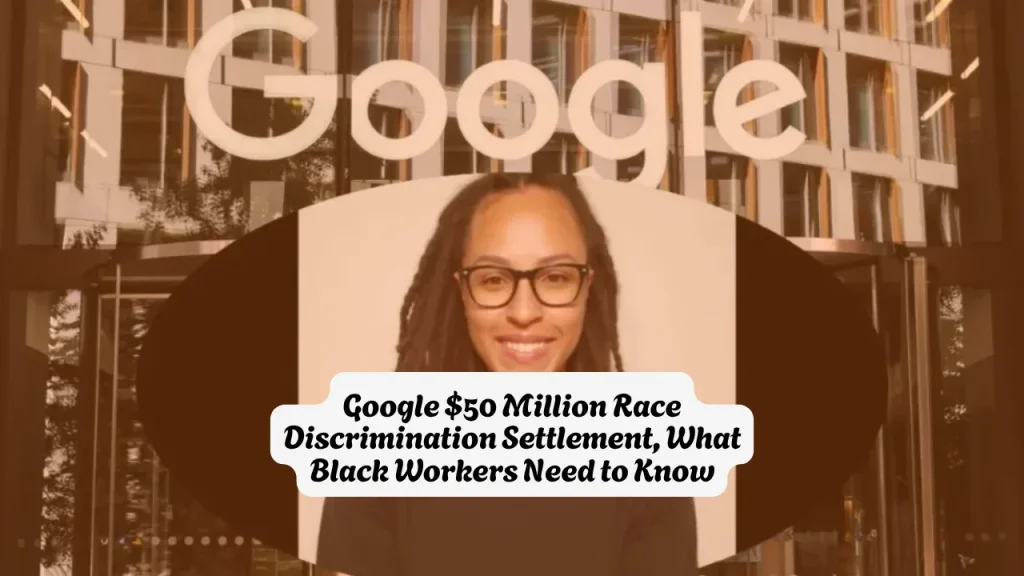
A federal judge has granted preliminary approval to a $50 million settlement in a racial discrimination lawsuit brought by thousands of Black Google employees who say the tech company steered them into lower-level jobs and paid them less than their white peers. The preliminary approval was signed by U.S. Magistrate Judge Kandis Westmore in the Northern District of California on December 7, 2025. A final approval hearing is now scheduled for May 7, 2026.
Quick Facts
| Field | Detail |
| Case Name | Curley v. Google LLC, Case No. 4:22-cv-01735 |
| Court | U.S. District Court, Northern District of California |
| Settlement Amount | $50,000,000 |
| Who Is Covered | ~4,000 Black and “Black+” Google employees in California and New York |
| Preliminary Approval | December 7, 2025 |
| Opt-Out / Objection Deadline | March 20, 2026 (now passed) |
| Final Approval Hearing | May 7, 2026 |
| Payout Per Person | TBD — individualized claims process |
| Settlement Status | Preliminarily approved — awaiting final approval |
| Settlement Administrator | TBD |
Where the Case Stands Right Now
- The court granted preliminary approval on December 7, 2025. The opt-out and objection deadline was March 20, 2026, and the motion for final approval was due April 2, 2026.
- The final approval hearing is set for May 7, 2026. If the judge signs off, payments and the individualized claims process will move forward.
- Google has not admitted any wrongdoing as part of the agreement.
What This Lawsuit Is About
The lawsuit traces back to 2021, when California’s Civil Rights Department launched an investigation into Google’s treatment of Black female employees. In 2022, lead plaintiff April Curley, an African American woman who designed outreach programs to help Google recruit from historically Black colleges and universities, filed a formal complaint in federal court alleging that Google discriminated and retaliated against her and similarly situated employees on the basis of race, sex, and sexual orientation in violation of federal and New York state and city laws.
The lawsuit accused Google of fostering a racially biased corporate culture where Black employees were routinely steered into lower-level roles, paid less than their peers, given lower performance evaluations, and denied advancement opportunities. Hiring managers allegedly viewed Black candidates as not “Googly” enough, and interviewers reportedly asked them “level-inappropriate questions” that made their chances of advancement worse.
Curley herself says she was denied promotions, labeled an “angry” Black woman, and ultimately fired while she was preparing a report on the company’s alleged racial bias. The lawsuit was filed on behalf of roughly 4,000 Black and “Black+” workers — Google’s internal designation for employees who identify as Black or multiracial with Black heritage.
Related article: $135M Google Android Data Transfer Settlement, Are You Eligible to Claim? Claim Before May 9, 2026
Who Is Covered by This Settlement
The settlement covers current and former Black and “Black+” Google employees who worked in California or New York. Based on court filings, you may be included if:
- You are a current or former Google employee who identifies as Black or as “Black+” under Google’s internal race designation
- You worked at Google in California or New York during the covered period
- You experienced disparate treatment in hiring level, pay, promotion, or performance evaluation
- You did not submit a valid opt-out form before the March 20, 2026 deadline
If you did not opt out, you are likely still part of the settlement class and bound by its terms once the court grants final approval.
How Much Will Each Person Receive?
Unlike many class action settlements that use standard formulas to divide funds, this agreement uses an individualized claims process. Class members will submit forms describing their experiences and claimed harms, including lost wages and emotional distress. Northwestern Pritzker School of Law Professor Lynn Cohn will oversee the evaluation of each individual claim.
This means payouts will vary based on each person’s specific situation — someone who lost years of wages due to repeated denied promotions may receive more than someone whose harm was more limited. Final individual amounts are TBD until the claims resolution process runs.
Class counsel will seek attorneys’ fees of up to 25% of the settlement fund, which amounts to up to $12.5 million. The three class representatives may also seek service awards of up to $50,000 each for leading the case.
What Google Must Now Do
The $50 million cash fund is only part of what Google agreed to. Google must conduct regular race-based pay equity audits, end mandatory arbitration in employment disputes through August 2026, and publish salary and bonus ranges in job postings to improve compensation transparency. Google also agreed to strengthen internal reporting mechanisms to better address concerns related to bias in hiring, leveling, and promotion decisions.
Google committed to analyzing pay over the next three years to identify unexplained differences based on race before pay changes are finalized for the following year, and will investigate any concerns raised and take action if it finds any employee has been leveled or paid incorrectly for an unlawful reason.
Google stated it strongly disagrees with the allegations and that the settlement involves no admission of wrongdoing. Still, the non-monetary provisions represent meaningful, court-enforceable changes to how the company manages pay and advancement for tens of thousands of employees.
Why This Case Matters Beyond Google
This settlement is one of the largest racial workplace discrimination settlements against a major tech company in U.S. history. The case illustrates that symbolic workplace programs are not enough — courts now expect hiring, leveling, and pay systems to deliver real, trackable outcomes.
The case also broke ground in how it handles payouts. Most employment class actions divide a settlement fund by a formula — a fixed amount per class member regardless of individual experience. Here, a law professor will review each person’s specific story. That approach treats the claims more like individual lawsuits, giving workers with deeper documented harm a stronger chance of receiving meaningful compensation.
For Black workers at other large companies who face similar patterns, the Curley settlement serves as a clear signal: federal courts are willing to take systemic pay and promotion discrimination seriously, even when the employer disputes every allegation.
Important Dates and Deadlines
| Milestone | Date |
| Original Complaint Filed | March 2022 |
| Settlement Reached in Mediation | March 2025 |
| Preliminary Approval Granted | December 7, 2025 |
| Opt-Out / Objection Deadline | March 20, 2026 (passed) |
| Motion for Final Approval Due | April 2, 2026 |
| Final Approval Hearing | May 7, 2026 |
| Expected Payment Timeline | TBD — after final approval |
Frequently Asked Questions
Do affected Google employees need a lawyer to receive payment?
No. Class members do not need to hire a lawyer to participate in the settlement. Once final approval is granted, eligible class members will go through an individualized claims process administered under court supervision. If you believe your individual losses significantly exceed what the settlement may offer, consulting an employment attorney about opting out was the right step — but that deadline has now passed.
Is this settlement legitimate?
Yes. The settlement received preliminary approval from U.S. Magistrate Judge Kandis Westmore in the Northern District of California on December 7, 2025. It is a real federal court proceeding. The final approval hearing is scheduled for May 7, 2026.
When will class members receive payment?
Payments will not go out until after the court grants final approval on or after May 7, 2026. After that, the individualized claims process — where each class member’s specific harm is evaluated — must run its course. A realistic timeline for payments is likely late 2026 at the earliest. All payment timing is TBD.
What if I missed the opt-out deadline?
The opt-out deadline was March 20, 2026, and it has passed. If you did not opt out, you remain part of the settlement class and will be bound by its terms once the court grants final approval. This means you give up the right to sue Google separately for the claims covered by this lawsuit, but you remain eligible to receive compensation through the claims process.
Will a settlement payment affect my taxes?
Possibly, depending on what portion of your payment covers lost wages versus emotional distress. Payments that replace lost wages are generally treated as taxable income, while payments for emotional distress may be treated differently. You should consult a tax professional once you receive your payment to understand how it applies to your specific situation.
What is the “Black+” category that Google uses?
Google uses “Black+” as an internal designation similar to the EEOC category of “Two or More Races” where one race is Black. The settlement covers both employees who identify solely as Black and those who identify as multiracial with Black heritage, as both groups faced the same alleged patterns of discrimination.
Does Google admit it discriminated against Black workers?
No. Google stated it strongly disagrees with the allegations and that the agreement involves no admission of wrongdoing. Settling a lawsuit does not equal an admission of guilt under U.S. law. Companies frequently settle to avoid the cost and uncertainty of a trial, even when they dispute all claims.
What if I experienced similar discrimination at a different tech company?
This settlement only covers Google employees in California and New York. If you experienced racial pay or promotion discrimination at another employer, you may have separate legal rights under Title VII of the Civil Rights Act and applicable state laws. For context on how similar workplace discrimination cases are covered, you can review AllAboutLawyer.com’s coverage of the Google $700 million settlement and other employment-related actions. Employees who experienced pay or promotion discrimination should document their experiences thoroughly and speak with an employment attorney about their options. You may also file a charge with the EEOC at no cost.
Sources and References
Last Updated: April 7, 2026
Disclaimer: This article is for informational purposes only and does not constitute legal advice. Legal claims and outcomes depend on specific facts and applicable law. For advice regarding a particular situation, consult a qualified attorney.
About the Author
Israr Ahmad is a legal content researcher with 4+ years of experience covering class action settlements and consumer rights cases. He has researched and published coverage of 2,500+ settlements using verified court records, settlement administrator filings, and government sources. Learn more about Israr.