
GM Class Action Claims 2025 Chevy Traverse and Four Other Models Have Faulty Brake Master Cylinders
Six vehicle owners have filed a new putative class action against General Motors LLC, claiming five of its 2025 model-year vehicles can lose braking power suddenly, and that GM knew about the problem and has not recalled them.
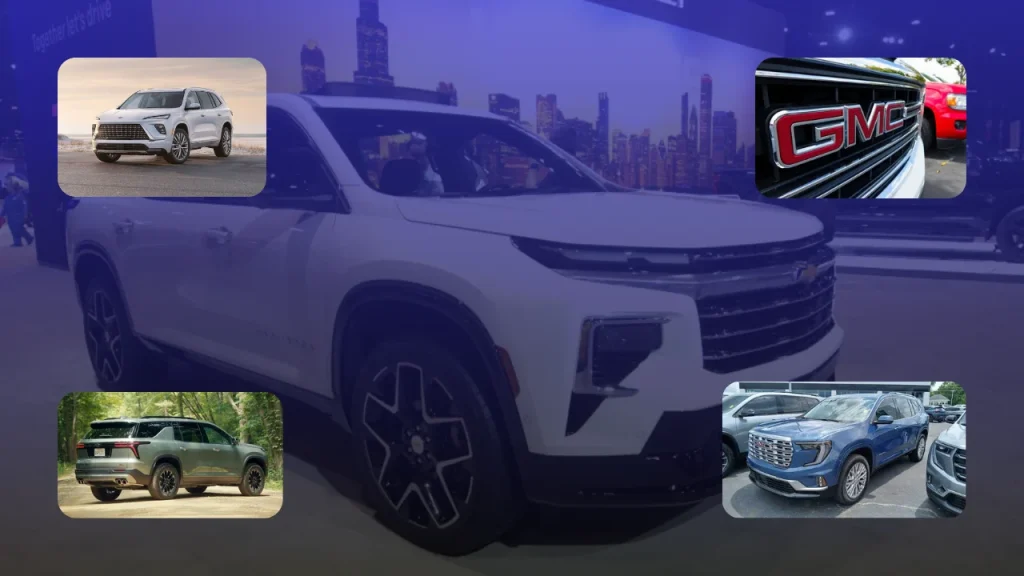
The case is Fehrmann, et al. v. General Motors LLC, No. 2:26-cv-07669, filed October 6, 2026, in the U.S. District Court for the Eastern District of Pennsylvania. It names the 2025 Chevrolet Traverse, GMC Acadia, Buick Enclave, Chevrolet Colorado and GMC Canyon.
Two things to know up front. First, this is not the first lawsuit over this part. A near-identical case, Barron v. General Motors, was filed a year earlier, was reportedly dismissed, and was refiled. Second, this lawsuit is not the same as a separate federal investigation into GM’s eBoost brake system covering roughly 1.16 million vehicles. Some models overlap, but the two matters should not be treated as one confirmed defect or recall.
Everything here describes allegations in a complaint. GM has not been found liable, no court has decided whether the claims can proceed as a class, and there is no settlement or claim form.
Quick Facts
| Item | Detail |
| Case | Fehrmann, et al. v. General Motors LLC |
| Case Number | 2:26-cv-07669 |
| Court | U.S. District Court, Eastern District of Pennsylvania |
| Filed | October 6, 2026 |
| Lead Plaintiff | Stephanie Fehrmann, with five other plaintiffs |
| Defendant | General Motors LLC |
| Plaintiffs’ Counsel | Sergei Lemberg, Lemberg Law LLC |
| Vehicles | 2025 Chevrolet Traverse, GMC Acadia, Buick Enclave, Chevrolet Colorado, GMC Canyon |
| Alleged Defect | Defective master brake cylinder assemblies |
| Proposed Class | Buyers and lessees of those vehicles in Illinois, Kentucky, Michigan, Ohio or Texas |
| Relief Sought | Class certification, damages, attorney fees and costs, jury trial |
| Class Certified? | No |
| Recall for This Issue | None reported for these 2025 models |
| Settlement or Claim Form | None; there is nothing to file right now |
Which 2025 GM Vehicles Are Named?
- 2025 Chevrolet Traverse: midsize SUV
- 2025 GMC Acadia: midsize SUV
- 2025 Buick Enclave: midsize SUV
- 2025 Chevrolet Colorado: midsize pickup
- 2025 GMC Canyon: midsize pickup
The complaint does not establish that every vehicle of these models has a defective part. Owners should confirm their exact model year and VIN before assuming any lawsuit, investigation, service campaign or recall applies to their vehicle.
What Is the Alleged Brake Defect?
According to published reports of the complaint, the plaintiffs say the master brake cylinder assemblies in these vehicles fail abruptly, often without warning and sometimes soon after delivery. The instrument cluster allegedly shows a red brake warning light, an ABS warning light and a “Service Brake System” message.
The plaintiffs describe two ways it feels to the driver: a brake pedal that turns stiff and hard to press, or one that sinks toward the floor. Either way, they say, the result is a partial or total loss of braking and a higher risk of a crash. Some owners allegedly tried workarounds, such as shutting the vehicle off and restarting it, or pumping the pedal.
These are allegations, not a finding that every listed vehicle will have these symptoms. A sudden change in braking is a safety issue, so anyone who experiences it should stop driving when it is safe, avoid continuing to use a vehicle that may be unsafe, and get qualified help.
What Does the Lawsuit Say GM Knew?
The knowledge allegation is the center of the case, because it supports the fraud-style, consumer-protection and warranty claims.
The plaintiffs point to a GM service update about the 2024 Chevrolet Traverse, which they say involved master cylinder assemblies with a missing internal cartridge seal in the eBoost module. The service update, N242482170, is public on NHTSA’s site. Its revision dated August 20, 2025 covers the 2025 Buick Enclave and 2024 Chevrolet Traverse and tells dealers to replace the brake master cylinder. The complaint, as reported, says GM issued no dealer bulletin about the defect and put out only one service update, on December 9, 2024, and only for the 2025 Enclave.
The plaintiffs say that, even so, GM has not issued a safety recall or told dealers to repair the problem across the affected models. They also allege GM failed to fix the defect within a reasonable time under its new-vehicle limited warranty, and that the defect leaves the vehicles worth less than they should be.
These remain disputed allegations. A service update about earlier or other vehicles does not by itself prove every named model has the same defect or that GM violated the law.
The Earlier Case: Barron v. General Motors
The same lawyer filed Barron, et al. v. General Motors LLC, No. 2:25-cv-05696, in the same court on October 2, 2025. It named the same five vehicles and made the same core claim. The original plaintiffs were Eric Barron of Pennsylvania and Chelsey Thompson of New York, both Traverse owners, and the proposed class covered New York and Pennsylvania.
Published reports say GM moved to dismiss, arguing neither plaintiff was injured because dealerships replaced their master cylinders free of charge under warranty, and that the original two-plaintiff case was dismissed in early 2026. A refiled version reportedly added Simon Moeller of Missouri, who owns a 2025 GMC Acadia, and expanded the class to Missouri, New York and Pennsylvania. In that round, GM also reportedly argued that none of the plaintiffs owned the specific vehicles named in the service update.
The current status of Barron has not been confirmed. Fehrmann covers different states, which is consistent with a separate case built on other states’ consumer laws, but the complaint itself would have to confirm the strategy.
Related article: FTAC II–Paysafe Merger $59.5M Class Action Settlement, Who Qualifies, How Payments Work and How to File by January 7, 2027
Is This the Same as NHTSA’s eBoost Investigation?
No. The lawsuit is a private civil case. NHTSA’s investigation is a federal safety inquiry.
What NHTSA is doing. On August 21, 2026, NHTSA’s Office of Defects Investigation opened Engineering Analysis EA26006, upgrading an earlier preliminary evaluation (PE24011) that began more than two years before, after complaints of lost brake assist in 2023 Cadillac Lyriq vehicles. It now covers about 1.16 million vehicles that use GM’s eBoost electronic brake-assist system, including some GM-built Honda Prologue and Acura ZDX models as peer vehicles. Reports say NHTSA has logged 745 unique incidents, including 22 crashes or fires and six injuries, and that no fatalities are listed.
GM has told NHTSA that a spindle fracture in the eBoost can cause loss of ABS, brake assist, stability control and traction control after the vehicle comes to a complete stop. NHTSA says some complaints describe a different failure, an immediate loss of brake assist while braking, which could extend stopping distance. The models covered include the Buick Enclave and Envision, Cadillac Lyriq, Optiq and Celestiq, Chevrolet Blazer, Blazer EV, Colorado, Equinox EV and Traverse, and GMC Acadia and Canyon, across several model years (for the five lawsuit models, roughly 2023 or 2024 through 2026). No recall has been announced.
How it differs from the lawsuit.
| Fehrmann Lawsuit | NHTSA EA26006 | |
| Type | Private civil class action | Federal safety investigation |
| Focus | Master brake cylinder assemblies | eBoost brake-assist system failures |
| Vehicles | Five 2025 models | Many models and model years, plus Honda and Acura peers |
| Outcome sought | Money damages and class relief | Possible defect finding or recall |
| Status | Complaint filed; no class certified | Engineering analysis; no recall |
The master cylinder is part of the brake system the eBoost works with, and the complaint itself references an eBoost module seal, so the two matters are related in subject. But the complaint’s alleged failure mechanism and NHTSA’s reported one (a spindle fracture) are described differently, and whether the same component is at issue has not been established. An NHTSA investigation is not a recall, and a lawsuit does not confirm a defect.
The Legal Hurdles Ahead
Free repairs and “injury”
If Barron is any guide, expect GM to argue that owners whose brakes were repaired for free have no damages. This is a standing argument, and it is the main reason the first case stalled. Plaintiffs typically respond that a safety defect lowers what the vehicle was worth at purchase (a benefit-of-the-bargain or diminished-value theory), that repeat repairs and long waits for backordered parts are harm in themselves, and that a free repair does not erase a concealed defect. Courts have not all treated this the same way, and no outcome should be predicted. Article III standing requires a concrete injury (TransUnion LLC v. Ramirez, 594 U.S. 413 (2021)).
One class for two different parts?
Reports on the earlier case noted that the Colorado and Canyon use a different master cylinder than the Traverse, Acadia and Enclave, which share a platform. The Fehrmann complaint, as reported, still groups all five together. That could raise commonality and typicality issues under Federal Rule of Civil Procedure 23.
Why Pennsylvania?
The reported class states (Illinois, Kentucky, Michigan, Ohio, Texas) do not include Pennsylvania, though the case is in a Pennsylvania federal court. GM may challenge personal jurisdiction over out-of-state plaintiffs’ claims or seek a transfer, for example under 28 U.S.C. § 1404(a) or based on cases such as Bristol-Myers Squibb Co. v. Superior Court, 582 U.S. 255 (2017). This is a common defense in multistate cases, not something reported in this one, and the complaint would need to be checked to see which plaintiffs live where.
State-by-state claims
The claims reportedly rest on the consumer-protection laws of the five states, which differ in what they require, such as proof of reliance, notice before suing, or whether a class action is allowed. Plaintiffs also commonly plead breach of express warranty (the new-vehicle limited warranty), breach of implied warranty and, for federal claims, the Magnuson-Moss Warranty Act (15 U.S.C. § 2301 et seq.). The specific counts should be confirmed from the complaint. The case likely sits in federal court under the Class Action Fairness Act (28 U.S.C. § 1332(d)), which covers large multistate class actions.
Recalls vs. Service Updates vs. Lawsuits
- A recall is a safety remedy, usually free to owners, under federal law (49 U.S.C. §§ 30118 to 30120). A manufacturer must notify NHTSA within five business days of determining a safety defect exists (49 C.F.R. § 573.6), and NHTSA can pursue a recall if it finds a defect.
- A service update or technical service bulletin is a manufacturer instruction to dealers. It is not a recall, and manufacturers must send such communications to NHTSA (49 C.F.R. § 579.5).
- A class action is a private lawsuit seeking compensation or other relief. It does not itself order repairs.
The lawsuit’s central theory, that GM should have recalled these vehicles, runs into the fact that NHTSA, not a private court, usually decides whether a safety defect warrants a recall.
Who Could Be in the Class?
The plaintiffs want to represent anyone who bought or leased one of the five 2025 vehicles in Illinois, Kentucky, Michigan, Ohio or Texas. The class is state-by-state because the claims rest on each state’s laws.
No class exists yet. A judge has not certified anything, and being in one of those states with one of those vehicles does not make you a party. If you bought or leased a vehicle in another state, do not assume you are included. The court’s rulings will determine which claims and class definitions can proceed.
What Happens Next?
- GM responds, most likely with a motion to dismiss. Given the history, expect standing arguments first.
- Rulings on the motion. Claims may be narrowed, dismissed or allowed to proceed.
- Discovery, if claims survive, including repair records, warranty data and internal communications.
- Class certification. Plaintiffs must satisfy Rule 23. These rulings often take many months.
- Settlement or trial. A settlement is possible at any stage. None has been reported.
What Owners Should Do Now
You cannot join Fehrmann now. But if you own one of these vehicles and see warning lights or a pedal that feels wrong, these steps cost nothing and protect your position:
- Prioritize safety. Treat any loss of braking power as urgent. If the brakes behave unexpectedly or a serious warning appears, stop driving when it is safe and arrange towing if needed.
- Get it inspected promptly by an authorized dealer and ask for any diagnostic codes in writing.
- Keep every repair order, including dates, mileage and what the dealer found. If a part is backordered, get that in writing.
- Document warnings, such as dashboard messages, only when it is safe to do so.
- Check your VIN for open recalls at NHTSA.gov/recalls. No open recall does not rule out a defect or an ongoing investigation.
- Report the problem to NHTSA. Complaints can add to its data, but filing one does not make you part of the lawsuit.
- Consider your legal options. Depending on your state, a repeated defect may raise warranty or lemon-law claims, and an attorney can assess your situation.
Be careful with sites or messages claiming a payment is guaranteed or that a claim deadline has been announced. None exists for this case.
What Is Not Established
- No court has found that the master cylinders are defective or that GM violated any law.
- No class has been certified.
- No safety recall has been reported for this specific issue.
- NHTSA’s eBoost investigation has not concluded that a defect exists or required a recall.
- Details of the complaint come from published reports and the docket listing, and should be checked against the complaint.
Frequently Asked Questions
What is the Fehrmann v. General Motors lawsuit about?
Stephanie Fehrmann and five other owners allege that 2025 Chevrolet Traverse, GMC Acadia, Buick Enclave, Chevrolet Colorado and GMC Canyon vehicles have defective master brake cylinder assemblies that can cause partial or total loss of braking.
Which states are in the proposed class?
Illinois, Kentucky, Michigan, Ohio and Texas. No class has been certified.
Has GM recalled these vehicles?
Published reports say no safety recall has been issued for this master cylinder issue on these 2025 models. GM did publish service update N242482170 telling dealers to replace the master cylinder in certain 2025 Enclave and 2024 Traverse vehicles. Check your VIN at NHTSA.gov/recalls.
Is this the same as the NHTSA investigation?
No. NHTSA’s Engineering Analysis EA26006 covers about 1.16 million vehicles with GM’s eBoost brake-assist system. Some models overlap with the lawsuit, but the alleged defects and proceedings are different, and NHTSA has not announced a recall.
Is Fehrmann the same as the Barron case?
They name the same vehicles, rely on the same alleged defect and are brought by the same law firm in the same court, but they are separate cases with different plaintiffs and different proposed state classes.
What did GM argue in the earlier Barron case?
Published reports say GM argued the plaintiffs were not harmed because their master cylinders were replaced for free, and that they did not own the vehicles named in the service update.
Can I claim money?
No. There is no settlement, no certified class and no claim form.
What if my vehicle has brake problems?
Prioritize safety, get a prompt inspection, keep all repair records, check your VIN for recalls, and report the problem to NHTSA. An attorney can advise on warranty or lemon-law options.
Key Dates
| Date | Event |
| December 9, 2024 | GM service update for the 2025 Buick Enclave, per the complaint as reported |
| 2024 | NHTSA opens preliminary evaluation PE24011 (eBoost, 2023 Cadillac Lyriq complaints) |
| August 20, 2025 | Revision of GM service update N242482170 (2025 Enclave, 2024 Traverse) |
| October 2, 2025 | Barron v. General Motors LLC filed (E.D. Pa.) |
| Early 2026 | Original Barron complaint reported dismissed |
| April 2026 | Barron reportedly refiled with a Missouri plaintiff added |
| August 21, 2026 | NHTSA opens Engineering Analysis EA26006 (about 1.16 million vehicles) |
| October 6, 2026 | Fehrmann v. General Motors LLC filed (E.D. Pa.) |
Related Coverage
- AT&T, State Farm and CVS Hit With Five TCPA Text Message Class Actions
- Anytime Fitness Robocall TCPA Lawsuit, What Members Need to Know About Automated Voicemail Messages
Sources and Records
- Federal docket listing for Fehrmann, et al. v. General Motors LLC, No. 2:26-cv-07669 (E.D. Pa.): https://dockets.justia.com/docket/pennsylvania/paedce/2%3A2026cv07669/663268
- Top Class Actions, “GM class action claims Chevy Traverse, other 2025 models have faulty brakes,” October 13, 2026: https://topclassactions.com/lawsuit-settlements/lawsuit-news/gm-class-action-claims-chevy-traverse-other-2025-models-have-faulty-brakes/
- General Motors, Service Update N242482170-01, “Brake Master Cylinder,” August 20, 2025, via NHTSA: https://static.nhtsa.gov/odi/tsbs/2025/MC-11021982-0001.pdf
- Top Class Actions, report on the October 2, 2025, filing of Barron, et al. v. General Motors LLC, No. 2:25-cv-05696 (E.D. Pa.): https://topclassactions.com/lawsuit-settlements/lawsuit-news/general-motors-class-action-claims-vehicles-have-defective-brake-assemblies/
- Barron, et al. v. General Motors LLC complaint: https://www.classaction.org/media/barron-et-al-v-general-motors-llc.pdf
- GM Authority, “GM Truck And Crossover Brake Master Cylinder Lawsuit Fails,” January 2026: https://gmauthority.com/blog/2026/01/gm-truck-and-crossover-brake-master-cylinder-lawsuit-fails/
- The BRAKE Report, “GM Brake Master Cylinder Lawsuit Refiled With Three Plaintiffs”: https://thebrakereport.com/gm-brake-master-cylinder-lawsuit-refiled-with-three-plaintiffs/
- CarComplaints, “GM Brake Master Cylinder Failure Lawsuit Names 5 Models”: https://www.carcomplaints.com/news/2026/gm-brake-master-cylinder-failure-lawsuit.shtml
- NHTSA Office of Defects Investigation, Engineering Analysis EA26006 opening resume: https://static.nhtsa.gov/odi/inv/2026/INOA-EA26006-17028.pdf
- GM Authority, “NHTSA investigating 1.1M GM vehicles over eBoost brake system failures,” August 2026: https://gmauthority.com/blog/2026/08/nhtsa-investigating-1-1m-gm-vehicles-over-eboost-brake-system-failures/
- CBT News, “NHTSA expands GM brake probe to 10 models, two Honda vehicles”: https://www.cbtnews.com/nhtsa-expands-gm-brake-probe-to-10-models/
- Electrek, “Over 1.1 million GM vehicles, including EVs, are under NHTSA investigation,” August 24, 2026: https://electrek.co/2026/08/24/over-1-1m-gm-vehicles-evs-nhtsa-investigation/
- NHTSA recalls lookup: https://www.nhtsa.gov/recalls ; NHTSA safety problem reporting: https://www.nhtsa.gov/report-a-safety-problem
- 49 U.S.C. §§ 30118 to 30120; 49 C.F.R. §§ 573.6 and 579.5; 28 U.S.C. §§ 1332(d) and 1404(a); 15 U.S.C. § 2301 et seq.; Fed. R. Civ. P. 23; TransUnion LLC v. Ramirez, 594 U.S. 413 (2021); Bristol-Myers Squibb Co. v. Superior Court, 582 U.S. 255 (2017)
Information is based on court filings and published reports as of October 14, 2026. Lawsuit allegations are unproven. This article is general information, not legal advice. AllAboutLawyer.com is not a law firm. Confirm the latest docket entries and the original complaint before relying on any detail. If you spot an error, tell us and we will correct it.
About the Author
Israr Ahmad is a legal content researcher with 4+ years of experience covering class action settlements and consumer rights cases. He has researched and published coverage of 2,500+ settlements using verified court records, settlement administrator filings, and government sources. Learn more about Israr.