
Frigorífico Gorina Raw Beef Recall, Nearly 30,000 Pounds Pulled From Florida and Texas
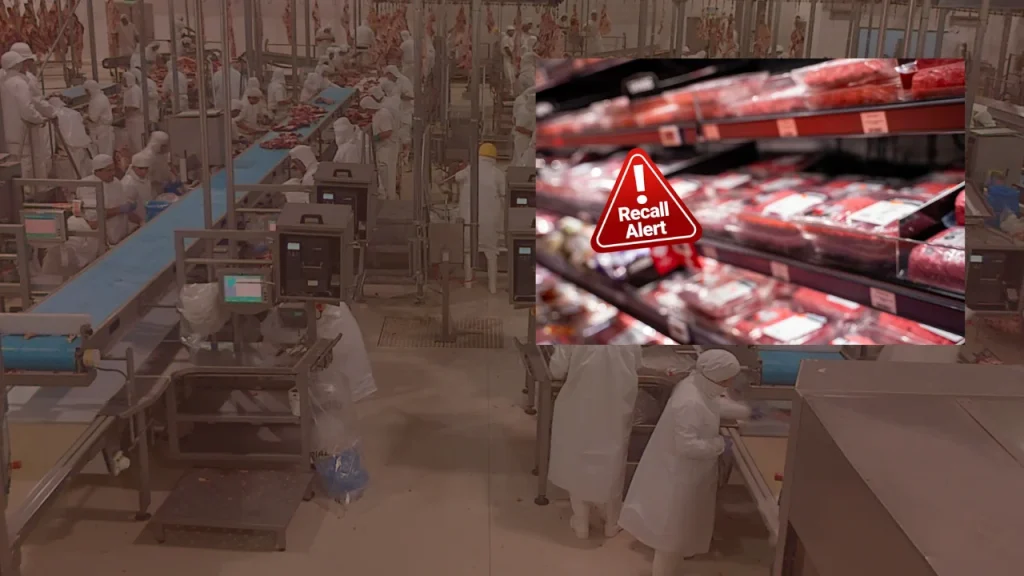
If you’ve bought imported Argentine beef in Florida or Texas recently, it’s worth checking your freezer. On August 7, 2026, the USDA’s Food Safety and Inspection Service announced a recall of roughly 29,628 pounds of raw boneless beef carrying the “Frigorífico Gorina SAIC” label, after the product was imported from Argentina without going through required U.S. reinspection. No illnesses have been reported, but here’s exactly what was recalled and why.
Frigorífico Gorina Beef Recall — Key Facts
| Recalling Company | Corte Argentino USA LLC, Aventura, Florida |
| Brand on Label | Frigorífico Gorina SAIC (imported from Argentina) |
| Amount Recalled | Approximately 29,628 pounds |
| Reason for Recall | Imported without the benefit of required U.S. import reinspection |
| FSIS Classification | High – Class I |
| States Affected | Florida and Texas (distributors and retailers; wider distribution, including restaurants and hotels, has not been ruled out) |
| Production Dates | May 15–20, 2026 |
| Use/Freeze-By Dates | September 15–20, 2026 |
| Product Markings | Argentine establishment number “EST. N° OF. 2025”; shipping mark “26644-AA” |
| Illnesses Reported | None confirmed as of this writing |
| Announcement Date | August 7, 2026 |
| Last Updated | August 28, 2026 |
Why This Beef Was Recalled
This wasn’t triggered by a positive pathogen test or a reported illness. FSIS says the problem surfaced during routine inspection activity: the beef had entered the U.S. from Argentina without going through import reinspection, the checkpoint where FSIS verifies documentation, labeling, packaging, and the product’s general condition — and, in some cases, tests for contaminants — before foreign meat is allowed into U.S. commerce. Skipping that step doesn’t mean the meat is confirmed unsafe. It means nobody has confirmed that it’s safe, which is exactly why FSIS treats it as a recall rather than a formality.
That’s also why this recall carries FSIS’s “High – Class I” classification, even with zero reported illnesses. Class I is the agency’s label for a “reasonable probability” of serious health consequences — a risk category tied to how the failure occurred, not proof that anyone was actually harmed. In practice, uninspected meat automatically gets treated at that highest risk tier until it’s proven otherwise.
What Products Are Affected
The recall covers five cuts of boneless beef, all sold in cardboard boxes of various weights under the Frigorífico Gorina SAIC label:
- Top Sirloin Butt (“Cuadril Sin Tapa”)
- Eye Round (“Peceto”)
- Topside Cap Off (“Nalga AD S/Tapa”)
- Flat (“Carnaza Cuadrada”)
- Knuckle (“Bola de Lomo”)
Every box carries the Argentine establishment number “EST. N° OF. 2025” and shipping mark “26644-AA” — check for both if you’re trying to confirm whether beef in your freezer is part of this recall. Because the product was sold in bulk boxes rather than individual retail packaging, it’s the kind of thing more likely to end up repackaged at a butcher counter, restaurant kitchen, or hotel banquet department than sold exactly as-is — which is part of why FSIS says it may have reached food service operations in addition to home kitchens.
Related article: CareCloud Data Breach Lawsuit, Were You Affected? — Arslanian v. CareCloud Inc., No. 1:2026-cv-23048
Where This Beef Came From
Frigorífico Gorina SAIC is a family-owned beef processing and export operation based in La Plata, Argentina. Corte Argentino USA LLC, the Florida company that imports and distributes it, describes itself as a supplier of premium Argentine beef cuts to restaurants, hotels, and catering companies across the U.S., alongside American Angus and Australian Wagyu products.
The recall lands against a bigger backdrop: expanded Argentine beef imports have been a point of controversy this year, following a trade arrangement between the U.S. and Argentina aimed at increasing beef imports to help ease record U.S. beef prices — a move that drew pushback from American ranchers and skepticism from economists about whether it would actually lower grocery prices. This recall isn’t connected to that broader trade fight in any legal sense, but it’s part of why more Argentine beef has been moving into U.S. distribution channels in the first place.
What to Do If You Have This Beef
- Check any raw beef in your freezer or fridge for the Frigorífico Gorina SAIC label and the “EST. N° OF. 2025” or “26644-AA” markings.
- Don’t cook or eat it, even if it looks and smells normal — the concern here is a missed inspection step, not something you’d be able to detect yourself.
- Throw it away or return it to where you bought it.
- If you ate it and are feeling unwell, contact a healthcare provider — though FSIS has not confirmed any illnesses tied to this product.
- Restaurants, caterers, and retailers that received bulk shipments should check their own receiving records against the production and use-by date windows above, not just look for a retail label.
Is There a Lawsuit Over This?
Not that’s been publicly reported, and there’s no indication of one forming — FSIS hasn’t linked this recall to any confirmed illness, which is usually what drives product liability litigation in a food recall. This is a paperwork and inspection failure, not a confirmed contamination event.
If you or someone in your household did get sick after eating beef matching this recall, that’s a different situation. Save the packaging (with the establishment number and shipping mark visible), any receipts, and document your symptoms and any medical treatment. A foodborne illness attorney can advise you on whether a claim is worth pursuing, but as of this writing, that’s a hypothetical, not an active case.
Sources Used in This Article
- U.S. Department of Agriculture, Food Safety and Inspection Service, official recall notice, August 7, 2026: fsis.usda.gov
- FSIS Recalls & Public Health Alerts index: fsis.usda.gov/recalls
Researched and written by Israr Ahmad, legal content researcher and founder of AllAboutLawyer.com. All facts verified against the official FSIS recall notice on August 28, 2026. Last Updated: August 28, 2026.
This article is for informational purposes only and does not constitute legal advice. If you believe a food product has made you ill, consult a qualified attorney about your specific situation.
About the Author
Israr Ahmad is a legal content researcher with 4+ years of experience covering class action settlements and consumer rights cases. He has researched and published coverage of 2,500+ settlements using verified court records, settlement administrator filings, and government sources. Learn more about Israr.