
FDA Peptide Compounding Policy 2026, What the New Proposal Could Change for BPC-157, TB-500 and Other Peptides
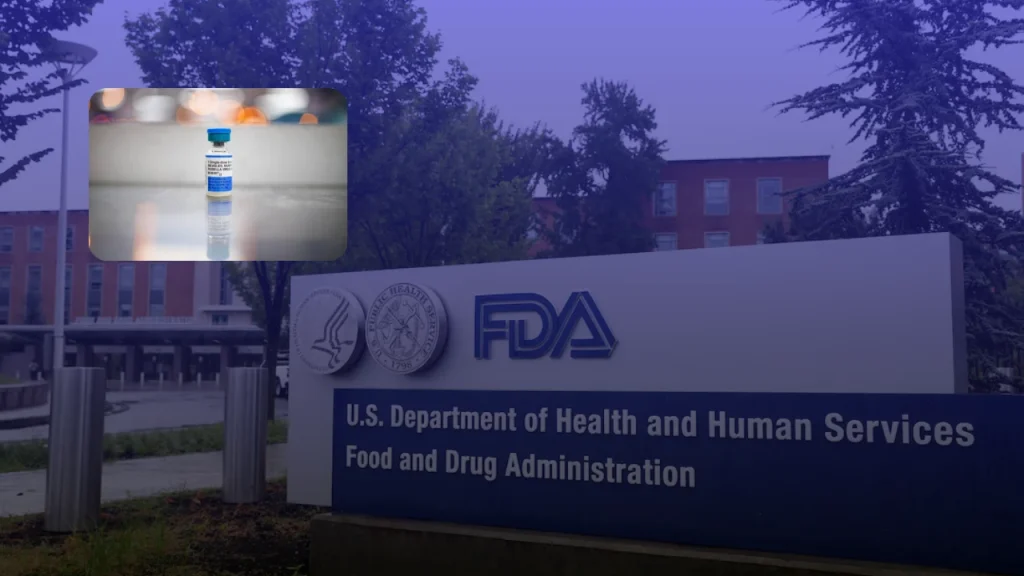
The U.S. Food and Drug Administration (FDA) has taken a step toward changing how pharmacies may compound certain peptides, including substances promoted for muscle recovery, injury healing, sleep and anti-aging. On October 14, 2026, an interim policy titled “Interim Access Policy for Compounding Using Certain Peptides” was submitted to the White House Office of Management and Budget (OMB) for review.
The proposed policy could give compounding pharmacies temporary regulatory flexibility for certain peptides. However, the public filing does not disclose the full policy, the complete list of covered substances, the conditions for access or an effective date. The submission is not an FDA approval of any peptide, and it does not by itself make any peptide legal for pharmacies to compound. The OMB record still showed the action as pending when checked on October 16, 2026.
Important notice: AllAboutLawyer.com is an independent legal information publication. We are not a law firm and do not provide medical or legal advice. This article explains federal rules and does not recommend any product.
Quick Facts: FDA Peptide Compounding Policy
| Detail | What is known |
| Federal agency | U.S. Food and Drug Administration (HHS) |
| Policy name | Interim Access Policy for Compounding Using Certain Peptides |
| Regulatory identifier | RIN 0910-ZD94 |
| Submitted to OMB | October 14, 2026 |
| Reviewing office | White House Office of Management and Budget |
| Current status | Pending review |
| Peptides reviewed by the FDA advisory committee in July 2026 | BPC-157, KPV, TB-500, MOTS-c, Semax, epitalon and emideltide (DSIP) |
| Does the submission approve these peptides? | No |
| Effective date | Not announced in the public filing |
| Full policy text public? | Not as of October 16, 2026 |
| Blanket authorization for every pharmacy? | None announced |
What Did the FDA Submit to the White House?
The OMB listing shows an interim access policy received on October 14, 2026, with the review pending. It does not include the full policy or identify every peptide that might qualify.
Reporting suggests the policy may use enforcement discretion, meaning a regulator chooses not to pursue certain violations under specified circumstances. Enforcement discretion is different from formally approving a drug or changing a drug-substance list through the full regulatory process. Courts have long treated an agency’s decision not to enforce as largely within its discretion (Heckler v. Chaney, 470 U.S. 821 (1985)), but that discretion does not change what the statute requires.
Until the policy text is published, patients and pharmacies should not treat the White House submission as permission to buy, prescribe, sell or compound every peptide marketed online.
Background: How the FDA Got Here
- Earlier restrictive stance: Reporting says that in 2023-2024 the FDA placed around 20 popular peptides, including BPC-157, TB-500, Ipamorelin, MOTS-c and epitalon, into Category 2 of its Section 503A interim compounding policy. Category 2 covers bulk drug substances the FDA identified as potentially presenting significant safety risks, and the agency said pharmacies should not compound them. The FDA cited limited human data, immunogenicity (immune reaction) risk and impurity concerns.
- Demand and political shift: Reports attribute the re-examination to growing public and telehealth demand and support from HHS leadership, including HHS Secretary Robert F. Kennedy Jr. These are reported characterizations, not official findings.
- July 2026 advisory meeting: The FDA’s Pharmacy Compounding Advisory Committee reviewed seven peptides on July 23-24, 2026, to advise on potential addition to the Section 503A bulks list.
- October 2026: The interim access policy was sent to OMB.
Which Peptides Could Be Affected?
The committee evaluated these substances for the potential uses the FDA asked it to consider:
| Peptide | Potential uses evaluated in July 2026 |
| BPC-157 | Ulcerative colitis |
| KPV | Wound healing and inflammatory conditions |
| TB-500 | Wound healing |
| MOTS-c | Obesity and osteoporosis |
| Semax | Cerebral ischemia, migraine and trigeminal neuralgia |
| Epitalon | Insomnia |
| Emideltide (DSIP) | Opioid withdrawal, chronic insomnia and narcolepsy |
These are the subjects of the committee’s review, not proven benefits, approved indications or evidence of effectiveness. For example, BPC-157 was evaluated for ulcerative colitis, which does not show it works for tendon injuries, muscle recovery or other uses sellers promote.
Reports say the committee recommended six of the seven (all except emideltide/DSIP) by narrow margins. That was a nonbinding advisory recommendation. The October filing does not confirm whether the interim policy will cover all six, some, or a different group. Reports also say the committee plans to review additional Category 2 peptides, including GHK-Cu and LL-37, but no dates or outcomes were verified.
Advisory Votes Are Not Final Decisions
FDA advisory committees give expert advice and make nonbinding recommendations. The agency does not have to follow them, and the July votes did not automatically add any substance to the bulks list. Staff concerns about insufficient safety and effectiveness evidence were also reported.
Does the Law Require a Federal Register Rule?
Adding a substance to the Section 503A bulks list generally requires notice-and-comment rulemaking (see 21 U.S.C. § 353a(c) and 21 C.F.R. § 216.23; the Administrative Procedure Act, 5 U.S.C. § 553). An interim policy is different: it is a guidance-style or enforcement-discretion approach that does not itself amend the list. FDA guidance documents are governed by 21 C.F.R. § 10.115 and do not create legally binding rights. That is why the final text matters, and why a reported “must publish a proposed rule” description is an oversimplification. The OMB review of significant regulatory actions arises under Executive Order 12866, and the review can end with the policy being issued, changed or withdrawn.
What Does Federal Law Say About Compounded Peptides?
Compounded Drugs Are Not FDA-Approved
New drugs generally require FDA approval (21 U.S.C. § 355). Compounded drugs are not FDA-approved, and the FDA does not review each one for safety, effectiveness and quality before marketing. Section 503A of the Federal Food, Drug, and Cosmetic Act (21 U.S.C. § 353a) provides conditional exemptions from certain requirements, including approval and some labeling and manufacturing rules.
Section 503A: Pharmacies and Physicians
Key conditions include:
- Compounding by a licensed pharmacist or physician for an identified individual patient based on a valid prescription, subject to limited exceptions.
- Bulk drug substances must generally (a) comply with a United States Pharmacopeia (USP) or National Formulary monograph, (b) be a component of an FDA-approved drug, or (c) appear on the 503A bulks list (21 U.S.C. § 353a(b)(1)(A)).
- Bulk substances must be made by an FDA-registered establishment and accompanied by a certificate of analysis (§ 353a(b)(1)(B)-(D)).
- The pharmacy must not compound drugs that are “essentially copies” of commercially available drugs regularly or in inordinate amounts.
- State pharmacy law and boards of pharmacy also regulate compounding.
Section 503B: Outsourcing Facilities
Section 503B (21 U.S.C. § 353b), created by the Drug Quality and Security Act of 2013, covers registered outsourcing facilities. They must follow current good manufacturing practice, may compound without individual prescriptions in some cases, and have different bulk-substance rules. The July meeting focused on the 503A list, which does not automatically settle the position for 503B facilities.
Consequences of Noncompliance
Violations can lead to adulteration or misbranding allegations (21 U.S.C. §§ 351 and 352), prohibited-act liability (§ 331) and penalties (§ 333), plus FDA warning letters, seizures, injunctions and state board discipline. These are general descriptions, not a claim that any seller has violated the law.
Does the Policy Mean BPC-157 Is Approved?
No. FDA approval and a shift in enforcement priorities are different. A temporary policy limiting enforcement in certain circumstances does not establish that a peptide is safe and effective, approve it as a prescription drug or authorize every company to sell it. BPC-157 is often marketed online for injury recovery and other wellness uses. The FDA’s safety materials cite limited safety information for certain routes of administration and concerns about immunogenicity, peptide-related impurities and active-ingredient characterization.
Why the FDA Has Raised Safety Concerns
The FDA’s public materials, depending on the substance and route, identify:
- Limited human safety information.
- Immunogenicity: a possible unwanted immune response.
- Peptide-related impurities and aggregation.
- Difficulty characterizing the active ingredient.
The FDA’s safety-risk page discusses BPC-157, KPV, MOTS-c, Semax, epitalon and TB-500, among others. That does not mean the FDA has proven each causes harm; it means the evidence is insufficient to resolve particular risks.
“Research Use Only” Peptide Sales
Reports note that online products labeled “research chemicals” or “for research use only” fall outside the compounding framework. Under federal law, a product’s intended use can be shown by labeling, marketing and circumstances (see 21 C.F.R. § 201.128), so a “research use only” label does not necessarily prevent a product from being treated as an unapproved new drug or misbranded drug if it is marketed for human use. Advertising claims can also draw action under Section 5 of the FTC Act (15 U.S.C. § 45). Whether any particular seller violated the law is a fact-specific question.
Other Legal Points People Ask About
- Athletes: BPC-157 appears on the World Anti-Doping Agency’s Prohibited List (non-approved substances category). A change in FDA compounding policy would not change anti-doping rules.
- Advertising by compounders: The Supreme Court held in Thompson v. Western States Medical Center, 535 U.S. 357 (2002), that certain federal restrictions on advertising compounded drugs violated the First Amendment. That does not make false or misleading health claims lawful.
- State law: State boards of pharmacy and medical boards set their own rules, and state requirements may be stricter than federal policy.
- Prescribers: A change in enforcement policy would not remove a prescriber’s duty to consider evidence, risks, informed consent and applicable standards of care.
What Could It Mean for Patients and Pharmacies?
The immediate effect is uncertainty while the policy is under review.
- Patients: Do not assume a peptide sold as a research chemical, anti-aging injection or recovery product is FDA-approved. Ask a licensed health professional about the evidence, risks, alternatives and regulatory status.
- Prescribers: A future policy would not eliminate the need to evaluate safety evidence and legal requirements.
- Compounding pharmacies: The scope of any enforcement discretion will matter. Pharmacies will need to check whether a substance, formulation and practice meet the policy’s conditions.
- Telehealth companies and sellers: Plans to offer these products do not show FDA approval or that they can market them without restriction.
What Happens Next?
The next key development is publication of the policy text and any FDA announcement. The OMB record gives no completion date. After review, the administration could release the policy, define covered substances and conditions, or take further steps such as rulemaking on the bulks list. Check the OMB listing and the FDA’s compounding pages for updates. Until then, describe the policy as submitted for White House review, not as an effective authorization.
Key Dates
| Date | Event |
| 2013 | Drug Quality and Security Act creates Section 503B. |
| 2023-2024 | FDA places a group of peptides in Category 2 of its Section 503A interim policy (per reporting). |
| July 23-24, 2026 | FDA Pharmacy Compounding Advisory Committee reviews seven peptides. |
| October 14, 2026 | Interim Access Policy for Compounding Using Certain Peptides received by OMB. |
| October 16, 2026 | OMB record still shows the review as pending. |
Frequently Asked Questions
Has the FDA changed its peptide compounding rules as of October 16, 2026?
The policy was submitted for White House review and was still pending. The submission alone does not mean it has taken effect.
Can pharmacies legally compound BPC-157 now?
The October 14 submission gives no blanket permission. A pharmacy must comply with federal compounding requirements and any effective policy covering the substance and circumstances.
Did the FDA approve BPC-157, TB-500 or KPV in July 2026?
No. The July meeting was a nonbinding advisory review of proposed placement on the Section 503A bulks list.
Which peptides did the advisory committee consider?
BPC-157, KPV, TB-500, MOTS-c, Semax, epitalon and emideltide (DSIP).
Why did the FDA previously restrict these peptides?
Reporting says they were placed in Category 2 over limited human data, immunogenicity and impurity concerns.
Does enforcement discretion make a peptide FDA-approved?
No. It describes how an agency may use its enforcement authority. It is not a drug approval.
Are “research use only” peptides covered by compounding rules?
No. Those sales fall outside the compounding framework, and labeling does not necessarily determine legal status if a product is marketed for human use.
When will the policy take effect?
No effective date was stated in the public filing.
Related Legal Coverage on AllAboutLawyer
For background on approved drugs, compounded products and unapproved peptides, see Are Peptides Legal? Peptides Legal Status: What’s Actually Legal and What Isn’t.
Sources and Official Records
- Office of Management and Budget (OIRA), Interim Access Policy for Compounding Using Certain Peptides, RIN 0910-ZD94. https://www.reginfo.gov/public/do/eoReviewSearch?rin=0910-ZD94
- FDA, July 23-24, 2026, Pharmacy Compounding Advisory Committee meeting and materials. https://www.fda.gov/advisory-committees/advisory-committee-calendar/july-23-24-2026-meeting-pharmacy-compounding-advisory-committee-07232026
- FDA, Certain Bulk Drug Substances for Use in Compounding That May Present Significant Safety Risks. https://www.fda.gov/drugs/human-drug-compounding/certain-bulk-drug-substances-use-compounding-may-present-significant-safety-risks
- FDA, Human Drug Compounding Laws. https://www.fda.gov/drugs/human-drug-compounding/human-drug-compounding-laws
- FDA, Understanding the Risks of Compounded Drugs. https://www.fda.gov/drugs/human-drug-compounding/understanding-risks-compounded-drugs
- United States Code: 21 U.S.C. §§ 331, 333, 351, 352, 353a, 353b and 355; 5 U.S.C. § 553; 15 U.S.C. § 45. Code of Federal Regulations: 21 C.F.R. §§ 10.115, 201.128 and 216.23. Executive Order 12866.
- U.S. Supreme Court, Heckler v. Chaney, 470 U.S. 821 (1985); Thompson v. Western States Medical Center, 535 U.S. 357 (2002).
- World Anti-Doping Agency, Prohibited List.
- News reports on the July 2026 advisory votes, the 2023-2024 Category 2 placements, the HHS leadership context and future committee reviews (GHK-Cu, LL-37), which are reported, not independently verified, details.
Disclaimer: AllAboutLawyer.com provides general information about U.S. drug regulation. It is not medical advice or legal advice. Patients should consult a qualified health professional about treatment decisions and current FDA information about any particular product.
About the Author
Israr Ahmad is a legal content researcher with 4+ years of experience covering class action settlements and consumer rights cases. He has researched and published coverage of 2,500+ settlements using verified court records, settlement administrator filings, and government sources. Learn more about Israr.