
DOJ v. Kansas City, Kansas Public Schools, The Full Legal Breakdown
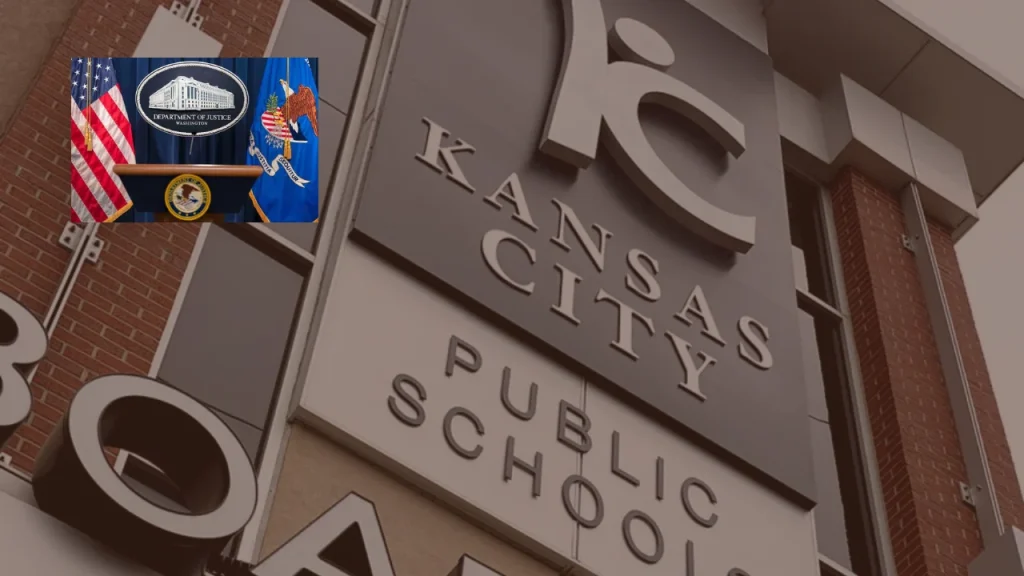
The U.S. Department of Justice sued Kansas City, Kansas Public Schools on September 1, 2026, in what it calls a first-of-its-kind case over how the district handles transgender and gender-nonconforming students. The district says it’s in full compliance with federal law and is fighting the suit. More than $70 million in federal funding — about 16% of the district’s budget — is on the line. Here’s the complete background, the exact statutes both sides are arguing over, and what happens next.
At a Glance
| Case Name | United States of America v. Unified School District No. 500, Wyandotte County, Kansas |
| Court & Docket | U.S. District Court for the District of Kansas, No. 2:26-cv-02519 |
| Filed | September 1, 2026 |
| Plaintiff | United States of America (DOJ Civil Rights Division + U.S. Attorney, District of Kansas) |
| Defendant | Unified School District No. 500 (Kansas City, Kansas Public Schools / KCKPS) |
| Laws Cited | FERPA, 20 U.S.C. § 1232g; PPRA, 20 U.S.C. § 1232h |
| Relief Sought | Declaratory judgment, injunction against the district’s Transgender Guideline, costs and fees |
| Federal Funding at Stake | More than $70 million (~16% of district budget) |
| District’s Position | Says it is in full compliance with FERPA and PPRA |
| Trial Date | Not yet set |
| Last Updated | September 3, 2026 |
What the Complaint Alleges
The complaint targets a document called the USD 500 Transgender and Gender Non-Conforming Students Internal Guidance Document, in use in its current form since 2024. According to the complaint, if a student is transgender or gender-nonconforming, staff who learn this are directed to notify the school principal, who can convene a “school planning meeting” covering the student’s preferred name, gender, pronouns, restroom and locker room use, and school records.
The disputed part: if a student asks to exclude their parents from that meeting, or doesn’t want their transgender or gender-nonconforming status disclosed to their parents, the guideline says that request gets evaluated case by case by a small group of district administrators and the district’s attorney — considering the student’s age, grade level, and welfare. Any resulting “Gender Plan” is put in writing and kept in district files, but the complaint alleges the district doesn’t give parents a way to see, challenge, or correct that plan if it excluded them.
It’s important to note these are allegations in a filed complaint — the district disputes the characterization, and none of this has been decided by a court yet.
The Two Laws at the Center of the Case
FERPA — 20 U.S.C. § 1232g. The Family Educational Rights and Privacy Act is a funding-conditions law: schools that take federal money have to let parents inspect and review their minor child’s education records, and give parents a way to challenge and correct information they believe is inaccurate. The complaint cites two specific provisions:
- § 1232g(a)(1)(A) — bars a school from maintaining a policy that denies or effectively prevents parents from inspecting their child’s education records
- § 1232g(a)(1)(D)(2) — requires schools to give parents a hearing process to challenge and correct records they believe are inaccurate or misleading
The complaint argues a Gender Plan created in a meeting parents were deliberately excluded from, with no later chance to review or dispute it, counts as a record that’s “effectively” inaccessible under the statute.
Related articles: Uber Drivers’ EU/UK AI Algorithm Lawsuit, Were You Affected?
PPRA — 20 U.S.C. § 1232h. The Protection of Pupil Rights Amendment separately requires written parental consent before a minor student is required to submit to any survey, analysis, or evaluation that reveals information in eight protected categories, including mental or psychological problems, sex behavior or attitudes, and religious beliefs (§ 1232h(b) lists all eight). The complaint argues that the case-by-case evaluation process itself — where administrators assess a student’s request to exclude parents — functions as exactly this kind of evaluation, without the written parental consent PPRA requires.
How DOJ gets to sue at all. This isn’t a civil rights claim brought directly under Title IX. It’s a funding-enforcement action: 20 U.S.C. § 1234c(a)(4) lets the Secretary of Education refer a district to DOJ once the Department finds the district isn’t in “substantial compliance” with FERPA or PPRA. According to the complaint, the Secretary made that FERPA finding on July 1, 2026, and the PPRA finding on August 25, 2026 — both of which had to happen before DOJ could file suit.
How the Case Got Here
- 2017 — A guidance document on transgender and gender-nonconforming students was presented to the KCKPS board as an information item; the board never formally voted to adopt it, but the district implemented a substantially similar internal guideline anyway, per the complaint.
- 2024 — The current version of the Transgender Guideline took effect.
- August 14, 2025 — The U.S. Department of Education opened a formal FERPA investigation into KCKPS.
- September 19, 2025 — KCKPS responded that the guidance document was irrelevant since the board never formally adopted it as policy.
- April 20, 2026 — The Department of Education announced that KCKPS and three other Kansas districts (Shawnee Mission, Olathe, and Topeka) were violating federal law, specifically finding their policies let schools conceal a student’s name or pronoun use from parents and allowed restroom, locker room, and athletics access based on gender identity rather than sex — a Title IX-related finding separate from the FERPA/PPRA claims in this lawsuit.
- June 2026 — The Department of Education gave the four districts 10 days to sign proposed resolution agreements.
- Late August 2026 — Topeka Public Schools reached an agreement, agreeing to stop creating “student gender support plans” and to let parents review existing records. Olathe and Shawnee Mission both declined to sign, each maintaining they hadn’t violated federal law.
- July 1, 2026 — The Secretary of Education found KCKPS out of substantial compliance with FERPA.
- August 12, 2026 — DOJ formally notified KCKPS that its Transgender Guideline violated FERPA and PPRA.
- August 25, 2026 — The Secretary of Education found KCKPS out of substantial compliance with PPRA.
- September 1, 2026 — DOJ filed suit in the District of Kansas.
What Kansas City, Kansas Public Schools Says
A district spokesperson said KCKPS maintains it is in full compliance with FERPA and PPRA and is disappointed by DOJ’s decision to sue, adding the district would respond through the normal legal process rather than commenting further while the case is pending.
Superintendent Dr. Anna Stubblefield told local station KSHB that the 2017 document DOJ cites was a report that was never formally adopted as policy — a point the complaint itself acknowledges, while arguing the district’s current guideline is substantially similar regardless. Stubblefield also said the district evaluates each situation case by case and that most parents already know if their child is transgender.
Separately, the complaint cites undated internal recordings in which a district administrator allegedly described the guideline as something not made available to the broader school community and safeguarded by “gatekeepers,” and another employee allegedly discussed how to navigate situations involving a student’s family and cultural or religious views on LGBTQ relationships. The district hasn’t publicly responded to these specific excerpts as of this writing.
Part of a Broader Pattern in Kansas — and Nationally
KCKPS is one of four Kansas districts the Department of Education flagged in April 2026 after a complaint from the Defense of Freedom Institute, a Washington, D.C.-based conservative nonprofit. Of the four, Topeka settled, Olathe and Shawnee Mission both refused to sign resolution agreements and maintain they’ve complied with federal law, and KCKPS is now the only one facing an actual federal lawsuit.
This case is also part of a larger national trend of federal and state authorities relitigating parental-notification policies in schools. On March 2, 2026, the U.S. Supreme Court granted an emergency appeal in Mirabelli v. Bonta, temporarily blocking a California law (AB 1955) that barred schools from telling parents about a student’s gender identity change without the student’s consent. In a 6-3 order, the Court reinstated a lower court’s injunction while the case continues in the Ninth Circuit, finding that California’s policy cut parents out of decisions about their children’s welfare. That ruling doesn’t bind the Kansas case, but both disputes turn on the same underlying question: when, if ever, a school can keep a student’s gender identity or transition process private from their parents.
What Happens Next
DOJ is asking the court for a declaration that KCKPS’s Transgender Guideline violates FERPA and PPRA, an injunction stopping the district from enforcing it, and an order requiring the district to give parents access to and a chance to correct any related records. The district has to respond to the complaint, and no trial date has been set. Given the funding at stake and the “first-of-its-kind” framing from DOJ, this case is likely to draw significant attention regardless of outcome, and an appeal is plausible whichever side loses.
Frequently Asked Questions
What specific laws does the DOJ say KCKPS violated?
The complaint cites the Family Educational Rights and Privacy Act, 20 U.S.C. § 1232g, and the Protection of Pupil Rights Amendment, 20 U.S.C. § 1232h — both funding-conditions statutes, not Title IX claims.
Has a court ruled on any of this yet?
No. As of this writing, this is a filed complaint. None of the allegations have been proven, and KCKPS disputes them.
Could KCKPS actually lose $70 million in funding?
That figure represents the federal funding tied to the district’s compliance with FERPA and PPRA, which the Department of Education can move to withhold if the district doesn’t come into compliance — separate from, but connected to, this lawsuit.
Did other Kansas districts face the same claims?
Yes. Shawnee Mission, Olathe, and Topeka were also flagged in April 2026. Topeka reached a resolution agreement; Olathe and Shawnee Mission refused to sign, maintaining they’ve complied with federal law.
How is this different from the California Supreme Court case?
Mirabelli v. Bonta involved a state law restricting what teachers could tell parents, decided on constitutional (First Amendment and due process) grounds. The KCKPS case is a federal funding-enforcement action under FERPA and PPRA, a different legal theory entirely, though both concern parental notification of a student’s gender identity.
Is this a class action or something parents can join?
No. This is a direct enforcement action brought by the federal government against the school district. It isn’t a private class action, and there’s no way for individual parents to join this specific case.
Sources Used in This Article
- U.S. Department of Justice — Complaint, United States v. Unified School District No. 500, No. 2:26-cv-02519 (D. Kan., filed Sept. 1, 2026): https://www.justice.gov/crt/media/1459841/dl
- U.S. Department of Justice — “Justice Department Sues Kansas City, Kansas Public Schools to Stop Secret Gender Transitions,” Sept. 1, 2026: https://www.justice.gov/opa/pr/justice-department-sues-kansas-city-kansas-public-schools-stop-secret-gender-transitions
- KCUR (Kansas News Service) — “Justice Department sues Kansas City, Kansas, Public Schools over transgender policies,” Sept. 1, 2026: https://www.kcur.org/education/2026-09-01/justice-department-sues-kansas-city-kansas-public-schools-transgender-policies
- U.S. Department of Education — “U.S. Department of Education Finds Four Kansas School Districts Violated Federal Law,” April 2026: https://www.ed.gov/about/news/press-release/us-department-of-education-finds-four-kansas-school-districts-violated-federal-law
- Clark Hill PLC — “U.S. Supreme Court Blocks California Transgender Student Nondisclosure Policy as Case Continues,” March 6, 2026: https://www.clarkhill.com/news-events/news/u-s-supreme-court-blocks-california-transgender-student-nondisclosure-policy-as-case-continues/
Researched and written by Israr Ahmad, legal content researcher and founder of AllAboutLawyer.com. Facts verified against the filed complaint and contemporaneous reporting as of September 3, 2026. Last Updated: September 3, 2026.
This article is for informational purposes only and does not constitute legal advice. It presents the claims in the complaint and the district’s response without taking a position on the merits of either side, as none of the allegations have been resolved by a court. Laws vary by state and individual circumstances differ. For advice about your specific situation, consult a qualified attorney.
About the Author
Israr Ahmad is a legal content researcher with 4+ years of experience covering class action settlements and consumer rights cases. He has researched and published coverage of 2,500+ settlements using verified court records, settlement administrator filings, and government sources. Learn more about Israr.