
Uber Drivers’ EU/UK AI Algorithm Lawsuit, Were You Affected?
This case applies to Uber drivers in the European Union and United Kingdom only. It is not a US lawsuit, and US-based drivers are not part of this claim.
Roughly 241,000 Uber drivers across the EU and UK are behind a landmark legal claim filed at Amsterdam’s district court, alleging Uber’s AI-powered pay-setting algorithm breaches European data protection law and has quietly pushed down what drivers earn. If you’ve driven for Uber anywhere in the EU or UK, here’s what the claim says, the law behind it, and what happens next.
At a Glance
| Claim Filed | September 2026, Amsterdam District Court, Netherlands |
| Defendant | Uber (claim filed where Uber’s European HQ is located) |
| Lead Organisation | Worker Info Exchange (WIE), founded by James Farrar |
| Drivers Covered | Approximately 241,000 across the EU and UK |
| Law Alleged | EU General Data Protection Regulation (GDPR), primarily Article 22 (automated decision-making) and related transparency provisions |
| Core Allegations | Unlawful automated decision-making/profiling in setting pay and allocating jobs; unlawful use of driver data to train AI models |
| Relief Sought | Compensation for affected drivers (reportedly could run into billions of euros) plus an injunction to stop the practices |
| Related Prior Ruling | Dutch data protection authority fined Uber €825m in August 2026 over automated account deactivations; Uber is appealing |
| Case Status | Newly filed; no ruling yet |
| Last Updated | September 3, 2026 |
What the Claim Says Uber Did
The claim centres on what drivers and Worker Info Exchange describe as a “black box” algorithm — a system drivers can’t see inside — that sets a personalised rate for each ride based on data collected about them. According to drivers involved in the case, the same job has been offered to two different drivers at two different prices, and the algorithm reportedly offers less for a return trip after a long journey, apparently calculating that a driver won’t want to come back empty and will accept a lower fare rather than risk an empty drive home.
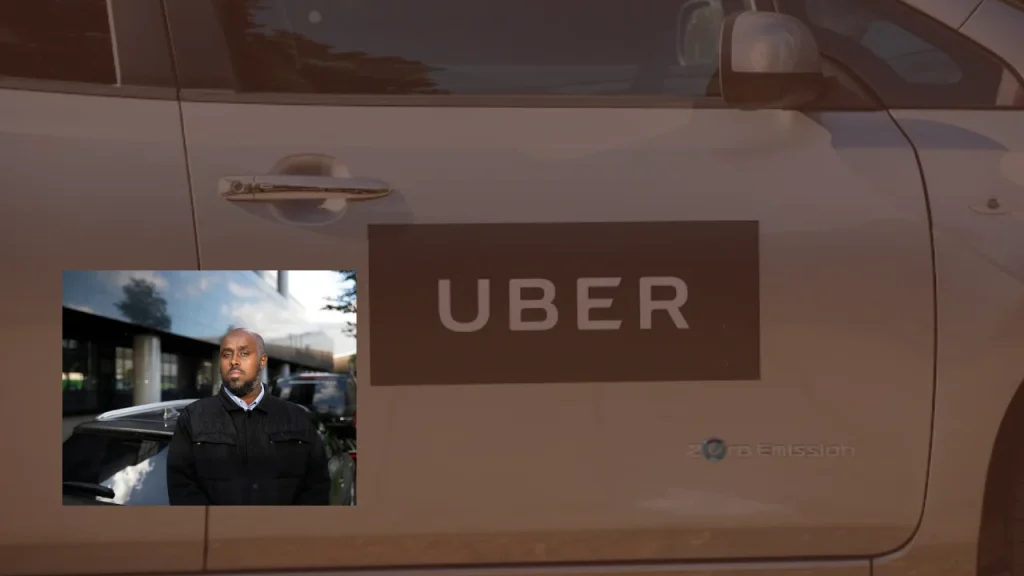
Mohammed Shirwa, a driver in Rotterdam, described it as constant surveillance: the system learns what a driver is willing to accept over time, and prices drift down accordingly, while the driver has little choice but to keep accepting jobs. Kola Oba, a driver in north London, said the arrangement uses a driver’s own data against their financial interests, since it shapes how much they earn and how long they have to work to earn it.
The claim also alleges Uber used driver data to train its AI models without a lawful basis to do so — a separate GDPR issue from the pay-setting claim itself.
Uber disputes the allegations. A company spokesperson said it categorically rejects the claims, adding that dynamic pricing reflects real-time trip information like distance and destination rather than an individual driver’s personal behaviour, and that drivers see their earnings and the destination before deciding whether to accept a trip. Uber has previously said that pay differences of the kind drivers describe stem from other factors in its system, including GPS routing, surge pricing, and promotions.
Worth noting for context: in 2023, Uber’s CEO Dara Khosrowshahi said publicly that the company could do more to target different trips to different drivers based on their preferences or behavioural patterns — a comment the drivers’ side points to as support for their claim, though Uber’s current position is that pricing isn’t personalised to an individual driver’s accept/reject history.
The Law Behind the Claim: GDPR and Automated Decision-Making
This case rests on the EU General Data Protection Regulation, which applies in the UK in a near-identical form (UK GDPR) even after Brexit. The central provision is Article 22, which restricts decisions “based solely on automated processing” that produce legal effects or similarly significantly affect a person — without meaningful human involvement, valid legal grounds, and a way to contest the outcome.
This isn’t the first time this exact legal theory has been tested against Uber in Amsterdam. In April 2021, the Amsterdam District Court ordered Uber to reinstate several UK drivers who had been dismissed by an automated fraud-detection system, ruling the terminations were “robo-firings” that violated Article 22. In 2023, the Amsterdam Court of Appeal went further, finding that several of Uber’s automated processes — including ride assignment, price calculation, driver ratings, and fraud-probability scoring — all qualify as automated decision-making under Article 22, meaning drivers are entitled to a meaningful explanation of how those systems work.
This new claim applies that same reasoning directly to pay-setting itself, arguing that if a driver’s price is set by an opaque algorithm with no real human review, that’s exactly the kind of automated decision Article 22 is meant to constrain.
Related article: American Express Settled Debt Credit Reporting Lawsuit, Were You Affected? — Pohl v. American Express National Bank, No. 2:26-at-00984
Are You Part of This Claim?
You may be part of the pool of affected drivers if:
- You have driven for Uber anywhere in the European Union or United Kingdom
- Your pay for individual rides was set by Uber’s dynamic pricing algorithm
- Uber processed your personal data as part of assigning jobs, calculating fares, or (allegedly) training its AI systems
US-based Uber drivers are not covered by this claim. GDPR only applies to data processing connected to the EU/UK, and the claim was filed under Dutch civil procedure specifically on behalf of EU and UK drivers. If you drive for Uber in the United States, this case has no bearing on your pay or your rights, though separate algorithmic-pay disputes exist in some US cities and states under different laws.
Procedural detail on how individual drivers formally join or benefit from this specific claim — including whether it proceeds on an opt-in or opt-out basis under Dutch collective action rules — hadn’t been made public in detail as of this writing. Drivers who want to confirm their status should watch for updates directly from Worker Info Exchange.
What Could Drivers Receive If This Succeeds?
There’s no settlement, no payout, and no claim form at this stage — this is a newly filed claim, not a resolved case. Reporting on the claim describes potential damages that “could run into billions of euros” across the driver pool, but no court has awarded anything and no per-driver figure has been made public. Treat any specific number you see elsewhere as unconfirmed until the case progresses.
Alongside compensation, the claim seeks an injunction — a court order requiring Uber to stop the algorithmic practices the claim challenges, separate from any money awarded.
What Should Affected Drivers Do Right Now
- No immediate action is required to preserve your position — there’s no claim form yet
- If you drive or have driven for Uber in the EU or UK, keep records of your pay history and any pricing discrepancies you’ve noticed for the same or similar trips
- Follow Worker Info Exchange for updates on how drivers can formally join or benefit from the claim
- Be aware this is separate from the €825m Dutch regulatory fine over account deactivations — that’s a different case with its own process, currently under appeal by Uber
- If you believe you were personally harmed by an automated Uber decision (such as an account deactivation), you may have independent grounds to make your own GDPR data access or contestation request to Uber, regardless of this collective claim
Frequently Asked Questions
Is this a lawsuit in the United States?
No. This claim was filed in Amsterdam, Netherlands, under EU data protection law (GDPR), and applies only to Uber drivers in the EU and UK.
What specific law does the claim rely on?
Primarily Article 22 of the GDPR, which restricts decisions made solely by automated processing that significantly affect a person, along with related GDPR transparency and lawful-basis requirements around how personal data is used.
Has a court ruled on this yet?
No. The claim was only just filed. Uber says it hasn’t seen the full claim yet and categorically rejects the allegations.
Is this connected to the €825m fine against Uber?
It’s related but separate. The Dutch data protection authority’s €825m fine, issued in August 2026, concerned automated account deactivations without adequate notice. This new claim is a civil case about pay-setting and AI training data, led by Worker Info Exchange rather than the regulator, though both rest on similar GDPR automated-decision-making principles.
Do I need a lawyer to be part of this claim?
At this stage, no formal individual action is required. Worker Info Exchange is leading the collective claim. If you want independent legal advice about your own situation as a driver, a data protection or employment solicitor in your country is the right place to start.
Why was the claim filed in Amsterdam specifically?
Uber’s European headquarters is based there, which under EU procedural rules makes the Amsterdam District Court an appropriate venue for a claim covering drivers across multiple EU countries and the UK.
Could this affect how Uber prices rides going forward?
If the claim succeeds and the injunction is granted, it could require Uber to change how its pay-setting algorithm works in the EU and UK. That outcome is not guaranteed and would likely take considerable time given the scale of the case.
Sources Used in This Article
- The Guardian (via Irish Examiner) — “Uber drivers launch European class action over ‘soulless’ and ‘scary’ AI algorithm,” Sept. 2, 2026: https://www.irishexaminer.com/world/arid-41905981.html
- Worker Info Exchange — “Historic digital rights win for WIE and the ADCU over Uber and Ola at Amsterdam Court of Appeal”: https://www.workerinfoexchange.org/post/historic-digital-rights-win-for-wie-and-the-adcu-over-uber-and-ola-at-amsterdam-court-of-appeal
- GDPRhub — Rb. Amsterdam, C/13/696010 / HA ZA 21-81 (April 2021 “robo-firing” ruling): https://gdprhub.eu/index.php?title=Rb.Amsterdam–C%2F13%2F696010%2F_HA_ZA_21-81
Researched and written by Israr Ahmad, legal content researcher and founder of AllAboutLawyer.com. Facts verified against contemporaneous reporting and publicly available GDPR case records as of September 3, 2026. This claim proceeds under EU/UK law; nothing here applies to US-based drivers or US legal rights. Last Updated: September 3, 2026.
This article is for informational purposes only and does not constitute legal advice under EU, UK, or US law. For advice about your specific situation as a driver, consult a qualified solicitor or data protection lawyer in your country.
About the Author
Israr Ahmad is a legal content researcher with 4+ years of experience covering class action settlements and consumer rights cases. He has researched and published coverage of 2,500+ settlements using verified court records, settlement administrator filings, and government sources. Learn more about Israr.