
Assault vs. Battery, They Are Not the Same Thing, and the Difference Can Determine Everything About Your Case
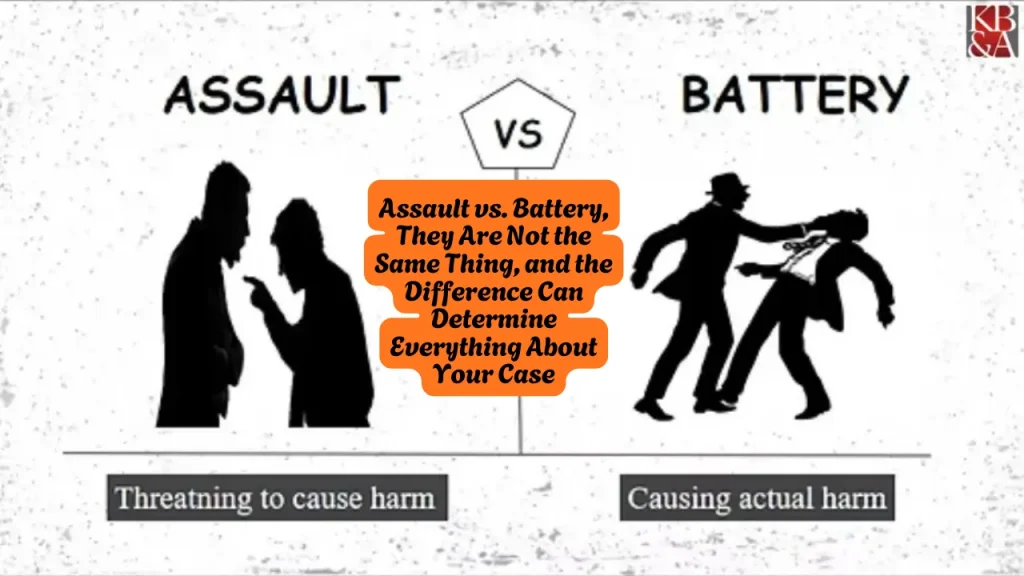
Assault is an intentional threat to cause imminent harm to another person. Battery is the actual unlawful physical contact that causes harm or offense. These are separate crimes with distinct legal elements and penalties, though they often occur together in a single incident. One stops at the threat. The other follows through. That gap between them is where the entire legal distinction lives.
People use these two words interchangeably every day — in conversation, in news reports, even in courtroom dramas. The law treats them as completely separate offenses with different elements, different penalties, and different defenses. Understanding which one applies to your situation is not a technicality. It determines what charges can be filed, what a victim can sue for, and what defenses actually work.
The Core Difference — One Stops Before Contact, One Does Not
The simplest way to understand it is this: assault happens in the moment before contact. Battery is the contact itself.
Assault refers to causing someone to reasonably fear imminent harm. The fear must be something a reasonable person would foresee as threatening to them. No punch needs to land. No touch needs to happen. If someone raises a fist and threatens to hit you — and you genuinely and reasonably believe they are about to — that is assault. The crime is already complete before a single finger connects.
Battery is the completion of assault — where physical contact actually happened. Where assault is more about intent and how an action made the victim feel, battery is the physical act itself. The moment the fist connects, assault becomes battery. In many real-world incidents both happen in the same sequence — the threat followed immediately by the contact — which is exactly why police and prosecutors routinely charge both at once.
But they can exist independently of each other. Someone can commit assault without ever touching the victim — threatening to hurt them while they back away and escape. And in rare cases, battery can occur without a preceding assault — striking someone from behind without warning, for example, gives the victim no time to experience fear first.
What Assault Actually Requires — and What It Does Not
Assault is any intentional act that causes another person to suffer apprehension or fear of imminent bodily harm. No physical contact is necessary for an assault charge. Three things have to be true: the act was intentional, the victim experienced genuine fear of immediate harm, and that fear was reasonable given the circumstances.
That third element — reasonableness — is what courts actually spend time examining. To commit assault, the defendant must do some overt act, like moving toward the victim, to make the victim reasonably fear immediate harm. Threats of future harm or words alone are not sufficient for assault charges. Someone telling you they will hurt you next week is not assault. Someone walking toward you with a raised fist saying they will hurt you right now very likely is.
One major benefit to assault charges, even if no harm actually happened, is that law enforcement can intervene before anyone gets hurt. This is the practical logic behind assault as a separate crime — the legal system does not have to wait for someone to be physically injured before stepping in.
The ability to actually carry out the threat matters too. For a case to qualify as assault, the perpetrator must possess the ability to carry out the threat. Just having a reputation for being violent, or an unreasonable fear on the victim’s part, is not enough. If someone in a wheelchair threatens to physically overpower a trained professional — and no reasonable person would believe that threat — the assault charge becomes far harder to sustain.
Related article: What Evidence You Actually Need to Prove Battery and Why Some Cases Are Stronger Than They Look
What Battery Actually Requires — and Why Minor Touches Count
Battery is the intentional act of making contact with another person in a harmful or offensive manner. The key word people overlook is offensive. Battery does not require injury. It does not require pain. It does not require the contact to leave any mark at all.
The act of battery does not require the victim to suffer a serious injury. Even touching someone without their consent can be considered battery. A deliberate shove, a condescending pat on the head done in a rude manner, spitting on someone — all of these qualify legally even though none cause physical damage in the traditional sense.
What battery does require is intent — but not the kind most people assume. Battery generally does not require any specific intent to harm the victim. Instead, a person only needs the intent to cause offensive contact with another. Someone who shoves a person as a joke intended to make contact. That intent is sufficient. The fact that they thought it was funny — or harmless — does not change what happened legally.
Accidental contact is the clear exception. If someone accidentally hits another shopper with a grocery cart, that would not be considered battery. The accidental element removes the intent that battery requires. But reckless behavior that causes contact — someone running through a crowd aimlessly swinging a bat — can satisfy the intent element even without targeting a specific person, because the recklessness itself demonstrates a conscious disregard for others.
Simple vs. Aggravated — Where Misdemeanors Become Felonies
Neither assault nor battery stays at one severity level. Both escalate based on circumstances, and the difference between a misdemeanor and a felony can mean the difference between probation and years in prison.
Simple assault generally carries misdemeanor penalties that can result in jail time and fines. A person could spend a few days or up to a year in jail. Fines could range from $500 to $2,500 or more. Raising a fist at someone and threatening to hit them — without following through — typically lands in this category.
Aggravated assault can result in stiff felony penalties, such as up to 10, 15, or even 20 years of prison time, plus maximum fines that can reach $10,000 or more. The factors that push a charge into aggravated territory include use of a deadly weapon, the victim’s protected status — law enforcement officers, healthcare workers, judges — and the severity of harm threatened or inflicted.
Threatening to harm a member of law enforcement, a prosecutor, or a judge will result in felony first-degree assault charges. The identity of the victim is a threshold question prosecutors ask before deciding how to charge, not an afterthought.
For battery, the presence of aggravating factors such as the use of a deadly weapon could result in aggravated battery charges. Domestic violence context also changes the calculus significantly — most states treat repeated contact in a domestic relationship as a pattern that warrants enhanced charging rather than treating each incident in isolation.
The Civil Side — Why Victims Can Sue Separately From Criminal Charges
This is the part that surprises most people who have been on the receiving end of assault or battery. The criminal case — if there is one — belongs to the state. The civil case belongs to the victim. They run on separate tracks and produce separate outcomes.
Assault and battery are intentional torts, and the victim can file a civil lawsuit against the wrongdoer for damages. While a criminal conviction punishes the defendant, a civil lawsuit compensates the victim — medical bills, lost wages, pain and suffering, emotional distress, and in cases of especially outrageous conduct, punitive damages designed to punish rather than just compensate.
The burden of proof is dramatically lower on the civil side. The burden of proof for a criminal conviction is beyond a reasonable doubt — a higher standard than in civil court, which requires a preponderance of the evidence, meaning more likely than not. A prosecutor declining to file charges — or a jury acquitting on criminal charges — does not close the door to civil recovery. The victim simply has to prove their case by a lower standard in a separate proceeding.
There is one practical complication worth knowing. The problem in intentional tort cases is that it’s actually harder to get paid than in negligence cases. When you have a negligence case, you’ll often have an insurance company involved. But insurance doesn’t cover intentional torts. For example, homeowner’s insurance will not cover someone who intentionally punched another person inside their home. Winning a civil assault or battery case does not automatically mean collecting money — it depends on whether the defendant has assets or resources to satisfy a judgment.
The Defenses That Actually Work
Defendants facing assault or battery claims often challenge the allegations on common grounds: self-defense — claiming actions were necessary to protect themselves from immediate harm; consent — in situations where the alleged victim agreed to the contact; and lack of intent — demonstrating the act was not intentional, which can reduce or eliminate criminal liability.
Self-defense is the most commonly raised and the most fact-specific. The defense requires that the threat was real, immediate, and that the response was proportionate. Using deadly force in response to a shove generally does not satisfy proportionality. Walking away from a verbal argument and coming back with a weapon does not satisfy the immediacy requirement.
Consent works cleanly in contact sports, medical procedures, and similar contexts where the person agreed to the type of contact that occurred. It does not protect someone who exceeded what was consented to — a surgeon who performs the authorized procedure is protected, one who goes further without consent is not.
Lack of intent is the strongest defense to battery specifically. Accidental contact — however painful or damaging — does not meet the intentional element battery requires. But courts look hard at whether the claim of accident is credible given the circumstances.
Frequently Asked Questions
What is the statute of limitations for filing an assault or battery lawsuit?
Most states set the civil statute of limitations for assault and battery at two years from the date the incident occurred, though some states allow as little as one year. The criminal statute of limitations varies by the severity of the charge — misdemeanor assault and battery typically carry shorter deadlines than felony charges, and some aggravated offenses have no statute of limitations at all. Missing the civil deadline means permanently losing the right to sue, regardless of how strong the underlying case is.
How long does an assault or battery criminal case typically take to resolve?
Misdemeanor assault and battery cases often resolve within weeks to a few months through guilty pleas, diversion programs, or dismissal. Felony charges — aggravated assault, aggravated battery — can take one to two years from arrest to trial, sometimes longer in jurisdictions with crowded court dockets. Cases that go to jury trial take considerably longer than those resolved through negotiation. The defendant’s criminal history and the severity of the alleged conduct heavily influence how aggressively prosecutors pursue the case.
Do I need a lawyer for an assault or battery case, and how do I find the right one?
On the criminal defense side, yes — immediately. Even a misdemeanor conviction carries consequences that follow you through background checks, professional licensing, and future legal proceedings. On the civil side, most personal injury attorneys who handle intentional tort cases work on contingency, meaning no upfront cost. The right attorney depends on which side you are on and what the specific circumstances involve. Visit AllAboutLawyer.com to find an attorney experienced in assault and battery cases in your state.
Can someone be charged with both assault and battery for the same incident?
Yes, and it is common. In many cases, law enforcement will arrest someone for both assault and battery because they frequently occur together in a single incident. The threat and the contact happen in rapid sequence. Prosecutors can charge both, and a conviction on both is possible if the evidence supports each element separately.
What happens if the victim does not want to press charges?
In civil court, the victim controls whether to file a lawsuit, and they can choose not to pursue it. In criminal court, the decision to prosecute belongs to the state — not the victim. A victim who decides not to cooperate with prosecutors can make the case harder to prove, but cannot unilaterally end it. In domestic violence cases particularly, many states explicitly prohibit dropping charges based solely on the victim’s request, because prosecutors recognize that pressure from the defendant is often what causes victims to withdraw.
Legal Terms Used in This Article
Assault: An intentional act that causes another person to reasonably fear imminent harmful or offensive contact. No physical contact is required — the crime is complete when the reasonable fear is created.
Battery: The intentional, harmful or offensive physical contact with another person without their consent. The contact does not have to cause injury — any offensive touching qualifies.
Aggravated Assault or Battery: An elevated form of either offense involving additional factors — use of a deadly weapon, serious injury, or the protected status of the victim — that elevates the charge from misdemeanor to felony.
Intentional Tort: A civil wrong that requires proof the defendant acted deliberately, rather than negligently. Both assault and battery qualify as intentional torts, allowing victims to sue for compensation separately from any criminal proceedings.
Preponderance of the Evidence: The civil standard of proof — meaning it is more likely than not that the defendant committed the act. Lower than the criminal standard of beyond a reasonable doubt.
Beyond a Reasonable Doubt: The criminal standard of proof — requiring the prosecution to eliminate any reasonable doubt of the defendant’s guilt. Higher than the civil preponderance standard, which is why someone can lose a civil case after being acquitted criminally.
Self-Defense: A legal justification for contact that would otherwise constitute assault or battery, available when the defendant reasonably believed force was necessary to protect themselves from imminent harm and used proportionate force in response.
The Line Between a Threat and a Touch Is Where the Law Draws the Distinction
Assault and battery are not interchangeable terms that lawyers use for the same thing. They describe two distinct moments in what is often a single violent sequence — the moment someone creates fear, and the moment that fear becomes physical contact.
For victims, understanding the distinction matters because it determines what you can prove, what compensation you can pursue, and whether the civil and criminal tracks serve your interests differently. For anyone facing charges, it determines what the prosecution actually has to establish — and where defenses have the best chance of landing.
If you were the victim of assault, battery, or both — or if you are facing charges arising from an incident — speak with an attorney before you assume you understand how the law applies to your specific facts. The details determine everything. Visit AllAboutLawyer.com to find the right legal guidance for your situation.