
Celsius Class Action Lawsuit, Energy Drinks Accused of Misleading Fat-Burning and Metabolism Claims
A putative class action accuses Celsius of misleading consumers by advertising that its energy drinks “Accelerate Metabolism” and “Burn Body Fat” without enough scientific evidence to support the impression that drinking the beverage itself produces meaningful weight-loss benefits.
The case is Nielsen v. Celsius Holdings Inc., et al., filed by Annabelle Nielsen in federal court in Washington. She says Celsius used prominent health and fitness statements on its packaging to encourage shoppers to pay premium prices for drinks they believed could burn fat and improve metabolism.
The complaint also challenges the research behind those claims. It alleges Celsius funded the studies it relies on and that the studies measured short-term metabolic changes, not meaningful, sustained body-fat loss.
This is not a lawsuit about caffeine side effects or an unsafe product. The central question is: when an energy drink advertises that it burns body fat, what scientific evidence must the manufacturer have to support what shoppers understand from that statement?
A second, similar putative class action is pending in Illinois. The two cases are separate, with different proposed classes and different state laws. Neither has produced a court finding that Celsius broke the law, and Celsius disputes the claims.
There is no settlement, claim form or payment available in this case.
Celsius Class Action Lawsuit: Quick Facts
| Case detail | Information |
| Case name | Nielsen v. Celsius Holdings Inc., et al. |
| Case number | 2:26-cv-04113 |
| Court | U.S. District Court, Western District of Washington |
| Judge | Tana Lin |
| Filing date | October 26, 2026 |
| Plaintiff | Annabelle Nielsen |
| Defendants | Celsius Holdings Inc. and Celsius, Inc. |
| Main allegations | Misleading metabolism and body-fat claims; inadequate disclosure of research |
| Phrases challenged | “Accelerates Metabolism” and “Burns Body Fat” |
| Main state law | Washington Consumer Protection Act (RCW 19.86) |
| Other claim | Common-law fraudulent concealment |
| Proposed class | People who bought the identified products in Washington from October 26, 2022 through trial |
| Related lawsuit | Valente v. Celsius, Inc., No. 1:26-cv-13271 (N.D. Ill.) |
| Class certified? | No certification order identified |
| Settlement, claim form or payment? | None verified |
Why Is Celsius Being Sued?
Many people buy energy drinks for caffeine and alertness. The complaint says Celsius goes further, using the phrases “Accelerates Metabolism” and “Burns Body Fat.” Nielsen alleges ordinary consumers can read these as saying that drinking a Celsius product itself increases the body’s ability to burn calories and fat. She argues they are not mere ingredient descriptions or general energy claims but specific physical benefits a shopper would expect to receive.
She alleges Celsius lacked adequate scientific evidence to support the full message consumers took from the packaging.
What Did Annabelle Nielsen Buy?
Nielsen lives in Bothell, King County, Washington. The complaint says she bought Celsius products from retailers including Amazon, Target, 7-Eleven, Costco and Fred Meyer between about December 2024 and September 2026. She says she read the packaging, relied on the metabolism and fat-burning statements, and would not have bought the drinks, or would not have paid as much, had she known the claims were not adequately substantiated.
That makes this mainly an economic-injury case. Her theory is that she paid for an allegedly misleading health benefit and received a product worth less than she paid. The complaint does not principally allege the drinks are contaminated or medically harmful.
Which Celsius Energy Drinks Are Named in the Lawsuit?
The complaint identifies 19 Celsius product variants.
Essential Energy and sparkling varieties
- CELSIUS Essential Energy Sparkling Galaxy Vibe
- CELSIUS Essential Energy Sparkling Astro Vibe
- CELSIUS Essential Energy Sparkling Arctic Vibe
- CELSIUS Essential Energy Sparkling Tropical Vibe
- CELSIUS Essential Energy Sparkling Peach Vibe
- CELSIUS Essential Energy Sparkling Raspberry Peach
- CELSIUS Essential Energy Sparkling Wild Berry
- CELSIUS Essential Energy Sparkling Watermelon
- CELSIUS Essential Energy Sparkling Grape Rush
- CELSIUS Essential Energy Sparkling Orange
- CELSIUS Essential Energy Sparkling Strawberry Lemonade
- CELSIUS Essential Energy Raspberry Acai Green Tea
- CELSIUS Fizz Free Pink Lemonade
- CELSIUS Sparkling Fuji Apple Pear
- CELSIUS Sparkling Blue Razz Lemonade
- CELSIUS Sparkling Kiwi Strawberry
On-the-Go varieties
- CELSIUS On-the-Go Strawberry Coconut
- CELSIUS On-the-Go Blueberry Lemonade
- CELSIUS On-the-Go Cranberry Lemon
Do not assume every Celsius flavor, powder or future product is covered. The specific products and the eventual class definition will matter if the court considers certification.
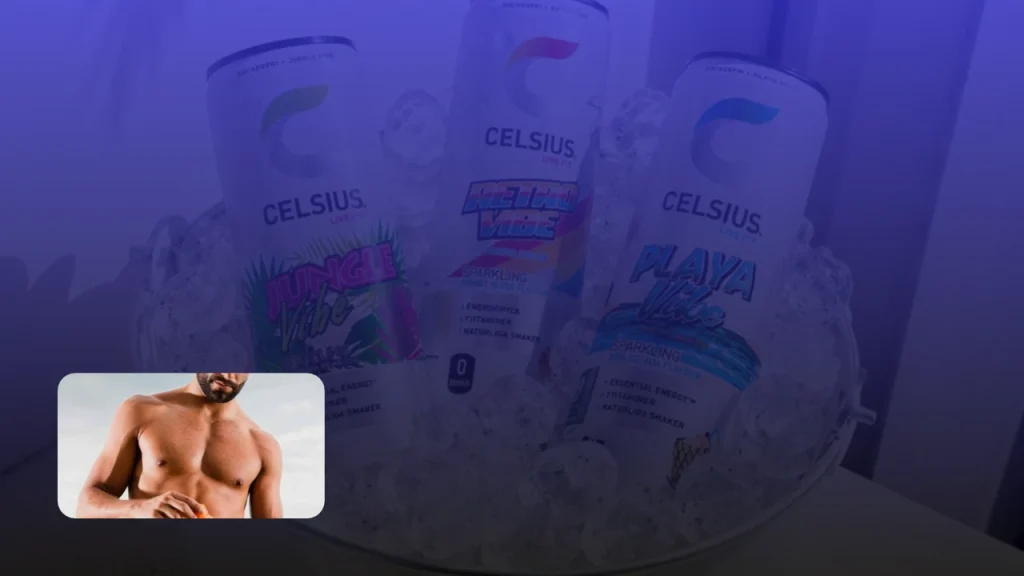
What Is the Science Behind the Celsius Metabolism and Fat-Burning Claims?
Metabolism refers to the chemical processes that convert food and stored energy into usable substances. Some common energy-drink ingredients, such as caffeine and green tea extracts, can be thermogenic, meaning they can raise heat production and energy expenditure for a time.
But temporarily increasing energy expenditure is not the same as producing meaningful, sustained fat loss. A product might show a short-term metabolic change without showing that people lose a meaningful amount of body fat over weeks or months. That gap is the center of Nielsen’s allegations.
What Does the Complaint Say About Celsius-Funded Studies?
The complaint examines six studies Celsius allegedly relies on. Nielsen alleges all six were solicited and funded by Celsius, that several involved overlapping researchers, and that one was conducted by an organization that is now defunct.
She also challenges what the studies measured. According to the complaint, they focused on short-term indicators such as resting energy expenditure and free fatty acids, not sustained weight loss or large reductions in body fat.
Those are allegations about the quality and relevance of the evidence. Company funding does not by itself make a study invalid. Methodology, results, limitations, publication, replication and relevance to the advertised claim all matter.
Does Green Tea Help Burn Fat?
The complaint also discusses green tea and its catechins. The evidence is nuanced. A Cochrane review of green tea preparations for weight loss and weight maintenance found that any weight reduction was small and generally not clinically important. A separate 2024 systematic review and meta-analysis of green tea catechins combined with exercise reported small improvements in some weight and body-composition measures, but described the added benefit as limited.
Neither review tests a finished Celsius drink. Research on an ingredient cannot automatically be treated as proof that a particular beverage produces the same result, which is why the science will likely matter if the case moves forward.
What About the Disclaimer on the Back of Celsius Cans?
The plaintiff alleges the front of the products prominently communicates that Celsius accelerates metabolism and burns body fat. The complaint also points to qualifying language on the back, including the statement: “CELSIUS alone does not produce weight loss in the absence of a healthy diet and moderate exercise.”
Nielsen’s position is that consumers should not be led to believe a can of Celsius by itself produces weight loss or meaningful fat reduction. Celsius may argue that the packaging, read as a whole, explains the product’s benefits and limits accurately.
The legal question is whether a manufacturer can make a prominent health claim on the front and rely on a smaller qualification elsewhere to explain its limits. Courts generally look to the overall impression on a reasonable consumer. In the Ninth Circuit, which covers Washington, Williams v. Gerber Products Co., 552 F.3d 934 (9th Cir. 2008), held that reasonable consumers are not always expected to look at the back of a package to correct a misleading front label. Later, in Moore v. Trader Joe’s Co., 4 F.4th 874 (9th Cir. 2021), the court held that back-label context can matter when the front label is ambiguous. A disclaimer does not automatically defeat a false-advertising claim, and a bold marketing statement does not automatically prove consumers were misled.
Which Laws Apply to the Celsius Class Action Lawsuit?
The complaint pleads two claims under Washington law. Federal laws provide important context and defenses, but they are not the causes of action Nielsen pleaded.
Washington Consumer Protection Act (RCW 19.86.020)
The first claim is under the Washington Consumer Protection Act, which prohibits unfair or deceptive acts or practices in trade or commerce. A private plaintiff generally must show five elements, drawn from Hangman Ridge Training Stables, Inc. v. Safeco Title Insurance Co., 105 Wn.2d 778 (1986):
- An unfair or deceptive act or practice.
- In trade or commerce.
- That affects the public interest.
- Injury to the plaintiff’s business or property.
- A causal link between the act and the injury.
Washington courts treat deception as turning on whether the practice has the capacity to deceive a substantial portion of the public. RCW 19.86.093 describes how the public-interest element can be met, including where the conduct injured other persons or had the capacity to injure many. Celsius can challenge any element, including whether the front-label claims were deceptive, whether any injury is concrete and whether the claimed loss was caused by the advertising.
Remedies Under RCW 19.86.090
A person injured in business or property by a violation may seek actual damages, an injunction, reasonable attorneys’ fees and costs. A court may also increase an award of actual damages up to three times, but the increase is capped at $25,000. That does not mean consumers are entitled to three times the purchase price or a set payout. Nielsen would first have to establish liability and qualifying damages.
Four-Year Limitations Period (RCW 19.86.120)
The Consumer Protection Act generally carries a four-year limitations period. The complaint was filed October 26, 2026, and the proposed class period starts October 26, 2022, exactly four years earlier. The complaint also alleges tolling, arguing consumers could not reasonably have discovered the alleged misconduct earlier because key information about the research was not disclosed. Whether any claims are time-barred or tolled is a question for the court.
Common-Law Fraudulent Concealment
The second claim is based on Washington common law. Nielsen alleges Celsius concealed or failed to adequately disclose material information about the evidence behind its claims, including the studies’ funding and limits. Fraudulent concealment is harder to prove than a simple labeling dispute. A plaintiff generally must show a concealed material fact, a duty to disclose, knowledge, intent, justifiable reliance and damages. Because it sounds in fraud, Federal Rule of Civil Procedure 9(b) also requires the circumstances to be pleaded with particularity. Reliance and injury may be difficult to prove with class-wide evidence.
Federal Rule of Civil Procedure 23
Filing a complaint “on behalf of a class” does not make a certified class. Under Rule 23(a), the plaintiff must show numerosity, commonality, typicality and adequacy, and then satisfy a Rule 23(b) category. The complaint invokes Rule 23(b)(2) and 23(b)(3). Rule 23(b)(3) requires common questions to predominate and a class action to be superior to other methods.
This could be contested. Consumers bought different flavors at different prices over several years and may have seen different packaging. Celsius is likely to argue that these differences defeat predominance. Until a judge certifies a class, Nielsen is simply the named plaintiff.
Class Action Fairness Act (28 U.S.C. § 1332(d))
The case relies on CAFA for federal jurisdiction, which generally requires at least 100 proposed class members, more than $5 million in aggregate controversy and minimal diversity. These are jurisdictional thresholds. They are not a promise that the class will recover $5 million, and they do not show that Celsius violated Washington law.
FTC Act and the Substantiation Doctrine
Section 5 of the FTC Act, 15 U.S.C. § 45, prohibits unfair or deceptive acts or practices, and Section 12, 15 U.S.C. § 52, addresses false advertising of foods, drugs, devices, services and cosmetics. Under the FTC’s advertising-substantiation policy, advertisers should have a reasonable basis for objective claims before making them, and the FTC’s Health Products Compliance Guidance explains that health claims should be backed by competent and reliable scientific evidence. Factors include study quality and design, participant numbers, study length, whether the research measures the advertised outcome, whether the tested product is the one advertised, and whether results are replicated.
That is relevant because Nielsen questions whether short-term metabolic measurements support a broader fat-burning message. But Nielsen has not pleaded a private claim under the FTC Act, and the FTC has not been reported to have sued Celsius or found its advertising unlawful.
Federal Food Labeling Law and Preemption
Under 21 U.S.C. § 343(a)(1), a food is misbranded if its labeling is false or misleading in a material particular. But under 21 U.S.C. § 337(a), enforcement of the Federal Food, Drug, and Cosmetic Act is generally reserved to the federal government, so consumers cannot sue directly under it. State-law food-labeling claims can also face express-preemption arguments under 21 U.S.C. § 343-1 where a state requirement differs from federal labeling rules. Celsius has not been reported to have raised preemption yet, but it is a common defense in cases of this type, along with arguments that the statements are non-actionable or substantiated.
The Illinois Case and the Consumer Fraud Act
The Illinois lawsuit relies on the Illinois Consumer Fraud and Deceptive Business Practices Act (815 ILCS 505/1 et seq.), which also prohibits deceptive practices in trade or commerce, and on fraudulent-misrepresentation allegations.
What Does Celsius Say About the Lawsuit?
Celsius has disputed the allegations. In its quarterly filing for the period ended September 30, 2026, the company disclosed both the Washington and Illinois cases, said it believes the claims are without merit and intends to defend them vigorously, and said it could not estimate any potential loss.
Celsius also told Food Dive that it stands by its peer-reviewed studies and product claims, which it said had been reviewed by the Better Business Bureau’s National Advertising Division, a self-regulatory body. A spokesperson defended the packaging, saying the products are clearly labeled and go beyond FDA requirements. These are the company’s positions, not court findings. A National Advertising Division review is not a court ruling and does not bind a court.
Is There Another Celsius Class Action Lawsuit?
Yes. Valente v. Celsius, Inc., Case No. 1:26-cv-13271, was filed in the U.S. District Court for the Northern District of Illinois. According to Celsius’s SEC filing, it was filed October 28, 2026.
| Detail | Washington case | Illinois case |
| Case | Nielsen v. Celsius | Valente v. Celsius |
| Case number | 2:26-cv-04113 | 1:26-cv-13271 |
| Court | W.D. Washington | N.D. Illinois |
| Filing date | October 26, 2026 | October 28, 2026 |
| Proposed class | Washington purchasers | Illinois purchasers |
| Main state-law claim | Washington Consumer Protection Act | Illinois Consumer Fraud and Deceptive Business Practices Act |
| Additional claim | Fraudulent concealment | Fraudulent misrepresentation |
The cases have not been reported as consolidated, and an Illinois resident is not automatically part of Nielsen’s Washington class.
Who Could Qualify for the Proposed Celsius Class?
The complaint proposes a class of all persons who purchased a “Healthwashed Energy Product” in the State of Washington between October 26, 2022 and the time of trial, covering the 19 products listed above. In practical terms, the most relevant facts are whether you bought one of the identified products, in Washington, during the class period.
That is a proposal, not a court-approved eligibility test. Someone who bought Celsius in California, Texas, Florida, New York or any other state should not assume the Washington case covers them. Other consumers may have rights under their own state’s laws, but the Nielsen complaint does not establish them.
Do You Need Proof of Purchase?
No claims process exists yet. Still, it is sensible to keep receipts, online order histories, payment records, packaging and photos of the front and back labels in case a class is later certified and a claims process approved.
Is There a Celsius Settlement or $250 Payout?
No. No settlement or new payout has been verified in Nielsen v. Celsius Holdings Inc. Do not confuse it with an older, separate Celsius settlement involving preservative-related claims, covered in Celsius Drink Lawsuit SETTLEMENT, Get Your $250 Payout Before The Deadline Passes. That was a different dispute with a different settlement process, and it does not mean consumers can claim $250 in this case.
The Nielsen case currently has no verified settlement fund, approved settlement agreement, claims administrator, claim form, payment amount or claim deadline. Be cautious about websites claiming everyone who drank Celsius is owed money.
Other consumer advertising cases can help put this one in context, such as Gatorade “Hydrates Better Than Water” Class Action Lawsuit, What Walsh v. PepsiCo Claims. It involves a different product, defendant and set of allegations, and its outcome does not decide the Celsius litigation.
What Should Celsius Customers Do Now?
- Keep the packaging. Photographs of the front and back labels preserve the exact statements and disclaimers.
- Save receipts and order histories. They show the date, place, price and product.
- Record the exact product variant. The proposed class names particular flavors and formats.
- Follow case developments. Motions to dismiss, class certification and other rulings could change what happens next.
- Be cautious about sign-up sites. No payment program has been established. Do not give sensitive information to anyone promising one.
- Consult an attorney if you want advice about your own purchases or rights.
What Is the Latest Status of the Celsius Class Action Lawsuit?
The case was filed October 26, 2026 in the Western District of Washington and assigned to Judge Tana Lin. A public docket mirror reviewed for this article showed activity through November 6, 2026:
| Date | Docket activity |
| October 26, 2026 | Complaint filed |
| October 27, 2026 | Summons and judicial assignment activity |
| October 28, 2026 | Notices and applications concerning counsel |
| November 2, 2026 | Court minute order concerning chambers procedures |
| November 3, 2026 | Affidavits of service |
| November 6, 2026 | Further pro hac vice applications and related orders |
The snapshot did not show a class-certification order, approved settlement or claim program, and no answer or substantive dismissal ruling was identified. Third-party docket mirrors can be incomplete or delayed, so check the official PACER/ECF record for newer filings.
As of November 10, 2026, the case should be treated as an early-stage putative class action, not a consumer recovery program. Typical next steps include Celsius’s response, likely a motion to dismiss under Rule 12(b)(6) and Rule 9(b), possible discovery into the studies and marketing, and later class-certification briefing.
Who Represents Annabelle Nielsen?
The plaintiff is represented by Steve W. Berman, Shelby Smith, Rebecca A. Peterson and Krista K. Freier of Hagens Berman Sobol Shapiro LLP, along with Kara A. Elgersma and Gwyneth F. Lietz of Wexler Boley & Elgersma LLP.
Frequently Asked Questions About the Celsius Lawsuit
Why is Celsius being sued?
Celsius is accused of misleading consumers by advertising that its drinks accelerate metabolism and burn body fat without adequate support for the overall impression those claims create. The plaintiff also challenges the company’s disclosures about the research behind them.
Which Celsius products are named in the class action?
The complaint identifies 19 products, including Galaxy Vibe, Astro Vibe, Arctic Vibe, Tropical Vibe, Peach Vibe, Wild Berry, Watermelon, Grape Rush, Fizz Free Pink Lemonade and three On-the-Go varieties.
Does Celsius really accelerate metabolism?
Some ingredients can temporarily affect metabolic activity. But a short-term change does not automatically show meaningful or sustained body-fat loss. Whether the Celsius claims are adequately supported is disputed in this case.
Does the lawsuit say Celsius drinks are dangerous?
No. The claims concern allegedly deceptive advertising and financial injury, not product safety or personal injury.
Can I join the Celsius class action if I live outside Washington?
The proposed Nielsen class is limited to Washington purchasers. The separate Illinois case concerns Illinois purchasers.
Can I get money from the Celsius class action?
Not now. There is no approved settlement, claims administrator or payment amount.
Is this the same as the old $250 Celsius settlement?
No. The older settlement involved different allegations about preservatives. Nielsen challenges metabolism and fat-burning claims.
Does the back-of-can disclaimer end the lawsuit?
Not automatically. Courts look at the overall impression a label gives a reasonable consumer. A back-label qualifier can matter, but its placement and consistency with the front-label claim are part of that analysis.
Has a judge decided Celsius misled consumers?
No. The complaint contains allegations, and Celsius disputes them. The court has not found a violation of the Washington Consumer Protection Act or fraudulent concealment.
Where can I check the Celsius lawsuit?
Search for Nielsen v. Celsius Holdings Inc., Case No. 2:26-cv-04113, in the Western District of Washington through PACER/ECF.
Legal Sources and References
- Nielsen v. Celsius Holdings Inc., et al., Complaint, No. 2:26-cv-04113 (W.D. Wash., filed Oct. 26, 2026)
- Washington Consumer Protection Act, RCW 19.86.020
- RCW 19.86.090 — Remedies
- RCW 19.86.120 — Limitations period
- Hangman Ridge Training Stables, Inc. v. Safeco Title Insurance Co., 105 Wn.2d 778 (1986)
- FTC Health Products Compliance Guidance
- 15 U.S.C. § 45 — FTC Act, unfair or deceptive practices
- Federal Rule of Civil Procedure 23 — class actions
- 28 U.S.C. § 1332 — Class Action Fairness Act
- 21 U.S.C. § 343 — Misbranded food
- 21 U.S.C. § 337 — FDCA enforcement
Update log: November 10, 2026 — Article published. Docket reviewed through November 6, 2026; check PACER for newer filings.
This article is for informational purposes only and does not constitute legal advice. Laws vary by state and individual circumstances differ. For advice about your specific situation, consult a qualified attorney. The allegations in the complaint have not been proven in court. AllAboutLawyer.com is an independent legal-information website, not a law firm, and does not represent consumers in this lawsuit.
Researched and written by Israr Ahmad, legal content researcher and founder of AllAboutLawyer.com. All facts verified against the Nielsen complaint (Case No. 2:26-cv-04113), the Washington Revised Code, the Federal Rules of Civil Procedure, FTC guidance, Celsius’s SEC quarterly filing and the federal docket record, as of November 10, 2026. Last Updated: November 10, 2026.
About the Author
Israr Ahmad is a legal content researcher with 4+ years of experience covering class action settlements and consumer rights cases. He has researched and published coverage of 2,500+ settlements using verified court records, settlement administrator filings, and government sources. Learn more about Israr.